Endurance Racing Esports: The Ultimate Test of Virtual Stamina
So, you’re curious about endurance racing in esports, huh? Basically, it’s those ridiculously long virtual races, think 24 hours or more, where drivers push their ski…

So, you’re curious about endurance racing in esports, huh? Basically, it’s those ridiculously long virtual races, think 24 hours or more, where drivers push their skills, focus, and sanity to the absolute limit. It’s not just about raw speed; it’s a serious test of mental and physical stamina, often mirroring the challenges faced by their real-world counterparts. If you’ve ever wondered what it takes to tackle something like the virtual 24 Hours of Le Mans or the Nürburgring, you’re in the right place.
Endurance racing in esports didn’t spring up overnight. It’s a natural evolution from the early days of sim racing, where dedicated communities started pushing the boundaries of what was possible in terms of realistic simulation and driver commitment. What began as a niche pursuit for hardcore enthusiasts has steadily grown into a respected and incredibly demanding discipline within the broader esports landscape.
From Pixels to Pit Stops: The Early Days
Remember those simpler racing games from decades ago? While fun, they were a far cry from the simulations we have today. Early sim racing saw dedicated groups of players tackling longer races, but the technology and the understanding of what constituted “endurance” were still developing. It was more about sheer time commitment than the nuanced strategies we see now.
The Rise of Realistic Simulators
The real shift happened as simulation technology matured. Games like iRacing, Assetto Corsa Competizione, and rFactor 2 started offering incredibly detailed physics, tire models, and track recreations. This fidelity meant that the challenges of real-world endurance racing, tire wear, fuel management, driver fatigue, could be accurately replicated in the virtual world. This opened the door for serious competition.
Community-Driven Events
A significant driving force behind the growth of endurance esports has been the sim racing community itself. Enthusiasts created their own events, often starting with smaller groups and gradually scaling up. These grassroots efforts fostered a culture of shared effort, strategy development, and the sheer grit required to complete these epic virtual challenges.
Mainstream Recognition
As the quality of the simulations and the professionalism of the drivers increased, so did the interest from larger organizations and even real-world motorsport teams. We started seeing official 24-hour races held on platforms like iRacing, and many professional racing drivers began participating, lending further credibility to the discipline.
What Sets Endurance Esports Apart?
It’s not just about driving for a long time. Endurance esports demands a unique blend of skills and preparation that goes far beyond what’s needed for a typical sprint race. The sheer duration of these events introduces a whole new set of challenges and considerations that can make or break a team’s chances.
The Mental Marathon
This is arguably the biggest hurdle. Hours upon hours of intense concentration can be mentally draining. Drivers need to maintain focus, make split-second decisions, and avoid costly mistakes, all while battling fatigue. It’s a battle of attrition against your own mind as much as against the competition.
Physical Toll in the Virtual Cockpit
While you’re not physically pounding the asphalt, sitting in one position for hours on end, gripping a steering wheel, and reacting to constant feedback takes a toll. Many drivers develop specific physical training routines to cope with the strain, focusing on core strength, neck stability, and overall endurance. Hydration and nutrition during the race are also critical.
Strategy is King
In endurance racing, brute force speed is often secondary to smart strategy. Teams have to meticulously plan their pit stop windows, tire strategies, and driver stints. Balancing aggressiveness with conservation, understanding when to push and when to save, is key. A perfectly timed pit stop or a well-executed strategy can gain far more time than a few extra tenths of a second per lap.
Teamwork Makes the Dream Work
Most major endurance esports events are team-based. This means seamless communication, clear role delegation, and unwavering trust between drivers are paramount. The ability to hand over the car cleanly, provide constructive feedback, and support each other through difficult stints is what separates the contenders from the pretenders.
The Evolution of Driving Styles
Endurance racing often requires a different driving style than sprint racing. Brutal aggression can lead to tire degradation and costly mistakes. Drivers often adopt a smoother, more consistent approach, focusing on maximizing tire life and fuel economy while still maintaining a competitive pace. This shift in mindset is crucial.
Mastering the Art of the Long Haul
Successfully competing in endurance esports isn’t something you just jump into. It requires significant preparation, both in terms of skill and logistical planning. Think of it as training for a marathon, you wouldn’t just show up on race day without months of preparation.
Practice, Practice, Practice (The Right Kind)
Generic practice won’t cut it. Endurance drivers need to spend hours familiarizing themselves with the specific track, understanding its nuances, and most importantly, practicing their stints in race conditions. This includes practicing driving with low fuel, worn tires, and in different weather conditions, all while simulating race pace.
Tire and Fuel Management: The Core Mechanics
Understanding how tire wear affects grip and how fuel consumption impacts lap times is fundamental. Teams will run simulations and practice sessions specifically to dial in their tire compounds for different stints and to optimize fuel loads. Every drop of fuel and every mile on the tires matters.
Driver Stint Planning: More Than Just Hours
It’s not as simple as splitting the race into equal segments. Teams consider driver fatigue, physiological needs, and even track conditions when planning stints. Some drivers might be better suited for night driving, while others excel in certain weather. The handover between drivers also needs to be practiced to minimize time lost.
Setup Optimization: Finding the Sweet Spot
Car setups are critical in endurance racing. Teams often invest heavily in finding a setup that is not only fast but also consistent and kind to the tires over long stints. A setup that’s too aggressive on tires might be quick for a few laps but disastrous for a two-hour stint.
Simulating Race Conditions
This goes beyond just driving laps. Teams need to simulate race scenarios, including traffic, safety cars, pit stops under pressure, and even unexpected weather changes. This helps drivers adapt to the unpredictable nature of a long race and hone their reactions.
Ergonomics and Comfort
For races lasting 24 hours or more, driver comfort is paramount. This includes ensuring their sim rig is set up ergonomically to prevent strain, having easy access to hydration, and even considering how they will manage meals during their time off.
The Tools of the Trade: Hardware and Software
While skill is the most important ingredient, the right hardware and software can significantly impact performance and comfort in endurance esports. Investing in quality gear can make a substantial difference over the course of a long race.
The Wheel and Pedals: Your Connection to the Track
A high-quality direct-drive wheel offers the most realistic force feedback, allowing drivers to feel subtle changes in tire grip and track surface. Similarly, responsive and well-calibrated pedals are crucial for precise control. For endurance, comfort and adjustability are also key features to look for.
The Rig: More Than Just a Seat
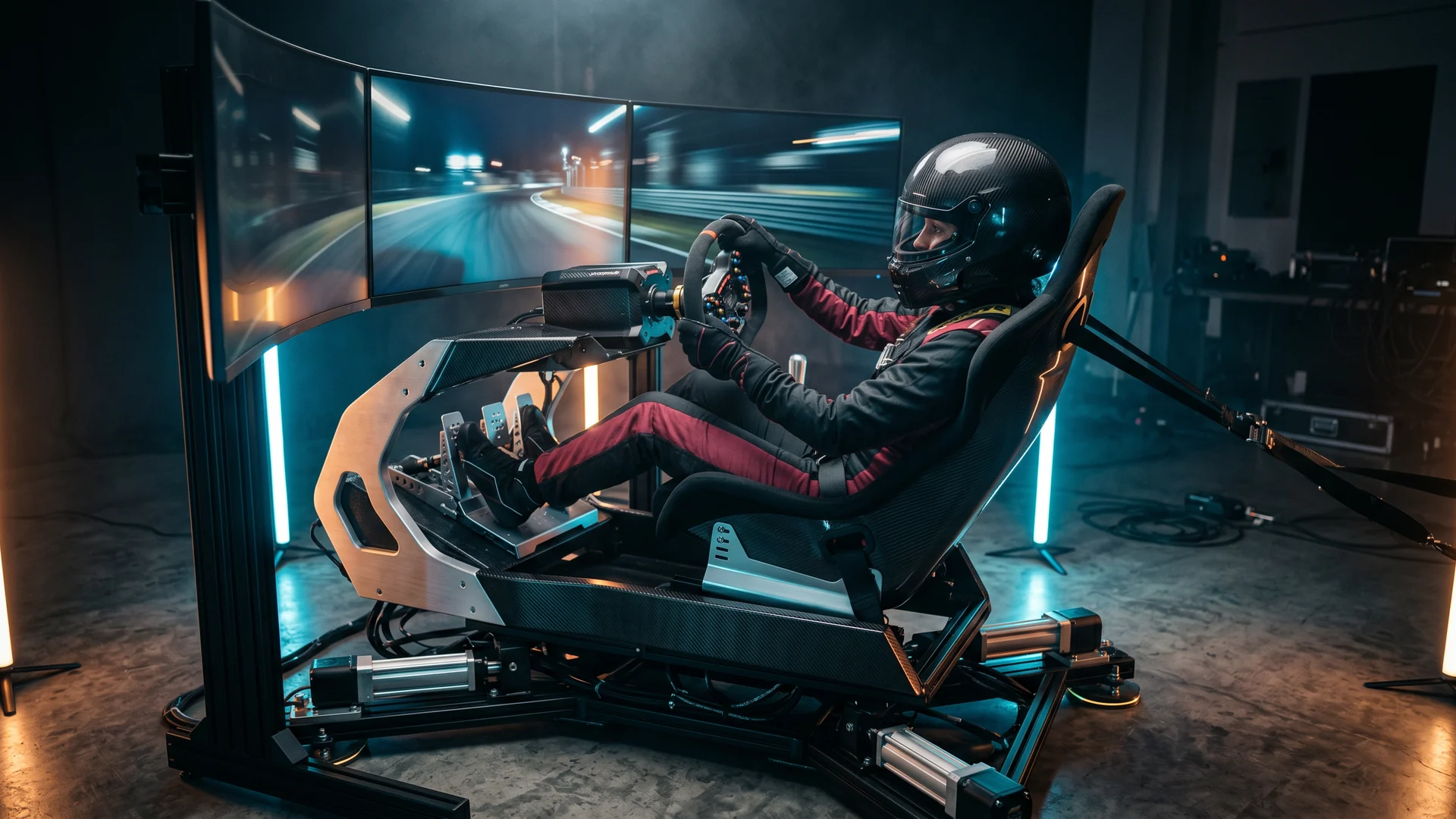
A robust racing cockpit, or “rig,” provides a stable platform for your wheel, pedals, and monitor setup. It should be adjustable to accommodate your body and allow for prolonged comfortable use. Some rigs even incorporate motion platforms for an added layer of immersion and realism.
The Computer: Powering the Simulation
Running a demanding simulation with complex physics and graphics requires a powerful PC. Smooth frame rates are essential for maintaining focus and reaction times, especially during long races where every visual cue matters.
Track and Car Selection: Strategic Choices
The choice of simulation platform and the specific car can also be a strategic decision. Some simulations are renowned for their tire models, while others excel in physics. Similarly, certain cars might be inherently better suited to endurance racing due to their fuel efficiency or tire wear characteristics.
VR vs. Triple Monitors: Immersion vs. Field of View
Virtual reality (VR) headsets offer unparalleled immersion, placing the driver directly into the cockpit. However, some drivers find the visual strain taxing over long periods. Triple monitor setups provide a wider field of view, which can be beneficial for situational awareness, but may not offer the same level of immersion. The choice often comes down to personal preference and what allows for the most comfortable and focused driving experience.
Peripheral Devices: Beyond the Basics
This can include button boxes for quick access to functions, external displays for telemetry data, or even specialized shifters. While not always essential, these can streamline operations during intense race periods.
Beyond the Finish Line: The Future of Endurance Esports
Endurance racing esports is still a relatively young discipline, and its potential for growth is immense. As technology continues to evolve and more real-world motorsport entities get involved, we can expect even more exciting and challenging events in the future.
Increased Realism and Immersion
As simulation technology advances, we’ll see even more accurate tire models, weather systems, and car physics. This will push the boundaries of what’s possible and create even more compelling challenges for drivers. The integration of AI might also play a more significant role in testing strategies and providing realistic competition.
Expansion of Real-World Motorsport Involvement
More motorsport teams and manufacturers are recognizing the value of endurance esports for driver training, brand exposure, and engaging with a new generation of fans. We can expect to see more official partnerships and even dedicated esports divisions within established racing organizations.
New Event Formats and Disciplines
Beyond the traditional 24-hour races, we might see the emergence of entirely new endurance formats, perhaps incorporating different types of vehicles or unique in-race challenges. The concept of endurance could also be applied to other motorsport disciplines within esports.
Accessibility and Community Growth
As the popularity of endurance esports grows, efforts will likely be made to make it more accessible to a wider audience, both as participants and viewers. This could involve more affordable hardware options, streamlined onboarding processes, and more engaging broadcasting for spectators.
The Role of Analytics and Data
The vast amount of data generated by these simulations will continue to be a crucial tool for driver development and team strategy. Sophisticated analytics will help to identify performance gains, optimize setups, and refine driving techniques, blurring the lines between virtual and real-world data analysis.
Cross-Platform Competition
While currently largely siloed within specific simulation platforms, the future might hold opportunities for cross-platform endurance events, fostering broader competition and bringing together drivers from different sim racing communities. This would require significant technical collaboration but could unlock a massive competitive landscape.
FAQs
What is endurance racing esports?
Endurance racing esports is a form of virtual racing that simulates long-distance endurance races, such as the 24 Hours of Le Mans or the 12 Hours of Sebring, using racing simulation games.How does endurance racing esports work?
Endurance racing esports typically involves teams of drivers competing in virtual endurance races that can last for several hours or even days. The races are held on racing simulation platforms and often feature realistic weather and day-night cycles.What are the key skills needed for endurance racing esports?
Key skills needed for endurance racing esports include strategic planning, teamwork, consistency in driving, fuel and tire management, and the ability to adapt to changing track conditions.What are some popular racing simulation games used in endurance racing esports?
Popular racing simulation games used in endurance racing esports include iRacing, Assetto Corsa Competizione, rFactor 2, and Project CARS 2, among others.Are there professional leagues and events for endurance racing esports?
Yes, there are professional leagues and events for endurance racing esports, such as the Virtual Endurance Championship (VEC) and the iRacing 24 Hours of Le Mans. These events often attract professional racing teams and drivers from around the world.More from Esports & Competitions

Sim Racing Communities and Leagues
Explore sim racing communities and leagues for 2026: r/SimRacing, RaceDepartment, LowFuelMotorsport, endurance teams, league finders, and Nurburgring …

The Rise of Sim Racing Esports
Sim racing esports has absolutely blown up. What started as a niche hobby for gearheads and gamers has rapidly evolved into a legitimate competitive s…
Sim Racing Championship: The Ultimate Virtual Racing Showdown
So, you’re curious about “Sim Racing Championship: The Ultimate Virtual Racing Showdown”? Basically, it’s a big deal in the world of…