The Latest Sim Racing Trends: What’s Shaping the Virtual Track
You’re probably wondering what’s new and exciting in the world of sim racing. The short answer is: a whole lot! It’s a fast-moving hobby, and what was cutting-edg…

You’re probably wondering what’s new and exciting in the world of sim racing. The short answer is: a whole lot! It’s a fast-moving hobby, and what was cutting-edge last year might feel a bit dated now. We’re seeing advancements in how realistic the cars feel, how immersive the experience is, and even how people connect with each other. Let’s dive into some of the key trends that are really shaping what it means to race virtually these days.
Sim racing has always aimed for realism, but the goalposts keep shifting. It’s not just about making the cars look good anymore; it’s about making them feel like they’re actually there. This push for authenticity is driven by a few key areas.
Tire Model Evolution
This is arguably the biggest driver of realism right now. The way tires behave is fundamental to how a car drives, and sim developers are spending a huge amount of effort on this.
Sophisticated Physics Engines
Newer tire models go beyond simple friction coefficients. They try to simulate things like tire carcass deformation, temperature variations across the tire surface, and how wear affects grip. This means you can feel the difference when your tires get hot and greasy, or when you’re pushing them too hard and they start to degrade. It’s a subtle, but incredibly important, layer of depth that makes controlling a car much more nuanced. You’re not just turning a wheel; you’re managing a complex interaction between rubber and asphalt.
Dynamic Surface Interaction
Think about how different track surfaces feel. Gravel is loose, grass is slippery, and even asphalt can vary in grip depending on the weather or if debris has been left on the racing line. Modern sim tires are getting better at simulating these dynamic interactions. You’ll feel the car slide differently on a damp patch or when you run over a bit of kerb that’s slightly off the intended line. This adds a level of unpredictability and requires a more adaptive driving style, mirroring real-world racing where drivers constantly react to changing track conditions.
Force Feedback Refinements
Force feedback (FFB) is your primary sensory connection to the car. It’s how you “feel” what the tires are doing, the forces acting on the chassis, and even the road surface.
High-Fidelity Wheels and Direct Drive Segments
We’re seeing a significant leap in direct drive wheels. These bypass the gears and belts found in older wheel bases, directly attaching the motor to the steering wheel. This results in incredibly precise and nuanced FFB effects. You can feel subtle vibrations, the slight resistance as a tire starts to lose grip, or the jolt of hitting a kerb with astonishing clarity. This level of detail allows for much finer control and a deeper sense of connection to the virtual vehicle. It’s not just a rumble; it’s a detailed conversation between you and the car.
Advanced FFB Software and Tuning
It’s not just about the hardware; the software that translates the car’s physics into FFB signals is also getting smarter. Developers are creating more sophisticated algorithms that can accurately represent a wide range of forces. On the user end, there’s also more flexibility in tuning FFB settings to personal preference, allowing drivers to dial in the exact feel they desire. This means you can tailor the feedback to better understand tire slip, track texture, or suspension load, making it easier to drive faster and more consistently. It’s about finding that perfect balance that helps you communicate with your virtual machine.
The Rise of Virtual Cockpits and Immersive Setups
While realistic physics are crucial, the way you experience the sim is equally important. The focus is shifting towards creating a fully enveloping, almost out-of-body experience.
Virtual Reality (VR) Integration
VR is no longer a niche curiosity; it’s becoming a mainstream way to experience sim racing for many.
Unparalleled Immersion
Putting on a VR headset completely changes the game. You’re no longer looking at a monitor; you’re in the car. The sense of scale, depth perception, and spatial awareness is vastly improved. Seeing the dashboard, the steering wheel, and the outside world from within the cockpit is incredibly compelling. You can physically turn your head to check mirrors or look through corners, which is a more natural and intuitive way to race than relying solely on button presses or joystick movements. This level of immersion can significantly boost lap times as you can better judge braking points, apexes, and distances.
Accessibility and Performance
While VR has historically been demanding on hardware, advancements in both headsets and graphics cards are making it more accessible. The improved visual cues also mean you can often get away with less reliance on on-screen information, which can sometimes clutter the drivers’ view in traditional setups. The key is finding that sweet spot where the visuals are smooth enough to avoid motion sickness while providing enough detail to be useful.
Motion Platforms and Haptic Feedback
Taking immersion a step further, motion platforms and advanced haptics are creating a truly multi-sensory simulation.
Simulating G-Forces and Track Imperfections
Motion platforms move your entire rig to simulate acceleration, braking, cornering G-forces, and even the bumps and undulations of the track surface. This adds a physical dimension that’s incredibly hard to replicate through visual or audio cues alone. Feeling the car heave as you accelerate or pitch as you brake adds a visceral layer of feedback that can significantly improve your car control and reduce reliance on visual cues. Imagine feeling the subtle shift of weight as you transition from braking to turning; it’s a game-changer for precise inputs.
Integrated Haptic Systems
Beyond motion, integrated haptic systems are becoming more common. These can be in seats, floor panels, or even integrated into steering wheels, providing localized feedback for specific events. A sharp jolt when you hit a kerb, a subtle vibration through the seat as the tires lose traction, or a pulse through the steering wheel when the engine hits its limiter. These small, but significant, sensory inputs contribute to a more complete and believable racing experience. They’re not just fancy add-ons; they’re extensions of the car’s communication system.
The Evolution of Competition and Community
Sim racing isn’t just about driving alone in your room; it’s about racing against others and being part of a vibrant community. These aspects are evolving rapidly.
Structured Esports and Organized Leagues
The competitive scene is booming, with more organized leagues, championships, and even professional esports teams dedicated to sim racing.
Professional Leagues and Broadcasts
Major sim racing titles now have dedicated esports leagues with significant prize pools and professional broadcasting. This elevates the stakes and attracts top talent. Watching these events is almost as engaging as playing, and it showcases the peak of sim racing skill. The production values are often on par with traditional motorsports, making it an exciting spectator sport.
Accessible League Racing for All Skill Levels
Beyond the professional realm, there are countless organized leagues catering to all skill levels. From beginner-friendly series to highly competitive championships, there’s a place for everyone. These leagues provide structured competition, often with regular race schedules, stewards, and a sense of community. It’s a great way to improve your skills in a more structured environment than jumping into random races online. These leagues often foster a sense of camaraderie and friendly rivalry, making the racing experience more rewarding.
Social Integration and Online Interaction
Connecting with other sim racers is easier and more engaging than ever.
Voice Communication Tools and In-Game Chat
Seamless voice communication is crucial for team racing and even just for general banter with fellow competitors. Modern sim racing platforms and associated voice chat applications (like Discord) make this incredibly easy and effective, allowing for real-time strategic discussions or simply a quick chat between laps. This fosters a stronger sense of community and allows for more dynamic team play, especially in endurance races.
Community-Driven Content and Modding
The passion of the sim racing community is a driving force behind its growth. Enthusiasts are constantly creating new cars, tracks, and modifications for existing sims.
Custom Liveries and Car Setups
The ability to customize your car’s appearance with custom liveries is a huge part of personalization. Beyond looks, the sharing of car setups is a vital aspect of competitive sim racing. Skilled drivers often share their meticulously crafted setups, allowing others to learn from their expertise or to find a starting point for their own tuning journey. This collaborative spirit accelerates learning and competition.
Community-Created Tracks and Cars
While official content from developers is important, the passion of the community shines through with custom-made tracks and cars. These can range from iconic real-world circuits that aren’t officially licensed to entirely fictional creations. This constant influx of new content keeps sims fresh and provides endless variety for racers, often breathing new life into older titles or offering experiences that developers might not pursue.
The Democratization of High-End Hardware
Getting into sim racing used to require a significant financial investment to get a passable experience. That’s changing, making high-quality sim racing more accessible.
More Affordable Direct Drive Wheels
As mentioned earlier, direct drive wheels are becoming the gold standard for realism. While the absolute top-tier units are still expensive, we’re seeing more and more entry-level and mid-range direct drive options becoming available.
Bridging the Gap from Belt/Gear Driven to Direct Drive
This is a massive win for sim racers. It means that the incredible precision and detail of direct drive technology are no longer exclusive to the wealthiest enthusiasts. Manufacturers are finding ways to offer compelling direct drive performance at price points that are becoming increasingly competitive with high-end belt or gear-driven wheels from yesteryear. This allows more people to experience the true feel of a Formula 1 car or a GT3 machine without breaking the bank.
Improved Value Proposition
The increased competition in the direct drive market is driving innovation and improving the value proposition. You’re getting more performance and features for your money than ever before. This trend is a significant factor in the overall growth of sim racing, as it lowers the barrier to entry for dedicated enthusiasts.
Accessible VR Headsets
The cost of VR hardware has also been steadily decreasing, while performance has been increasing.
Higher Resolution and Wider Field of View
Newer VR headsets offer higher resolutions, meaning less screen-door effect (where you can see the individual pixels) and a sharper image. They also often have wider fields of view, which further enhances immersion and situational awareness. The integration of features like eye-tracking is also becoming more common, which can help with performance optimization and even FFB.
Improved Comfort and Ease of Use
Manufacturers are also focusing on making VR headsets more comfortable for extended use, with better weight distribution and padding. Setup is generally becoming more streamlined as well, meaning less fiddling with sensors and cables. This makes jumping into a VR sim racing session a more seamless experience.
The Integration of Real-World Motorsport
The lines between virtual and real racing are blurring, with benefits flowing in both directions.
Talent Scouting and Driver Development
Sim racing is increasingly being used as a tool for identifying and developing real-world racing talent.
Sim Racing as a Pathway to the Track
Many race drivers, from aspiring juniors to established professionals, now spend significant time practicing and honing their skills on simulators. For some, it’s a crucial step in their career progression, offering a cost-effective way to gain experience and test different racing lines and strategies. It allows for an immense amount of track time and experimentation that would be prohibitively expensive in a real car.
Data Analysis and Performance Training
The data generated by sim racing is incredibly detailed, allowing drivers and engineers to analyze performance in ways that can be directly applied to real-world racing. This data can inform car setups, driving techniques, and even race strategy. It’s like having an infinite test track with perfect repeatability.
Simulation for Car Development and Testing
Virtual environments are becoming invaluable for the development and testing of actual race cars.
Virtual Wind Tunnels and Aerodynamic Testing
Automakers and race teams are using sophisticated simulation software to perform virtual wind tunnel tests and aerodynamic simulations. This allows them to iterate on designs much faster and more cost-effectively than relying solely on physical prototypes. The ability to test variations of a wing or an aerodynamic element in a controlled virtual environment accelerates the entire design process.
Virtual Track Testing and Setup Validation
Before a car ever turns a wheel on a real track, it can undergo extensive virtual testing. Engineers can simulate how a car will perform on specific circuits, validate setup changes, and even identify potential issues before committing to physical track days. This can save significant amounts of time and money in the development cycle. It’s a way to de-risk and optimize the real-world performance before ever leaving the lab.
The Future is Dynamic and Accessible
Looking ahead, the trends we’re seeing suggest a future where sim racing is more realistic, more immersive, and more accessible than ever before. The advancements in physics, hardware, and community integration are creating a compelling experience that bridges the gap between virtual and real motorsport. Whether you’re a seasoned sim racer or just curious about jumping in, now is a fantastic time to explore the world of virtual racing. The constant innovation means there’s always something new to discover, a better way to feel the track, and a faster way to compete.
FAQs
What is sim racing?
Sim racing, short for simulated racing, is a genre of video games that aims to accurately simulate real-world racing events and vehicles. Players use specialized racing wheels, pedals, and sometimes even virtual reality headsets to create a realistic racing experience.What are some popular sim racing trends?
Some popular sim racing trends include the rise of esports competitions, the use of virtual reality technology for a more immersive experience, and the development of more realistic physics and graphics in sim racing games.How has sim racing evolved over the years?
Sim racing has evolved from simple, arcade-style racing games to highly realistic simulations that accurately replicate real-world racing conditions. The rise of online multiplayer and esports has also contributed to the evolution of sim racing.What are some key components of a sim racing setup?
A typical sim racing setup includes a racing wheel, pedals, and a gaming PC or console. Many players also use virtual reality headsets for a more immersive experience, as well as specialized racing seats and frames for added realism.What are some popular sim racing games?
Some popular sim racing games include titles like iRacing, Assetto Corsa, Project CARS, and rFactor. These games are known for their realistic physics, accurate vehicle models, and extensive online multiplayer features.More from News
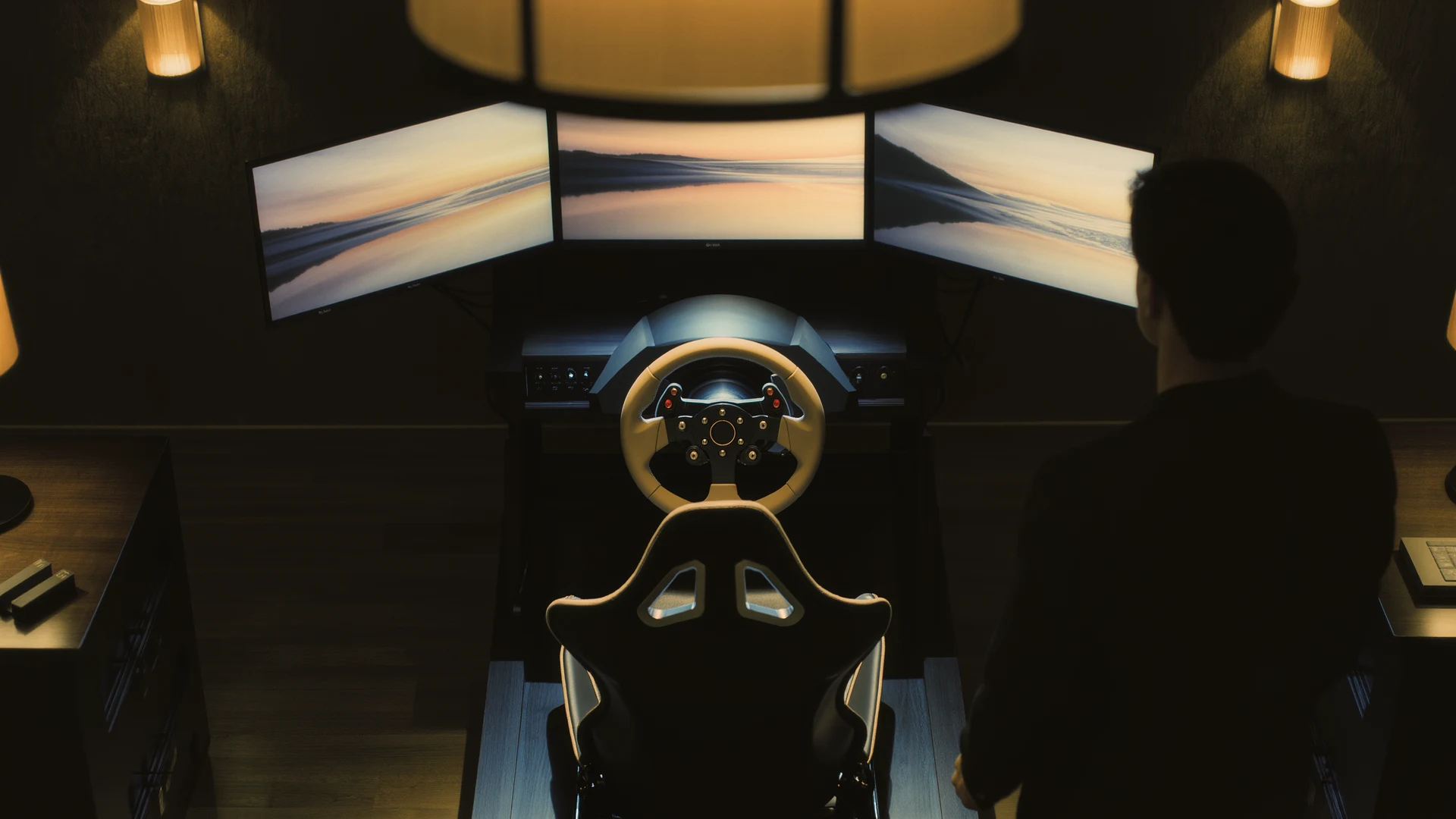
Future of Sim Racing
The future of sim racing: how AI tire models, mixed reality, cloud streaming, cheaper direct-drive hardware and the sim-to-real pipeline reshape motor…
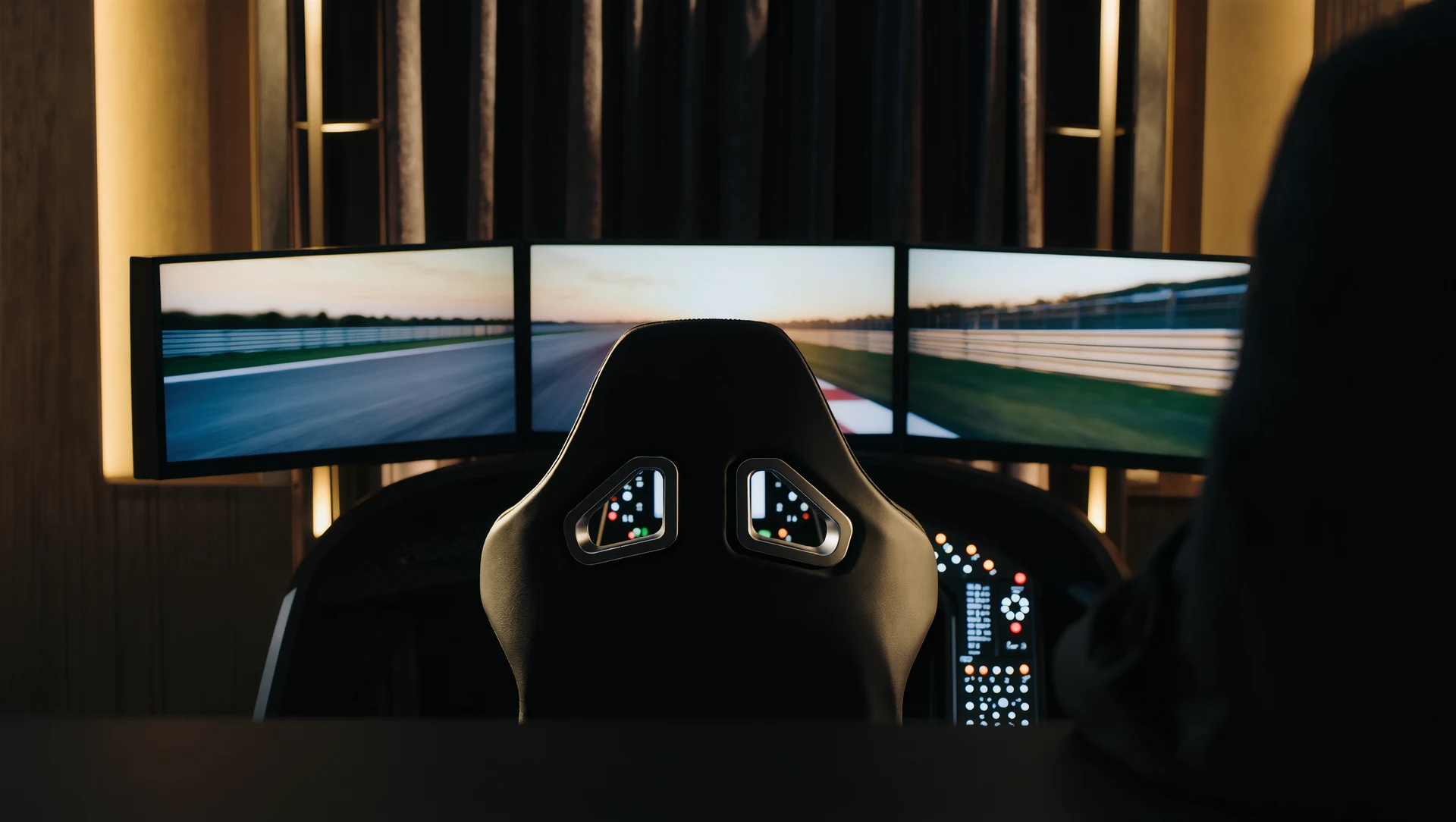
Revving Up: Motorsport Gaming News
Looking for the latest in motorsport gaming? You’ve come to the right place. This article will cut through the noise and get straight to what…

Racing Esports Revs Up with Exciting News
Racing esports is definitely picking up speed, with a lot of exciting news coming out of the circuit lately. We’re seeing bigger prize pools, mo…