Mastering the Art of Sim Racing: A Guide for Enthusiasts
Sim racing isn’t just a game; it’s a deep dive into an engaging hobby that combines technical skill, strategic thinking, and a passion for motorsports. Whether you…
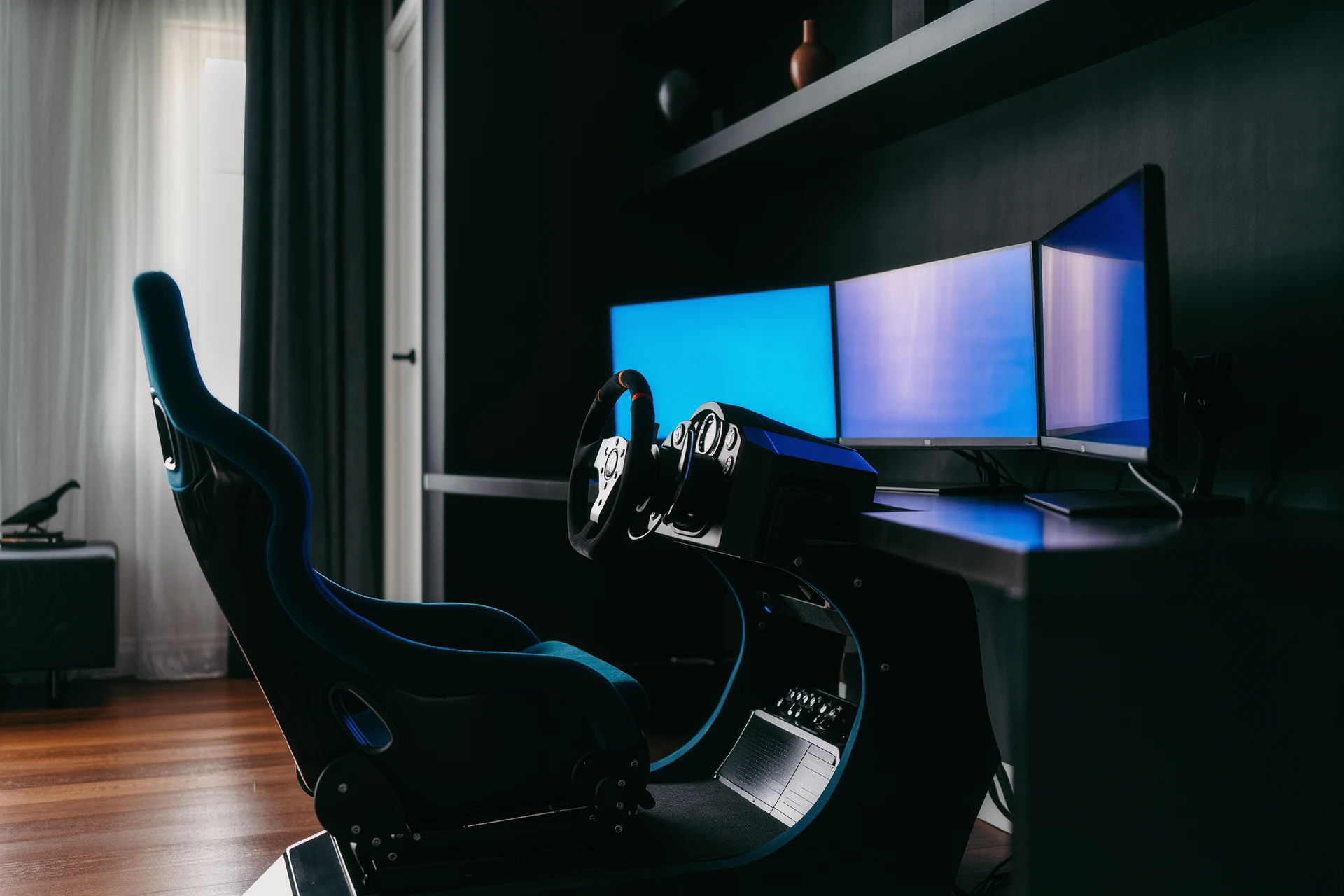
Sim racing isn’t just a game; it’s a deep dive into an engaging hobby that combines technical skill, strategic thinking, and a passion for motorsports. Whether you’re a seasoned racer looking to shave off those last tenths or a newcomer eager to get started, the core of mastering sim racing lies in understanding the fundamentals, investing wisely, and continuously refining your approach. It’s about more than just hitting the accelerator, it’s about control, consistency, and a persistent drive to improve.
Starting your sim racing journey doesn’t require a second mortgage, but some fundamental hardware will make a world of difference. Think of it as investing in your potential, rather than simply buying toys.
The Foundation: PC or Console?
Ultimately, this choice boils down to your existing setup and budget.
- PCs: Generally offer the most flexibility, a wider range of simulators, better graphics options, and access to more peripherals. They require a bit more technical know-how to set up and optimize, but the payoff in depth and customization is significant.
- Consoles (PlayStation, Xbox): Are often a more budget-friendly entry point and are plug-and-play friendly. While their peripheral ecosystem is more limited, titles like Gran Turismo and Forza offer fantastic racing experiences. Many modern console sims are also catching up in terms of physics and realism.
The Core: Wheel and Pedals
This is where the magic happens. A good force feedback (FFB) wheel and sturdy pedals are non-negotiable for a truly immersive experience.
- Entry-Level (Under $200-$300): Brands like Logitech (G29/G920/G923) and Thrustmaster (T150/TMX) offer excellent starting points. These typically use gear-driven FFB, which can feel a bit notchy but provides crucial feedback. Their pedals are usually two-pedal sets, often with a potentiometers for braking.
- Mid-Range ($300-$700): Moving up, you’ll find hybrid gear/belt-driven or purely belt-driven wheels (e.g. Thrustmaster T300RS/TX, Fanatec CSL Elite). These offer smoother, more detailed FFB and often come with improved pedal sets, sometimes including a load cell brake. A load cell brake is a game-changer for consistency, as it measures pressure rather than distance, mimicking real-world braking better.
- High-End ($700+): This category enters direct-drive territory (e.g. Fanatec Podium/CSL DD, Simucube, AccuForce). Direct drive wheels connect the motor directly to the wheel, providing incredibly detailed, strong, and immediate force feedback, pure realism. These usually require a dedicated sim rig and come with advanced load cell pedal sets.
Display: Immersion Matters
What you see significantly impacts your ability to race effectively.
- Single Monitor: A good starting point. A fast refresh rate (120Hz+) and low response time (1ms) are more important than 4K resolution at this stage. A larger monitor (27-34 inches) is beneficial for field of view.
- Ultrawide Monitor: Offers a wider field of view without the bezels of a triple setup. Can be a great compromise between a single and triple screen.
- Triple Monitors: The gold standard for peripheral vision and immersion. This setup truly wraps the track around you, making it easier to judge apexes and anticipate other cars. Requires significant GPU power and careful calibration.
- Virtual Reality (VR): Unmatched immersion, putting you directly in the cockpit. However, it can be demanding on hardware, uncomfortable for long sessions for some, and tracking issues can occasionally arise. The visual clarity and field of view vary greatly between headsets.
Peripherals: Enhancing Control
While not strictly necessary to start, these can improve the experience.
- Shifter: An H-pattern or sequential shifter adds realism, especially for older cars or specific racing series.
- Handbrake: Essential for rally, drift, or certain dirt oval disciplines.
- Button Boxes: Customizable panels for quickly accessing functions like pit requests, brake bias adjustments, or traction control.
- Sim Rig/Cockpit: A sturdy frame that mounts your wheel, pedals, and often a seat. This eliminates flexing and provides a consistent, ergonomic racing position, preventing fatigue and improving consistency.
Fundamental Racing Techniques
Once you have your gear, it’s time to learn how to drive it. Sim racing is about precision and consistency, not just raw speed.
The Racing Line: Cornering Mastery
Understanding and executing the optimal racing line is foundational.
- Outside-Inside-Outside (OIO): The classic approach. Start wide (outside), turn in towards the apex (inside), and exit wide (outside) to maximize corner radius and maintain momentum.
- Apex Placement: The geometric apex (the tightest point of the corner) isn’t always the fastest. Sometimes an earlier or later apex is better for maximizing exit speed onto a long straight. This is where track knowledge comes in.
- Smoothness over Aggression: Choppy steering and sudden braking waste momentum and unsettle the car. Aim for smooth, flowing inputs.
Braking and Throttle Control: The Nuances
These are often the biggest differentiators between fast and slow drivers.
- Trail Braking: Gradually releasing brake pressure as you turn into a corner. This helps transfer weight to the front wheels, improving turn-in, and allows you to carry more speed through the corner. It’s a difficult technique to master but incredibly effective.
- Throttle Application: Don’t just hammer the throttle. Squeeze it on progressively as you unwind the steering. Too much throttle too early leads to wheelspin and a slow, wide exit.
- Threshold Braking: Applying maximum brake pressure without locking the wheels. Modulating brake pressure just at the point of lock-up maximizes deceleration. ABS in sim racing, if available, can assist here, but often a well-tuned car and skillful driver can brake just as effectively (or better) without it.
Weight Transfer: The Invisible Force
Understanding how weight moves around the car is crucial for vehicle control.
- Braking: Weight shifts to the front, increasing front tire grip but reducing rear grip. This can cause oversteer (rear slides out) if braking too hard while turning.
- Acceleration: Weight shifts to the rear, increasing rear tire grip (good for traction) but reducing front grip (can cause understeer if accelerating too hard out of a corner).
- Turning: Weight shifts to the outside tires, increasing their grip. The inside tires become lighter.
- Utilizing Weight Transfer: Experienced drivers use braking and throttle to intentionally shift weight and influence the car’s behavior, for instance, trail braking to encourage rotation, or carefully applying throttle to settle the rear.
Optimizing Your Setup: Beyond the Default
Most sims offer extensive customization options for your car’s setup. While default setups are a good starting point, adjusting them can unlock significant performance.
Understanding Car Settings
Don’t be intimidated by the myriad of sliders and numbers. Focus on a few key areas first.
- Aerodynamics (Aero): Deals with downforce and drag.
- Higher Downforce: More grip in corners, but more drag on straights (lower top speed). Good for technical tracks.
- Lower Downforce: Less grip in corners, but higher top speed on straights. Good for tracks with long straights.
- Suspension: Controls how the car reacts to bumps and weight transfer.
- Springs: Stiffer springs reduce body roll and improve responsiveness but can make the car twitchy over bumps. Softer springs offer more compliance but less direct feedback.
- Dampers (Shocks): Control the rate at which suspension components move. Adjusting bump (compression) and rebound (extension) can fine-tune how the car settles and reacts to various inputs.
- Anti-Roll Bars (ARBs): Connect the left and right suspension. Stiffer ARBs reduce body roll but can affect independent wheel movement and increase weight transfer across the axle.
- Tires: Crucial for grip and handling.
- Pressures: Affect grip, tire wear, and temperature. Higher pressures generally mean a smaller contact patch and less grip but can reduce rolling resistance. Too low, and the tire may overheat or deform excessively.
- Camber: The vertical angle of the wheel relative to the road. Negative camber (top of the wheel tilts inwards) can increase grip during cornering by ensuring more of the tire is in contact with the road.
- Toe: The horizontal angle of the wheel relative to the car’s centerline. Toe-in (front of wheels point inward) helps with stability. Toe-out (front of wheels point outward) aids turn-in but can reduce stability.
- Brakes:
- Brake Bias: Determines how much braking force goes to the front vs. rear wheels. Too much front bias leads to understeer on entry; too much rear bias causes instability and lock-ups.
- Brake Pressure: Affects the overall strength of the brakes. Higher pressure means more stopping power but increases the risk of lock-ups.
Iterative Testing
Don’t change everything at once. Make small adjustments, test, and note the changes.
- One Change at a Time: This is critical. If you change multiple settings, you won’t know which adjustment had the desired (or undesired) effect.
- Focus on Problem Areas: Is the car understeering? Adjust aero or suspension to promote rotation. Oversteering? Look at rear aero, spring stiffness, or anti-roll bars.
- Telemetry: Most advanced sims offer telemetry data. Learn to interpret tire temperatures, slip angles, and suspension travel to diagnose handling issues scientifically.
Practice Makes Progress: The Road to Consistency
Raw talent helps, but consistent practice is what makes a master.
Structured Practice Sessions
Don’t just hotlap aimlessly. Have a goal for each session.
- Lap Time Focus: Dedicate sessions to simply pushing for the fastest lap, identifying braking points and turn-in markers.
- Consistency Focus: Once you have a respectable pace, focus on doing 5-10 clean, mistake-free laps within a very narrow time window. This builds race pace.
- Specific Section Practice: If a particular corner is giving you trouble, practice it intensely for 15-20 minutes, trying different lines or braking points.
- Race Simulations: Practice full race distances, including pit stops if applicable, to understand fuel consumption, tire wear, and race strategy.
Analyzing Your Driving
The best way to improve is to understand why you’re losing time.
- Ghost Car: Race against your fastest lap to instantly see where you’re gaining or losing time.
- Replays: Watch your replays from different camera angles. Look at your inputs (steering, throttle, brake overlays are crucial in many sims). Compare your line to faster drivers.
- Telemetry Data (Again!): Dive deep into the data. Are you carrying enough speed into the apex? Are your tires overheating? Are you trail braking effectively? What are your slip angles doing?
- Onboard Videos: Watch professional sim racers or real-world drivers’ onboard videos for the same track and car. Pay attention to their braking markers, turn-in points, and throttle application.
The Mental Game: Focus and Patience
Sim racing can be frustrating, especially when you’re stuck on a plateau.
- Stay Calm: Don’t let frustration lead to erratic inputs or giving up. Take a short break if needed.
- Be Patient: Improvement isn’t always linear. There will be good days and bad days. Stick with it.
- Focus on the Process: Don’t just chase lap times. Focus on executing each corner perfectly. The lap time will follow.
Joining the Community: Learning from Others
Sim racing is a social hobby, and engaging with the community turbocharges learning.
Leagues and Online Racing
This is where your practice pays off in exciting, competitive environments.
- Find Your Niche: From casual pick-up races to highly competitive esports leagues, there’s a community for every skill level and preference.
- Clean Racing is Key: Respect other drivers. Learn racecraft like holding your line, anticipating overtakes, and avoiding dive bombs.
- Learn from Mistakes: Race incidents happen. Watch the replay, understand what went wrong, and learn how to avoid it next time. Don’t be afraid to take responsibility.
Forums and Discord Servers
These are treasure troves of information and support.
- Car Setups: Find base setups shared by others, and ask for advice on tuning.
- Driving Tips: Get specific feedback on your driving from experienced racers.
- Troubleshooting: Get help with technical issues or game settings.
- Friendships: Connect with like-minded individuals and find regular racing partners.
Streaming and YouTube
A fantastic resource for visual learners.
- Tutorials: Many sim racers create in-depth tutorials on tracks, cars, and specific techniques.
- Onboard Footage: Watch fast drivers’ full laps to analyze their lines and inputs.
- Setup Guides: Some streamers will walk through their setup philosophies and explain their decisions.
Mastering sim racing is a journey, not a destination. It’s about continuously learning, adapting, and refining your skills. It requires dedication, a willingness to analyze your performance honestly, and the patience to push through plateaus. But the reward, the pure satisfaction of a perfectly executed lap, a hard-fought victory, or simply the feeling of becoming one with the car, is what keeps enthusiasts coming back for more. Dive in, get your hands on the wheel, and enjoy the ride.
FAQs
What is sim racing?
Sim racing, short for simulated racing, is a form of racing where participants use simulated racing software to compete in virtual races. This can be done on a variety of platforms, including PC, gaming consoles, and virtual reality systems.Who is the audience for sim racing?
The audience for sim racing is diverse and includes both casual gamers and dedicated racing enthusiasts. Many sim racing fans are also fans of real-life motorsports, and are drawn to the realistic simulation and competitive nature of sim racing.What are the demographics of the sim racing audience?
The sim racing audience is predominantly male, with a significant portion of the audience falling within the 18-34 age range. However, there is also a growing number of female and older participants joining the sim racing community.How has the sim racing audience grown in recent years?
The sim racing audience has experienced significant growth in recent years, fueled by advancements in technology, the popularity of esports, and the accessibility of sim racing software and hardware. This has led to an increase in both participation and viewership of sim racing events.What are some key factors that attract people to sim racing?
Some key factors that attract people to sim racing include the realistic simulation of driving experiences, the ability to compete against others in a virtual environment, the accessibility of sim racing software and hardware, and the opportunity to engage with a passionate and supportive community of fellow racing enthusiasts.More from Business & Sponsorship

Rev Up Your Marketing with Racing Simulator Excitement
Let’s talk about turbocharging your marketing efforts, and I’m not just talking about putting a fancy sticker on your website. Imagine tap…

Revving Up: Racing Esports Marketing Accelerates
Racing esports, a world where virtual tires hit digital tracks, is absolutely accelerating its marketing efforts. It’s no longer just about pass…

Experience the Thrill: Sim Racing – The Ultimate Virtual Racing Experience
So, you want to know what sim racing is all about? In a nutshell, sim racing is the closest you can get to real-life competitive motorsport without ac…