Maximize Performance with Sim Racing Training
Here’s the lowdown on getting faster in sim racing: it’s not just about spending hours in the seat. To truly maximize your performance, you need a structured approach, …
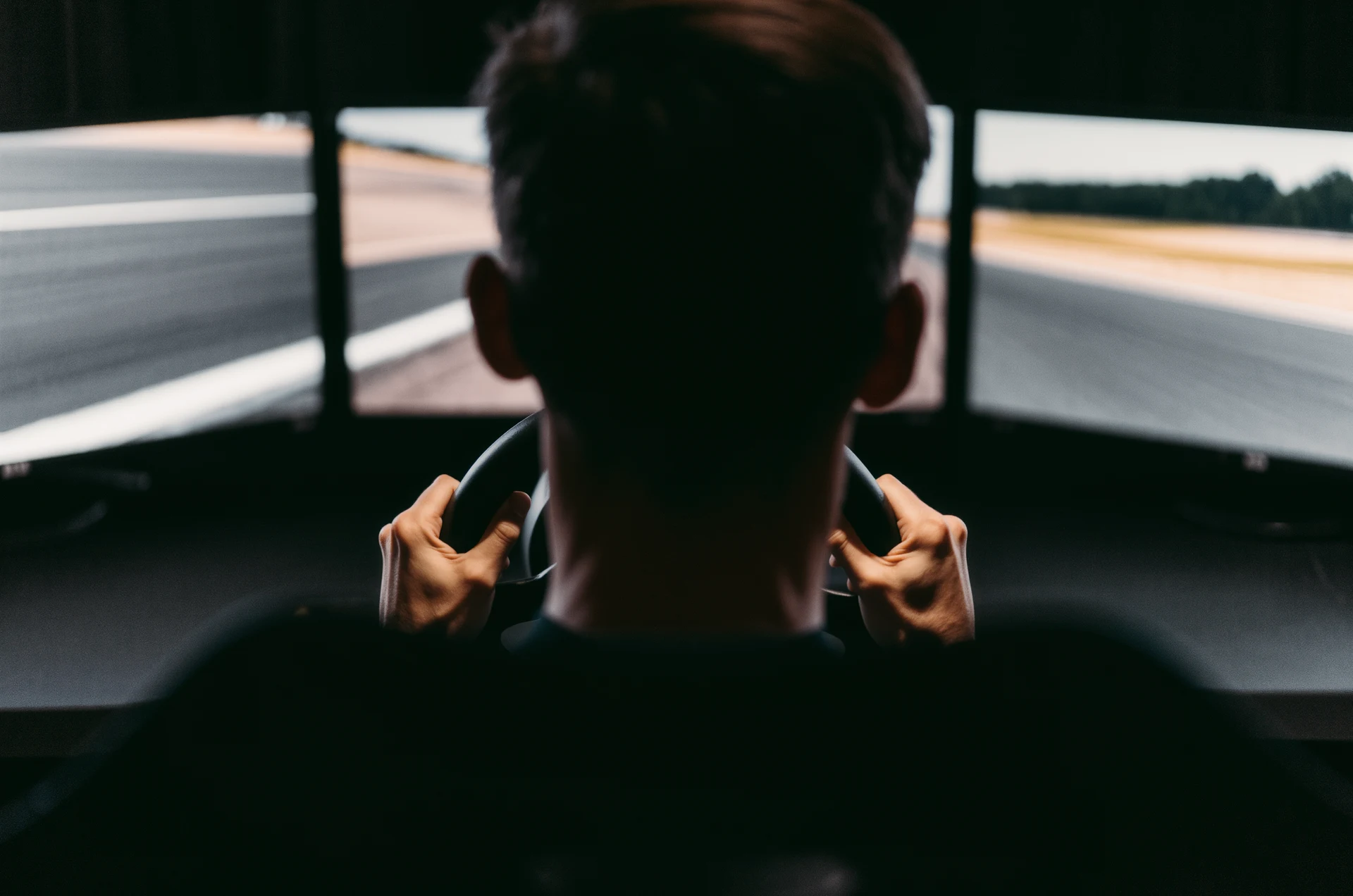
Here’s the lowdown on getting faster in sim racing: it’s not just about spending hours in the seat. To truly maximize your performance, you need a structured approach, almost like real-world motorsport. This means focusing on deliberate practice, analyzing your laps, understanding vehicle dynamics, and even looking at your own physical and mental state. Think of it as a comprehensive training program, not just casual gaming.
Why bother with dedicated training? Simply putting in track time, while helpful initially, quickly hits diminishing returns. You might get a feel for the car and track, but to shave those last few tenths, you need to be precise and intentional. Training helps you identify weaknesses, build good habits, and understand the intricate relationship between input and outcome. It shifts you from being a passenger in your own car to being an active, strategic driver.
The Problem with Unstructured Practice
Just driving lap after lap can lead to ingrained bad habits. If you’re consistently over-driving a corner or missing an apex without realizing it, repetition only reinforces those errors. You might feel like you’re making progress, but without objective feedback and analysis, you’re essentially practicing poor technique. This is where a structured approach steps in, turning aimless driving into purposeful development.
The Benefits of a Structured Approach
A structured training regimen brings several key advantages. Firstly, it allows for targeted improvement. Instead of vaguely trying to “get faster,” you’ll be working on specific areas, like improving trail braking or optimizing exit speed. Secondly, it provides a framework for tracking progress. By setting benchmarks and reviewing data, you can see concrete improvements, which is incredibly motivating. Finally, it fosters a deeper understanding of racing principles, transforming you from someone who just drives to someone who understands driving.
Data is Your Best Friend: Telemetry and Replays
This is where the magic happens. Ignoring telemetry data and replays is like trying to diagnose an engine problem without opening the hood. These tools provide objective, undeniable feedback on every single input you make and every action the car takes.
Deciphering Telemetry Data
Telemetry often looks intimidating at first glance, but it’s a goldmine of information. Most sims offer some form of telemetry overlay or export. Focus on a few key graphs initially:
Speed Trace Analysis
Comparing your speed trace against a faster ghost or your personal best is fundamental. Look for differences in braking points, minimum corner speed, and acceleration zones. Are you carrying less speed through that hairpin? Are you getting on the power later than your ideal lap? This instantly highlights areas where you’re losing time.
Brake and Throttle Input
These graphs show exactly when and how much you’re applying brake and throttle. Are you smooth with your feathering or are you stabbing at the pedals? Are you getting to 100% throttle as early as possible on corner exit? Are you trailing off the brakes effectively into the corner without locking up? Inconsistent inputs here are often a major time-killer.
Steering Angle and G-Forces
Steering angle tells you about your overall car control and balance. Excessive steering input often indicates a car that’s not settled or a driver who isn’t effectively managing weight transfer. G-force data, particularly lateral Gs, gives you insight into how much grip you’re generating in corners and how smoothly you’re transitioning between them. A jagged lateral G-trace suggests abrupt inputs and wasted grip.
Utilizing Replays for Visual Feedback
Telemetry is numbers, but replays are the visual confirmation. Watch your laps, and especially your fastest laps, from different angles.
Driver Input Overlay
Many simulators allow you to enable a driver input overlay on replays. This shows your steering, brake, and throttle inputs alongside the visual. Does your steering look frantic at the point where telemetry shows inconsistent G-forces? Are you seeing a premature throttle input visually that corresponds with a loss of traction?
Different Camera Angles
Watch from the cockpit, chase cam, and even orbital views. The cockpit view helps you align your braking points with track markers. The chase cam gives you a better sense of car attitude and how it’s reacting to your inputs. An orbital view can reveal lines that feel right from the cockpit but are actually inefficient.
Comparing to Fastest Laps/Ghosts
Overlaying a faster ghost car on your replay is incredibly effective. Where are they gaining time? Are they taking a tighter line, braking later, or carrying more speed through a specific section? Don’t just watch; actively analyze what they’re doing differently.
Mastering Core Driving Principles
Before you can fine-tune your setup or worry about advanced techniques, you need a solid foundation in the basics. These principles apply to all forms of motorsport, including sim racing.
The Racing Line
This seems obvious, but many drivers aren’t consistently hitting the optimal racing line. The racing line isn’t static; it changes based on the corner type and the car you’re driving.
Apex Identification
Understanding the difference between an early, late, and geometric apex is crucial. For most corners aiming for a late apex allows for a straighter, faster exit onto the next straight. Geometric apexes are rarer, often for very tight turns or specific scenarios.
Corner Entry, Mid, and Exit
Think of every corner in three distinct phases. Entry the point where you begin to brake and turn in. Mid-corner the point where you hit your minimum speed and apex. Exit the point where you unwind the wheel and apply full throttle. Optimizing each phase is critical for overall corner speed.
Braking Techniques
Braking isn’t just “slamming the pedal.” It’s an art form that significantly impacts lap time.
Threshold Braking
The goal is to apply maximum brake force just before locking the wheels. This is the point where your tires are generating the most longitudinal grip. Practice hitting this threshold consistently without flat-spotting tires or engaging ABS excessively.
Trail Braking
This is the technique of gradually releasing brake pressure as you turn into a corner. It helps transfer weight to the front of the car, increasing front-end grip, allowing for a sharper turn-in, and helping to rotate the car. It’s a delicate balance; too much trail braking can cause snap oversteer.
Throttle Application
Getting on the power effectively is just as important as good braking.
Smoothness and Progressive Application
Avoid mashing the throttle. Smooth, progressive application ensures maximum traction and prevents wheelspin, especially in powerful cars. You want to match the throttle application to the available grip as you unwind the steering.
Short Shifting for Grip
In some instances, particularly with high-horsepower cars and tricky exits, short shifting (shifting up to the next gear before redline) can be beneficial. It can sometimes help manage wheelspin and deliver power more effectively to the ground by reducing torque at the wheels.
Setting Up for Success: Car Adjustments
A significant part of maximizing performance comes from understanding how car adjustments affect handling. Even small tweaks can unlock significant lap time. Many sims offer extensive setup options, and learning to interpret their impact is a skill in itself.
Suspension Tuning
The suspension is the car’s primary connection to the track. Adjustments here dictate how the car reacts to bumps, turns, and braking.
Springs and Dampers
Spring stiffness affects how much the car rolls and pitches. Stiffer springs reduce body movement but can make the car twitchier over bumps. Dampers (shock absorbers) control the rate at which the springs compress and rebound. Correct damping is crucial for keeping the tires in contact with the road and managing weight transfer.
Anti-Roll Bars (Sway Bars)
Anti-roll bars connect the left and right sides of the suspension, reducing body roll during cornering. Stiffening the front anti-roll bar increases oversteer (or reduces understeer), while stiffening the rear increases understeer (or reduces oversteer). It’s a key tool for balancing the car.
Aerodynamics
If your car has aerodynamic adjustments, they’re typically front and rear wing settings.
Wing Angles
Higher wing angles generate more downforce, which means more grip through corners, but it also creates more drag, reducing top speed on straights. Finding the right balance for a given track is key. Low downforce tracks benefit from less wing, high downforce tracks (or those with long, fast corners) benefit from more.
Brake Balance
This adjustment dictates how much braking force is applied to the front versus the rear wheels. Moving the balance forward (more front brake) can help with turn-in but increases the risk of front lock-up. Moving it rearward provides more stability under braking and can help with rotation but increases the risk of rear lock-up. Most drivers prefer a slight forward bias.
Tire Management
Tires are the only things connecting your car to the track, so understanding them is paramount.
Pressures and Temperatures
Optimal tire pressure is critical for managing the contact patch. Too low, and the tire may overheat and become unstable. Too high, and the contact patch shrinks, reducing grip. Observing tire temperatures across the tread can help you fine-tune camber and pressure. Even heating across the tire indicates a good setup.
Camber and Toe
These alignment settings significantly affect grip. Camber is the vertical angle of the wheel; negative camber (top of the wheel tilted inward) improves cornering grip at the expense of braking efficiency. Toe is the horizontal angle; toe-out at the front generally aids turn-in, while toe-in improves stability. These are subtle but powerful adjustments.
The Human Element: Mindset and Physicality
Even in the virtual world, the driver is the most important component. Your mental and even physical state significantly impacts your performance.
Mental Fortitude and Focus
Sim racing, especially in competitive scenarios, demands intense focus and mental resilience.
Concentration and Flow State
Learning to shut out distractions and enter a “flow state” where you are completely immersed in the drive is crucial. This is where your reactions become instinctive, and you can anticipate situations better. Practice active concentration, focusing solely on the track ahead and your inputs.
Race Craft and Consistency
Beyond raw pace, consistency and good race craft (how you interact with other drivers, manage overtakes, and defend positions) are vital. Practice running long stints without making mistakes. Understand when to press and when to back off.
Managing Frustration and Developing Patience
We all get frustrated when we can’t hit a certain lap time or make a mistake. Learning to manage this frustration is key to continued improvement.
Taking Breaks
If you’re getting consistently slower or making repeated errors, step away from the sim. A short break to clear your head can make a huge difference. Come back refreshed and with a new perspective.
Segmenting Challenges
Don’t try to master an entire track at once. Break it down into sections. Focus on perfecting sector 1, then sector 2, and so on. This makes the task less daunting and allows for targeted practice.
Ergonomics and Physical Comfort
While it’s not a real race car, your physical setup and comfort still matter.
Proper Driving Position
Ensure your seat, pedals, and steering wheel are positioned correctly. You should be comfortable, able to reach all controls without stretching, and have good visibility. A strained driving position will lead to fatigue and poorer performance.
Hydration and Breaks
Just like any intense activity, sim racing can be physically demanding. Stay hydrated, and take regular breaks, especially during long practice sessions or races, to avoid fatigue and maintain sharp reflexes. Even in a comfortable sim rig, blood flow and muscle strain are factors.
By treating sim racing like a serious endeavor, applying a structured training regimen, and leveraging the powerful tools available, you’ll not only become measurably faster but also gain a much deeper appreciation for the art and science of racing. It’s an ongoing journey, but a rewarding one.
FAQs
What is sim racing training?
Sim racing training is the process of using simulation software and hardware to practice and improve driving skills for virtual racing. It involves using realistic racing simulators to replicate real-world racing scenarios and tracks.What equipment is needed for sim racing training?
To engage in sim racing training, you will need a computer or gaming console, a racing simulator software, a steering wheel and pedals, and a gaming chair. Some enthusiasts also invest in additional accessories such as virtual reality headsets and motion platforms for a more immersive experience.How does sim racing training benefit real-world racing skills?
Sim racing training allows drivers to practice and refine their racing techniques in a safe and controlled environment. It helps improve skills such as car control, racecraft, and track familiarity, which can directly translate to better performance on real racetracks.Are there professional sim racing training programs available?
Yes, there are professional sim racing training programs offered by racing schools and coaching services. These programs are designed to provide personalized coaching, data analysis, and simulated race experiences to help drivers improve their skills and performance.Can sim racing training be used for competitive esports racing?
Yes, sim racing training is widely used by competitive esports racers to hone their skills and prepare for virtual racing competitions. Many professional esports racing leagues and events feature sim racing as a primary platform for competition.More from Training & Performance
Mastering the Apex Technique: A Guide to Peak Performance
So, you’re looking to hit your peak, whether that’s in your craft, your sport, or your daily life. The “apex technique” isn’t …
Mastering Throttle Control: The Key to Smooth Riding
Ever felt like your motorcycle lurches forward or sputters when you twist the throttle? That jerky, disconnected feeling is super common, especially w…
Mastering the Art of Braking: Techniques for Safe and Efficient Stops
So, you want to know how to brake better? It sounds simple, right? Just squeeze the levers. But good braking is more than just stopping. It’s ab…