Maximizing Performance: Racecraft Training for Success
So, you’re looking to get faster on the track, not just by tweaking your bike or car, but by becoming a better driver or rider? That’s where racecraft training comes in…
So, you’re looking to get faster on the track, not just by tweaking your bike or car, but by becoming a better driver or rider? That’s where racecraft training comes in. In a nutshell, racecraft is all about honing the skills that make you more effective when you’re actually racing. It’s not just about going fast in a straight line or taking corners at 100%. It’s about understanding how to be efficient, how to make overtakes stick, how to defend your position, how to manage your tires or fuel, and how to anticipate what the competition is doing, all while keeping your cool. Think of it as the strategic and tactical side of motorsport, layered on top of raw speed. It’s the difference between being quick and being a winner.
Understanding the Pillars of Racecraft
Before diving into specific drills and techniques, it’s essential to grasp what racecraft actually is made of. It’s not a single skill, but a collection of interwoven abilities that work together to create a more formidable competitor.
The Foundation: Driving/Riding Fundamentals
You can’t build a skyscraper on shaky ground, and you can’t have great racecraft without solid fundamentals. This might sound obvious, but it’s surprising how many people overlook the basics when they’re focused on the flashy stuff.
Smoothness and Control
This is the bedrock. Being smooth means your inputs, steering, throttle, braking, are gradual and controlled. Jerky movements unsettle the vehicle, leading to less grip, more tire wear, and ultimately, slower lap times. Think about it: every time you over-brake, you scrub off speed, and every time you get on the throttle too aggressively out of a corner, you spin your tires. Smoothness translates directly into efficiency and speed.
Vision and Awareness
Where you look is where you will go. This isn’t just about looking where you are now, but looking ahead. Anticipating the next corner, the apex, the exit, and importantly, the positions of other cars or bikes on the track. Good vision allows you to react proactively rather than reactively, which is crucial for avoiding incidents and setting up overtakes.
The Strategic Layer: Decision Making Under Pressure
Once the fundamentals are in place, racecraft really starts to shine when you introduce the element of competition and the need to make smart choices when things get intense.
Risk Assessment
Every maneuver on track carries a risk. A bold overtake might gain you a position, but a botched attempt could cost you a lot more. Racecraft involves understanding the probabilities of success versus failure for any given action. It’s about knowing when to push the envelope and when to play it safe, and importantly, understanding why you’re making that decision.
Situational Awareness
This is more than just looking around. It’s about comprehending the entire race picture. Who is faster than you? Who is struggling? What is the tire wear like for you and your rivals? What are the track conditions? This constant, evolving assessment allows you to adapt your strategy on the fly.
Mastering Overtaking and Defending
These are arguably the most exciting and critical aspects of racecraft where you directly interact with other competitors. Executing them well can make or break your race.
The Art of the Overtake
An overtake isn’t just about being next to someone; it’s about safely and effectively getting past them.
Understanding the ‘Net’
Think of the track as a series of nets you’re trying to catch your competitors in. This means positioning your vehicle or bike to be in the right place at the right time to make a move. It’s about setting up the overtake on the preceding corner or straight.
Patience and Opportunity
The best overtakes are often born out of patience. Waiting for a mistake from the driver ahead, or for an opportunity to open up, is far more effective than forcing it and risking a crash. This involves observing their lines, their braking points, and their potential weaknesses.
The ‘Dive Bomb’ (and When to Use It)
While often portrayed dramatically, a “dive bomb” is a high-risk, high-reward maneuver. It involves braking later than the car in front and attempting to cut underneath or around them. It requires immense precision, confidence in your braking ability, and a willingness to accept that it might not always work. It’s rarely the first choice for a skilled racer.
The Science of Defense
Holding your position requires a different set of skills, focused on denial and control.
Line Choice and Angles
As the defender, you dictate the racing line. This means strategically positioning your vehicle to block the most likely overtake points. It’s about using the width of the track and geometric angles to make it as difficult as possible for the attacker to find space.
Brake Management and Throttle Control on Exit
While defending, you often have to sacrifice some cornering speed to maintain your position. This means being smooth on the brakes, and careful with your throttle application on exit to avoid losing momentum unnecessarily. You want to be positioned to resist the attack, not to be unable to accelerate away afterwards.
The ‘Art of the Block’ (and Common Pitfalls)
A well-timed defensive move, or “block,” can be very effective. However, it’s crucial not to leave yourself vulnerable on the exit. A common mistake is to make a drastic move and then be too slow or out of position to defend the next opportunity. It’s about subtlety and control, not just a sudden swerve.
Tire and Fuel Management Strategies
In longer races, or even shorter ones where every tenth counts, managing your resources is a crucial part of racecraft.
Understanding Tire Degradation
Tires are your contact patch with the track. How you treat them directly impacts your performance.
Smooth Inputs Equal Longer Tire Life
This ties back to fundamentals. Slamming on the brakes, accelerating hard, and making aggressive steering inputs all churn away at your tires. Smooth driving conserves rubber, allowing you to maintain pace for longer.
Predicting and Responding to Grip Levels
As tires wear, their grip levels change. You need to be able to sense this degradation and adjust your driving style accordingly. pushing too hard on worn tires is a recipe for a spin or a loss of significant time.
Fuel Saving Techniques (Where Applicable)
In endurance racing or formula series with fuel restrictions, smart fuel management is a race-winning skill.
Lifting and Coasting and Rolling Through Corners
These techniques involve backing off the throttle earlier and using the car’s momentum to carry you through corners, minimizing throttle application and thus fuel consumption. This requires excellent understanding of braking points and vehicle dynamics.
Strategic Pace Adjustments
Sometimes, you need to deliberately slow down to save fuel. This is about knowing when to conserve and when to push, and how to make those pace changes without losing too much time or allowing overtakes.
Mental Fortitude and Strategy Adaptation
Racecraft goes beyond just physical skill; it’s profoundly mental. Your ability to stay calm and think logically under pressure is paramount.
Maintaining Composure
Motorsport is inherently stressful. There are milliseconds where huge decisions are made, and the pressure can be immense.
Dealing with Mistakes and Setbacks
Everyone makes mistakes. The difference is how you recover. Dwelling on an error will only compound it. Learning to acknowledge it, learn from it, and immediately refocus on the next task is vital.
Managing Aggression and Frustration
It’s easy to get frustrated when you’re stuck behind a slower car or feel like you’re being unfairly treated by an opponent. Uncontrolled aggression leads to rash decisions and potential crashes. Learning to channel that energy into focused driving is key.
Adapting Strategy Mid-Race
No race plan survives first contact with the enemy, as they say. Your initial strategy might need significant adjustments.
Pit Stop and Tire Strategy
In classes with pit stops, the timing and execution of these stops can be crucial. Decisions about tire choices (hard vs. soft, wet vs. dry) need to be made based on race conditions and evolving strategies.
Responding to Safety Cars and Full Course Yellows
These disruptions can completely change the complexion of a race. Being able to quickly re-evaluate your position, tire wear, and fuel levels when the pace car is out or a yellow flag is shown is essential for making smart strategic calls.
Training for Better Racecraft
Knowing what racecraft is is one thing; developing it is another. It requires deliberate practice and a structured approach.
On-Track Practice Drills
There’s no substitute for time on the circuit, but not just aimless laps.
Practice Overtakes in Specific Zones
Identify key overtaking areas on your track and repeatedly practice different types of passes there (e.g. late braking, run-wide then cut back). Do this without other cars initially, then introduce slower traffic, and finally, with a willing practice partner.
Defensive Driving Drills
Work with a partner to practice defending. They can try to overtake you in various situations, and you practice holding your line and denying them the opportunity. Focus on holding the inside, blocking the apex, and managing exit speed.
Off-Track Training and Analysis
Racecraft can also be honed away from the circuit.
Simulators and Gaming
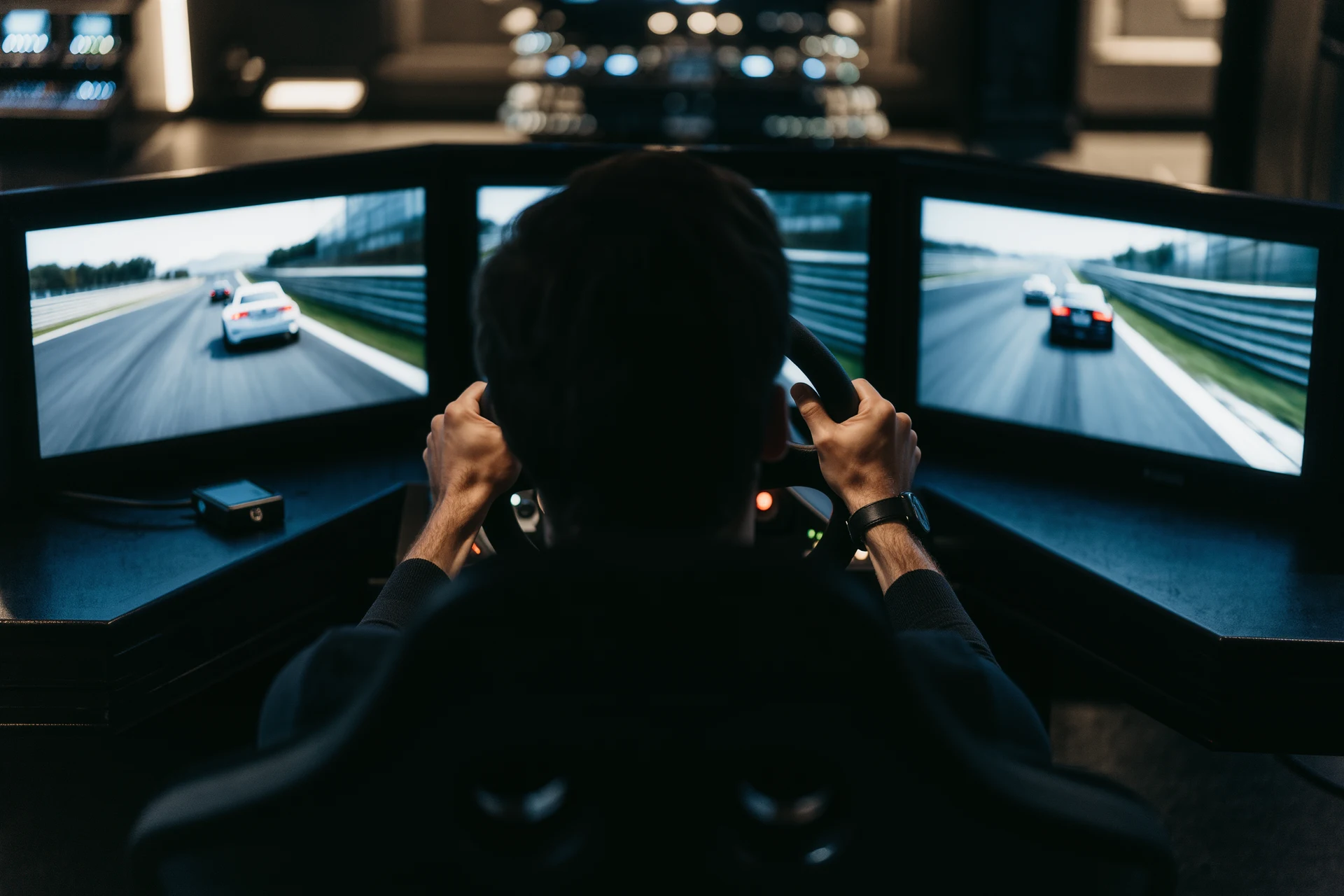
Modern racing simulators are incredibly sophisticated and can be a fantastic tool for practicing racecraft scenarios. You can safely repeat overtakes, practice defending, and experiment with different lines without real-world consequences.
Video Analysis and Data Logging
Recording your on-track sessions and analyzing the footage can reveal habits and decision-making flaws you might not otherwise notice. Look at your line choice, braking points, acceleration points, and your reactions to other drivers. Data loggers can provide objective performance metrics that complement your visual analysis.
Studying Professional Racing
Watch races with a critical eye. Don’t just admire the speed; analyze how overtakes are made, how drivers defend, and how they manage their race. Pause the footage and ask yourself why a certain move was made or why a particular strategy was employed.
By focusing on these elements and dedicating time to practicing them deliberately, you’ll find your performance on the track improving significantly. It’s a continuous journey, but one that’s incredibly rewarding when you start seeing the results.
FAQs
What is racecraft training?
Racecraft training is a type of specialized training that focuses on developing the skills and techniques necessary for success in racing sports, such as car racing, motorcycle racing, or kart racing. It involves honing skills such as vehicle control, race strategy, and mental focus.What are the key components of racecraft training?
Key components of racecraft training include vehicle control, understanding racing lines, mastering overtaking techniques, race strategy, mental focus, physical fitness, and understanding the technical aspects of the vehicle being used in the race.Who can benefit from racecraft training?
Racecraft training can benefit anyone involved in racing sports, from beginners looking to improve their skills to professional racers aiming to stay competitive. It can also be beneficial for individuals looking to enhance their driving skills for everyday use.How is racecraft training typically conducted?
Racecraft training is typically conducted through a combination of classroom instruction, on-track practice sessions, and simulation exercises. Coaches and instructors often provide personalized feedback and guidance to help participants improve their skills.Where can one find racecraft training programs?
Racecraft training programs are offered by racing schools, specialized training facilities, and professional racing organizations. These programs may be available at various locations around the world and can range from introductory courses to advanced, specialized training.More from Training & Performance
Mastering the Apex Technique: A Guide to Peak Performance
So, you’re looking to hit your peak, whether that’s in your craft, your sport, or your daily life. The “apex technique” isn’t …

Mastering Throttle Control: The Key to Smooth Riding
Ever felt like your motorcycle lurches forward or sputters when you twist the throttle? That jerky, disconnected feeling is super common, especially w…
Mastering the Art of Braking: Techniques for Safe and Efficient Stops
So, you want to know how to brake better? It sounds simple, right? Just squeeze the levers. But good braking is more than just stopping. It’s ab…