Rare and Exclusive: Limited Edition Hypercars
When we talk about “rare and exclusive” hypercars, we’re really diving into a world where engineering meets art, and scarcity often amplifies desire. These aren…
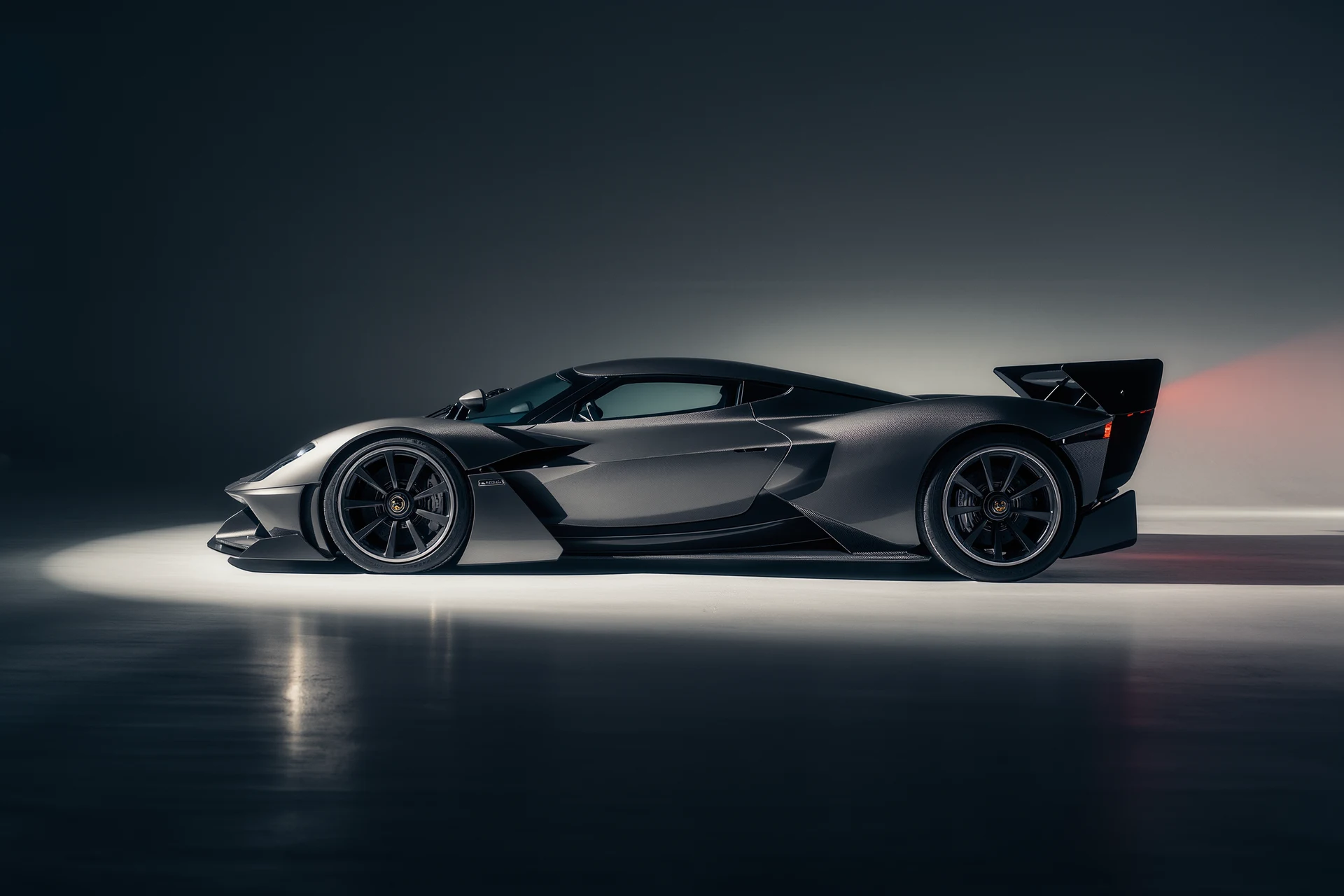
When we talk about “rare and exclusive” hypercars, we’re really diving into a world where engineering meets art, and scarcity often amplifies desire. These aren’t just fast cars; they’re production-limited masterpieces, often conceptualized as the pinnacle of automotive performance and luxury, built in such small numbers that seeing one in person is an event in itself. They represent the extreme end of automotive design, pushing boundaries in speed, technology, and sheer audaciousness.
The Allure of Limited Production
So, why are these cars so captivating? It’s not just the speed or the price tag. Part of it is the chase. Knowing that only a handful of these vehicles exist worldwide creates an intrinsic value that goes beyond their performance metrics. Collectors, enthusiasts, and even casual observers are drawn to the mystique of something so difficult to acquire. It also often means a level of bespoke craftsmanship that mass-produced vehicles simply can’t offer.
Exclusivity as a Design Principle
For manufacturers, creating a limited-edition hypercar isn’t just about making a profit, although that’s certainly a factor. It’s often a statement, a way to showcase their ultimate capabilities, experiment with new technologies, and solidify their brand’s position at the very top. These projects are usually passion projects for the engineers and designers involved, free from many of the constraints of producing higher-volume models.
Defining “Limited Edition” and “Hypercar”
Before we dive into some examples, let’s clarify what we mean by these terms, as they can sometimes get a bit fuzzy.
What Makes a Car a Hypercar?
Generally speaking, a hypercar occupies the top tier of performance vehicles. This usually means extremely high horsepower (often exceeding 700-800 hp), blistering acceleration (0-60 mph in under 3 seconds), and top speeds well over 200 mph. Beyond the numbers, hypercars often feature advanced materials like carbon fiber for much of their construction, cutting-edge aerodynamics, and technologies trickled down from motorsports. They’re typically not designed for everyday practicality.
The “Limited Edition” Factor
“Limited edition” in this context usually means a production run of a few hundred units or less, sometimes even in the single or double digits. This isn’t just about controlling supply; it allows for highly specialized manufacturing processes and a level of individual attention to each vehicle that’s simply not feasible for cars produced in the thousands. It also ensures that the ownership experience remains truly exclusive.
The Engineering Marvels: Beyond Horsepower
It’s easy to get caught up in horsepower figures, but the true marvel of these vehicles lies in the holistic engineering approach that goes into them.
Aerodynamics as an Art Form
For hypercars, aerodynamics isn’t just about making the car slippery through the air. It’s about generating monumental downforce to keep the car glued to the road at extreme speeds, improving stability, and aiding cornering. Active aerodynamic elements, spoilers, flaps, and diffusers that adjust dynamically, are common. These systems are incredibly complex, constantly optimizing airflow based on speed, steering input, and braking. Designers work closely with engineers, often starting with computational fluid dynamics (CFD) analysis and extensive wind tunnel testing. The shapes you see aren’t just for looks; every curve and vent serves a purpose.
Materials Science at its Peak
Carbon fiber is almost a given in hypercar construction. Not just for body panels, but often for the entire monocoque chassis, offering incredible strength and rigidity with minimal weight. Beyond carbon fiber, you’ll find exotic alloys, titanium, and even advanced ceramics. The choice of material for every component, down to the bolts, is meticulously considered to reduce weight, improve durability, and enhance performance. For instance, brake discs are often carbon-ceramic, providing phenomenal stopping power and resistance to fade, even under track conditions.
The Powertrain: A Symphony of Power
While many hypercars now feature hybrid powertrains, integrating electric motors with traditional internal combustion engines, the focus remains on delivering astonishing power and torque. Whether it’s a V8, V10, V12, or even a W16, these engines are technological masterpieces. They often feature bespoke components, advanced forced induction systems (turbochargers or superchargers), and incredibly precise fuel delivery and ignition systems. The goal isn’t just raw power, but also instant throttle response, a broad power band, and, for many, an exhaust note that stirs the soul.
Iconic Examples of Limited Edition Hypercars
Let’s look at a few examples that really embody this category. These are cars that have pushed boundaries and become legends in their own right.
The McLaren P1: A Hybrid Pioneer
The McLaren P1, part of the “Holy Trinity” of hybrid hypercars from the early 2010s, was limited to just 375 units. Its 3.8-liter twin-turbo V8, combined with an electric motor, produced a staggering 903 horsepower. What made the P1 revolutionary was its focus on utilizing electric power not just for efficiency, but to “fill in” torque gaps and provide instant, electrifying acceleration, a concept McLaren called “instanteous torque fill.” It was designed from the ground up for track performance, yet capable of road legality.
- Hybrid Innovation: The P1 demonstrated how electric power could enhance, rather than detract from, the raw performance of a hypercar. The electric motor essentially eliminated turbo lag.
- Active Aerodynamics: It featured a massive active rear wing that could extend, retract, and adjust its angle, along with active underbody flaps, to optimize downforce or reduce drag depending on the driving situation.
- Monocage Chassis: A carbon fiber monocoque chassis meant exceptional rigidity and lightness, crucial for its handling prowess.
The Ferrari LaFerrari: Pure Italian Passion
Also part of the “Holy Trinity,” the LaFerrari was limited to 499 coupes and 210 Aperta (convertible) models. Ferrari’s first production hybrid, it showcased their Formula 1-derived HY-KERS system. Its naturally aspirated 6.3-liter V12 engine, combined with an electric motor, delivered a combined output of 950 horsepower. Unlike the P1, the electric motor’s primary role was to boost performance, particularly at lower RPMs where a naturally aspirated engine might typically be weaker.
- NA V12 and Hybrid Power: The combination offered the best of both worlds: the screaming, high-revving drama of a naturally aspirated Ferrari V12 and the instantaneous torque boost of electric power.
- F1 Pedigree: Many of its technologies, from the HY-KERS system to the advanced traction control, were direct derivatives of Ferrari’s Formula 1 efforts.
- Sculptural Design: Its design, while incredibly aerodynamic, also maintained Ferrari’s classic aesthetic beauty and proportion.
The Porsche 918 Spyder: Everyday Usability Meets Hyperspeed
The third member of the “Holy Trinity,” the Porsche 918 Spyder, was limited to 918 units. What truly set it apart was its plug-in hybrid system, allowing for a significant all-electric range, about 12-19 miles, making it arguably the most “practical” of the three for certain types of driving. Its 4.6-liter naturally aspirated V8, combined with two electric motors, produced 887 horsepower. It was lauded for its incredible grip and balance.
- Plug-in Hybrid Capability: The ability to drive silently on electric power for short distances made it unique among its peers.
- Advanced AWD System: Its all-wheel-drive system, with electric motors driving the front wheels, contributed greatly to its tractability and launch performance.
- Focus on Driver Engagement: Despite the advanced technology, Porsche ensured the 918 remained highly engaging for the driver, with precise steering and a fantastic chassis.
The Bugatti Chiron Super Sport 300+: Breaking Records
The Chiron Super Sport 300+ is a prime example of a hypercar built with one singular, outrageous goal: outright speed. Limited to just 30 units, it officially broke the 300 mph (actually 304.773 mph) barrier with a modified version of the car. Its quad-turbocharged 8.0-liter W16 engine produces an astonishing 1,578 horsepower. This car isn’t just about power; it features a significantly lengthened and aerodynamically optimized body specifically for high-speed stability.
- The Pursuit of Speed: Every aspect of the 300+ was engineered to withstand and conquer extreme velocities, from its tires to its unique “longtail” bodywork.
- W16 Engine: Bugatti’s iconic W16 engine is a marvel of engineering, delivering unparalleled power and a turbine-like smoothness.
- Aerodynamic Mastery for Top Speed: The extended rear section, revised diffuser, and other tweaks were crucial in reducing drag and maintaining stability at speeds previously thought impossible in a production car.
The Koenigsegg Jesko Absolut: Furthering the Speed Frontier
Koenigsegg is known for pushing the boundaries of what’s possible, and the Jesko Absolut is their interpretation of the ultimate top-speed machine. While the standard Jesko (limited to 125 units) has a track-focused “Attack” variant, the Absolut variant is designed purely for achieving maximum speed, with an estimated top speed well over 300 mph. It features a twin-turbo 5.0-liter V8 producing up to 1,600 horsepower on E85 fuel.
- Light Speed Transmission (LST): Koenigsegg’s revolutionary multi-clutch, nine-speed transmission is designed for incredibly fast, seamless shifts.
- Aerodynamic Efficiency: The Absolut has an incredibly low drag coefficient, achieved through extensive re-engineering of the bodywork to be as slippery as possible.
- Megacar Power: With 1600 horsepower, the Jesko Absolut is firmly in the “megacar” category, representing the absolute pinnacle of power output.
The Ownership Experience: More Than Just a Car
Owning a limited-edition hypercar goes far beyond simply having a fast mode of transport. It’s an entry into an exclusive club, a connection to automotive history, and often, an investment.
Bespoke Personalization
When you’re spending millions on a vehicle, you expect it to be tailored to your tastes. Manufacturers often offer extensive customization options, allowing owners to select specific paint colors, interior materials, stitching patterns, and even unique components. This level of personalization means that no two cars are truly identical, further enhancing their exclusivity. Meeting with designers, engineers, and specialists to craft your unique vehicle is part of the experience.
Access to Exclusive Events
Owners of these vehicles are often invited to exclusive track days, factory tours, and private gatherings organized by the manufacturers. These events offer opportunities to meet fellow enthusiasts, drive their cars in controlled environments, and receive expert instruction directly from the people who designed and built their vehicles. It’s a way to foster a community around these special machines.
The Investment Aspect
While not every hypercar will appreciate in value, many limited-edition models do, sometimes significantly. Their scarcity, combined with their status as engineering benchmarks and cultural icons, can make them desirable assets for collectors. This isn’t the primary reason most people buy them, but it’s certainly a compelling aspect of ownership for some. However, like any investment, it comes with risks, and the market can fluctuate.
The Future of Limited Edition Hypercars
The landscape of hypercars is continuously evolving, driven by technological advancements and shifting regulations.
Electrification and Sustainability
The push for electrification is impacting hypercars just as it is the broader automotive industry. We’re already seeing fully electric hypercars like the Rimac Nevera setting new performance benchmarks. Future limited editions will likely continue to explore hybrid and fully electric powertrains, potentially combining extreme performance with greater environmental consciousness. However, the emotional connection to the sound and feel of a powerful internal combustion engine will likely ensure that they remain a part of the hypercar scene for as long as possible, perhaps with synthetic fuels providing a pathway.
Autonomy and AI
While full autonomy might seem counterintuitive for a driver-focused vehicle, elements of AI and advanced driver-assistance systems (ADAS) are finding their way into hypercars. This might involve optimizing suspension settings in real-time, predicting track conditions, or even advanced telemetry for performance analysis. However, the core ethos of driver engagement and control is unlikely to be compromised. The joy of driving these machines is paramount.
Pushing Performance Boundaries Even Further
The pursuit of speed, power, and handling will never truly end. Materials science will continue to yield lighter, stronger composites. Aerodynamics will become even more sophisticated, perhaps integrating even more active elements or even adaptive morphing surfaces. Battery technology will improve, allowing for lighter, more powerful electric drivetrains. The boundaries of what’s possible will continue to be stretched, ensuring that the next generation of limited-edition hypercars will be just as, if not more, astounding.
In essence, limited-edition hypercars are more than just cars. They’re statements of intent, showcases of engineering prowess, and often, the realization of automotive dreams. Their rarity, combined with their incredible capabilities, ensures they’ll continue to captivate enthusiasts and collectors for years to come.
FAQs
What are limited edition hypercars?
Limited edition hypercars are high-performance, ultra-exclusive vehicles that are produced in limited numbers, often with unique design elements and advanced technology. These cars are typically produced by luxury automakers and are highly sought after by collectors and enthusiasts.How many limited edition hypercars are typically produced?
The production numbers for limited edition hypercars can vary, but they are usually extremely low. Some models may have production runs of only a few dozen or even just a handful of units. This exclusivity adds to the desirability and value of these vehicles.What sets limited edition hypercars apart from regular supercars?
Limited edition hypercars are distinguished from regular supercars by their extremely limited production numbers, bespoke design features, and cutting-edge technology. These vehicles often push the boundaries of performance and innovation, making them highly coveted by automotive enthusiasts.How much do limited edition hypercars typically cost?
Limited edition hypercars are among the most expensive vehicles in the world, with prices often reaching into the millions of dollars. The combination of exclusivity, advanced engineering, and high-performance capabilities contributes to their hefty price tags.Are limited edition hypercars a good investment?
Limited edition hypercars can be a good investment for collectors, as their rarity and desirability often lead to appreciation in value over time. However, the high initial purchase price, maintenance costs, and market fluctuations should be carefully considered before viewing these vehicles solely as investment opportunities.More from Hypercars
The Rise of Hypercar Investment: The Future of Luxury Performance Cars
Thinking about hypercars as an investment? It’s a question many high-net-worth individuals are pondering. The short answer is: yes, they can be …
Ultimate Hypercar Experience: A Thrilling Ride
So, you’re curious about the ultimate hypercar experience, wondering what it really entails beyond just seeing these incredible machines on a sc…
The Top Hypercar Brands: A Guide to the Ultimate Performance Machines
So, you’re wondering which hypercar brands truly stand out from the crowd? The answer isn’t just about speed; it’s a blend of engine…