Revolutionizing Sim Racing with Cutting-Edge Technology News
So, you’re curious about what’s shaking up the world of sim racing, are you? It’s a pretty exciting time to be hitting the virtual track because, honestly, the tech is …
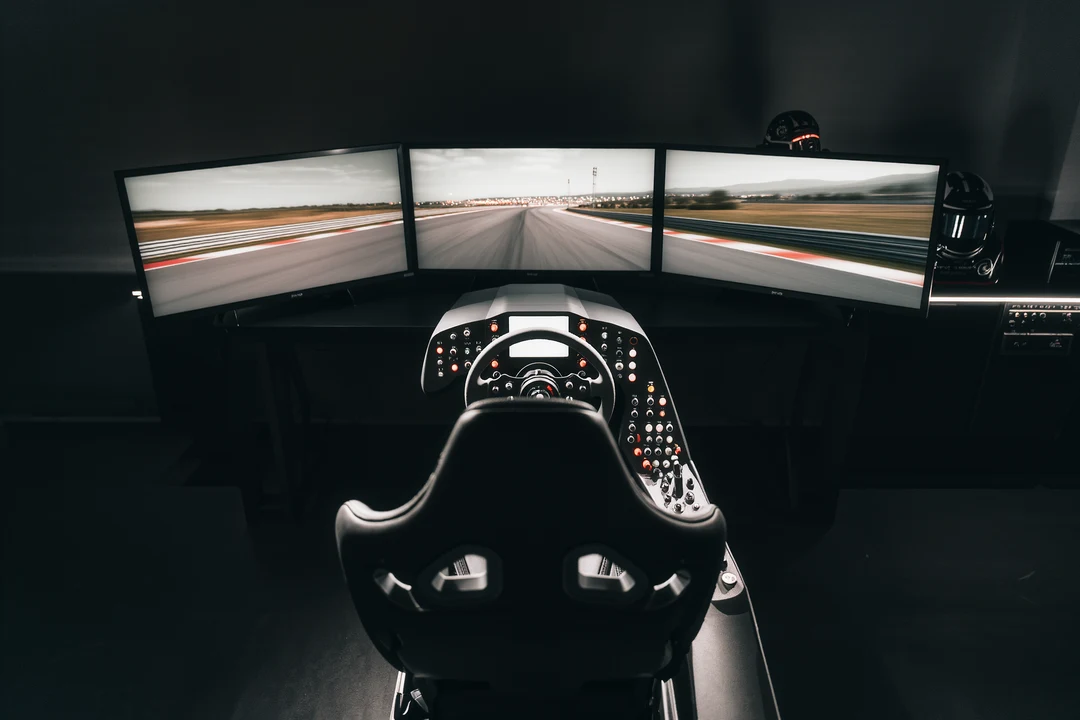
So, you’re curious about what’s shaking up the world of sim racing, are you? It’s a pretty exciting time to be hitting the virtual track because, honestly, the tech is getting seriously good. Forget those clunky old setups; we’re talking about experiences that are blurring the lines between real and digital in ways you might not expect. The core of these advancements isn’t just about making things look prettier, though that’s part of it. It’s really about getting closer to the feeling of driving a real car, the force feedback, the immersion, the sheer responsiveness. Let’s dive into some of the key areas where cutting-edge tech is making a real difference.
When you think sim racing hardware, the wheel and pedals are usually the first things that come to mind. And for good reason. They’re your direct connection to the virtual car. But the tech behind them has come a long way, and it’s constantly pushing boundaries.
Direct Drive: The Gold Standard for Realism
For a while now, direct drive wheelbases have been the holy grail for serious sim racers. Instead of using gears or belts to transmit force, the steering wheel is directly attached to a powerful motor. This might sound simple, but the effect on realism is huge.
- Unfiltered Feedback: With direct drive, you get the raw, unfiltered feedback from the sim. Every bump, every tire scrub, every subtle change in grip is transmitted directly to your hands. There are no intermediary components to dampen or interpret the forces, so what you feel is as close to the actual car as the sim software can provide.
- Force Resolution: The ability to detect and reproduce very subtle forces is a big deal. A high-quality direct drive wheel can communicate tiny changes in tire slip or road surface, allowing for more precise control and a deeper understanding of the car’s behavior. This is crucial for developing real car control skills.
- Torque and Speed: Direct drive systems can deliver much higher peak torque than older technologies. This means they can realistically simulate the heavy steering forces you’d encounter in a race car at low speeds or during a spin. They can also react incredibly quickly to sudden changes, like hitting a kerb hard, giving you instant feedback.
Beyond Basic Force Feedback: Nuance and Detail
While direct drive is the foundation, the innovation doesn’t stop there. Manufacturers are exploring new ways to pack more nuanced information into the feedback.
- Tactile Transducers (Butt Kickers): While not directly part of the wheel, these devices are becoming increasingly integrated into racing setups. Mounted to your seat or rig, they vibrate to simulate engine rumble, gear shifts, road texture, and even impacts.
- Advanced Motor Control: It’s not just about raw power. Sophisticated software and motor control algorithms are allowing for finer control over the type of force feedback. For instance, differentiating between understeer and oversteer through feel, or simulating the feeling of the car settling after a bump.
- New Sensor Technologies: Research is ongoing into how to better measure and transmit forces. This includes exploring different types of motors, encoders, and control boards to achieve even greater fidelity and responsiveness.
Pedals: Feeling the Braking and Throttle Precision
Pedals have also seen significant advancements, moving beyond simple spring resistance.
- Load Cells: These are pretty much standard on any serious pedal set now. Instead of measuring how far you push a pedal, load cells measure the force you apply. This means braking and throttle feel much more like a real car, where you press with varying degrees of pressure rather than just travel.
- Hydraulic Systems: Some high-end pedals incorporate hydraulic dampers to simulate the feel of brake fluid or the resistance of a real clutch. These can provide a more realistic and progressive feel, especially for braking.
- Adjustability: The ability to customize pedal feel is also crucial. Whether it’s adjusting the stiffness of springs, the travel of the pedals, or the damping in hydraulic systems, modern pedals allow racers to fine-tune their setup to their preferences and the demands of different cars.
Immersive Visuals: More Than Just Pretty Graphics
The visual aspect of sim racing has always been a major draw, but the technology is now enabling levels of realism that are genuinely astounding.
High Refresh Rate and Resolution Displays
This is probably the most talked-about visual upgrade for many.
- Higher Refresh Rates (144Hz, 240Hz, and beyond): Sim racing is all about quick reactions. A higher refresh rate means more frames are displayed per second, leading to smoother motion and reduced motion blur. This is particularly important when tracking fast-moving cars or making rapid steering adjustments. You can see the track ahead much more clearly and react to subtle cues faster.
- Higher Resolutions (4K, 8K): As display technology improves, so does the detail in sim racing. Higher resolutions mean sharper images, more defined textures, and the ability to see further into the distance with greater clarity. This translates to more realistic environments and the ability to pick out details like braking markers or apexes more easily.
- HDR (High Dynamic Range): HDR allows for a wider range of brightness and color. This means sun glare will look more intense, shadows will be deeper, and the overall scene will have more contrast and visual punch. It makes exteriors more believable and helps you distinguish between bright and dark areas on the track.
Ultrawide and Curved Monitors: Expanding the Field of View
While VR is often seen as the ultimate in immersion, wide-format displays offer a compelling alternative for some.
- Field of View: Ultrawide (21:9, 32:9) and curved monitors significantly increase your horizontal field of view. This mimics the peripheral vision you’d have in a real car, making it easier to judge distances, spot other cars, and feel more connected to the racing environment.
- Reduced Screen Border Impact: Curved monitors help to wrap the image around your vision, reducing the distraction of screen bezels and creating a more continuous visual experience.
- Performance Considerations: While offering great immersion, these displays can also be more demanding on your PC’s graphics card.
The Rise of VR: A True Leap in Immersion
Virtual Reality headsets have been a game-changer for sim racing.
- Unparalleled Immersion (1:1 Scale): VR places you directly inside the car. The sense of scale, the feeling of being there, is something traditional monitors simply can’t replicate. You look around the cockpit naturally, seeing depth and distance in a way that’s incredibly intuitive.
- Depth Perception: VR excels at conveying accurate depth perception. This allows you to better judge braking points, corner entry speeds, and the proximity of other cars.
- Motion Sickness Mitigation: While early VR had issues, newer headsets and software techniques have significantly improved the experience and reduced motion sickness for many. Features like higher refresh rates, better tracking, and optimized software really help here.
- Hardware Advancements: Newer VR headsets boast higher resolutions, wider fields of view, improved comfort, and more precise tracking, continuously pushing the boundaries of what’s possible in virtual racing.
The Intelligence of the Software: AI and Realism
It’s not all about the hardware; the brains behind the operation, the sim racing software, are also undergoing rapid development.
Advanced Physics Engines: Mimicking Real-World Dynamics
The core of any sim is its physics engine, and this is where much of the “cutting-edge” really happens.
- Tire Modeling: This is arguably the most complex aspect. Modern sims use sophisticated models that account for tire temperature, pressure, wear, slip angles, camber, and even the microscopic deformation of the rubber. This leads to incredibly nuanced tire behavior that requires skill to manage.
- Aerodynamics: Simulating airflow around a car is incredibly complex. Cutting-edge sims invest heavily in accurate aerodynamic models that capture downforce, drag, and how airflow changes with steering inputs, wing settings, and even the dirty air from other cars.
- Suspension and Drivetrain: Realistic simulation of suspension travel, stiffness, and how the drivetrain (engine, gearbox, differential) interacts with the wheels is crucial for accurately replicating how a car handles over bumps, under acceleration, and through corners.
- Real-time Simulation: The ability to calculate all these complex interactions in real-time, many times per second, is a testament to the power of modern computing and sophisticated algorithms.
Artificial Intelligence (AI) for Opponents
Relying solely on human opponents can be challenging for practice or casual racing. AI has become significantly more sophisticated.
- Human-like Driving: Modern AI is designed to mimic the behavior of real drivers, including their strengths and weaknesses. This means they can make mistakes, defend their positions, and even engage in close racing.
- Adaptability: Some AI systems are designed to adapt to the player’s skill level, providing a challenge that’s neither too easy nor too difficult.
- Strategic Behavior: Advanced AI can also exhibit strategic behavior, such as managing tire wear, fuel consumption, and pit stop timing, making races feel more dynamic and unpredictable.
- Learning AI: While still an emerging area, there’s research into AI that can learn from player behavior or even real-world racing data to provide even more realistic and challenging opposition.
Procedural Generation and Dynamic Track Conditions
The environment itself is becoming more dynamic.
- Dynamic Track Conditions: Tracks can now degrade over the course of a race, with rubber laying down (a “racing line” forming), dirt and dust accumulating, and even weather conditions changing dynamically. This adds a layer of realism and strategic depth that was previously unavailable.
- Procedural Elements: Some sims are exploring procedural generation for elements like trackside objects or even track layouts, which could lead to endless variety and replayability.
Connectivity and Social Integration: The Future of Racing Together
Sim racing is not just a solo endeavor; it’s a growing community. Technology is helping to connect racers in more meaningful ways.
Online Multiplayer Enhancements
The online racing experience continues to improve.
- Improved Netcode: This refers to how the game handles data communication between players. Better netcode means smoother synchronization of player positions and actions, leading to fewer perceived glitches or unfair collisions.
- Race Servers and Hosting: Dedicated race servers and more robust hosting options provide more stable and reliable online races for larger groups of drivers.
- Matchmaking Systems: Sophisticated matchmaking systems aim to pair drivers of similar skill levels, leading to more competitive and enjoyable races.
- Race Stewarding and Incident Reporting: Systems are being developed and refined to help police online races, with options for virtual stewards or player-driven incident reporting to promote fair play.
Esports and Spectator Experience
The competitive side of sim racing is booming, and technology plays a key role.
- Broadcast Technologies: High-quality streaming, in-game camera options, and data overlays are making sim racing esports exciting and accessible to watch.
- Data Analytics: Spectators and drivers can benefit from real-time data analysis of lap times, telemetry, and driver performance, adding another layer of insight to the competition.
- Virtual Grandstands and Social Hubs: As technology evolves, we’re seeing the development of virtual spaces where fans can gather, interact, and watch races together in a more immersive way.
Integration with Real-World Motorsport
The lines are blurring further.
- Driver Training: Many professional racing drivers use sim racing for training, testing setups, and practicing tracks. The advancements in realism make these simulations incredibly valuable tools.
- Car Development: Some manufacturers are using sim racing platforms to test aerodynamic concepts or suspension settings before building physical prototypes.
- Fan Engagement: Sim racing events are increasingly being used by real-world motorsport series to engage with fans and attract new audiences.
Haptic Technologies and Sensory Feedback: Feeling the Drive
Beyond force feedback, there’s a whole world of tactile sensations that are being explored to enhance the sim racing experience.
Advanced Motion Platforms: Feeling the G-Forces
These are perhaps the most dramatic technological advancements in terms of physical immersion.
- Multi-Axis Actuators: High-end motion platforms use multiple powerful actuators to tilt, pitch, roll, and heave your entire rig. This allows them to simulate the sensations of acceleration, braking, cornering G-forces, and even bumps and impacts.
- Yaw and Slip Simulation: Advanced platforms can even simulate the yaw motion of the car, meaning you can feel the car rotating under you during a drift or a slide. This is a critical aspect of car control that’s hard to convey otherwise.
- Integration with Software: The real magic happens when these platforms are tightly integrated with the sim software. The simulation engine tells the platform exactly how the car is behaving, and the platform translates that into physical motion you can feel.
- Full-Motion Rigs: These are dedicated pods or cockpits that offer the most comprehensive motion simulation, aiming to replicate the driver’s experience as closely as possible.
Beyond Motion: Other Haptic Innovations
The pursuit of tactile realism doesn’t stop with motion.
- VR Haptic Suits and Gloves: While still somewhat niche and expensive, these technologies aim to provide haptic feedback directly to the body and hands. Imagine feeling the rumble of an engine through your torso or the texture of a steering wheel rim directly in your fingertips.
- Scent Emitters: Some experimental setups are even looking at incorporating scent emitters to replicate the smell of burning rubber, fuel, or exhaust fumes, further engaging the senses.
- Broader Tactile Feedback: Researchers are also exploring ways to incorporate more subtle tactile feedback into the entire racing environment, like simulating the vibration of road surface through a specialized seat or even the floor.
The pace of innovation in sim racing is genuinely impressive. What used to be a hobby for a dedicated few with expensive, niche hardware is rapidly becoming more accessible and sophisticated. The goal, it seems, is to get as close as possible to the real thing, not just visually, but through every sense. It’s a fantastic time to be a sim racer, and it’s only going to get more exciting.
FAQs
What is sim racing technology?
Sim racing technology refers to the use of computer software and hardware to simulate real-life racing experiences. This includes the use of racing simulators, steering wheels, pedals, and virtual reality headsets to create a realistic racing environment.What are some recent advancements in sim racing technology?
Recent advancements in sim racing technology include improved force feedback steering wheels, more realistic physics engines, and the integration of virtual reality for a more immersive experience. Additionally, there have been developments in motion platforms and advanced telemetry systems.How has sim racing technology impacted the racing industry?
Sim racing technology has had a significant impact on the racing industry by providing a cost-effective way for drivers to practice and improve their skills in a safe environment. It has also opened up new opportunities for esports competitions and has become a valuable tool for professional racing teams in training and development.What are some popular sim racing platforms and games?
Popular sim racing platforms and games include iRacing, Assetto Corsa, rFactor 2, and Project CARS. These platforms offer a wide range of cars and tracks, as well as multiplayer capabilities for competitive racing.How can individuals get started with sim racing technology?
Individuals can get started with sim racing technology by investing in a racing simulator setup, which typically includes a steering wheel, pedals, and a racing seat. They can then choose a sim racing platform or game to start practicing and competing in virtual races. Additionally, joining online communities and forums can provide valuable resources and support for beginners.More from News
Future of Sim Racing
The future of sim racing: how AI tire models, mixed reality, cloud streaming, cheaper direct-drive hardware and the sim-to-real pipeline reshape motor…
Revving Up: Motorsport Gaming News
Looking for the latest in motorsport gaming? You’ve come to the right place. This article will cut through the noise and get straight to what…
Racing Esports Revs Up with Exciting News
Racing esports is definitely picking up speed, with a lot of exciting news coming out of the circuit lately. We’re seeing bigger prize pools, mo…