Revving Up: Latest Racing Simulator News
Let’s face it, the world of racing simulators is always on the move, and keeping up with every tweak and upgrade can feel like trying to lap a Formula 1 car in a go-kart. So,…
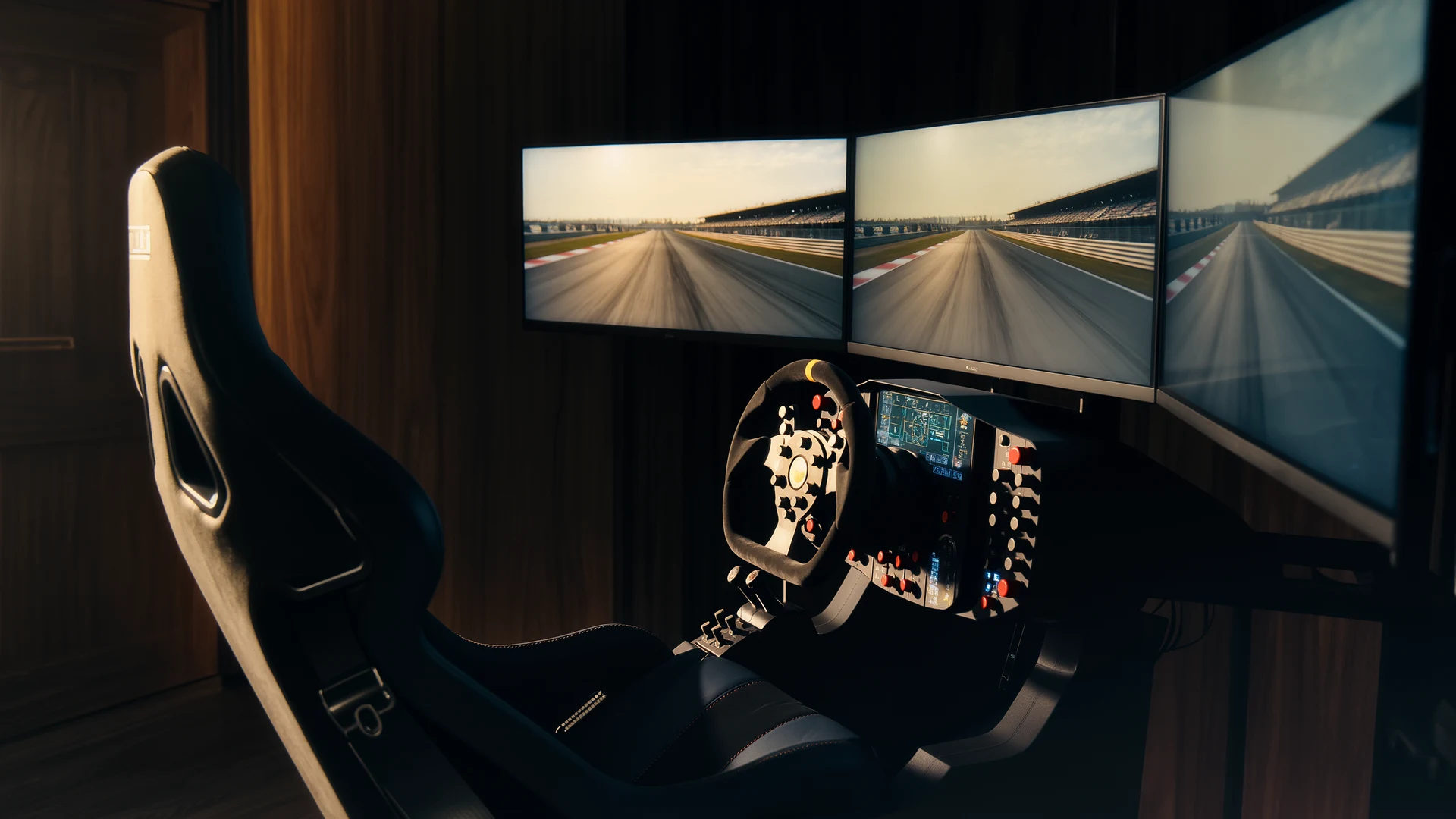
Let’s face it, the world of racing simulators is always on the move, and keeping up with every tweak and upgrade can feel like trying to lap a Formula 1 car in a go-kart. So, you’re probably wondering: what’s actually new and exciting in the realm of virtual checkered flags? The good news is, sim racing isn’t just about pretty graphics anymore. Developers are pushing boundaries in how realistic these experiences can feel, making them more accessible and, frankly, more fun for everyone from seasoned pros to folks just dipping their toes in.
The Quest for Ultimate Realism: Physics and Force Feedback
The core of any good racing sim lies in its physics engine. It’s what translates the digital car’s behavior into something you can actually feel through your wheel and pedals. And this is where we’re seeing some of the most significant advancements lately.
Beyond Basic Grip: Advanced Tire Models
Gone are the days of simple grip calculations. Modern sim developers are diving deep into the complex world of tire deformation, heat buildup, and wear patterns.
Real-World Tire Data Integration
What this means for you is that tire models are becoming incredibly nuanced. They’re not just calculating a single grip value; they’re simulating how the tire physically deforms under load, how different compounds behave in various temperatures, and how wear affects the contact patch. Some sims are even starting to incorporate real-world tire data gleaned from actual motorsport research. This allows for a much more authentic prediction of how your tires will react to track conditions, your driving inputs, and how they’ll degrade over a race. It’s less about guessing and more about understanding the science behind the grip.
Simulating Tire Degradation More Authentically
The way tires degrade is also getting a significant overhaul. Instead of a generic “tire wear” slider, we’re seeing systems that simulate blistering, graining, and even delamination based on factors like aggressive driving, incorrect pressures, and track surface temperatures. This means you might not be able to run a whole race on a single set of tires in the same way you used to, forcing you to think strategically about your pit stops and driving style. It adds a layer of strategic depth that mirrors real motorsport.
Feeling the Road: Force Feedback Evolution
Force feedback (FFB) is your direct line to the virtual car. It’s how the sim tells you what the tires are doing, what the suspension is experiencing, and whether you’re about to spin off into the scenery.
Nuance in FFB Signals
The latest advancements are all about providing more subtle and distinct FFB signals. It’s not just about a general rumble anymore. Developers are working to isolate different forces acting on the steering wheel. You might feel the distinct sensation of a tire losing grip versus the bump from hitting a curb or the subtle weight transfer as you lean into a corner.
Improved Suspension and Road Feel
This allows for a more immersive experience where you can genuinely feel the nuances of the track surface, the difference between smooth tarmac, rougher patches, or even the jarring impact of a kerb. The suspension’s response to bumps, dips, and undulations is being translated into FFB with greater fidelity, giving you a better sense of where the car’s limits are.
Beyond Vibration: Dynamic FFB Systems
Some developers are also exploring dynamic FFB systems that go beyond simply vibrating the wheel. These systems aim to replicate more complex forces, like the steering wheel fighting back when you’re overdriving a corner or the sensation of the car wanting to straighten itself out under acceleration. This can lead to a much more intuitive and responsive feeling, making it easier to catch slides and maintain control.
Immersive Environments and Dynamic Track Conditions
While physics are king, a believable racing world significantly enhances the immersion. Developers are investing heavily in making their tracks and environments more dynamic and lifelike.
Hyper-Realistic Track Scans and Laser Scanning
The quest for perfect track accuracy continues, with an increasing reliance on advanced scanning technologies.
Laser Scanning for Unrivaled Precision
Laser scanning, a technology widely used in real-world motorsport surveying, is becoming the norm for creating digital replicas of tracks. This captures the track’s contours, elevation changes, and kerbs with millimeter-level accuracy, translating directly into a more faithful representation of the racing surface in the sim. You’ll find yourself noticing subtle undulations or banking that you might not have even recognized on TV.
Photogrammetry for Lifelike Recreations
Beyond the track itself, photogrammetry is being used to bring the entire environment to life. This technique uses multiple photographs to create highly detailed 3D models of objects and scenery, resulting in incredibly realistic foliage, buildings, barriers, and advertising hoardings. This makes the virtual world feel less like a sterile game environment and more like a place you could actually visit.
Dynamic Weather and Track Evolution
The thrill of racing isn’t just about dry laps; it’s about adapting to changing conditions.
Advanced Rain and Wetness Simulation
Rain is no longer just a visual effect. Modern sims are simulating how rain affects the track surface in intricate detail. This includes how puddles form and grow, how the track dries out over time, and how the grip level changes dynamically based on these factors. You’ll need to learn where the damp patches are and how to avoid them, or conversely, how to exploit them if your rivals are struggling.
Tire Rubbering-In and Track Degradation
Tracks evolve as you and other cars race on them. As tires lay down rubber, the racing line becomes faster and grippier. Conversely, if you go off-track, you might pick up dirt or debris, making that section of the track slower. This “rubbering-in” effect is crucial for strategic racing, as it dictates where the fastest lines will emerge during a race. This adds a layer of organic progression to each session.
Dynamic Lighting and Time of Day
The visual impact of dynamic lighting and time of day changes is also profound. Racing through a sunset, with the sun casting long shadows across the track and glinting off your car, is an experience that adds a new dimension to immersion. The way light interacts with the environment and the car can also subtly affect visibility and perception on track.
Enhanced AI and Competitive Multiplayer
Sim racing communities are vibrant, and the drive for better competition, both against AI and human opponents, is constant.
Smarter, More Human-like AI Opponents
AI has always been a tricky beast in racing sims. The goal is to create opponents that are challenging but also realistic in their behavior.
Adaptive AI Driving Styles
The latest AI systems are designed to be more adaptive. Instead of following a fixed racing line, they can react to your presence, make mistakes, and even employ defensive driving tactics. Some AI can even mimic different driving styles, offering a more varied and unpredictable challenge. You might find some AI drivers are aggressive attackers, while others are more methodical defenders.
Realistic Error Simulation
Crucially, AI is also programmed to make mistakes. They can lock up their brakes, run wide, or even have minor collisions, just like human drivers. This makes racing against the computer feel less like a programmed event and more like a genuine multi-car battle. The occasional spin from an AI car can actually be a welcome break from overly perfect opposition.
Improving Online Racing Etiquette and Connectivity
Online racing is the ultimate test, but it comes with its own set of challenges.
Netcode Improvements for Smoother Racing
Developers are constantly refining their netcode to ensure smoother online experiences. This means reducing lag, minimizing rubber-banding (where cars teleport around), and providing more accurate positional data between players. The goal is to make online races feel as close to offline races as possible, reducing frustration and increasing fairness.
Enhanced Penalties and Stewarding Systems
To promote cleaner racing, many sims are introducing more sophisticated penalty systems. These can include drive-through penalties, stop-and-go penalties, and even time penalties applied after the race based on incident analysis. Some stewarding systems are also becoming more intelligent, able to differentiate between racing incidents and deliberate contact.
Server Browser and League Management Tools
For those looking for organized competition, improvements to server browsers and league management tools are key. This makes it easier to find races that suit your skill level and schedule, and for organizers to run their own competitive series effectively. This is crucial for fostering a long-term community around a sim.
Accessibility and User Experience Updates
The era of sim racing being solely for hardcore enthusiasts with deep pockets is fading. Developers are making their titles more accessible to a wider audience.
Simplified Control Schemes and Assisted Driving Options
While simulation purists might scoff, offering accessible options is vital for growing the hobby.
Adjustable Steering Ratios and Brake Bias
Many sims now offer adjustable steering ratios, allowing you to fine-tune how directly your wheel responds to your inputs. Similarly, brake bias adjustments can help you manage tire wear and improve braking stability, especially for those new to the concept. These are small tweaks that can make a big difference in comfort.
Traction Control and ABS Enhancements
Traction control and anti-lock braking systems (ABS) are becoming more refined and, importantly, more adjustable. You can often choose from different levels of assistance or even turn them off entirely as you gain experience. This allows newcomers to get up to speed without being immediately overwhelmed by the car’s raw power.
User Interface and Onboarding Improvements
Getting into a new sim can be daunting. Developers are making it easier to learn the ropes.
Intuitive Menu Navigation and Settings
Modern UIs are generally more intuitive and less cluttered than their predecessors. Finding settings, organizing your car collection, and setting up races should be a more straightforward process. This means less time fumbling through menus and more time on track.
In-Game Tutorials and Driving Tips
Many sims now include more comprehensive in-game tutorials that guide you through the basics of driving, car setup, and race craft. These can range from simple explanations of throttle and brake control to more advanced lessons on weight transfer and tire management. Some even offer real-time driving tips during a session, helping you correct mistakes on the fly.
Controller and Wheel Support Enhancements
The range of hardware people use to race is vast.
Broader Controller Compatibility
Developers are increasingly ensuring broad compatibility with various gamepads and racing wheels from different manufacturers. This means you’re more likely to have a good experience regardless of the specific hardware you own.
Advanced Wheel Calibration and Profile Management
For wheel users, tools for calibrating your wheel and managing custom profiles for different cars and tracks are becoming more sophisticated. This allows for finer control over force feedback, rotation limits, and button mappings, tailoring the experience to your preferences.
The Drive Towards Virtual Reality and Augmented Reality
The future of immersive sim racing might just be through your eyes.
VR Integration and Performance Optimization
Virtual Reality (VR) offers an unparalleled level of immersion, placing you directly in the driver’s seat.
Wider VR Headset Support
As VR technology matures, more racing sims are offering robust VR support. This includes compatibility with popular headsets like the Valve Index, Meta Quest series, and others. The goal is to provide a seamless and believable VR racing experience.
Performance Tweaks for Smoother VR
VR demands significant processing power, so developers are working on optimizing their games to run smoothly in a virtual environment. This involves clever rendering techniques, visual fidelity adjustments, and ensuring high frame rates to prevent motion sickness.
FFB Translation in VR
Translating force feedback effectively into a VR experience is a complex challenge. Developers are working to ensure that the tactile sensations from your wheel complement the visual immersion of VR, creating a truly cohesive experience. You want to feel what you’re seeing.
Augmented Reality Possibilities
While still in its nascent stages for racing sims, Augmented Reality (AR) presents intriguing possibilities for the future.
Overlaying Real-World Data
Imagine AR glasses overlaying critical data directly onto your real-world view, lap times, fuel levels, or even competitor positions. This could bridge the gap between a pure sim and a real-world racing scenario.
Mixed Reality Racing Experiences
AR could also enable mixed reality experiences, where virtual cars race on your actual desktop or living room floor. While this is more of a novelty currently, it hints at future directions for interactive entertainment.
Future Hardware Innovations
The hardware driving these experiences is also evolving.
Next-Generation VR/AR Headsets
The development of lighter, higher-resolution, and more comfortable VR and AR headsets will undoubtedly lead to even more immersive sim racing. Wider fields of view and improved tracking are key goals.
Haptic Suits and Advanced Motion Simulators
Beyond traditional wheels and pedals, the integration of haptic feedback suits and advanced motion simulators promises to bring another layer of physical sensation to sim racing. Feeling the G-forces and vibrations of a race car would be a revolutionary step.
The world of racing simulators is a dynamic and exciting one. The focus is clearly on making the experience more realistic, more accessible, and more engaging for everyone. Whether you’re a seasoned sim racer looking for the latest physics advancements or a newcomer curious about the thrill of virtual motorsport, there’s never been a better time to get involved. Keep an eye on these developments, and you might just find yourself hooked on the checkered flag.
FAQs
What is a racing simulator?
A racing simulator is a type of video game or software that aims to simulate the experience of driving a race car. It typically involves realistic physics, vehicle dynamics, and racing environments to provide an immersive experience for players.What are some popular racing simulators?
Some popular racing simulators include titles such as Gran Turismo, Forza Motorsport, Assetto Corsa, iRacing, and Project CARS. These simulators are known for their realistic driving physics, accurate car models, and detailed racing tracks.What are some recent developments in the racing simulator industry?
Recent developments in the racing simulator industry include advancements in virtual reality (VR) technology, improved force feedback steering wheels and pedals, and the integration of esports competitions within racing simulator platforms.How can I improve my racing simulator setup?
To improve your racing simulator setup, you can consider investing in a high-quality racing wheel and pedal set, a VR headset for a more immersive experience, and a sturdy racing seat or cockpit to enhance the realism of the simulation.Are racing simulators used for professional training?
Yes, racing simulators are used for professional training by race car drivers and teams. Simulators provide a cost-effective and safe way to practice driving techniques, learn new race tracks, and refine racing strategies without the need for real-world track time.More from News
Future of Sim Racing
The future of sim racing: how AI tire models, mixed reality, cloud streaming, cheaper direct-drive hardware and the sim-to-real pipeline reshape motor…
Revving Up: Motorsport Gaming News
Looking for the latest in motorsport gaming? You’ve come to the right place. This article will cut through the noise and get straight to what…

Racing Esports Revs Up with Exciting News
Racing esports is definitely picking up speed, with a lot of exciting news coming out of the circuit lately. We’re seeing bigger prize pools, mo…