Revving Up: The Latest in Sim Racing News
What’s New in Sim Racing? In a nutshell, we’re seeing a fantastic push towards realism, accessibility, and community engagement. From more sophisticated force feedback …
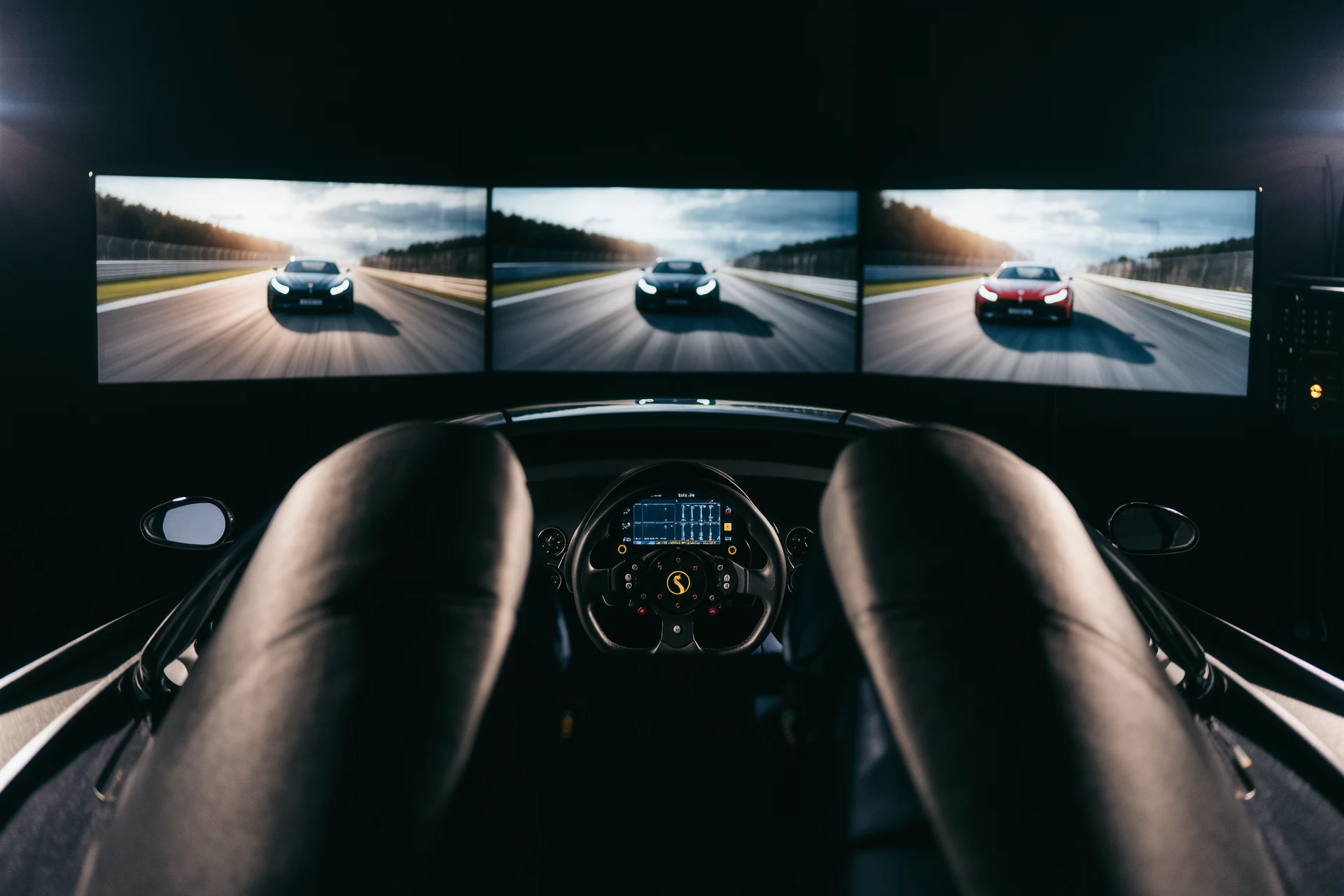
What’s New in Sim Racing?
In a nutshell, we’re seeing a fantastic push towards realism, accessibility, and community engagement. From more sophisticated force feedback and ever-expanding track libraries to new hardware and exciting competition formats, sim racing is buzzing. It’s not just about better graphics anymore; it’s about a deeper, more immersive, and ultimately more rewarding experience for everyone, whether you’re a seasoned pro or just starting out.
The Hardware Horizon: What’s Hot and What’s Coming
Let’s be honest, shiny new gear is a big part of the sim racing appeal. And 2024 has delivered, and continues to deliver, some pretty compelling options that are making those virtual laps feel more real than ever.
Direct Drive Wheels Are Becoming Mainstream
For years, direct drive wheels were the holy grail, often carrying a price tag that made them aspirational for most. That’s changing rapidly. Companies like Fanatec, Moza, and Simagic have significantly lowered the entry barrier. We’re seeing powerful 5-8 Nm direct drive units hitting the market for under $500, often bundled with decent pedals.
This isn’t just about bigger numbers; it’s about fidelity. Direct drive eliminates the belts and gears of older force feedback systems, which means you feel every nuance of the track, curbs, tire slip, elevation changes, with incredible clarity. If you’re upgrading from a gear or belt-driven wheel, it’s a monumental leap. The increased detail allows for better car control and a much more immersive experience. We’re also seeing more robust software suites with these direct drive wheels, offering granular control over force feedback settings, allowing users to fine-tune their experience for specific simulators and car types. This level of customization was once reserved for high-end professional setups.
Pedal Evolution: Beyond Two Pedals
It’s not just the wheel getting attention. Load cell pedals, which measure pressure rather than displacement, are becoming increasingly common and affordable. This is a game-changer for braking, allowing for much finer control and a more realistic feel. Instead of judging how far a pedal travels, you’re reacting to how much force you’re applying, just like in a real car. This significantly improves consistency and helps shave off those crucial tenths. More sophisticated designs are also appearing, incorporating haptic feedback into pedals, further enhancing the immersion by mimicking ABS activation or tire lock-up directly through your foot. Three-pedal setups, once an enthusiast niche, are also becoming standard, giving drivers full control over clutch engagement for more realistic starts and gear changes.
The Rise of Entry-Level Rigs
You no longer need to spend thousands to get a decent sim racing setup. Many manufacturers are bundling ready-to-race packages with direct drive wheels, load cell pedals, and even entry-level cockpits for a surprisingly reasonable price. This accessibility is crucial for bringing new blood into the hobby. These starter bundles often provide a solid foundation that can be upgraded components over time, allowing drivers to gradually enhance their setup as their skills and budget grow. The modular nature of these systems makes it easy to swap out pedals, add a shifter, or even upgrade the wheel base without having to replace the entire rig.
Software Deep Dive: Simulators Pushing Boundaries
While hardware makes things feel real, the software dictates what you feel. Simulators are constantly evolving, refining their physics, expanding their content, and generally making virtual racing more compelling.
Physics Refinements: More Than Just Grip
Developers are always tweaking their physics engines, and the focus isn’t just on raw grip anymore. We’re seeing more attention paid to tire flex, suspension kinematics, aerodynamic effects at different speeds, and even the subtle differences between cold and warm tires. Small changes, like how a car reacts to hitting a curbing at a specific angle, are being modeled with increasing accuracy.
iRacing, for example, continues to lead the pack in detailed tire and track modeling, with regular updates that often include new tire compounds or track scans that capture every bump and ripple. Assetto Corsa Competizione (ACC) has long been praised for its detailed GT3 physics, and subsequent updates continue to refine this, often incorporating insights from real-world teams and drivers. The fidelity of these simulations means that what you learn on the virtual track often translates directly to real-world understanding of car behavior.
Content Galore: Tracks, Cars, and Series
The sheer volume of content available in modern sims is staggering. Almost every major race track in the world is available in at least one simulator, often laser-scanned for pinpoint accuracy. Car selections span generations and disciplines, from classic touring cars to cutting-edge hypercars. Beyond the standard race series, many simulators now offer specialized content like rallycross, oval racing, and even truck racing, catering to a wider variety of tastes.
Automobilista 2, for instance, has rapidly expanded its roster of Brazilian tracks and unique car classes, offering a distinct flavor in the sim racing landscape. Forza Motorsport, while more arcade-leaning, still offers a massive car list and detailed track environments that appeal to a broad audience. The continuous release of new content keeps the experience fresh and encourages players to explore different racing disciplines. This constant influx of new cars and tracks also facilitates an active modding community in many simulators, further expanding the available content beyond official releases.
Feature Richness: Beyond the Race Itself
Modern simulators are doing more than just letting you race. Advanced telemetry tools are becoming integrated, allowing drivers to analyze their performance in detail. Replay editors are more robust, enabling content creation and social sharing. Dynamic weather systems, once a rarity, are now common, adding another layer of challenge and strategy to races. This includes live track conditions that evolve throughout a session, impacting grip levels and tire degradation.
Customization options for cars, from livery editors to subtle setup tweaks, are also becoming more sophisticated, allowing drivers to personalize their experience. The trend is moving towards a complete ecosystem around the racing itself, fostering communities and extending the value of the simulation beyond just hitting the start button. Many simulators now also feature robust online matchmaking systems, skill-based rating systems, and official esports leagues, transforming casual play into a competitive online sport.
The Esports Arena: Sim Racing in the Spotlight
Esports has been a huge driver for sim racing’s popularity, and it’s showing no signs of slowing down. The lines between virtual and real-world motorsports are blurring more than ever.
Professional Leagues and Prize Pools
Major racing organizations, car manufacturers, and even tire companies are investing heavily in sim racing esports. We’re seeing professional leagues with significant prize pools and global reach. Competitions like the Porsche TAG Heuer Esports Supercup, the Le Mans Virtual Series, and official F1 Esports Series draw massive viewership and attract top sim racers from around the world. These events are often structured similarly to real-world racing, with qualification, heats, and grand finals, broadcast with professional commentary and production values.
This professionalization provides a clear career path for talented sim racers, offering not just financial rewards but also recognition within the broader motorsport community. The accessibility of sim racing means that anyone with a passion for motorsport and a decent setup can potentially compete at these high levels, regardless of their financial background or physical location.
Real-World Crossovers: From Sim to Seat
The dream of going from sim to real-world racing isn’t just a fantasy anymore. Programs like Nissan GT Academy pioneered this concept, and it continues today with various initiatives. Sim racers are regularly being scouted by real-world teams, offered test drives, and even securing full-time race seats.
This crossover highlights the genuine skill and understanding developed through high-fidelity simulation. Drivers who excel in sims often demonstrate exceptional car control, race craft, and strategic thinking that translates well to an actual race car. It’s a testament to how far sim racing has come in terms of realism and training utility. We’ve seen numerous examples of sim racers transitioning into successful real-world careers in various motorsport disciplines, validating the training potential of these platforms.
Accessibility and Grassroots Competition
Beyond the professional leagues, the ease of setting up online races means that grassroots competition is thriving. Thousands of online communities, leagues, and casual races happen daily across various simulators. This accessibility allows anyone to participate and find their competitive niche, from casual fun to highly structured amateur championships.
Many simulators offer built-in competition features, making it easy to jump into a ranked race or join a community event. This fosters a vibrant and inclusive community where drivers of all skill levels can find opponents and refine their craft. The social aspect of these grassroots competitions is also a huge draw, allowing drivers to connect with like-minded enthusiasts from around the globe.
Immersive Tech: Beyond the Screen
Sim racing is about immersion, and technology is constantly pushing the boundaries of what’s possible, drawing you further into the virtual cockpit.
Virtual Reality (VR) Refinements
VR has been a game-changer for sim racing, offering unparalleled immersion. Being able to look naturally into corners, gauge distances accurately, and feel genuinely “in” the car is an incredible experience. Recent VR headsets offer higher resolutions, wider fields of view, and improved refresh rates, making the experience smoother and less prone to motion sickness. The integration of eye-tracking technology in some newer headsets is also allowing for more dynamic rendering, optimizing visual quality where the user is focused, thus improving performance.
While still demanding on hardware, the barrier to entry for a decent VR experience in sim racing is lowering. As headsets become more comfortable and technically advanced, VR is set to become an even more dominant force in high-end sim setups. The sense of presence and depth provided by VR simply can’t be matched by a flat screen, making it a preferred choice for many serious sim racers.
Motion Simulators: Adding G-Forces
For the ultimate in immersion, motion simulators are becoming more sophisticated and, surprisingly, more attainable. These systems move your cockpit to simulate G-forces, bumps, and elevation changes. From basic two-axis platforms that simulate pitch and roll to complex six-degrees-of-freedom (6DOF) systems that replicate almost every movement, motion adds a completely new dimension to the sim racing experience.
While still a significant investment, entry-level motion systems are appearing that offer a taste of this experience without breaking the bank. The haptic feedback and physical cues provided by motion platforms greatly enhance immersion and can even improve lap times by providing additional sensory information about the car’s behavior. The feedback from the motion system can give you crucial early warnings about oversteer or loss of traction, allowing for quicker reactions.
Haptic Feedback and Advanced Peripherals
It’s not just the wheel and pedals anymore. Haptic feedback vests, bass shakers mounted to seats, and even systems that vibrate the whole cockpit are becoming popular. These peripherals simulate the rumble of the engine, the feeling of tires on curbing, or the jolt of hitting a wall, further enhancing the sensory experience.
Beyond haptics, specialized dashboards that display real-time telemetry, button boxes for quick control, and even custom-built sim racing gloves designed for force feedback wheels are adding layers of detail and realism that were once the domain of professional training simulators. The goal is to provide as much sensory information as possible, tricking your brain into believing you’re genuinely in a race car.
Community and Accessibility: Broader Horizons
Sim racing used to be seen as a niche, somewhat intimidating hobby. That perception is changing, thanks to a more welcoming community and easier entry points.
Growing Online Communities
The sim racing community is vibrant and diverse, spanning platforms like Discord, Reddit, and various dedicated forums. There are communities for every sim, every car type, and every skill level. These communities are vital for sharing setup advice, organizing races, troubleshooting issues, and simply connecting with like-minded individuals.
Many communities also host their own leagues and championships, offering structured racing for those who want more than just casual online play. This sense of belonging is a huge draw for new participants and helps retain existing ones. The peer support and knowledge sharing within these communities significantly lower the learning curve for newcomers.
Beginner-Friendly Resources and Coaching
For newcomers, the world of sim racing can still feel a bit overwhelming. However, there’s a growing array of beginner-friendly resources, tutorials, and even dedicated sim racing coaches available. Channels on YouTube and Twitch offer guides on car setups, driving techniques, and track explanations, often broken down into easily digestible segments.
Many experienced sim racers also offer coaching services, providing personalized feedback and guidance to help new drivers improve their skills more quickly. This accessibility to learning resources makes sim racing far less intimidating than it once was, encouraging more people to give it a try. These resources range from basic “how-to” guides for setting up your gear to advanced telemetry analysis webinars, catering to all stages of a sim racer’s journey.
Expanding Demographics
The demographic of sim racers is expanding beyond the traditional stereotype. We’re seeing more women, younger drivers, and individuals from diverse backgrounds entering the hobby. The accessibility of information, the lower cost of entry for decent hardware, and the welcoming nature of many communities are all contributing factors.
This diversification is healthy for the hobby, bringing in new perspectives and fostering a more inclusive environment. As sim racing continues to grow and gain mainstream recognition, this trend is likely to accelerate, making the community even richer and more varied. The online nature of sim racing removes many of the physical and financial barriers that traditionally existed in real-world motorsport, creating a more level playing field for participation.
FAQs
What is sim racing?
Sim racing, short for simulated racing, is a genre of video games that aims to accurately simulate real-world racing events and vehicles. Players use specialized racing wheels, pedals, and sometimes even virtual reality headsets to create a realistic racing experience.What are some popular sim racing games?
Some popular sim racing games include titles like iRacing, Assetto Corsa, Project CARS, and rFactor. These games offer a wide range of cars, tracks, and realistic physics to provide an immersive racing experience for players.What is the appeal of sim racing?
Sim racing appeals to racing enthusiasts who may not have access to real racing vehicles or tracks. It also offers a safe and cost-effective way for people to experience the thrill of racing from the comfort of their own homes.Are there professional sim racing competitions?
Yes, there are professional sim racing competitions that attract top talent from around the world. These events often feature large cash prizes and are broadcasted on streaming platforms, attracting a growing audience of fans.What equipment do I need to get started with sim racing?
To get started with sim racing, you will need a gaming PC or console, a racing wheel and pedals, and a compatible racing game. Some players also opt to use virtual reality headsets for a more immersive experience.More from News
Future of Sim Racing
The future of sim racing: how AI tire models, mixed reality, cloud streaming, cheaper direct-drive hardware and the sim-to-real pipeline reshape motor…
Revving Up: Motorsport Gaming News
Looking for the latest in motorsport gaming? You’ve come to the right place. This article will cut through the noise and get straight to what…

Racing Esports Revs Up with Exciting News
Racing esports is definitely picking up speed, with a lot of exciting news coming out of the circuit lately. We’re seeing bigger prize pools, mo…