Revving Up: Sim Racing Industry News
So, you want to know what’s new in the world of sim racing? Awesome! The scene is constantly buzzing with innovation, new hardware, and exciting developments on the software side. …
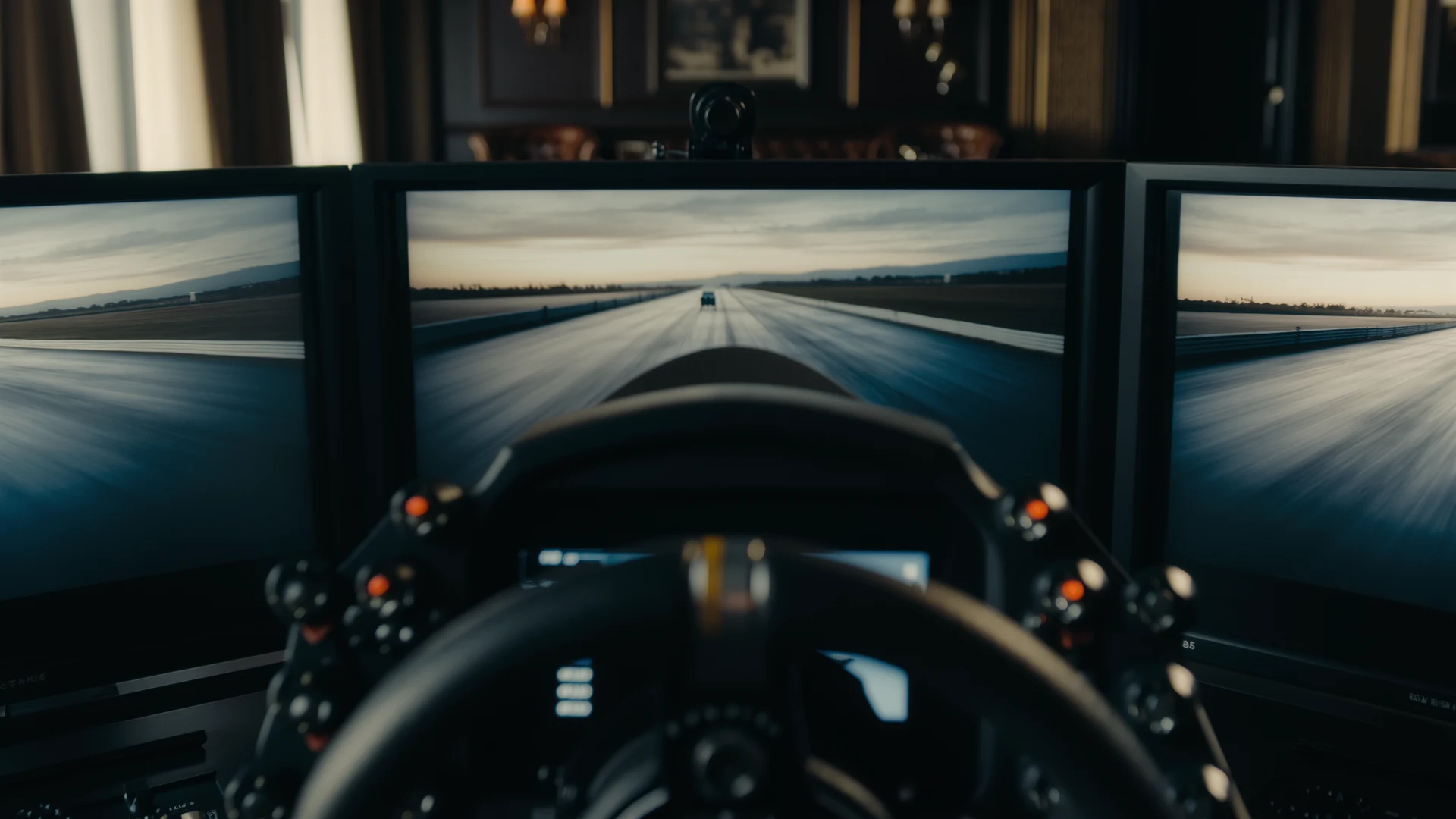
So, you want to know what’s new in the world of sim racing? Awesome! The scene is constantly buzzing with innovation, new hardware, and exciting developments on the software side. Think of it as a real-time race track where tech companies and game developers are constantly pushing the boundaries of what’s possible, all so you can get that adrenaline rush from the comfort of your own home. In short, the sim racing industry is thriving, with more ways than ever to get that true-to-life racing feel.
This is where most sim racers feel the immediate impact of industry progress. New wheels, pedals, and cockpits are always hitting the market, promising better realism, more responsive feedback, and ultimately, a more immersive experience. It’s not just about flashy gadgets; it’s about refining the connection between you and the virtual race car.
Direct Drive Wheels: The King of Feedback
If you’re looking for the gold standard in wheel feedback, direct drive (DD) wheels are pretty much where it’s at these days. Instead of using gears or belts to transfer motor power to the wheel rim, DD wheels connect the motor directly to the shaft. This means you get an unfiltered, instantaneous transfer of force feedback. You feel every bump in the road, every nuance of the tire grip, and every lock-up without any mechanical lag or slop. The technology has been around for a while, but it’s now becoming more accessible, with a range of options from enthusiast-grade to professional setups. Expect increased torque, higher resolution for finer details, and build quality that feels robust and reliable.
The Growing Market Share
Once considered a niche, high-end luxury, DD wheels are now a significant segment of the market. This increased competition has driven down prices slightly, making them a more realistic aspiration for serious sim racers. Brands are constantly iterating, offering different motor types, casing materials, and firmware updates to enhance performance.
What to Look For in a DD Wheel
When considering a DD wheel, think about:
- Torque Output: Measured in Newton-meters (Nm), this determines how strong the force feedback will be. More is generally better for realism, but you also need to consider your physical strength and the space available.
- Resolution: This relates to how precisely the wheel can interpret and transmit force feedback signals. Higher resolution means smoother, more detailed feedback.
- Build Quality: Look for sturdy construction, reliable components, and good thermal management to prevent overheating during long sessions.
- Software and Ecosystem: How well does the wheel integrate with your chosen sim racing titles? What kind of customization options does the software offer?
Pedals: More Than Just Gas and Brake
Pedals are the unsung heroes. Sure, you can get by with a basic set, but a good pedal set can transform your sim racing experience, especially when it comes to braking. Load cells, which measure the force you apply rather than just pedal travel, are becoming the norm for serious racers.
Load Cell Pedals: Realism in Braking
Load cell pedals use a sensor to measure how much pressure you’re actually putting on the brake pedal. This is a massive step up from potentiometer-based pedals that just measure how far you’ve pushed the pedal. In a real car, you brake by applying force, and load cells replicate that feeling. This allows for much more nuanced braking control, helping you trail brake effectively and avoid locking up your tires. The difference in lap times and car control can be significant.
Different Sensations for Different Needs
You’ll find load cell pedals with various spring stiffnesses and elastomer combinations, offering different levels of resistance and travel. Some aim to mimic a specific type of brake pedal feel (e.g. a race car), while others offer more adjustability to suit individual preferences. Dampening systems are also common, providing a smoother, more controlled pedal stroke.
Clutch Pedals: The Final Piece of the Puzzle
For those who are serious about manual shifting, a quality clutch pedal is essential. High-end pedal sets often include a load cell clutch, which adds another layer of realism. This allows for precise clutch control during starts, downshifts, and heel-and-toe maneuvers, crucial for many racing scenarios.
Cockpits and Rigs: The Foundation of Immersion
A solid rig is the backbone of any serious sim racing setup. While you can start with a desk clamp, dedicated cockpits offer a much more stable and comfortable platform, dramatically increasing immersion.
From Basic to Extravagant
The range of cockpits is vast. You have simpler, foldable structures that are great for saving space, mid-range options that offer good adjustability and stability, and then the full-blown professional rigs that are essentially custom-built racing seats with integrated wheel and pedal mounts. The trend is towards more integrated solutions where the wheel, pedals, and even shifters all feel like part of a cohesive unit.
Modularity and Customization
Many modern cockpits are designed with modularity in mind. This means you can add accessories like keyboard trays, monitor mounts, or even motion platforms later on if you decide to upgrade. The ability to fine-tune the position of your wheel, pedals, and seat is paramount for achieving optimal ergonomics and driving comfort.
Beyond the Basics: Motion Platforms
While still a significant investment and more niche, motion platforms are gaining traction. These devices physically move your rig to simulate acceleration, braking, and cornering forces. The sense of G-forces is simulated, making the experience incredibly visceral and adding a new dimension to realism that even the best force feedback wheels can’t replicate alone.
Software Innovations: More Than Just Graphics
While hardware gets a lot of the spotlight, the software side of sim racing is just as crucial. Game engines are becoming more sophisticated, data acquisition is improving, and the overall realism of the driving physics is constantly being refined.
Physics Engines: The Heart of Realism
The core of any sim racing title is its physics engine. This is what dictates how the virtual car behaves. Recent advancements focus on more accurate tire models, suspension physics, and aerodynamics. This means that the cars in games feel more like their real-world counterparts, with predictable handling characteristics and realistic responses to driver inputs.
Tire Models: The Key to Grip
Tire modeling is arguably the most important aspect of a physics engine for realism. Modern sim games are investing heavily in understanding how tires interact with the track surface under various conditions, temperature, pressure, wear, and slip angles. This leads to more believable grip levels, understeer, oversteer, and the subtle nuances of tire slip.
Heat and Wear Simulation
Beyond just grip, you’re seeing more sophisticated simulation of tire heat buildup and wear. Pushing too hard can overheat your tires, leading to a loss of grip. Driving smoothly and managing tire wear over a race distance is becoming a critical skill, just like in real motorsport.
Aerodynamics: Feeling the Downforce
Understanding and simulating aerodynamic forces is another area of rapid progress. This means feeling the effect of downforce in high-speed corners, the slipstream from other cars, and the impact of body roll and wing adjustments on the car’s stability. This is particularly noticeable in open-wheel or prototype racing sims.
Assetto Corsa Competizione: Setting the Bar
Assetto Corsa Competizione (ACC) continues to be a benchmark for GT3 racing simulation. Its laser-scanning technology for tracks, highly detailed car models, and incredibly accurate physics have set a high standard. The ongoing development and regular updates from Kunos Simulazioni ensure that it remains at the forefront of GT racing realism.
Real-World Data Integration
The development team behind ACC uses a significant amount of real-world data from actual GT cars and racing teams. This data feeds directly into the physics engine, resulting in a driving experience that closely mirrors what professional GT drivers experience.
Community-Driven Improvements
While Kunos is behind the core development, the modding community and a dedicated player base constantly provide feedback, leading to continuous improvements and refinements in the game’s physics and features.
iRacing: The E-Sports Pioneer
iRacing remains a dominant force in online competitive sim racing. Its subscription model and focus on esports mean that the development is consistently driven by the need for accurate racing simulations and a robust online competition platform.
Comprehensive Track and Car Laser Scanning
iRacing’s commitment to accuracy is evident in its meticulous laser scanning of every track and car. This ensures that the virtual representations are as close to reality as possible, down to the smallest bump and camber change on the circuit.
Race Elo and Demerit System
The unique “Safety Rating” and “iRating” system in iRacing is designed to encourage clean racing and skilled driving. The system rewards drivers for clean laps and penalizes them for incidents, fostering a competitive environment where sportsmanship is as important as speed.
Simucube Track Star for iRacing
While not directly a game development, Simucube’s efforts to optimize their direct drive wheels for iRacing, with specific firmware profiles, highlight how hardware and software developers collaborate to enhance the user experience. This focus ensures that iRacers get the most out of their high-end hardware.
Competitions and Esports: The Rise of Virtual Athletes
Sim racing isn’t just a hobby anymore; it’s a legitimate sport with professional leagues, dedicated teams, and significant prize pools. This growing esports scene is driving innovation and investment in the industry.
Formula 1 Esports Series
The official F1 Esports Series is a prime example of how real-world motorsport is embracing sim racing. Top drivers from the virtual world compete for prestigious titles, and the series attracts significant viewership and sponsorship.
Bridging the Gap with Real Drivers
Many real-world racing drivers now participate in sim racing to train, stay race-fit, or simply for fun. This cross-pollination further validates sim racing as a serious discipline. Drivers like Lando Norris have built substantial followings and demonstrated considerable skill in online competitions.
NASCAR’s Involvement
Similar to Formula 1, NASCAR has increasingly leaned into sim racing. Their esports series and collaborations with sim racing platforms demonstrate a commitment to engaging with a new generation of fans and potential drivers.
Virtual Challenges and Driver Development
NASCAR employs sim racing technology for driver analysis and development, showcasing its utility beyond just entertainment. This practical application of sim racing highlights its potential as a training tool.
Emerging Technologies and Future Trends
The sim racing industry is constantly looking ahead, with several emerging technologies poised to further revolutionize the experience.
Virtual Reality (VR): Deeper Immersion
VR headsets are becoming more accessible and higher in resolution, offering an unparalleled level of immersion. Seeing the track from the driver’s perspective, with full depth perception and head tracking, can significantly enhance your sense of presence and spatial awareness.
Improved Resolution and Field of View
As VR technology advances, we’re seeing headsets with higher resolutions and wider fields of view, reducing the “screen door effect” and making the virtual world look more natural and less like a display. This makes it easier to pick out braking points and track details.
Motion Sickness and Comfort
While VR immersion is great, motion sickness can still be an issue for some. Developers are working on techniques to mitigate this, and individual tolerance varies. The trend is towards more comfortable, lighter headsets with better cooling.
Haptic Feedback Beyond the Wheel
Beyond force feedback in wheels, there’s growing interest in haptic feedback vests and suits. These can simulate vibrations, impacts, and even the engine rumble, adding another layer of physical sensation to the sim racing experience.
AI and Machine Learning: Smarter Competition and Training
Artificial intelligence is starting to play a bigger role in sim racing, both in creating more sophisticated AI opponents and in analyzing driver performance for training purposes.
Advanced AI Opponents
AI drivers are becoming more realistic, learning from your driving, and adapting their strategies. This means that even when racing against the computer, you’re getting a more challenging and engaging experience that feels less predictable and robotic.
Personalized Training with AI Analysis
Machine learning algorithms can now analyze your driving data to identify areas for improvement, such as cornering lines, braking points, and throttle control. This personalized feedback can be invaluable for accelerating your learning curve.
The Rise of AI in Analytics
Companies are also using AI to analyze vast amounts of telemetry data from both real and virtual races, providing insights that can inform car development and driver coaching. This data-driven approach is becoming increasingly important.
Cloud Computing: Accessible Power
The potential for cloud computing in sim racing is significant. Imagine being able to access high-fidelity simulations and complex physics calculations without needing an incredibly powerful PC.
Offloading Processing Power
Cloud gaming solutions could eventually allow for more resource-intensive simulations to be run on remote servers, with the visual output streamed to your device. This could democratize access to higher-end sim racing experiences.
Future of Online Competition
This could also pave the way for more complex and detailed online races, with more cars and more realistic environmental conditions being simulated simultaneously.
The Growing Ecosystem: More Than Just Games and Hardware
The sim racing world has grown into a complex ecosystem, encompassing a wide range of businesses and communities that cater to every aspect of the hobby, from content creation to specialized training.
Content Creators: Fueling the Passion
YouTube and Twitch are brimming with sim racing content creators. These individuals play a vital role in showcasing new hardware, reviewing games, sharing tips and tricks, and building communities around specific racing titles or disciplines.
Hardware Reviews and Comparisons
Many creators dedicate their channels to thoroughly testing and reviewing new wheels, pedals, rigs, and other sim racing peripherals. This helps consumers make informed purchasing decisions.
Gameplay and Analysis
Beyond just playing games, many creators offer in-depth analysis of racing techniques, car setups, and race strategies, providing valuable learning resources for aspiring sim racers.
Community Building and Engagement
Streamers often foster active communities, interacting with their viewers in real-time, answering questions, and organizing community races. This social aspect is a significant draw for many in the sim racing world.
Sim Racing Schools and Coaching
Just like in real motorsport, there are now specialized sim racing schools and coaches who offer tailored training programs to help drivers improve their performance.
Personalized Coaching Sessions
These coaches often use detailed telemetry data and video analysis to identify specific areas for improvement and provide personalized feedback and drills.
Curriculum Development for Beginners
Some programs focus on teaching the fundamentals of sim racing, from basic car control and braking techniques to more advanced race craft and setup principles, making it easier for newcomers to get started.
Leveraging Real-World Motorsport Expertise
Many sim racing coaches and schools have roots in professional motorsport, bringing valuable real-world experience and training methodologies to the virtual world.
Modding Communities: Extending the Experience
The modding communities for popular sim racing titles are incredibly active and innovative. They create new cars, tracks, and even entirely new gameplay experiences, significantly extending the life and appeal of these games.
Custom Tracks and Cars
From historically significant race tracks to obscure classic cars, modders breathe new life into sims by creating content that the developers may not have.
Physics Tweaks and Graphics Enhancements
Beyond new content, modders also often refine existing physics models or enhance graphics, providing further customization options for players. This dedication to the platform keeps communities engaged.
The Future: Integration and Accessibility
Looking ahead, the sim racing industry is likely to see even greater integration between real-world motorsport and virtual platforms. We can also expect a continued push towards greater accessibility, making it easier for more people to get involved and enjoy the thrill of virtual racing. The advancements in hardware are making the experience more realistic than ever.
Bridging the Gap Further
Expect to see even more partnerships between real racing teams and sim racing developers, leading to more realistic car models and physics. The lines between virtual and real racing will continue to blur.
Lowering the Barrier to Entry
While high-end gear can be expensive, the ongoing development of more affordable yet capable hardware, coupled with advancements in software accessibility, will likely make sim racing more approachable for a wider audience. This is key to continued growth.
FAQs
What is the current state of the sim racing industry?
The sim racing industry is experiencing rapid growth, with an increasing number of players, events, and technological advancements. The industry has seen a surge in popularity, especially during the COVID-19 pandemic, as more people turn to virtual racing as a form of entertainment and competition.What are some recent developments in the sim racing industry?
Recent developments in the sim racing industry include the introduction of new racing simulators, advancements in virtual reality technology, and the expansion of esports events and competitions. Additionally, there has been an increase in partnerships between sim racing companies and real-world racing teams and organizations.How has the sim racing industry been impacted by the COVID-19 pandemic?
The COVID-19 pandemic has had a significant impact on the sim racing industry, leading to a surge in interest and participation as real-world racing events were canceled or postponed. This has resulted in increased viewership for virtual racing events and a growing market for sim racing equipment and software.What are some key trends shaping the future of the sim racing industry?
Key trends shaping the future of the sim racing industry include the integration of virtual reality technology, the rise of esports and competitive gaming, and the development of more realistic and immersive racing simulators. Additionally, there is a growing emphasis on accessibility and inclusivity within the sim racing community.What are some notable partnerships and collaborations within the sim racing industry?
The sim racing industry has seen notable partnerships and collaborations between sim racing companies and real-world racing teams, as well as collaborations with gaming hardware and software companies. These partnerships have led to the development of new racing simulators, esports events, and opportunities for cross-promotion and brand exposure.More from News
Future of Sim Racing
The future of sim racing: how AI tire models, mixed reality, cloud streaming, cheaper direct-drive hardware and the sim-to-real pipeline reshape motor…
Revving Up: Motorsport Gaming News
Looking for the latest in motorsport gaming? You’ve come to the right place. This article will cut through the noise and get straight to what…

Racing Esports Revs Up with Exciting News
Racing esports is definitely picking up speed, with a lot of exciting news coming out of the circuit lately. We’re seeing bigger prize pools, mo…