Ultimate Supercar Simulator Experience
Ever wondered what it’s truly like to tame a supercar on a legendary track, without the multi-million dollar price tag or the terrifying risk? The “Ultimate Supercar Si…
Ever wondered what it’s truly like to tame a supercar on a legendary track, without the multi-million dollar price tag or the terrifying risk? The “Ultimate Supercar Simulator Experience” aims to deliver just that. We’re talking about high-fidelity simulators designed to replicate the sensation of driving the world’s most exotic machinery, offering a unique blend of entertainment, skill development, and a serious adrenaline rush, all within a safe and controlled environment. It’s more than just a game; it’s a detailed, immersive simulation intended to bridge the gap between virtual and real-world driving.
It’s easy to throw around the word “ultimate,” but what does it really mean in the context of supercar simulation? It boils down to a combination of cutting-edge hardware, meticulously crafted software, and a deep understanding of vehicle dynamics. This isn’t your average home gaming setup; these are professional-grade systems designed to push the boundaries of immersion.
Beyond the Basic: High-End Hardware
The foundation of any great simulator experience is its hardware. We’re talking about components that go far beyond a standard console and controller.
Motion Platforms: Feeling Every Bump and G-Force
One of the most crucial elements is the motion platform. This isn’t just about tilting and vibrating. Advanced motion platforms use sophisticated hydraulics or electric actuators to replicate acceleration, braking, cornering forces (G-forces), and even subtle road textures like bumps and curbs.
- Degrees of Freedom (DOF): You’ll often hear about 3DOF, 6DOF, or even higher. This refers to the number of axes the platform can move along. A 6DOF platform can move in all six directions (roll, pitch, yaw, surge, sway, heave), offering incredibly realistic sensations. This translates to feeling your stomach lurch under heavy braking, your body press into the bolster during a high-speed turn, and the subtle jolts as you clip a kerb.
- Response Time and Fidelity: The speed and accuracy with which the platform responds to in-game events are paramount. A laggy platform breaks the immersion entirely. Modern systems boast near-instantaneous feedback, ensuring what you see on screen is precisely what you feel in your seat.
Force Feedback Steering Wheels and Pedals: True Control
A cheap plastic wheel just won’t cut it. “Ultimate” simulators feature professional-grade force feedback steering wheels and pedal sets designed to replicate the nuances of a real supercar.
- Direct Drive Wheels: These wheels use powerful industrial motors connected directly to the steering shaft, providing incredibly detailed and strong force feedback. You feel the resistance build in corners, the subtle vibrations from the road surface, and the momentary loss of grip as a tire slips. It’s a world apart from gear-driven or belt-driven consumer wheels.
- Hydraulic Pedal Systems: Real supercars have stiff, responsive brake pedals that require significant force. Hydraulic pedal sets replicate this feel, allowing for precise trail braking and modulation. They often include load cells to measure the force applied, rather than just pedal travel, offering much greater fidelity. This means you can truly feel the bite point of the brakes and modulate pressure effectively, just like a real race driver.
Visual Immersion: Displays That Disappear
The visual aspect is equally important for immersion. You need displays that provide a wide field of view and high resolution, making you feel like you’re actually looking out of a car.
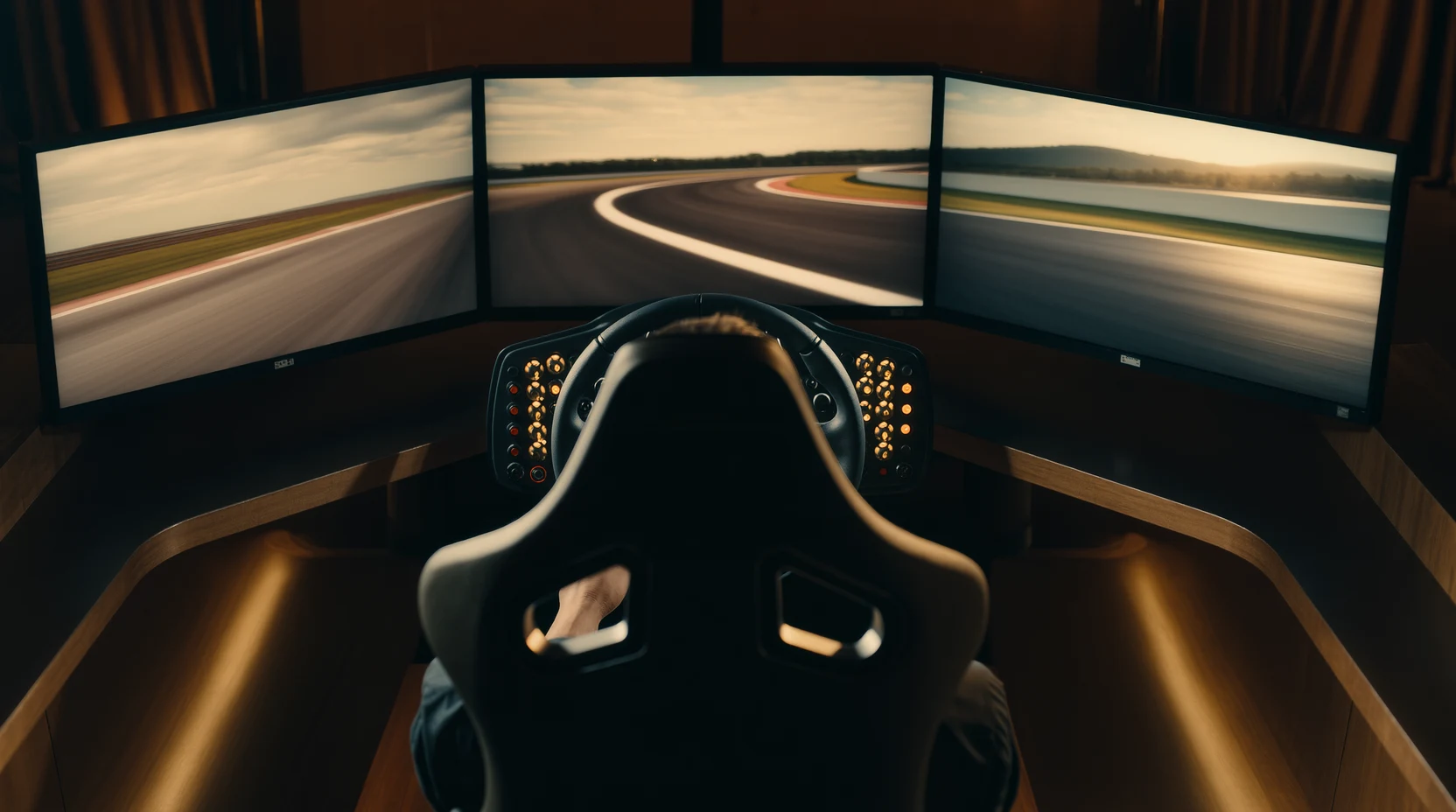
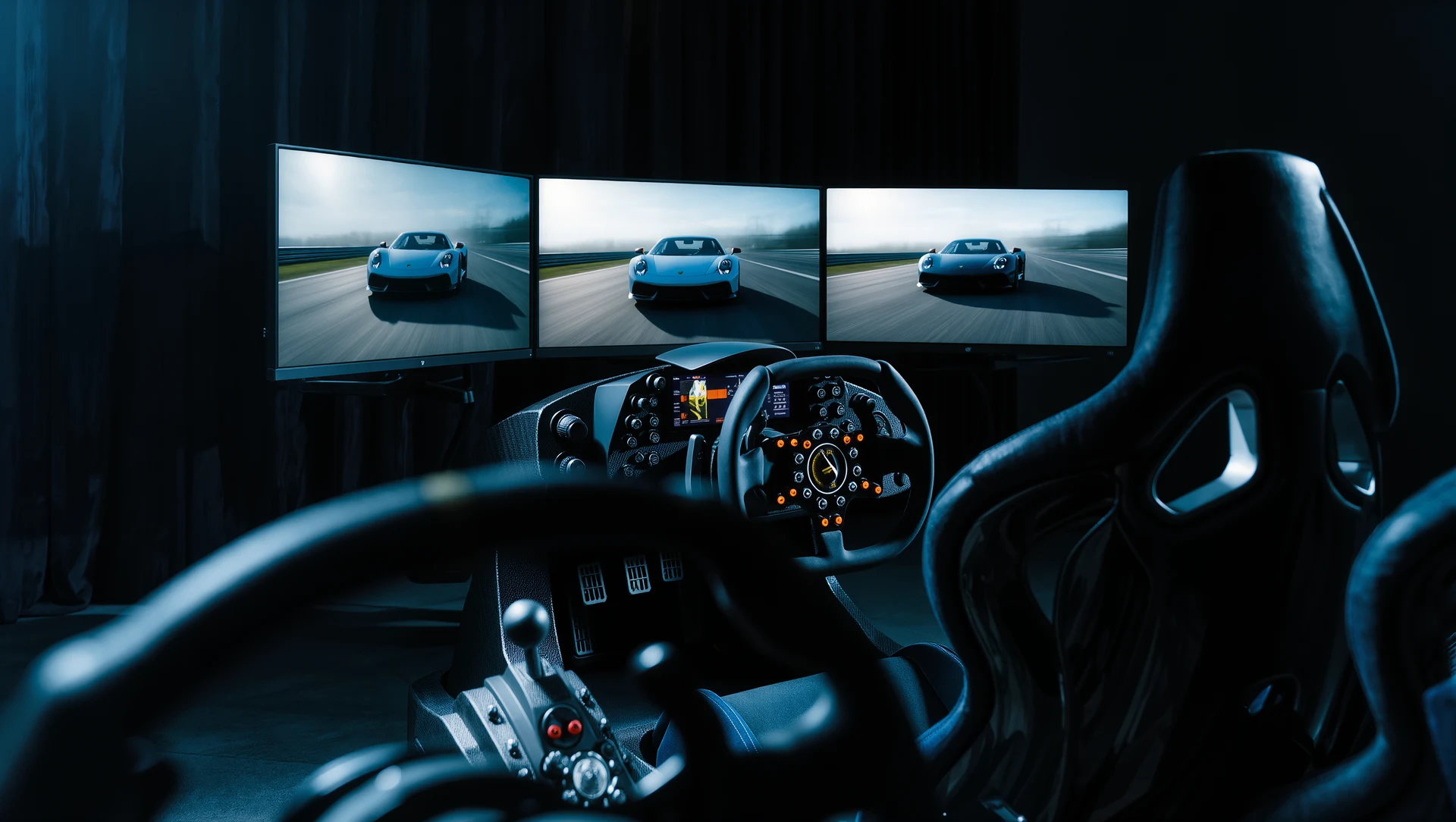
- Triple Monitor Setups or Ultrawide Displays: A single monitor simply doesn’t provide the peripheral vision needed for realistic driving. Triple monitor setups, curved ultrawide displays, or even projectors creating a wrap-around view are common. This allows you to see the apex of the corner, judge distances, and spot competitors in your blind spots, just as you would in a real car.
- High Refresh Rates and Low Latency: To avoid motion sickness and maintain realism, screens need high refresh rates (120Hz or more) and low input latency. This ensures smooth motion and immediate visual feedback for your actions.
- Virtual Reality (VR) Integration: Some ultimate simulators are combining with high-end VR headsets, offering a completely unique and even more immersive perspective. The sense of presence and depth perception in VR can be unparalleled, though it does come with its own set of challenges, including potential for motion sickness for some users.
The Software: The Brains Behind the Power
Even the best hardware is useless without excellent software. This is where the physics engines, track scanning, and detailed car models come into play.
Hyper-Realistic Physics Engines: The Science of Speed
The most crucial element of the software is the physics engine. It’s not about making cars easy to drive; it’s about accurately simulating how a car behaves under various conditions.
- Complex Tire Models: Tires are the most critical component determining a car’s grip and handling. Advanced simulator software uses highly complex tire models that account for temperature, pressure, slip angle, wear, and even the type of rubber compound. This means you’ll feel the car understeer when the front tires lose grip, or oversteer when the rears break away, just like in real life.
- Aerodynamics Simulation: Supercars rely heavily on aerodynamics for downforce. The software accurately simulates how air flows over the car, affecting stability, grip, and top speed. You’ll feel the car “stick” to the track at high speeds and become lighter in slower corners.
- Suspension and Drivetrain Details: Every detail, from the stiffness of the springs and dampers to the differential settings and engine torque curves, is meticulously modeled. This allows for fine-tuning that mimics real-world adjustments and provides accurate feedback on how changes impact performance.
Laser-Scanned Tracks: Millimeter-Perfect Recreation
No generic track models here. Leading simulators utilize laser-scanned data to recreate iconic racetracks with millimeter accuracy.
- Every Apex, Every Bump: This means every curb, every undulation, every elevation change, and even minor surface imperfections are precisely replicated. Driving a laser-scanned Nürburgring Nordschleife in a simulator feels remarkably similar to the real thing, allowing drivers to internalize the track layout and nuances without ever turning a wheel on the actual circuit.
- Dynamic Weather and Time of Day: Add in dynamic weather conditions (rain, fog, variable grip levels) and time-of-day transitions, and the challenge and realism escalate dramatically. Driving the Spa-Francorchamps circuit in the wet, with changing light, offers a depth of experience that is truly immersive.
Authentically Modeled Supercars: Digital Twins
The cars themselves are digital twins, built with incredible attention to detail, both visually and dynamically.
- Performance Data Integration: Developers work directly with manufacturers or use extensive real-world telemetry data to ensure the performance characteristics, engine power, torque, weight distribution, brake biases, aerodynamic profiles, are as accurate as possible.
- Interior Detail and Sound Design: The interiors are often meticulously recreated, with working dashboards and displays. Crucially, the sound design is exceptional, with every engine note, gearbox whine, and tire squeal captured and replicated to add another layer of immersion. Hearing the howl of a V12 or the crackle of an exhaust on downshift greatly enhances the experience.
The Experience: More Than Just Driving
Beyond the technology, the “Ultimate Supercar Simulator Experience” offers several layers of engagement. It’s not just about turning laps; it’s about learning, competing, and pushing your limits.
Training and Coaching: Sharpening Your Skills
For many, these simulators are serious tools for improving real-world driving or racing skills.
Expert Guidance and Data Analysis
Many facilities offer coaching sessions with real racing drivers. They can observe your driving, provide real-time feedback, and analyze telemetry data to pinpoint areas for improvement.
- Line Optimization: Coaches can help you identify the optimal racing line for each corner, crucial for shaving off precious tenths of a second. They can show you where you’re braking too early or too late, or where you’re not carrying enough speed through a corner.
- Braking and Throttle Control: Mastering delicate inputs is vital. The simulators allow for repeated practice of techniques like trail braking, left-foot braking, and precise throttle application out of corners.
- Mental Toughness and Consistency: Repeated exposure to high-pressure situations in a simulator can help build mental fortitude and the consistency required for real-world racing.
Realistic Race Scenarios
Simulators allow for practicing various race scenarios, from qualifying laps to full-distance races with AI opponents.
- Pit Stop Practice: Some advanced simulators even incorporate pit stop procedures, allowing drivers to practice timing their stops and rejoining the track safely.
- Overtaking Maneuvers: Practicing overtaking and defending against AI or other human drivers refines spatial awareness and decision-making under pressure.
Competitive Thrills: Racing Against the Best
For the competitive at heart, these simulators offer a platform for fierce, fair competition.
Leagues and Tournaments
Many simulator centers host regular leagues and tournaments, allowing drivers to compete against others in a structured environment.
- Leaderboards and Rankings: Global and local leaderboards fuel friendly rivalry and allow drivers to track their progress against fellow enthusiasts.
- E-Sports Opportunities: The line between sim racing and real-world racing is blurring. Top sim racers are now regularly competing in professional esports series, some even earning opportunities in real motorsport.
Multi-User Capabilities
The ability to link multiple simulators together for head-to-head racing is a huge draw.
- Head-to-Head Challenges: Race your friends, colleagues, or even strangers in a virtual showdown, experiencing the thrill of side-by-side racing without the risk of actual contact.
- Team Endurance Races: Some advanced setups allow for team endurance races, including driver swaps, adding another layer of strategy and communication.
Who is the “Ultimate Supercar Simulator Experience” For?
This isn’t just for hardened racers. The broad appeal lies in its versatility.
Aspiring Racers
For those dreaming of becoming a racing driver, these simulators are an invaluable training tool. The cost of real-world track time is astronomically high, making simulators a far more accessible way to develop and hone skills.
Car Enthusiasts
If you have a passion for exotic cars but can’t afford a real one (or several), this is your chance to experience them in a hyper-realistic way. It’s about feeling the raw power, the precise handling, and the exhilaration of driving a machine engineered for speed.
Team Building and Corporate Events
Many businesses use these experiences for unique team-building events or client entertainment. It promotes communication, friendly competition, and can be tailored to various skill levels.
The Curious and Adrenaline Seekers
Even if you have no prior interest in racing, the sheer immersion and thrill of these simulators can be incredibly captivating. It’s an accessible way to experience extreme performance and adrenaline without any actual danger. It’s a safe space to explore the limits of speed and control.
Preparing for Your Experience: Tips for Maximum Enjoyment
To get the most out of your “Ultimate Supercar Simulator Experience,” a little preparation can go a long way.
What to Wear
Most importantly, wear something comfortable. You’ll be moving and potentially sweating!
- Comfortable Clothing: Avoid restrictive clothing. Think athletic wear or anything you’d wear for light exercise.
- Appropriate Footwear: Flat-soled shoes are ideal for pedal input. Avoid chunky boots or high heels. Many places will have racing shoes you can borrow or rent.
Mental Preparation
Approach the experience with an open mind and a willingness to learn.
- Listen to Instructors: If there’s an instructor, pay close attention to their advice. They are there to help you get the most out of the simulator.
- Manage Expectations: Remember, it’s a simulator. While incredibly realistic, it’s still a digital representation. Don’t expect it to be exactly like driving a real car, but appreciate it for its own unique qualities and challenges.
- Be Patient: Learning to drive these powerful machines in a simulation takes practice. Don’t be discouraged if you spin out initially. It’s all part of the learning curve.
Physical Conditioning (Optional, but Helpful)
For longer sessions or competitive events, a degree of physical fitness can be beneficial.
- Core Strength: A strong core helps you maintain stability against the g-forces simulated by the motion platform.
- Endurance: Driving for extended periods can be surprisingly tiring, especially when concentrating intensely and fighting force feedback.
The Future of Supercar Simulation
The technology is constantly evolving. What was cutting-edge five years ago is becoming mainstream today.
Advances in Haptics and Feedback
Expect even more nuanced haptic feedback, not just through the wheel and motion platform, but potentially through the seat and even clothing, to simulate wind resistance or vibrations.
AI-Driven Coaching
More sophisticated AI will likely provide real-time, personalized coaching within the simulation itself, adapting to your driving style and offering tailored advice.
Cloud-Based Simulation and Accessibility
As internet speeds increase and cloud computing becomes more powerful, truly ultimate simulation experiences might become more accessible, potentially streaming incredibly complex physics simulations to more consumer-friendly hardware. The line between professional and consumer-grade sim racing hardware is already blurring, and this trend is only set to continue.
Ultimately, the “Ultimate Supercar Simulator Experience” offers a compelling glimpse into the world of high-performance driving. It’s a testament to how far technology has come in replicating complex real-world sensations, providing an exhilarating, educational, and genuinely thrilling experience for anyone brave enough to strap in and push the limits. Whether you’re aiming to shave seconds off your lap times, experience a dream car, or just have an incredible time, these simulators offer an unparalleled journey into the heart of speed.
FAQs
What is a supercar simulator experience?
A supercar simulator experience is a virtual reality or simulation experience that allows participants to feel like they are driving a high-performance supercar on a race track or scenic route. It typically involves using a high-tech simulator with realistic controls and visuals to create an immersive driving experience.How does a supercar simulator experience work?
Supercar simulator experiences work by using advanced technology to replicate the sensation of driving a supercar. Participants sit in a cockpit with a steering wheel, pedals, and a wraparound screen or virtual reality headset that displays realistic driving environments. The simulator responds to the participant’s inputs, providing a realistic driving experience.What are the benefits of a supercar simulator experience?
Supercar simulator experiences offer several benefits, including the opportunity to experience the thrill of driving a supercar without the cost or risk associated with real supercar driving. Participants can also improve their driving skills, learn about different supercar models, and enjoy a safe and controlled environment for high-speed driving.Where can I find a supercar simulator experience?
Supercar simulator experiences are offered at various locations, including dedicated simulation centers, entertainment venues, and special events. Some racing and driving schools also offer supercar simulator experiences as part of their programs. Additionally, there are virtual reality and gaming platforms that provide supercar simulation experiences.What should I expect from a supercar simulator experience?
Participants in a supercar simulator experience can expect to feel the excitement and adrenaline of driving a high-performance supercar. The experience typically includes realistic driving physics, immersive visuals, and the opportunity to choose from a variety of supercar models and driving scenarios. Participants may also receive guidance and instruction from experienced instructors.More from Supercars
Join the Exclusive Supercar Club Today!
If you’re wondering how to get behind the wheel of those dream machines without breaking the bank, a supercar club might be exactly what you…
Unleash Your Inner Speed Demon with a Ferrari Driving Experience
Ever dreamt of that iconic Ferrari roar? Of carving corners with precision that feels almost balletic? You’re not alone. The good news is, getti…
Unleash the Thrill: Porsche GT Driving Experience
So, you’re wondering about the Porsche GT Driving Experience and if it’s worth your time, and your money. The short answer? It’s a unique…