Unleashing Virtual Racing Insights
So, you’re wondering how virtual racing can actually help improve your real-world driving? The short answer is: a lot, if you approach it right. We’re talking about sha…

So, you’re wondering how virtual racing can actually help improve your real-world driving? The short answer is: a lot, if you approach it right. We’re talking about sharpening reflexes, learning race craft, understanding car dynamics, and even memorizing tracks. It’s not just a game; it’s a powerful, low-risk training ground for anyone serious about driving better.
Let’s be clear, virtual racing isn’t just about putting your foot down and having fun, though there’s plenty of that. It’s matured into a sophisticated simulation environment that mirrors real-world physics and track conditions with increasing accuracy. This isn’t your arcade-style racer from the 90s; these are highly detailed simulators designed to replicate the nuances of driving.
Why Simulators Matter
Modern racing simulators have come a long way. They factor in things like tire wear, fuel consumption, aerodynamic drag, suspension geometry, and even track surface temperature. This level of detail means that the decisions you make in a sim often have direct parallels to real-world driving. You’re not just moving a car around a screen; you’re engaging with a complex system that demands strategic thinking and precise execution.
The Low-Risk Learning Environment
One of the biggest advantages of virtual racing is the ability to push limits without real-world consequences. Spinning out, crashing, or misjudging a corner doesn’t cost you thousands in repairs, puts no one at risk, and doesn’t end your day prematurely. This allows for aggressive experimentation and learning. You can try different racing lines, braking points, and car setups without fear, making mistakes a valuable part of the learning process rather than a costly setback.
Cost-Effectiveness
Training for real-world racing or even just track days can be incredibly expensive. Fuel, tires, entry fees, potential repairs, it all adds up fast. Virtual racing offers a significantly more affordable alternative. A good sim rig might be an initial investment, but once set up, the ongoing costs are minimal compared to consistent real-world track time. This democratizes access to high-level driving practice, allowing more people to hone their skills.
Mastering Car Control and Dynamics
This is where the rubber (virtual rubber, that is) truly meets the road. Feeling confident and in control of a car at its limit is a skill that takes countless hours to develop. Virtual racing provides an accelerated path to understanding this critical aspect of driving.
Understanding Weight Transfer
In a simulator, you can keenly feel how braking, accelerating, and turning shift the car’s weight. Hard braking transfers weight forward, increasing front tire grip and decreasing rear grip. Accelerating shifts it backward. Turning moves it to the outside wheels. Learning to anticipate and manage these shifts is fundamental to smooth, fast driving. Sims, especially with good force feedback, communicate this information effectively, allowing you to react and adjust.
Oversteer and Understeer Recovery
These are the two big ones that beginners often struggle with. Oversteer (when the rear loses grip) and understeer (when the front loses grip) are inevitable when pushing a car hard. Simulators are fantastic for practicing how to catch a slide and recover control. You can deliberately provoke these situations and practice the necessary counter-steering and throttle modulation until it becomes second nature. It’s a fantastic way to develop the muscle memory without spinning into a tire wall.
Threshold Braking Techniques
Braking effectively is often overlooked but crucial for fast lap times. Virtual racing allows you to practice threshold braking, applying maximum brake pressure without locking up the wheels. With good force feedback pedals, you can learn to feel that fine line. You can also experiment with trail braking, where you gradually release the brakes as you turn into a corner, using the weight transfer for better front-end grip.
Cornering Apex and Line Selection
Choosing the correct racing line and hitting the apex perfectly are cornerstones of fast driving. Sims provide immediate feedback on your line. You can experiment with different approaches to a corner, seeing how early or late you turn in, where you apex, and when you get back on the power, directly impacts your exit speed and subsequent straightaway speed. Over time, you build an intuitive understanding of optimal lines.
Developing Race Craft and Strategic Thinking
Driving fast is one thing; racing well is another. Virtual racing provides a realistic environment to learn the psychological and strategic elements of competitive driving.
Overtaking and Defending
This is where things get exciting. Virtual racing teaches you how to spot overtaking opportunities, execute passes cleanly, and critically, how to defend your position without being overly aggressive or dangerous. You learn about setting up a pass, using slipstreams, and understanding driver behavior, both your own and that of your competitors.
Managing Tire Wear and Fuel
Many modern simulators include dynamic tire wear and fuel consumption. This adds a crucial strategic layer. Do you push hard early, burning through tires and fuel, or conserve them for later in the race? When is the optimal time for a pit stop? These are real-world dilemmas that virtual racing helps you practice and master. Learning to manage these variables can be the difference between a podium finish and dropping down the pack.
Pit Stop Strategy and Execution
For longer races, pit stops are a vital component. Practicing entry and exit from the pit lane, adhering to speed limits, and coordinating tire changes and fuel refills in the virtual world prepares you for the pressure of real-world pit stops. Understanding the timing and impact of these stops on overall race strategy becomes clear.
Maintaining Composure Under Pressure
Multiplayer online racing can be intense. The pressure of battling for a position, managing traffic, and trying to hit your marks lap after lap is a great training ground for mental fortitude. Learning to stay calm, focused, and make rational decisions when adrenaline is high is a skill directly transferable to real-world competition.
Virtual Track Reconnaissance and Memorization
One of the most practical and immediate benefits of virtual racing is the ability to learn tracks intimately before ever setting a wheel on them in real life. This drastically reduces your learning curve and increases safety.
Lapping a New Circuit Endlessly
Imagine being able to drive a new track hundreds of times from the comfort of your home. You can learn every corner, every braking zone, every elevation change, every kerb. This familiarization means that when you get to the real track, you’re not spending your first sessions merely learning the layout; you’re already refining your lines and pushing limits.
Identifying Key Reference Points
In virtual racing, you can pause, rewind, and re-examine every turn. This allows you to identify critical reference points for braking, turn-in, and apex. These visual cues are essential for consistent lap times. You can cement these in your mind virtually, making them easier to spot and use when driving the real thing.
Understanding Track Characteristics
Some tracks are incredibly bumpy, others have challenging cambers, and some have surprisingly tight corners after long straights. Simulators can often replicate these unique characteristics. By virtually experiencing them, you gain a better understanding of how a real car might behave on that specific surface, helping you anticipate challenges and adjust your driving style accordingly.
Walkthrough & Review
Many simulators offer replay functions. This is a goldmine for analysis. You can watch your own laps, compare them to faster drivers, and pinpoint exactly where you’re losing time. You can examine your inputs, steering, throttle, brake, and see how they correlate with the car’s behavior. This analytical approach, similar to what professional drivers do with telemetry, is invaluable for continuous improvement.
Setting Up Your Virtual Training Ground
To truly unleash these insights, you need a decent setup. You don’t need to break the bank, but a few key components make a huge difference in the realism and effectiveness of your training.
Essential Hardware Components
- Wheel and Pedals: This is non-negotiable. Forget gamepads. A good force feedback wheel and a set of load cell pedals (which measure pressure, not just travel) are crucial for feeling the car and refining your inputs. This investment directly correlates with the quality of feedback you get from the sim.
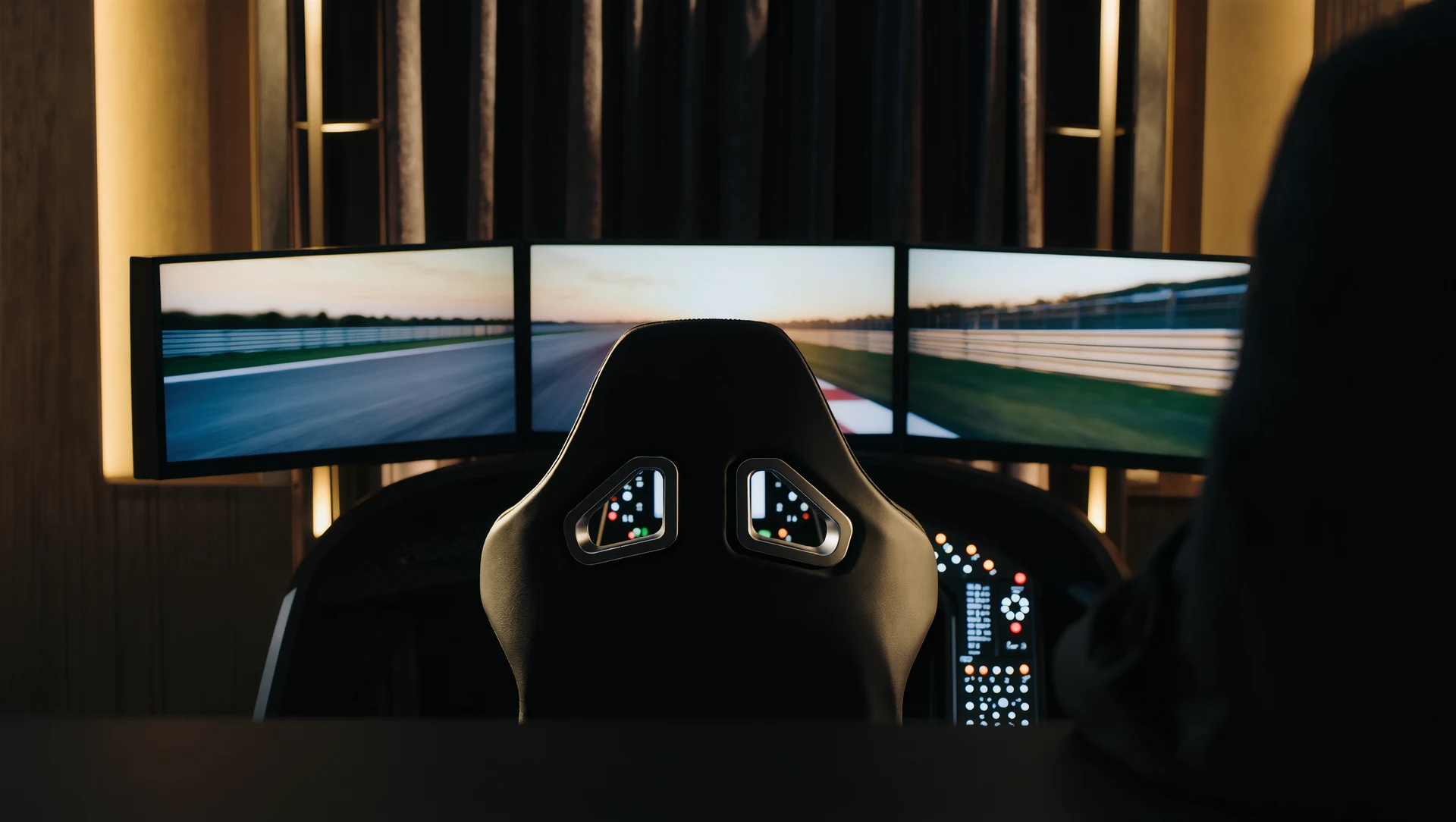
- Monitor/VR Headset: A single widescreen monitor is a good start, but tripe screens offer far better peripheral vision, enhancing immersion and situational awareness. Virtual Reality (VR) takes this even further, providing unmatched depth perception and a true sense of being in the cockpit.
- A Solid PC: Simulators can be demanding. A decent gaming PC with a strong processor and graphics card will ensure smooth frame rates, which is critical for consistent and accurate input.
Choosing the Right Software
The simulator itself makes a massive difference. Not all racing games are created equal when it comes to realism.
- iRacing: Highly regarded for its accurate physics, competitive online matchmaking, and laser-scanned tracks. It has a subscription model, but for serious training, it’s often considered the gold standard.
- Assetto Corsa Competizione (ACC): Focuses specifically on GT3 and GT4 racing with incredibly detailed car models and physics. Excellent force feedback and a great feeling of grip.
- Assetto Corsa (Original): A vast library of mods for cars and tracks, offering incredible variety. It’s also known for its challenging and rewarding physics engine.
- Automobilista 2: Great physics, particularly for Brazilian tracks and touring cars, with a strong focus on force feedback. It also boasts beautiful graphics and a range of weather conditions.
- F1 Series: Good for learning the specific dynamics of Formula 1 cars and strategy, though some argue its physics are less hardcore than dedicated simulation titles.
The Importance of Force Feedback Settings
Calibrating your force feedback correctly is vital. It’s the primary way the simulator communicates what the car is doing. Too weak, and you miss crucial information about grip limits; too strong, and it can become fatiguing and mask subtle cues. There are many guides online for optimizing FFB settings for different wheels and sims. Don’t underestimate this step.
Getting Feedback and Analysis
Many online communities exist around virtual racing. Joining leagues or communities can provide invaluable feedback on your driving. Many players use data logging tools (similar to real-world telemetry) to analyze their laps and compare them to others, helping identify areas for improvement. This kind of objective data analysis is a powerful tool for accelerating your learning.
Virtual racing is no longer just a pastime; it’s a legitimate, accessible, and highly effective training tool for anyone looking to improve their driving skills. By approaching it with a serious mindset and the right equipment, you can unlock a wealth of insights and dramatically accelerate your growth as a driver. It’s about developing feel, understanding mechanics, sharpening reflexes, and mastering strategy, all without the hefty price tag or risks of the real world.
FAQs
What is virtual racing?
Virtual racing is a form of racing that takes place in a simulated environment, often using video game technology. Participants use virtual reality headsets or gaming consoles to compete in races against other players.How does virtual racing work?
Virtual racing works by using computer software to create a realistic racing environment. Players use controllers or steering wheels to control their virtual vehicles and compete against other players in real-time.What are the benefits of virtual racing?
Virtual racing allows participants to experience the thrill of racing without the need for expensive equipment or physical risk. It also provides a platform for racing enthusiasts to compete against others from around the world.What are some popular virtual racing platforms?
Some popular virtual racing platforms include iRacing, Assetto Corsa, and Gran Turismo Sport. These platforms offer a variety of racing experiences, from realistic simulations to arcade-style racing games.Are there professional virtual racing competitions?
Yes, there are professional virtual racing competitions, such as the FIA-Certified Gran Turismo Championships and the eNASCAR iRacing Pro Invitational Series. These competitions feature top virtual racing talent competing for prizes and recognition.How does virtual racing help improve real-world driving?
Why is virtual racing considered a low-risk training ground?
Can simulators teach oversteer and understeer recovery?
More from News

Future of Sim Racing
The future of sim racing: how AI tire models, mixed reality, cloud streaming, cheaper direct-drive hardware and the sim-to-real pipeline reshape motor…
Revving Up: Motorsport Gaming News
Looking for the latest in motorsport gaming? You’ve come to the right place. This article will cut through the noise and get straight to what…

Racing Esports Revs Up with Exciting News
Racing esports is definitely picking up speed, with a lot of exciting news coming out of the circuit lately. We’re seeing bigger prize pools, mo…