Console Racing Simulators: The Ultimate Virtual Driving Experience
So, you’re curious about console racing simulators and whether they can truly give you that “ultimate virtual driving experience”? The short answer is: yes, they …
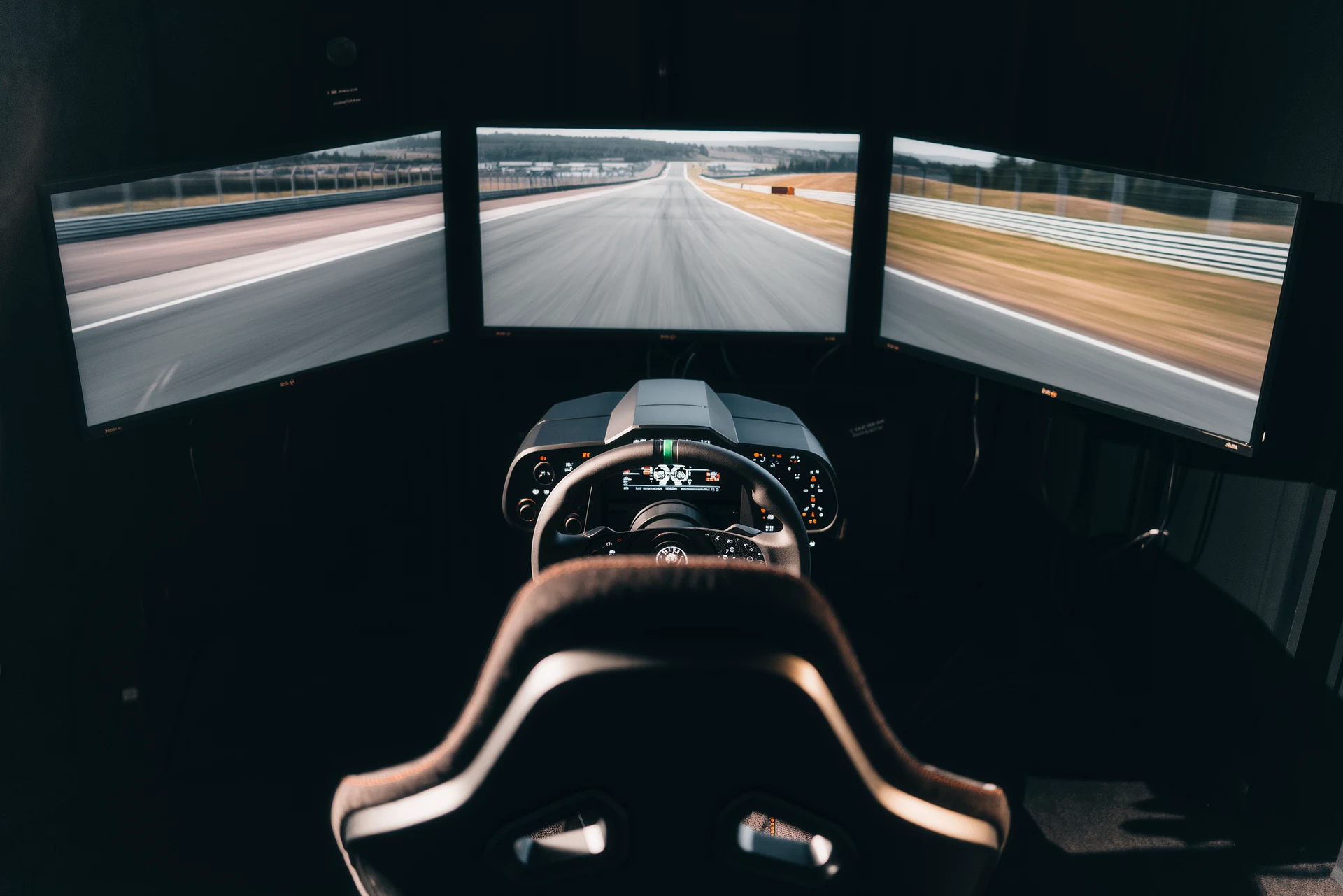
So, you’re curious about console racing simulators and whether they can truly give you that “ultimate virtual driving experience”? The short answer is: yes, they absolutely can, provided you know what you’re looking for and set your expectations realistically. Forget those arcade-style racers; we’re talking about a whole other ballgame here, one that’s all about physics, feedback, and precision.
Think of it like this: an arcade racer is like playing a video game where cars happen to exist. A console racing simulator is like being in a car, trying to understand its limits. It’s a hobby that can be surprisingly deep, rewarding, and yes, even a bit addictive. If you’ve ever found yourself mesmerized by the roar of an engine or the ballet of tires on asphalt, these simulators might just be your gateway to experiencing that thrill from the comfort of your living room.
What Exactly is a Console Racing Simulator?
When we talk about console racing simulators, we’re essentially referring to video games designed to replicate the experience of driving a real race car as accurately as possible. This goes far beyond just having wheels and a speedometer on screen. It’s about mimicking how a car behaves under different conditions, how it reacts to your inputs, and how it feels to push its limits.
The Core Principles of Simulation
At their heart, these simulators are built on a foundation of complex physics engines. This means they’re constantly calculating things like:
- Tire Grip: How much traction your tires have at any given moment, influenced by tire temperature, wear, and the road surface.
- Aerodynamics: How the air flowing over and around the car affects its downforce, stability, and speed.
- Weight Transfer: How the car’s weight shifts during acceleration, braking, and cornering, impacting tire load and grip.
- Suspension Dynamics: How the car’s suspension compresses and rebounds in response to bumps and changes in direction.
- Engine and Drivetrain: The power delivery, gear ratios, and differential behavior.
The Difference from Arcade Racers
It’s easy to confuse a simulator with a more traditional racing game. The key differentiator lies in the level of realism and the player’s engagement with it.
Arcade Racers:
- Often feature forgiving physics, making it easy to drift or powerslide.
- Booster mechanics or unrealistic handling are common.
- Focus is on speed and accessibility, often with simplified controls.
- Damage is usually visual or has minimal impact on performance.
Racing Simulators:
- Demand precise control and understanding of car dynamics.
- Mistakes are punished; going too fast into a corner will lead to a spin-out.
- Require learning braking points, optimal racing lines, and throttle control.
- Damage models can significantly affect car performance.
Why Console Simulators Are “Ultimate” for Many
The “ultimate virtual driving experience” isn’t hyperbole for dedicated sim racers. It’s about an immersive and deeply satisfying pursuit of automotive realism.
Immersion Through Detail
The developers of these games put an incredible amount of effort into recreating not just the cars, but the entire experience:
- Authentic Car Models: Detailed 3D models of real-world vehicles, often scanned or meticulously recreated based on manufacturer data. This includes the interior, which is crucial for a sense of presence.
- Realistic Tracks: Famous circuits like Silverstone, Spa-Francorchamps, or Nürburgring are laser-scanned to capture every undulation, kerb, and gradient with astonishing accuracy.
- Dynamic Weather and Time of Day: Rain can drastically change track conditions, making certain parts slippery. Night racing adds a new layer of challenge.
- 3D Soundscapes: The distinct engine notes of different cars, tire squeal, wind noise, and track ambiance all contribute to a believable atmosphere.
The Thrill of Pushing Limits
For many, the ultimate draw is the challenge and reward of mastering these complex systems.
- A Steep, But Rewarding Learning Curve: It takes time and practice to understand how to drive a simulated car effectively. This challenge is part of the appeal. You’re not just pressing buttons; you’re learning a skill.
- The “Aha!” Moments: The feeling when you finally nail a perfect corner, understand how to manage tire wear, or execute a clean overtake is incredibly satisfying.
- Fostering Real-World Driving Insights: Many sim racers find they develop a better understanding of vehicle dynamics that can even translate, in subtle ways, to their real-world driving.
Essential Hardware for the Sim Experience
While you can get started with a standard controller, true immersion in console racing simulators often calls for dedicated hardware. This is where the experience elevates from “playing a racing game” to “participating in a sim.”
The Steering Wheel and Pedals
This is arguably the most important peripheral for any simulator enthusiast.
- Force Feedback (FFB): This is the magic ingredient. A good FFB wheel will translate the forces acting on the car’s front wheels directly into your hands. You’ll feel the road surface, the understeer as the front tires lose grip, the bump of a kerb, and the subtle shifts in weight.
- Wheel Materials and Build: From plastic to leather, and from basic gear-driven FFB to more advanced belt or direct-drive systems, the quality and feel vary significantly.
- Pedal Sets: Beyond just acceleration and braking, good pedal sets offer resistance, especially for the brake pedal, mimicking the feel of a real car. Some even include a clutch for manual gear changes.
Types of Force Feedback Systems
Understanding FFB is key to appreciating its impact:
- Gear-Driven: Often found in entry-level wheels, these can feel a bit notchy or less refined.
- Belt-Driven: Smoother than gear-driven, offering a more progressive feel.
- Direct Drive: The most advanced and expensive. The steering wheel is directly attached to the motor, offering incredibly detailed and immediate feedback.
- Hall Effect Sensors: Used in many modern wheels and pedals, these use magnetic fields instead of physical contact, leading to greater durability and accuracy.
Shifters and Handbrakes
For those seeking even more realism, these add another layer of control and engagement.
- Sequential Shifters: A simple stick you push forward or pull back to change gears, mimicking a race car’s transmission.
- H-Pattern Shifters: These replicate the traditional manual gear stick with a gate pattern, requiring you to engage the clutch and shift into specific gears.
- Handbrakes: Essential for rally simulations and certain types of drifting.
Top Console Racing Simulators to Consider
The choice of simulator can be as personal as the choice of car outside. What one person finds perfect, another might find lacking. Here are some of the leading contenders on consoles, known for their simulation credentials:
Gran Turismo Series (PlayStation)
The undisputed king of simulation on PlayStation for decades. Gran Turismo is known for its massive car list, exceptionally detailed models, and a physics engine that evolves with each iteration.
- Strengths: Unparalleled car collection, stunning graphics, deep career mode, accessible yet deep simulation.
- Considerations: Can sometimes feel more like a sim-cade (a blend of simulation and arcade) compared to pure PC sims, though it leans heavily towards simulation.
Forza Motorsport Series (Xbox)
Forza Motorsport offers a strong simulation experience on Xbox, often praised for its handling model and competitive online racing.
- Strengths: Excellent physics, great graphics, robust online multiplayer, strong progression system.
- Considerations: While very sim-like, it might not delve into the absolute minutiae of physics that some hardcore PC sims do.
Assetto Corsa Competizione (PlayStation, Xbox)
This game is the official video game of the GT World Challenge. It’s built on a highly detailed physics engine developed by Kunos Simulazioni and is renowned for its realistic tire model and handling.
- Strengths: Extremely realistic tire physics, authentic GT3 racing experience, excellent FFB feedback, official GT World Challenge content.
- Considerations: Primarily focused on GT3 cars, so if you’re after a wider variety of vehicles, this might be limiting.
F1 Series (PlayStation, Xbox)
Developed by Codemasters (now EA), the F1 series offers the most authentic Formula 1 experience on consoles. They consistently strive for year-on-year improvements in physics and handling.
- Strengths: Official F1 license, realistic F1 car handling, strong career mode, engaging multiplayer.
- Considerations: Limited to Formula 1 cars, which is obviously its niche.
Setting Up Your Console Sim Rig
Creating your “ultimate” experience isn’t just about the software; it’s about how you physically interact with it. Setting up your console sim rig can be a project in itself, but the rewards are immense.
Choosing Your Cockpit and Mounts
Where will your wheel and pedals live? This is crucial for ergonomics and immersion.
- Wheel Stands: A popular option for those who don’t want a permanent setup. They fold away and provide a stable base for your wheel and pedals.
- Racing Cockpits: These are more involved, offering a dedicated seat and integrated mounts for your wheel, pedals, and even shifter. They provide the most stable and immersive platform.
- Desk Clamps: Many wheels come with robust desk clamps, which can be a good starting point if you have a sturdy desk. However, they can sometimes lead to flex or vibrations.
Ergonomics and Comfort
You’ll be spending a lot of time here, so comfort is paramount.
- Seating Position: Aim for a position that mimics a real car, allowing you to comfortably reach the wheel and pedals without straining.
- Wheel Angle and Height: Experiment to find what feels natural and allows for precise control.
- Pedal Placement: Ensure they are firmly planted and at an angle that feels comfortable for your feet.
Cable Management
A tidy setup is not only aesthetically pleasing but also helps prevent accidental snags or disconnections during intense racing moments.
- Cable Ties and Sleeving: Simple tools that can make a big difference.
- Velcro Straps: Great for adjustable cable management.
- Integrated Cable Channels: Many high-end cockpits come with these built-in.
The Road Ahead: Future of Console Racing Simulators
The world of racing simulators on consoles is constantly evolving, with technology and developer ambition pushing boundaries.
Advancements in Physics and AI
Expect even more sophisticated physics engines that can more accurately model tire wear, suspension degradation, and the subtle nuances of car behavior. Artificial intelligence is also becoming more sophisticated, leading to more challenging and realistic AI opponents.
Growing VR Integration
While VR on consoles is still somewhat nascent compared to PC, the push for more immersive experiences means we’ll likely see better VR support and more developers leveraging its potential for truly mind-blowing virtual driving.
Community and Esports Expansion
The online racing community is thriving, and esports continues to grow. More competitive leagues, organized events, and opportunities to race against other enthusiasts will undoubtedly shape the future of console racing sims.
Is It “Ultimate” for You?
The truth is, the “ultimate virtual driving experience” is a subjective thing. For some, the sheer fidelity and depth of PC simulators are unmatched. But for many console players, the combination of powerful hardware, increasingly sophisticated games, and dedicated peripherals offers an incredibly compelling and deeply satisfying way to experience the thrill of racing from their living room. If you love cars, challenging yourself, and the pursuit of perfection, then a console racing simulator might just be the ultimate experience you’re looking for. It’s a journey, not just a game, and one that can be endlessly rewarding.
FAQs
What are console racing simulators?
Console racing simulators are video games that aim to simulate the experience of driving a race car. They are designed to provide a realistic driving experience, including accurate physics, vehicle handling, and racing environments.What gaming consoles are compatible with racing simulators?
Racing simulators are available for various gaming consoles, including PlayStation, Xbox, and Nintendo. Different racing simulators may be exclusive to specific consoles, so it’s important to check compatibility before purchasing.What features can be found in console racing simulators?
Console racing simulators often include features such as realistic vehicle customization, dynamic weather and track conditions, online multiplayer modes, and a variety of licensed cars and tracks. Some simulators also offer virtual reality support for an even more immersive experience.Are racing simulators suitable for casual gamers?
While racing simulators can be enjoyed by casual gamers, they are designed to provide a more realistic and challenging driving experience compared to arcade-style racing games. Players who enjoy a more authentic and detailed driving experience may find racing simulators more appealing.What are some popular console racing simulators?
Popular console racing simulators include titles such as Gran Turismo, Forza Motorsport, and Project CARS. These games are known for their realistic graphics, extensive car and track selection, and attention to detail in vehicle handling and physics.More from Games & Platforms
F1 Sim Racing Guide
F1 sim racing guide: compare F1 24, iRacing, RSS and AMS2, choose the right wheel and load-cell brake, and master braking, ERS and tire strategy.…
Assetto Corsa Ultimate Guide
Assetto Corsa ultimate guide: the best mods (Content Manager, CSP, SOL, Pure), free cars and tracks, online racing, performance tuning, and AC vs ACC …
iRacing Complete Guide
IRacing complete guide: how the online racing sim works, real pricing, iRating vs Safety Rating, the Rookie path, and whether iRacing is worth the cos…