IRacing Complete Guide
IRacing complete guide: how the online racing sim works, real pricing, iRating vs Safety Rating, the Rookie path, and whether iRacing is worth the cost.…
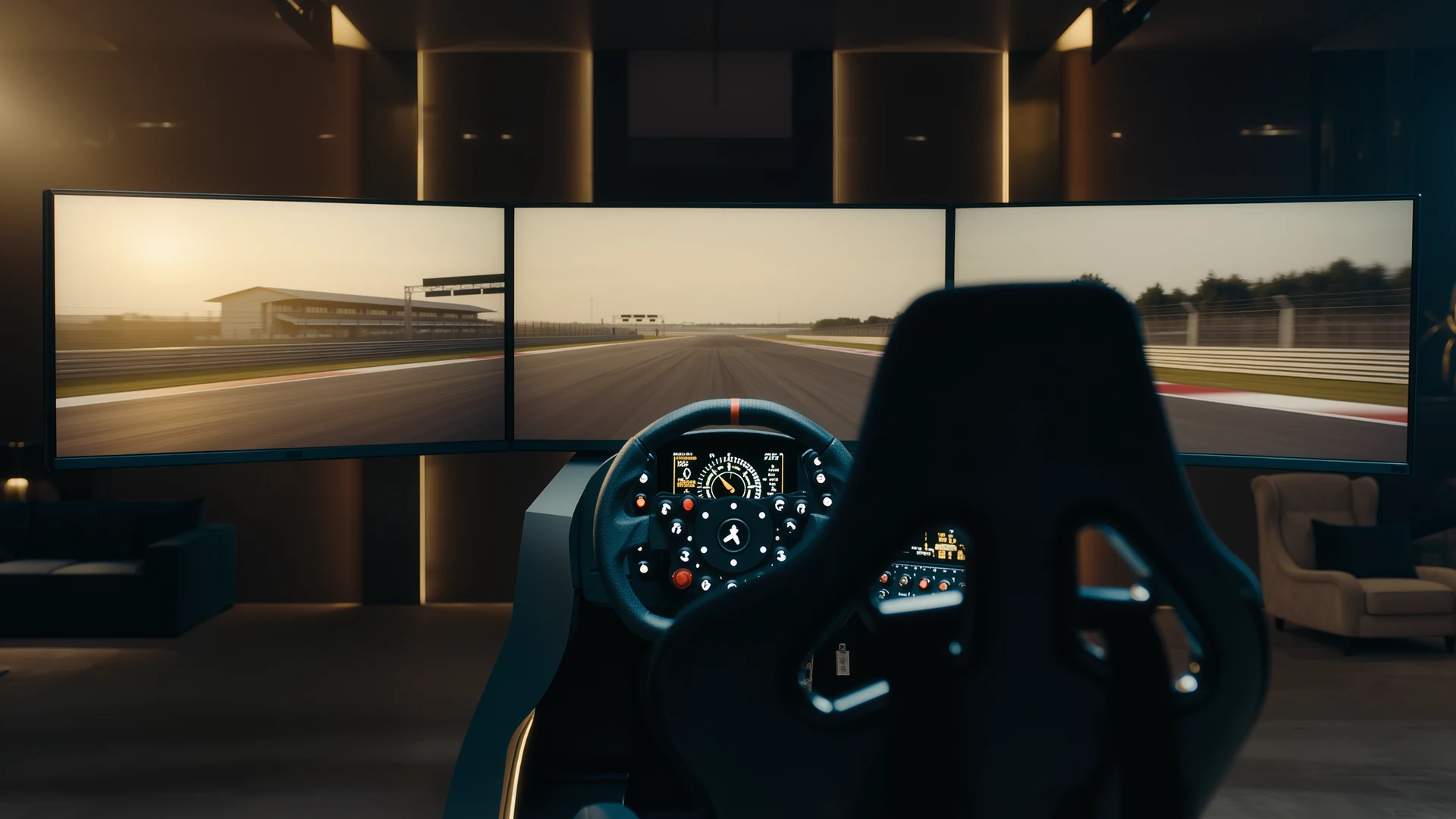
IRacing is a subscription-based online motorsport simulation service, founded in 2004 by Dave Kaemmer, built around scheduled, sanctioned races and dual iRating and Safety Rating systems.
Key Takeaways
- iRacing was founded in 2004 by Dave Kaemmer, co-founder of Papyrus Design Group, the studio behind Grand Prix Legends and the NASCAR Racing series.
- Every race is a scheduled, sanctioned event with a registration window, dedicated practice server, timed qualifying, and a starting grid set by your fastest lap.
- Two persistent rating systems define your identity: iRating, an Elo-derived measure of pace, and Safety Rating, which tracks incidents per corner driven.
- Subscriptions cost 12.99 dollars monthly, 99 dollars per year (8.25 monthly), or 179 dollars for two years (7.46 monthly), with new members getting 40 to 50 percent off.
- Extra cars cost 11.95 dollars each and tracks 14.95 dollars each, with bulk discounts of 10 or 15 percent and a permanent 20 percent discount after owning 40 items.
- Beginners should start in the Rookie Mazda MX-5 Cup, run at least 30 solo practice laps, set FOV correctly, and start Rookie races from the pit lane to earn a clean D license.
- A realistic first-year budget is roughly 150 to 250 dollars, dropping to 60 to 120 dollars annually thereafter as your owned content library grows.
What Is iRacing? The Definitive Explanation of the World’s Premier Online Racing Platform
iRacing is not a video game in any conventional or traditional understanding of that term. It is a motorsport simulation service, a subscription-based, continuously updated, professionally maintained, and competitively governed online racing platform that prioritizes realistic vehicle dynamics, competitive integrity, structured competition, and the organized administration of sanctioned racing events above every other possible consideration. Founded in 2004 by Dave Kaemmer, the co-founder of Papyrus Design Group, the legendary development studio responsible for creating Grand Prix Legends, widely and correctly regarded as the first true consumer racing simulator, and the iconic NASCAR Racing series that defined and dominated PC-based racing simulation throughout the entirety of the 1990s, iRacing represents the culmination of multiple decades of accumulated expertise in building simulation software that real-world motorsport professionals trust, rely upon, and integrate into their competitive workflows. The platform has grown from a small, intensely passionate community of early adopters into the undisputed, universally acknowledged global standard for competitive online sim racing. Its active subscriber base numbers in the hundreds of thousands, distributed across every time zone and every continent, ensuring that populated, competitive race sessions are available twenty-four hours per day, every single day of the year.
iRacing’s single defining and differentiating characteristic, the feature that separates it fundamentally from every other racing simulator on the market, is its organized, scheduled, and sanctioned competition structure. Unlike every competing product, iRacing does not permit you to simply browse a list of active servers and join whichever random public lobby happens to be running at the moment. Every race on the service is a scheduled, published, organized event that appears on a calendar accessible weeks or months in advance. Races occur on a fixed, repeating schedule, typically every hour or every two hours, with the specific frequency determined by the popularity, complexity, and session duration of each individual racing series. The driver experience follows a structured, professional-motorsport workflow: you identify an upcoming race session that fits your schedule, you register during a defined registration window, you join a dedicated practice server populated exclusively by the other drivers who have registered for that specific session, you participate in a formal, timed qualifying session that determines your starting grid position according to your fastest lap time, and then you compete in the race itself. Every single official race session you complete on the service permanently affects two persistent, publicly visible, mathematically rigorous rating systems that between them define your entire competitive identity on the platform. Your iRating is an Elo-derived statistical measurement of your raw driving pace and race results relative to every other driver in the iRacing population. Your Safety Rating quantifies your demonstrated ability to complete race sessions without committing incidents, off-track excursions, losses of vehicle control, or, most consequentially, contact with other competing cars. This dual-rating architecture creates genuine, meaningful, and personal stakes for every single race you enter on the service. You care about the outcome of a mid-field battle for fourteenth position because that result directly, measurably, and permanently affects both your iRating and your ability to progress to higher license classes. You drive with discipline, awareness, and spatial respect because every incident affects your Safety Rating and, through it, your access to faster cars, longer races, more prestigious series, and higher levels of competition. No other consumer simulator creates this specific psychological environment where every racing decision carries lasting consequences, and it is this competitive weight, this sense that your actions genuinely matter beyond the immediately visible result, that makes iRacing uniquely compelling to its subscriber base.
Pricing Transparency: What iRacing Actually Costs, Itemized and Explained
iRacing is expensive relative to its commercial competitors. No honest, responsible guide can present this fact otherwise, and any review or recommendation that minimizes, obscures, or deflects from the cost structure does a fundamental disservice to potential subscribers who deserve to make fully informed financial decisions before committing their money and their time.
Subscription Costs: The Monthly Access Fee
The base subscription fee provides access to the iRacing service infrastructure, the matchmaking servers, the competition database, the protest and stewarding system, the forums, and all associated online functionality, along with the base content package that includes approximately twenty cars and twenty-five tracks. Subscription pricing is structured as follows: a monthly plan at $12.99 per billing period, representing the most expensive per-month rate and suitable primarily for initial service evaluation or short-term participation; a one-year prepaid plan at $99.00, which reduces the effective monthly cost to $8.25; and a two-year prepaid plan at $179.00, which further reduces the effective monthly cost to $7.46. New, first-time subscribers consistently receive a substantial introductory discount, typically forty to fifty percent off the initial subscription term, which dramatically reduces the financial barrier to entry during the critical evaluation period. Existing, renewing subscribers can take advantage of iRacing’s annual Black Friday promotional period, which has historically offered a twenty-five percent discount on subscription renewals, making this the optimal time to extend membership. Active-duty military personnel, reservists, and honorably discharged veterans qualify for an ongoing twenty-five percent subscription discount through iRacing’s formal partnership with the United States Department of Veterans Affairs and equivalent programs in allied nations.
Content Costs: Cars, Tracks, and the Economics of Racing Variety
The subscription fee alone provides access only to the limited base content library. Every additional vehicle you wish to own and race costs a standardized $11.95 per car. Every additional circuit you wish to race on costs a standardized $14.95 per track. These are single, one-time purchases that are permanently, irrevocably attached to your iRacing account, once purchased, a car or track is yours to use for the entire remaining lifetime of your account with no further payment required. A typical twelve-week racing season in a popular series, for example, the GT3 Sprint fixed-setup series, the IMSA multi-class series, or the FIA Formula 4 open-wheel series, visits twelve different circuits, rotating weekly. Of those twelve circuits, approximately three or four will be base content tracks that you already own by virtue of your subscription. The remaining eight or nine circuits, plus the specific car required for the series if you have not previously purchased it, represent additional per-item content costs. iRacing provides bulk purchase discounts to partially mitigate these accumulating expenses: purchasing any three to five items in a single checkout transaction earns a ten percent discount on those items; purchasing six or more items in a single transaction earns a fifteen percent discount. Furthermore, once your account has accumulated forty or more individual pieces of owned content, cars and tracks combined, you receive a permanent, automatically applied twenty percent discount on every future content purchase, representing the long-term pricing tier that committed, multi-year subscribers will eventually reach through the natural accumulation of content across multiple seasons of participation.
A Realistic, Representative First-Year Budget
For a hypothetical new iRacing subscriber who commits to the service for a full calendar year and wishes to participate in one popular, well-populated series, the Ferrari GT3 Challenge, which uses a single car for the entire season, a representative budget calculation proceeds as follows. Initial one-year subscription purchased during a new-member promotional period: approximately $49 to $66, depending on the specific offer active at the time of signup. The Ferrari 296 GT3 car required for series participation: $11.95. Approximately eight track purchases over the course of the twelve-week season, at $14.95 per track, organized into two separate checkout transactions of four items each to consistently receive the ten percent bulk discount: approximately $107.64. Total realistic first-year financial commitment: approximately $168 to $185. For a subscriber who wishes to participate more broadly, perhaps racing in the GT3 Sprint series, the IMSA multi-class series, and the Formula 4 open-wheel series simultaneously, the content costs increase correspondingly and might reach $250 to $350 in the first year. After that initial year, with a library of owned content already established and significant overlap between series from season to season, annual content costs typically stabilize in the range of $60 to $120, varying with the breadth of series participation. Across a multi-year period of sustained, committed use, a dedicated iRacer might spend a cumulative total of $500 to $700 on content purchases, after which point they own essentially all the most frequently used circuits in their preferred racing discipline and only purchase occasional new releases as they are added to the service.
The Dual Rating System: Understanding iRating and Safety Rating
Safety Rating: Your License to Compete at Higher Levels
Safety Rating, universally abbreviated as SR within the iRacing community, measures your demonstrated ability to complete race sessions while avoiding incidents of any kind. Every incident you commit during an official session is counted against your Safety Rating with specific weightings: a single wheel leaving the racing surface onto the runoff area or grass counts as a one-times incident (1x); a complete loss of vehicle control resulting in a spin, regardless of whether contact occurs, counts as a two-times incident (2x); and any form of car-to-car contact, car-to-wall contact, or car-to-barrier contact counts as a four-times incident (4x). The Safety Rating calculation divides your total accumulated incident points by the total number of corners you have driven across your most recent race history, with more recent sessions weighted progressively more heavily than older sessions in a continuously rolling window. SR values range from the starting Rookie license level at 2.50 upward through D, C, B, and A license classes, with each transition requiring the driver to exceed specific SR thresholds, typically 3.00 to advance normally and 4.00 for what the community terms a fast-track promotion, and to complete a minimum number of official races or time trials in their current license class. The single most important piece of strategic advice for any new iRacer, validated by the collective experience of the entire community: do not attempt to win Rookie class races. Instead, start every Rookie race from the pit lane after the field has departed, maintain generous distance from all other cars, drive clean and conservative laps, avoid every possible incident, and collect your D class license within a handful of completed races. Competitive, meaningful, and genuinely rewarding racing on the iRacing service truly begins at the D license level and above. Rookie class is a filter and a training ground, not a competitive environment.
iRating: The Statistical Measurement of Your Competitive Pace
iRating, abbreviated as iR, is an Elo-derived, zero-sum skill rating system that mathematically measures your race pace and competitive results relative to the entire population of iRacing drivers in your chosen racing discipline. After each official race concludes, iRating points are algorithmically exchanged between all participating drivers based on their finishing positions relative to their pre-race iRating values: finishing ahead of a driver who entered the race with a higher iRating than yours earns you points from that driver, while finishing behind a driver who entered with a lower iRating costs you points to that driver. The total number of iRating points within each individual race split is conserved, this is a mathematically zero-sum exchange at the race level, though not at the service level because new drivers continuously enter the population with starting ratings. New drivers typically begin their iRacing career at an iRating of 1,350 for road racing and 1,350 for oval racing. The approximate top one percent of all iRacing subscribers across all disciplines hold an iRating above 5,000. The approximate top one-tenth of one percent exceed 7,000. For the vast majority of iRacers who race for enjoyment, personal development, and community rather than as professional esports competitors, a stable, sustained iRating between 1,500 and 2,500 indicates competent, clean, and genuinely competitive driving at a level that produces consistently enjoyable racing. Essential psychological perspective: iRating is fundamentally a matchmaking algorithm designed to place you into race splits populated by drivers of broadly similar demonstrated skill, not a high-score table or a measure of personal worth. A driver who maintains a 2,000 iRating while racing cleanly, respectfully, and with consistent sportsmanship is universally respected within the community. A driver with a 4,000 iRating who habitually dive-bombs corner entries, blames every incident on other drivers regardless of fault, and generates a stream of successful protest filings from competitors is not respected, they are tolerated and avoided.
The Rookie Path: How to Begin Your iRacing Career Correctly and Efficiently
iRacing offers four fundamentally distinct racing disciplines, each with entirely separate, non-overlapping license progression tracks, iRating calculations, and Safety Rating measurements: road racing, encompassing sports cars, GT cars, prototypes, and formula cars; oval racing, encompassing stock cars, IndyCar, and modifieds; dirt oval racing; and dirt road racing, encompassing rallycross and off-road trucks. The overwhelming majority of new subscribers choose road or oval as their primary discipline.
Before registering for your first race, invest significant, focused time in solo practice. The Rookie Mazda MX-5 Cup series is the most popular, most populated, and most recommended entry point for road racing. This vehicle was deliberately selected by iRacing’s competition designers as the Rookie training car because it is forgiving and communicative at the limit of grip, it teaches fundamental vehicle dynamics principles including weight transfer management, momentum conservation, and smooth control inputs more effectively than any faster car could, and it produces consistently close, exciting, and educational racing. Run a minimum of thirty continuous, focused solo practice laps at the week’s active circuit before ever registering for a race session. Memorize every braking zone, every turn-in reference point, every apex, and every corner exit trajectory. Watch at least one track guide video on YouTube, the channels maintained by Dave Cam, Basic Ollie, and the broader Sim Racing Corner network provide free, expert-level, corner-by-corner track guides for essentially every car-and-track combination that exists on the iRacing service.
Set your field of view correctly before making any other configuration decision. iRacing includes a built-in FOV calculator, accessible through the Options menu, then the Graphics tab, then the Monitor configuration section, that requires only two measurements: your physical screen width and the measured distance from your eyes to the screen surface. Enter these values honestly and trust the mathematically calculated result. An incorrect FOV fundamentally distorts your visual perception of speed, of distance to braking markers and other cars, and of the spatial relationships that govern safe, clean racing. The correct, mathematically derived FOV will feel uncomfortably narrow or zoomed in when you first apply it, this sensation is universal and passes completely within thirty to sixty minutes of driving.
Start your Rookie races from the pit lane. Do not qualify. Do not grid up with the field. Wait for the entire grid to depart Turn 1, then join the circuit at a conservative pace. Your sole objective in Rookie class is accumulating clean corners and achieving zero-incident race finishes, not winning races or setting fast laps. The Mazda MX-5 is durable, the races are short at approximately fifteen minutes, and clean conservative driving will reliably earn your D license within a small number of completed races.
Install and configure Crew Chief, the free third-party spotter and race engineer application. It provides dramatically superior spatial awareness, fuel calculations for races requiring pit stops, and verbal alerts for incidents ahead that iRacing’s built-in spotter cannot match. Every experienced iRacer uses Crew Chief or an equivalent third-party spotting tool, it is essentially mandatory for clean, safe racing at any license level above Rookie.
Career Progression and Special Events: The iRacing Experience Matures
A representative road racing career progression follows: D Class introduces the Ferrari GT3 Challenge, GT4 cars in the Sports Car Challenge, and the GR86 Cup with the free Toyota GR86 teaching momentum conservation. C Class introduces the Porsche Cup car, no ABS, no traction control, manual clutch, widely regarded as iRacing’s ultimate driver training vehicle, and multi-class racing through the IMSA Michelin Pilot Challenge pairing GT4 and TCR machinery. B Class delivers the marquee series: GT3 Sprint with forty-minute races, and the IMSA iRacing Series with GTP prototypes, LMP2, and GT3 cars sharing the track at dramatically different speeds and performance envelopes. A Class represents the pinnacle with full-length Formula 1 Grand Prix races using the Mercedes-AMG W13 and the highest-tier IMSA endurance events.
Iracing’s Special Events: the annual Rolex 24 at Daytona, the 12 Hours of Sebring, the 24 Hours of the Nurburgring, the 24 Hours of Spa, and Petit Le Mans, are the crown jewels of the sim racing calendar, attracting thousands of participants in team-based endurance races that run for the full real-world duration. The experience of crossing the finish line at dawn after a full night of driving, with your teammates celebrating in voice chat, represents one of the most profound and memorable achievements available in any form of interactive entertainment.
Essential Third-Party Software: The Extended iRacing Ecosystem
iRacing’s built-in tools are functional but deliberately minimal. The community has developed a rich, sophisticated ecosystem of third-party applications. Crew Chief provides professional-quality spotting, fuel strategy calculation, and race engineering audio feedback at no cost. Trading Paints enables custom car liveries with a free tier and a premium option at $12 annually. Overlay suites including Racelab, Kapps, and iOverlay provide real-time relative timing, tire data, fuel status, track maps, and radar-based proximity detection for $5 to $10 monthly. Virtual Racing School at $9.99 per month provides telemetry analysis comparing your driving data to professional coaches corner-by-corner, the single most effective tool for lap time improvement available. SimHub delivers dashboard displays, bass shaker tactile transducer control, and button box integration on a donationware model.
Is iRacing Worth the Investment? An Honest Assessment
If your goal in sim racing is structured, organized, professionally governed online competition where your decisions and actions carry genuine, persistent consequences, where your progression through levels of competition is earned through demonstrated skill and discipline rather than passively granted through accumulated play time, and where the racing is actively stewarded by a professional team that reviews incident protests and issues penalties including suspensions for repeat offenders, iRacing is unmatched in the current market and, at present, functionally unmatchable by any competing platform. The total cost of participation, realistically $150 to $250 in the initial year, $60 to $120 annually thereafter, is comparable in financial magnitude to a single real-world track day event, one set of high-performance tires for a sports car, or a reasonable annual expenditure on any serious adult hobby. No other simulator currently delivers the specific, visceral, adrenaline-producing experience of battling for position on the final lap of a top-split iRacing race against twenty equally skilled, equally respectful, equally invested competitors, all operating under the shared understanding that their reputation, their rating, and their access to future competition depend on how they conduct themselves in this moment. That experience, that particular combination of competition, community, and genuine consequence, is exactly what iRacing sells, and for those who value it, it is worth every dollar of the price of admission.
Frequently Asked Questions (FAQ)
What is iRacing and who created it?
iRacing is a subscription-based online motorsport simulation service, not a conventional video game. It was founded in 2004 by Dave Kaemmer, co-founder of Papyrus Design Group, the studio behind Grand Prix Legends and the NASCAR Racing series. It is regarded as the global standard for competitive online sim racing, with hundreds of thousands of active subscribers worldwide.
How much does iRacing cost per month?
iRacing offers three subscription tiers: 12.99 dollars monthly, 99 dollars for one year (8.25 dollars per month), and 179 dollars for two years (7.46 dollars per month). New first-time subscribers typically receive 40 to 50 percent off their initial term. Veterans and active military qualify for an ongoing 25 percent discount through a Department of Veterans Affairs partnership.
How much do cars and tracks cost in iRacing?
Each additional car costs a standardized 11.95 dollars and each additional track costs 14.95 dollars, as one-time permanent purchases tied to your account. Buying three to five items at once earns a 10 percent discount, six or more earns 15 percent, and owning 40 or more total items unlocks a permanent 20 percent discount on all future content.
What is the difference between iRating and Safety Rating in iRacing?
iRating is an Elo-derived, zero-sum measure of your race pace relative to all other drivers, with new drivers starting at 1,350. Safety Rating quantifies your ability to race without incidents, dividing incident points by corners driven. Incidents are weighted: 1x for a wheel off track, 2x for a spin, and 4x for any contact.
How should a beginner start their iRacing career?
Begin in the Rookie Mazda MX-5 Cup, the most recommended road-racing entry point. Run at least 30 focused solo practice laps, set your field of view correctly using the built-in FOV calculator, and start Rookie races from the pit lane after the field departs. Your goal is clean, zero-incident finishes to earn a D license, not winning.
What is the best car to learn iRacing in?
The Rookie Mazda MX-5 Cup car is the most popular and most recommended training vehicle. iRacing's designers chose it because it is forgiving and communicative at the limit of grip, teaching weight transfer, momentum conservation, and smooth inputs more effectively than faster cars. Its races are short, around 15 minutes, and produce consistently close, educational racing.
What third-party software do iRacing drivers use?
Crew Chief is the essential free spotter and race engineer app, providing spatial awareness and fuel calculations. Other tools include Trading Paints for custom liveries, overlay suites like Racelab and iOverlay, Virtual Racing School at 9.99 dollars monthly for telemetry analysis, and SimHub for dashboards and tactile transducer control on a donationware model.
Is iRacing worth the cost?
For drivers seeking structured, professionally governed online competition where decisions carry persistent consequences, iRacing is described as unmatched and functionally unmatchable. The cost, realistically 150 to 250 dollars the first year and 60 to 120 dollars annually after, is comparable to a single track day or one set of high-performance tires. For those who value it, it is worth the price.
More from Games & Platforms
F1 Sim Racing Guide
F1 sim racing guide: compare F1 24, iRacing, RSS and AMS2, choose the right wheel and load-cell brake, and master braking, ERS and tire strategy.…
Assetto Corsa Ultimate Guide
Assetto Corsa ultimate guide: the best mods (Content Manager, CSP, SOL, Pure), free cars and tracks, online racing, performance tuning, and AC vs ACC …
The Ultimate Guide to iRacing: Mastering the Virtual Track
So, you’re curious about iRacing, huh? You’ve seen the awesome videos, heard the hype, and maybe even thought, “Could I do that?…