Sim Racing VR vs Triples Guide
VR vs triple monitors for sim racing in 2026: compare Quest 3, Pimax Crystal Light and triple 1440p setups on field of view, depth, comfort, cost and GPU needs.…
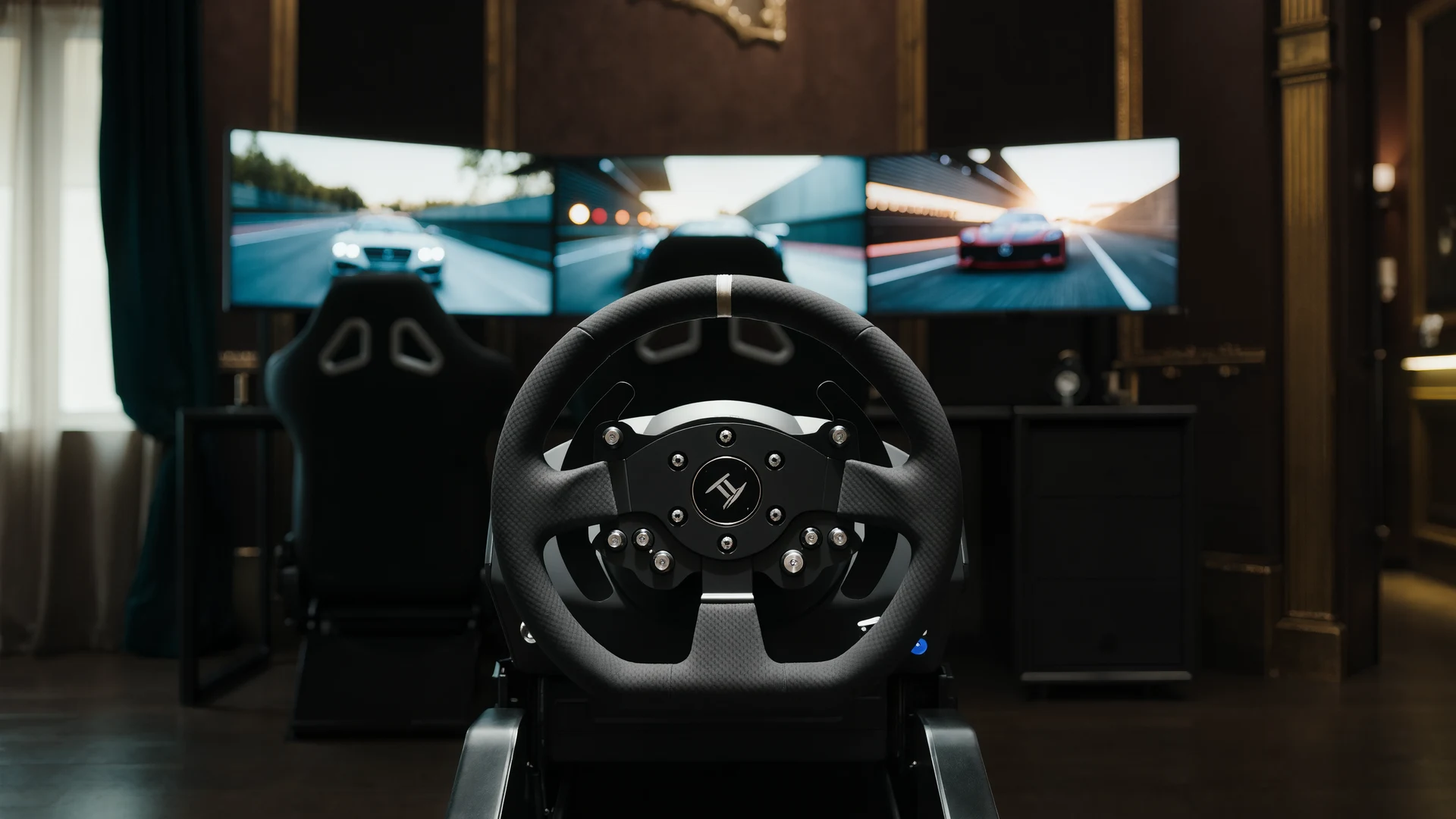
Choose VR for true binocular depth and compact immersion, or triple monitors for the widest field of view and unlimited comfort during long sessions.
Key Takeaways
- The Meta Quest 3 at $499 is the recommended default VR headset for sim racing, offering 2,064 by 2,208 pixels per eye, 120 Hz, and roughly a 110-degree horizontal field of view.
- The Pimax Crystal Light at $899 is the resolution champion with 2,880 by 2,880 pixels per eye (about 16.6 million total), a 125-degree field of view, but it needs an RTX 4080 or RX 7900 XTX minimum.
- The Bigscreen Beyond at $999 weighs just 127 grams for all-day comfort, but trades down to a 102-degree field of view and a 90 Hz refresh ceiling.
- Triple 27-inch or 32-inch 1440p IPS panels at 165 Hz deliver a 150-to-170-degree field of view, around 11.5 million pixels, and unlimited multi-hour comfort.
- A complete triple-monitor setup costs roughly $1,200 to $2,000 including monitors and a freestanding stand from Sim-Lab ($399) or Trak Racer ($349).
- VR gives true binocular stereoscopic depth and natural head tracking, while triple monitors are inherently flat and rely on learned monocular depth cues.
- Over ninety-five percent of users overcome VR motion sickness within one to two weeks of graduated exposure; a face-directed fan helps reduce nausea.
VR Versus Triple Monitors: The Defining Decision in Sim Racing Display Hardware
No single equipment decision in the entire sim racing hobby generates more passionate, more deeply held, and more vigorously defended opinions than the choice between virtual reality and triple monitor displays. Both approaches solve the fundamental limitation that makes single-screen sim racing inherently compromised: a single monitor, regardless of its size or resolution, cannot provide the wide, immersive field of view that real-world driving depends upon for spatial awareness, for accurately judging corner apexes through peripheral vision, for sensing the position of competing cars alongside you without turning your head, and for the fundamental, intuitive understanding of speed and distance that the human visual system evolved to process across nearly 180 degrees of horizontal vision. Both VR and triple-monitor configurations deliver this expanded field of view. Both enable you to see apexes that would be invisible on a single screen, to judge braking distances with dramatically improved accuracy, and to race wheel-to-wheel with genuine spatial confidence. But the experiences are fundamentally, qualitatively different, and each approach carries distinct, significant, and non-overlapping advantages and disadvantages spanning immersion, comfort, performance requirements, cost, physical footprint, and practical usability. This guide provides the definitive, data-driven comparison incorporating current hardware specifications and real-world user experience data as of mid-2026.
Virtual Reality: Total Visual Immersion Inside the Cockpit
The VR Experience Described
When you lower a virtual reality headset over your eyes and launch a supported simulator, you are no longer looking at a screen that displays a representation of a car’s interior. You are inside the car. The cockpit surrounds you in three dimensions, occupying the correct physical scale relative to your body. The steering wheel you see floating before you occupies the exact spatial position of the physical wheel your hands are gripping, and when your virtual hands turn the virtual wheel in perfect synchronization with the physical wheel in your real hands, the illusion is seamless and profound. When you turn your head to look toward a corner apex, your view changes exactly as it would in a real vehicle, because the motion is your actual head rotation being tracked in real time by the headset’s inertial measurement unit and external cameras with sub-millimeter positional accuracy and sub-degree rotational precision. Depth perception is real, natural, and binocular, your brain receives slightly different images in each eye, exactly as it does in physical reality, and the resulting stereoscopic depth cue allows you to judge distances to braking markers, corner apexes, and competing vehicles with the same intuitive accuracy you use when walking through a doorway or reaching for a coffee cup. The sense of speed is genuinely visceral, the optical flow of track surface and barriers rushing past your peripheral vision at 250 kilometers per hour triggers the same mild autonomic nervous system response as real high-speed travel. The sense of scale is physically accurate, the daunting, stomach-dropping compression at the bottom of Eau Rouge at Spa, the terrifying proximity of Armco barriers at the Nurburgring Nordschleife, the claustrophobic closeness of the walls through Monaco’s swimming pool complex are all experienced with the correct, intimidating physical scale that a flat monitor simply cannot convey.
VR Hardware Recommendations for Sim Racing in 2026
The Meta Quest 3 at $499 for the 128-gigabyte storage configuration is the best overall value in VR hardware for sim racing and the recommended default choice for the vast majority of users. Its specifications are genuinely impressive: 2,064 by 2,208 pixels rendered per eye, yielding approximately 4.5 million total pixels across both displays; pancake lens optics that deliver edge-to-edge image clarity without the central sweet-spot limitation that plagued earlier Fresnel-lens headsets; a maximum refresh rate of 120 Hertz; and a measured horizontal field of view of approximately 110 degrees. The Quest 3 connects to a gaming PC either wirelessly through Air Link or the third-party Virtual Desktop application, or through a wired USB-C Link Cable, the official Meta cable costs $79, but fully functional third-party alternatives with equivalent bandwidth are available for approximately $20. For sim racing specifically, a wired connection is strongly recommended: it eliminates the compression artifacts and occasional latency spikes that wireless streaming can introduce, and since you are seated in a fixed position, the cable imposes no practical limitation. The Quest 3’s standalone mobile processing capabilities are irrelevant for sim racing purposes, but the headset’s price-to-performance ratio is currently unmatched in the market.
The Pimax Crystal Light at $899 is the current resolution champion among consumer VR headsets suitable for sim racing. Each eye receives 2,880 by 2,880 pixels, approximately 16.6 million total pixels, nearly four times the Quest 3’s pixel count. The display panels are mini-LED with full-array local dimming, producing genuinely deep black levels and high dynamic range. The lenses are glass aspheric elements delivering class-leading geometric stability and minimal distortion. The refresh rate reaches 120 Hertz, and the horizontal field of view spans approximately 125 degrees, notably wider than the Quest 3 and most competing headsets. The Crystal Light strips out the standalone processor, battery, and inside-out tracking cameras of the original Pimax Crystal, reducing weight from 960 grams to 815 grams and price from $1,599 to $899. It requires a DisplayPort connection to the PC, not USB-C video, and demands a powerful GPU: an NVIDIA RTX 4080 or AMD RX 7900 XTX is effectively the minimum for running at full panel resolution with a stable 90 frames per second in demanding conditions such as ACC with rain and a full grid. For sim racers who prioritize raw visual clarity above every other consideration, the ability to read corner-exit marker boards and braking distance signage without any squinting, leaning forward, or guesswork, the Crystal Light is the current performance benchmark.
The Bigscreen Beyond at $999 is a fundamentally unique product: a custom-fitted, ultra-compact, ultra-lightweight headset that weighs 127 grams, approximately the mass of an average candy bar or a small smartphone. Each eye receives 2,560 by 2,560 pixels on micro-OLED panels, with pancake lenses providing a 102-degree horizontal field of view at 90 Hertz refresh rate. The Beyond requires SteamVR base stations for positional tracking, adding approximately $300 for two base station units, and a pair of Valve Index controllers for the initial room-setup procedure, adding $279, though the controllers are not needed during actual sim racing use. The Beyond’s defining competitive advantage for endurance racers is physical comfort: at 127 grams, it is genuinely wearable for the full duration of a twenty-four-hour race stint without developing neck fatigue, facial pressure points, or the general physical exhaustion that heavier headsets impose during extended sessions. The trade-off is field of view, 102 degrees is noticeably narrower than the Quest 3’s 110 degrees or the Crystal Light’s 125 degrees, and the 90 Hertz refresh rate ceiling, which some competitive drivers find limiting.
VR Advantages and Disadvantages: An Honest Assessment
The genuine, experiential advantages of VR are significant: true, binocular, three-dimensional depth perception enables millimeter-precise car placement because you judge distance using the same neurological mechanisms you evolved for physical reality; natural, intuitive head tracking means you look at apexes, check mirrors by turning your head, and glance toward a car alongside you using the same motor patterns you use in a real vehicle; the physical footprint is negligible, a VR headset occupies zero desk or floor space beyond its storage location; and no bezels interrupt your field of view at any point. The cost comparison is also favorable: a Quest 3 at $499 is substantially less expensive than three quality gaming monitors at $300 to $500 each plus a dedicated triple monitor stand at $300 to $450, totaling $1,200 to $1,950 for a complete triple-screen solution.
The equally genuine disadvantages must be acknowledged: VR headsets are worn on the face, and heat, perspiration, facial pressure, and general physical discomfort are real issues during races exceeding forty-five minutes; a subset of users experience motion sickness that never fully resolves despite graduated exposure protocols; GPU requirements are severe, driving a Pimax Crystal Light at native resolution and a stable 90 frames per second demands an RTX 4080 or better; you are visually isolated from your physical environment, unable to see your button box, keyboard, phone, beverage, or pet; and even the widest consumer VR headsets provide a narrower horizontal field of view than a properly configured triple monitor setup, requiring deliberate head rotation to see cars directly alongside.
Triple Monitors: Maximum Field of View, Maximum Practicality
Three flat-panel monitors arranged in a continuous arc wrapping around the driver’s seating position provide a panoramic, ultra-wide, high-resolution view of the simulated track environment. The center monitor displays the view directly ahead, exactly as a single screen would, while the left and right monitors display what you would see through the driver’s-side and passenger’s-side windows, the same visual information available in a real car through peripheral and side-mirror vision. With mathematically correct field of view settings configured in the simulator, objects track continuously and seamlessly from one monitor to the next. You can race for six hours continuously without any physical discomfort beyond normal seated fatigue. You can see your physical button box, your keyboard, your secondary telemetry display, and your surroundings. You can take a sip of water without removing or lifting any equipment. You can interact with another person in the room without disengaging from the simulator. Triple monitors are the practical, comfortable, high-performance default choice for the majority of committed sim racers who have the physical space to accommodate the installation.
Recommended monitor specifications: 27-inch, 1440p resolution, IPS panel technology, 165 Hertz refresh rate, models such as the Dell S2722DGM or LG 27GP850-B at $250 to $300 each, provide the optimal balance of pixel density, color accuracy, response time, and cost. Three 27-inch monitors at a viewing distance of approximately 60 centimeters yield a combined horizontal field of view of roughly 150 degrees. Moving to 32-inch panels at 1440p, Samsung Odyssey G5 or Gigabyte M32Q at $300 to $400 each, increases the sense of physical scale and immersion while expanding the horizontal field of view to approximately 170 degrees at a comfortable 65-centimeter viewing distance. The enthusiast-tier option of triple 42-inch OLED panels, LG C3 or equivalent at $800 to $900 each, creates a genuinely life-sized cockpit environment with perfect black levels and infinite contrast, but demands an RTX 4090-class GPU to maintain acceptable frame rates and occupies a physical footprint exceeding 1.5 meters in width and 1.2 meters in depth.
Essential supporting hardware: a freestanding triple monitor stand from Sim-Lab at $399 or Trak Racer at $349, freestanding is strongly preferred over cockpit-integrated mounting to maintain motion platform compatibility and eliminate vibration transfer from the wheel base into the displays; the Asus ROG Bezel-Free Kit ABF01 at $129, which uses optical lens strips to optically bridge the physical gaps between adjacent monitors, substantially reducing the visual interruption of bezel lines, though the optical illusion is not perfect and creates visible distortion at the lens edges; and identical DisplayPort cables of identical length for all three monitors, because mismatched cables are a common and frustrating source of VRR flickering issues on NVIDIA GPUs.
Triple Monitor Advantages and Disadvantages
The advantages are substantial and practical: unmatched peripheral vision spanning 150 to 180 degrees without any head movement, exactly as you experience in a real car; unlimited comfort for endurance sessions of any duration; superior raw resolution, triple 1440p produces approximately 11.5 million total pixels, exceeding any consumer VR headset’s rendered resolution; complete awareness of your physical environment; zero adaptation period and zero risk of motion sickness; and content creation compatibility. VR gameplay footage is inherently unstable and uncomfortable for viewers, while triple-monitor footage is clean, stable, and suitable for streaming or recording.
The disadvantages are equally real: total system cost from $1,200 to $2,000 including monitors and mounting hardware; a permanent physical footprint that dominates the room in which it is installed; a multi-hour setup and alignment process to achieve perfect color matching, brightness matching, and geometric alignment across all three displays; NVIDIA Surround or AMD Eyefinity driver-level configuration introduces its own idiosyncrasies and incompatibilities, though most modern simulators now support native triple-screen rendering that bypasses these driver-level solutions; and the fundamental absence of true stereoscopic depth perception, triple monitors are inherently flat surfaces displaying a monoscopic image to both eyes, requiring the driver to rely entirely on learned monocular depth cues rather than the innate binocular depth perception that VR and physical reality provide.
The Definitive Comparison Table
| Factor | VR: Quest 3 | VR: Pimax Crystal Light | Triple 27″ 1440p | Triple 32″ 1440p |
|---|---|---|---|---|
| Total Resolution | 9.1 megapixels | 16.6 megapixels | 11.5 megapixels | 11.5 megapixels |
| Horizontal FOV | ~110 degrees | ~125 degrees | ~150 degrees | ~170 degrees |
| Maximum Refresh Rate | 120 Hz | 120 Hz | 165+ Hz | 165+ Hz |
| Stereoscopic 3D Depth | Yes, binocular | Yes, binocular | No, monoscopic | No, monoscopic |
| Multi-Hour Comfort | Limited | Limited | Excellent | Excellent |
| Minimum GPU Required | RTX 3070 | RTX 4080 | RTX 4070 Ti Super | RTX 4070 Ti Super |
| Total Cost Including Mount | $499 | $899 | $1,050-$1,300 | $1,250-$1,600 |
| Initial Setup Time | ~15 minutes | ~30 minutes | ~3-6 hours | ~3-6 hours |
| Physical Footprint | Minimal | Minimal | ~1.4m x 1.0m | ~1.5m x 1.2m |
The Verdict: Which Display Technology Should You Choose?
If you prioritize absolute immersion, genuine binocular depth perception, natural head-movement-based situational awareness, and a compact, stowable physical footprint, and you possess a sufficiently powerful GPU, tolerance for wearing a device on your face for extended periods, and no susceptibility to VR-induced motion sickness, invest in a virtual reality headset. The Meta Quest 3 at $499 is the default, low-risk entry point. If you prioritize physical comfort during unlimited-duration sessions, the widest possible horizontal field of view without head movement, superior raw resolution and text clarity, the ability to maintain awareness of your physical environment, and a permanent installation that becomes part of your living space, and you have the physical room and the larger budget to accommodate it, invest in triple monitors. Three matched 27-inch or 32-inch 1440p IPS panels at 165 Hertz on a freestanding monitor stand is the proven, time-tested formula that serves the majority of dedicated sim racers. A growing number of committed enthusiasts choose both: triple monitors as the daily driver for practice, league racing, and streaming, with a VR headset added for special-event immersion, solo hot-lapping, and the unique experience of genuine stereoscopic depth perception. If your budget allows, this hybrid approach sacrifices nothing and delivers the complete sim racing visual experience.
Additional VR Hardware Considerations and Setup Optimization
Beyond the primary headset selection, several additional hardware and software considerations significantly affect the VR sim racing experience. A dedicated, high-quality USB PCI Express expansion card, such as the StarTech 4-Port USB 3.0 card with dedicated power, is strongly recommended for VR users, as many motherboard USB controllers share bandwidth between multiple ports and can introduce tracking glitches or disconnection events during races. The card should use a chipset known to be compatible with VR headsets; the Fresco Logic FL1100 series is widely recommended by the VR sim racing community. For Quest 3 users connecting via Link Cable, ensure the USB-C port provides sufficient power delivery to prevent gradual battery drain during extended sessions, many motherboard USB-C ports deliver only 15 watts, while the Quest 3 can draw up to 18 watts under sustained use, leading to the headset shutting down mid-race after two to three hours. A powered USB-C hub or a dedicated PCIe USB-C card with Power Delivery support resolves this issue.
For users who experience VR motion sickness, the adaptation protocol recommended by aerospace medicine and VR research communities is: begin with sessions of no more than ten minutes in duration; stop immediately at the first sensation of nausea, do not attempt to push through it; wait until the nausea has completely resolved before attempting another session; gradually increase session duration as tolerance builds; and consider using a small electric fan directed at your face during VR sessions, which has been clinically demonstrated to reduce motion sickness incidence by providing a non-visual, vestibular-consistent motion cue that helps resolve the sensory conflict between visual motion and physical stillness. The overwhelming majority of users, estimated at over ninety-five percent, achieve full adaptation within one to two weeks of consistent, graduated exposure. A small minority cannot adapt and should consider triple monitors as their permanent display solution.
Frequently Asked Questions (FAQ)
Is VR or triple monitors better for sim racing?
Neither is universally better; the article frames it as a trade-off. VR delivers true binocular depth perception, natural head-tracking immersion, and a compact footprint. Triple monitors offer the widest field of view without head movement, unlimited comfort for long sessions, and full awareness of your physical environment. Your priorities and available space decide.
What is the best VR headset for sim racing in 2026?
The Meta Quest 3 at $499 is named the best overall value and recommended default for most users. It renders 2,064 by 2,208 pixels per eye, runs at 120 Hz, and offers roughly a 110-degree field of view. For maximum clarity, the Pimax Crystal Light is the resolution champion; for comfort, the Bigscreen Beyond is the lightest.
How much does a triple monitor sim racing setup cost?
A complete triple-monitor solution costs roughly $1,200 to $2,000, including monitors and mounting hardware. Three quality 27-inch 1440p panels run $250 to $300 each, while a freestanding stand from Sim-Lab costs $399 or from Trak Racer $349. Enthusiast 42-inch OLED panels like the LG C3 reach $800 to $900 each.
Why does the Pimax Crystal Light need such a powerful GPU?
The Crystal Light renders 2,880 by 2,880 pixels per eye, about 16.6 million total pixels, nearly four times the Quest 3's count. To drive that native resolution at a stable 90 frames per second in demanding conditions such as ACC with rain and a full grid, it effectively requires an NVIDIA RTX 4080 or AMD RX 7900 XTX at minimum.
Do triple monitors give the same depth perception as VR?
No. Triple monitors are flat surfaces displaying a monoscopic image to both eyes, so drivers rely entirely on learned monocular depth cues. VR provides true binocular stereoscopic depth, sending slightly different images to each eye exactly as physical reality does, enabling millimeter-precise car placement using the same neurological mechanisms you evolved for the real world.
Can you overcome VR motion sickness for sim racing?
Yes, for most people. The article's adaptation protocol starts with sessions of no more than ten minutes, stopping immediately at the first sensation of nausea and waiting until it fully resolves before continuing. Over ninety-five percent of users achieve full adaptation within one to two weeks. A small fan directed at your face also reduces nausea.
How wide is the field of view with triple monitors versus VR?
Triple monitors provide the wider field of view. Three 27-inch panels at about 60 centimeters yield roughly 150 degrees, and 32-inch panels at 65 centimeters reach approximately 170 degrees. By comparison, the Quest 3 offers about 110 degrees, the Pimax Crystal Light about 125 degrees, and the Bigscreen Beyond about 102 degrees.
Should you buy both VR and triple monitors for sim racing?
The article says a growing number of enthusiasts choose both. They use triple monitors as the daily driver for practice, league racing, and streaming, then add a VR headset for special-event immersion, solo hot-lapping, and genuine stereoscopic depth. If your budget allows, this hybrid approach sacrifices nothing and delivers the complete sim racing visual experience.
More from Cockpits & Rigs
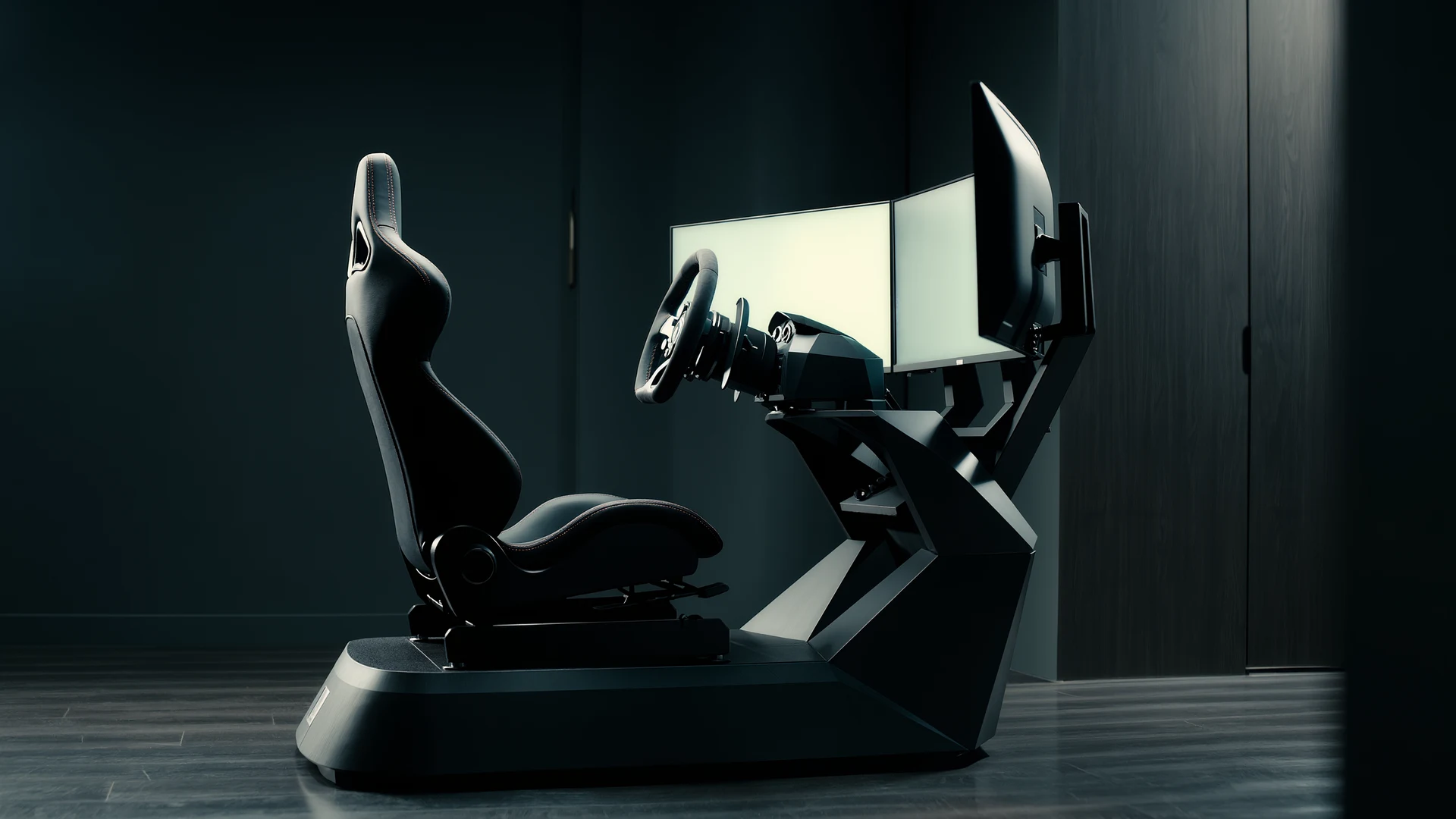
Sim Racing Motion Platforms Guide
Sim racing motion platforms guide: compare seat movers, chassis movers, D-BOX, PT Actuator, and bass shakers, with prices from $150 to $20,000-plus an…
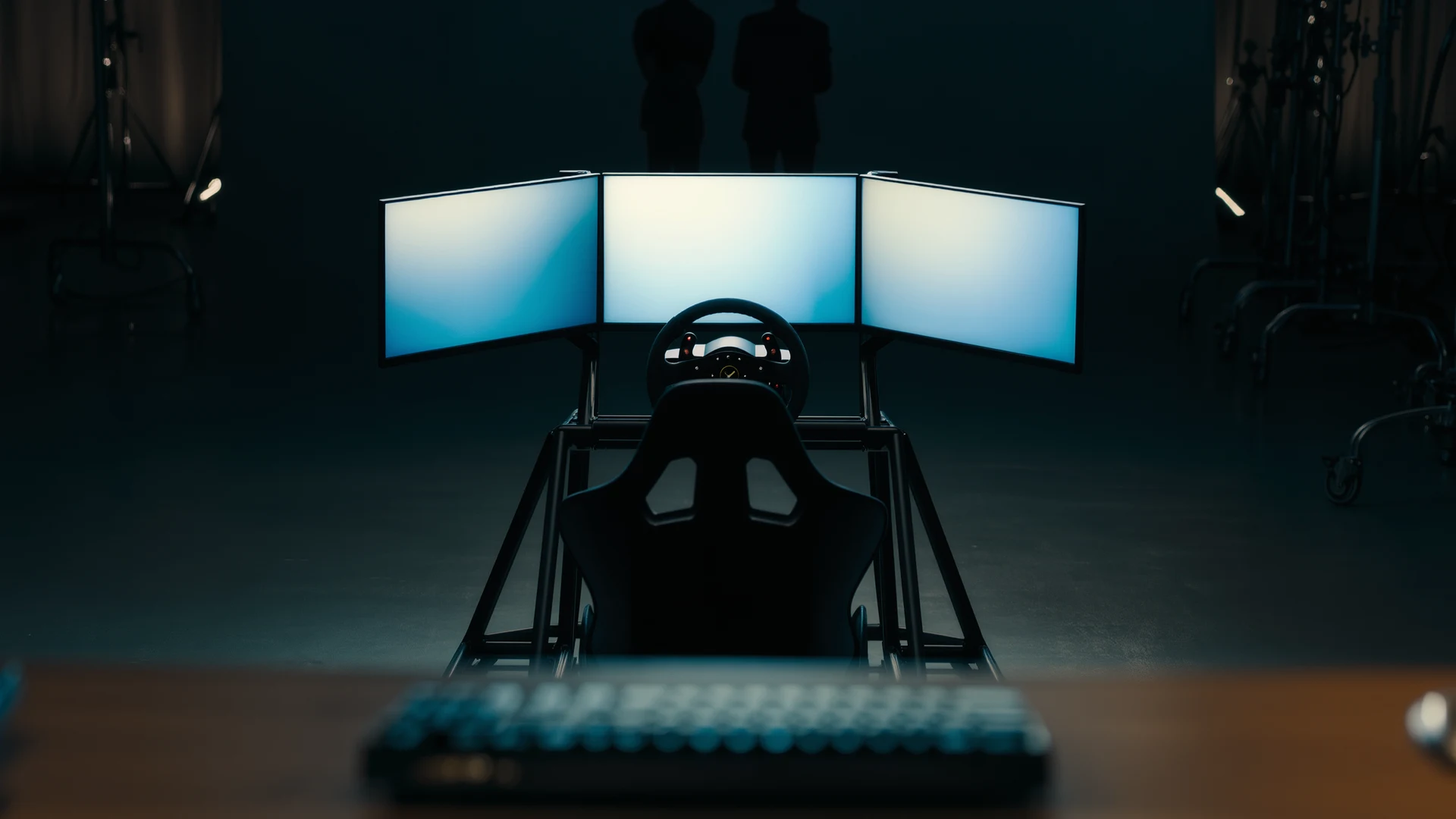
Sim Racing Cockpit Setup Guide
Sim racing cockpit setup guide: compare folding rigs, wheel stands, full cockpits and aluminum profile, plus seats, ergonomics and field-of-view tips.…
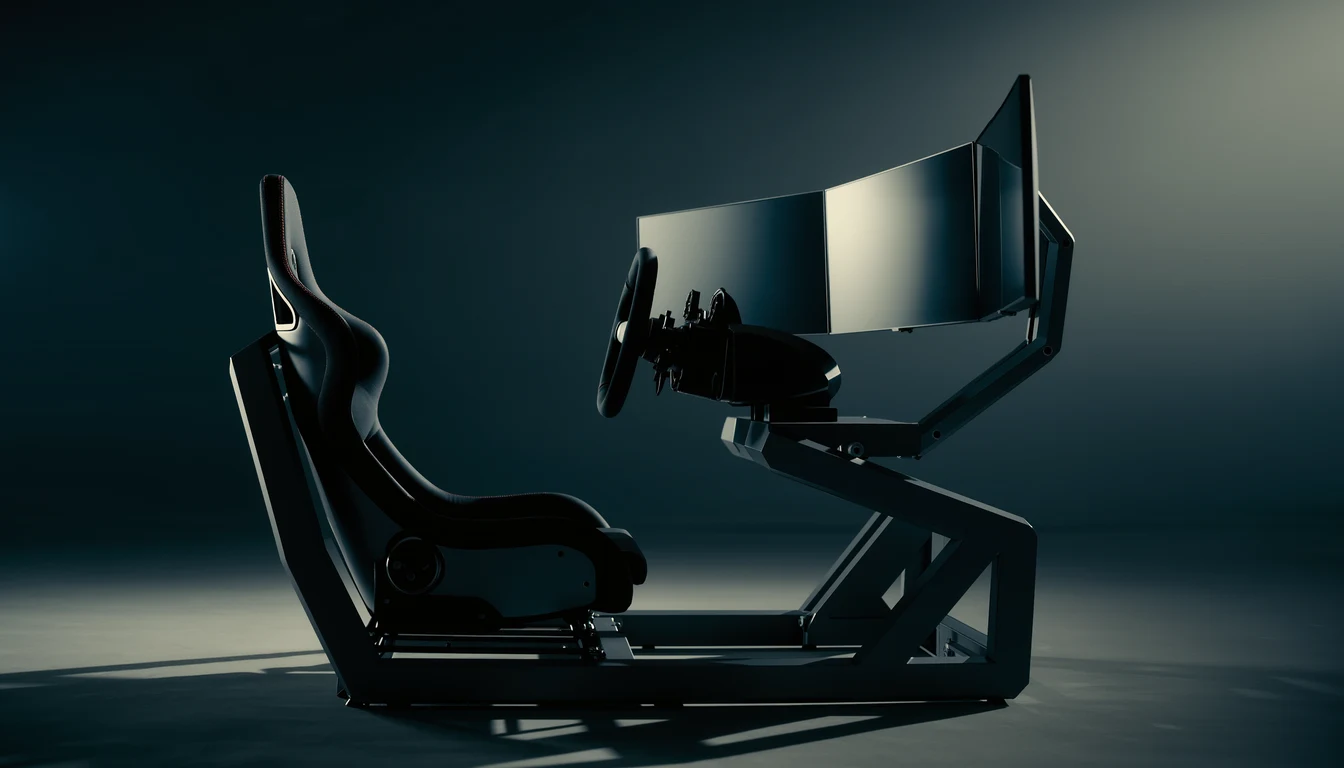
Maximizing Efficiency with Aluminum Profile Rigs
Here’s an article about maximizing efficiency with aluminum profile rigs. Getting More Done with Aluminum Profile Rigs If you’re looking t…