Sim Racing Motion Platforms Guide
Sim racing motion platforms guide: compare seat movers, chassis movers, D-BOX, PT Actuator, and bass shakers, with prices from $150 to $20,000-plus and tuning tips.…
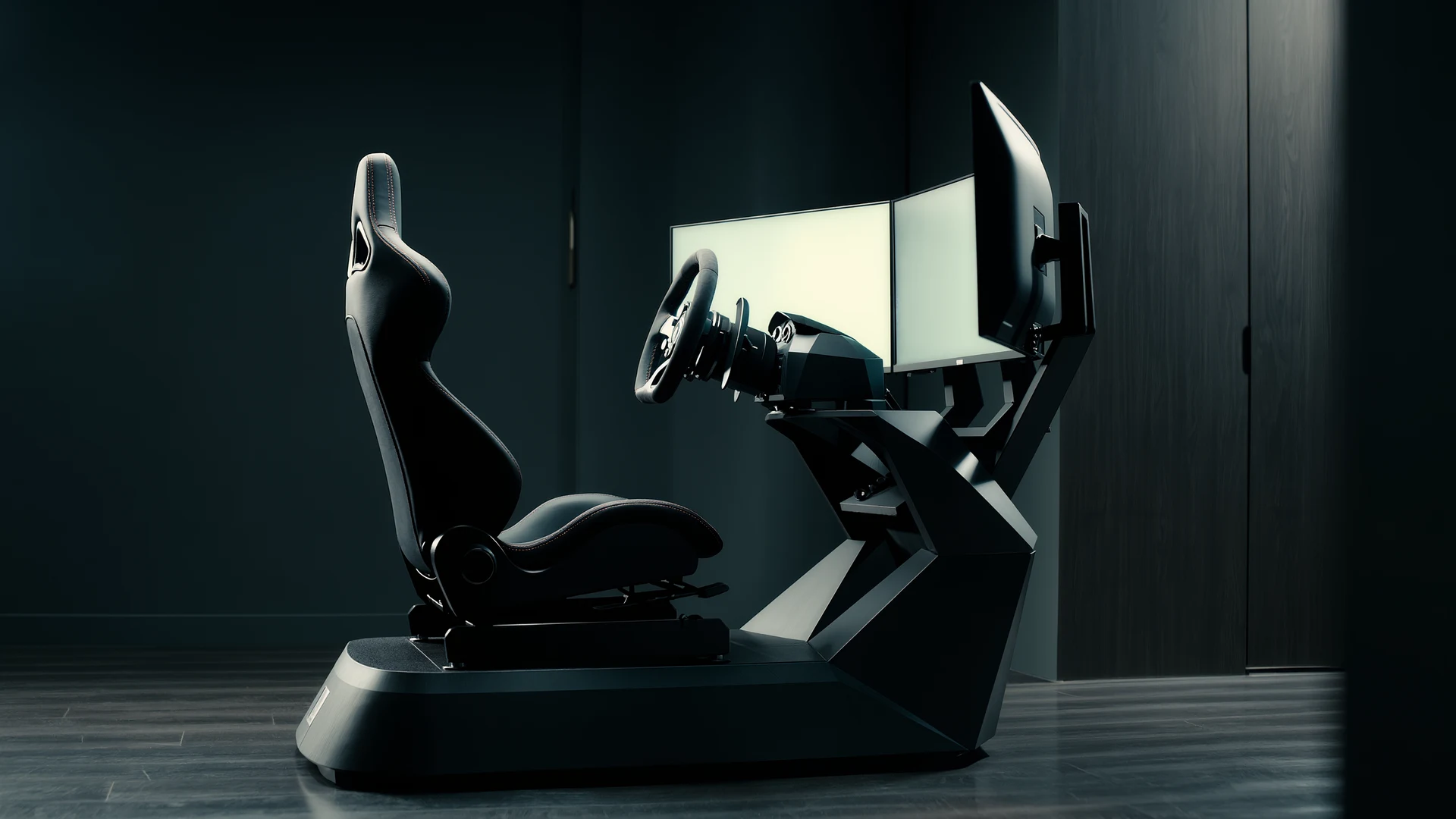
Sim racing motion platforms add real physical movement to driving, with seat movers from $1,500, chassis movers up to $20,000-plus, and bass shakers offering immersion from about $150.
Key Takeaways
- Motion platforms use electric linear actuators that extend and retract at frequencies exceeding one hundred Hertz, driven by telemetry describing longitudinal, lateral, and vertical G-forces plus yaw, pitch, and roll.
- Tilt coordination and washout filters exploit the vestibular system's inability to distinguish low-frequency tilt from sustained acceleration, returning the platform to neutral at about three degrees per second or slower.
- Seat movers like the Next Level Racing Motion Platform V3 at $2,999 deliver roughly sixty to seventy percent of total motion sensation for about twenty percent of a full chassis system's cost.
- Chassis movers move the whole cockpit as one unit: the D-BOX 4250i 3-DOF runs $4,999 with pre-authored Motion Code profiles, while the PT Actuator Scorpion-3 kit at about $3,500 is the open-source value champion.
- The Sigma Integrale DK6 at about $18,000 is a six-DOF Stewart-platform hexapod, professional-grade equipment used in automotive development centers and top racing team factories.
- Tactile transducers (bass shakers) offer the cheapest physical feedback: two Dayton Audio BST-1 transducers at $49 each plus a $35 Nobsound amplifier total about $133, driven by SimHub.
- Motion platforms rarely improve lap times because actuator latency of ten to thirty milliseconds negates any reactive advantage, but they make the experience far more immersive; lateral G should be scaled to roughly twenty to thirty percent.
Motion Simulation: The Final Frontier of Sim Racing Immersion
Motion platforms represent the most ambitious, most technically sophisticated, and most financially significant category of sim racing hardware. They add genuine, physical movement to the simulated driving experience, transforming what is fundamentally a visual and auditory activity into a full-body, multi-sensory, vestibular experience that engages the same inner-ear balance and acceleration-detection systems that real-world driving activates. When your virtual car brakes aggressively for a hairpin corner, a properly configured motion platform tilts the entire cockpit structure forward, not enough to throw you from the seat, but enough that your vestibular system registers deceleration before your eyes have fully processed the visual cue of the approaching corner. When you accelerate hard out of a slow corner, the platform tilts backward, pressing you into your seat. Lateral cornering forces push and rotate the cockpit sideways, and individual curb impacts transmit as sharp, discrete jolts through the entire structure. A motion system of sufficient quality and properly tuned configuration transforms sim racing from an activity you watch and hear into an experience you inhabit with your entire body. The physical sensation of motion, of being moved through space by forces you are simultaneously controlling with your hands and feet, creates a feedback loop that is qualitatively different from and subjectively more immersive than any static simulator, regardless of the visual or audio fidelity involved. Professional racing teams invest tens of thousands of dollars in motion-equipped simulators for their factory driver training programs precisely because the addition of physical motion cues improves driver performance, accelerates track familiarization, and provides earlier, more intuitive feedback about the vehicle’s dynamic state, particularly grip levels, brake locking, and the onset of oversteer, than visual and auditory cues can deliver in isolation.
How Consumer Motion Platforms Actually Work: The Engineering Explained
All consumer-grade motion platforms operate on a common fundamental principle: electric linear actuators, essentially powerful, precision-controlled servo motors connected to threaded lead screws, ball screws, or belt-drive mechanisms housed within telescoping tubular bodies, are mounted between the cockpit structure and the floor or base platform. These actuators extend and retract at frequencies up to and exceeding one hundred Hertz on high-performance systems, driven by motion controller electronics that continuously receive and process telemetry data streaming from the simulator software. This telemetry data describes, in engineering units, the instantaneous forces and moments acting on the simulated vehicle: longitudinal G-force representing acceleration and braking, lateral G-force representing cornering loads, vertical G-force representing bumps, curbs, and track surface undulations, and rotational moments in yaw (rotation around the vertical axis, simulating oversteer and understeer), pitch (nose-up and nose-down rotation, simulating acceleration squat and braking dive), and roll (body lean in corners).
The foundational concept in all motion simulation: whether for consumer sim racing, professional driver training, or full-motion commercial airline simulators costing millions of dollars, is the motion cue and its accompanying washout filter. A stationary simulator physically bolted to the floor of a room cannot sustain a continuous acceleration in any direction, because the actuators would reach the end of their physical travel within a fraction of a second and the illusion would be catastrophically broken. Motion platforms therefore employ a technique called tilt coordination, which exploits a fascinating and well-documented limitation of human sensory perception: at low frequencies and small angular rates, the human vestibular system cannot reliably distinguish between the sensation of linear acceleration and the sensation of being tilted relative to gravity. To simulate sustained braking deceleration, the platform pitches forward by a few degrees, slowly enough and smoothly enough that the motion is below the driver’s conscious perception threshold for angular rotation, and then holds that tilted attitude. The combination of the initial, higher-frequency braking jolt, which does register consciously, and the sustained forward tilt, which the brain interprets as a component of the ongoing deceleration force due to gravity’s contribution, creates a convincing, physically grounded illusion of continuous braking. The washout filter is the software algorithm that, after completing a motion cue, returns the platform to its neutral, centered position imperceptibly slowly, typically at rotational rates of three degrees per second or less, so that the return movement is completed without the driver consciously noticing, and the platform is ready for the next motion cue.
Motion Platform Categories: Seat Movers, Chassis Movers, and Specialized Systems
Seat Movers (2-3 Degrees of Freedom, $1,500-$4,000)
Seat mover systems attach motion actuators between the driver’s seat and the cockpit frame. Only the seat itself moves, the steering wheel, pedals, and in most configurations the monitors remain rigidly stationary relative to the floor. This is the most affordable category of motion simulation, and it is substantially more effective than its modest specifications might suggest. Because the human body’s primary physical contact points with a vehicle are the seat surface supporting the torso and thighs and the pedal faces under the feet, moving only the seat delivers a surprisingly large fraction of the total motion sensation, perhaps sixty to seventy percent, at a small fraction of the cost, complexity, space requirement, and power consumption of a full chassis-moving system. The Next Level Racing Motion Platform V3 at $2,999 is the most popular and most thoroughly reviewed seat mover on the consumer market. It employs two compact, integrated electric actuators providing pitch and roll motion, two degrees of freedom, abbreviated as 2 DOF, with approximately one hundred millimeters of total actuator travel. Installation is remarkably straightforward: the Motion Platform V3 bolts between the bottom of any standard sim racing seat and the seat rails or mounting brackets of any standard cockpit. Connect a single USB cable to the PC and a single power cable to a wall outlet, install the NLR Motion Platform software, and the system is operational. The V3 additionally incorporates haptic engine vibration motors embedded within the seat base structure that generate high-frequency tactile feedback, engine RPM vibration, gear-shift impulses, road surface texture, complementing the lower-frequency motion cues from the actuators. The SimXperience GS-5 G-Seat at $2,499 adopts an entirely different engineering philosophy: rather than physically moving the entire seat assembly through space, it uses an array of internally mounted air bladders and mechanical paddles that apply programmable, variable pressure to the driver’s back, sides, and thighs. The result is less visually dramatic than a seat mover, an observer sees no external movement, but the force sensations applied directly to the body can, for certain types of sustained forces, actually be more realistic than whole-seat movement, which is inherently limited in its ability to simulate continuous lateral loading.
Chassis Movers (3-6 Degrees of Freedom, $3,500-$20,000+)
Chassis movers lift, tilt, rotate, and translate the entire cockpit assembly, the wheel, the pedals, the seat, the monitor mounts, and the driver’s entire body, as a single rigid unit. This is the authentic motion simulation experience that most enthusiasts picture when they imagine a motion-equipped simulator. When the virtual car brakes, the entire world perceptibly pitches forward. When it accelerates, the whole structure tilts backward with convincing authority. When it rides a curb, the entire cockpit jolts with sharp, immediate violence. The immersion and physical engagement are on a qualitatively different level from seat-only motion.
D-BOX motion systems, manufactured by a publicly traded Canadian company that also supplies motion hardware to commercial cinema chains and professional simulation facilities, are the most polished, most consumer-friendly, and most comprehensively supported chassis-mover products. The D-BOX 4250i 3-DOF system at $4,999 includes four compact, floor-mounted actuators, a dedicated motion controller unit, and the D-BOX Motion Code software platform. The system is essentially plug-and-play: bolt the four actuators to the floor beneath your cockpit’s four corners, connect them to the controller, install the software, run the automated calibration routine, and begin driving. D-BOX’s defining feature is Motion Code, pre-authored, hand-tuned motion profiles created by D-BOX’s engineering team for specific car-and-track combinations that go beyond simple telemetry translation to provide curated, cinematic motion experiences. D-BOX Motion Code is available for every circuit in iRacing, every track in Assetto Corsa Competizione, and the vast majority of popular sim racing content across all major platforms. The primary limitation of the D-BOX ecosystem is its closed, proprietary nature, you cannot integrate third-party actuators, use third-party motion software, or customize the motion algorithms beyond the parameters exposed through the official configuration interface.
PT Actuator systems, designed and manufactured in Australia, represent the open-source, community-driven alternative to D-BOX’s polished walled garden. PT Actuator sells complete actuator kits, the Scorpion series for 2-DOF and 3-DOF configurations starting at approximately $3,500, and the Mega series for 4-DOF and 6-DOF configurations scaling up to approximately $8,000 and beyond, that the user integrates with the open-source SimFeedback motion control software platform. This approach demands substantially more technical knowledge and willing engagement with configuration, calibration, and tuning than D-BOX requires, but it offers in exchange significantly greater flexibility, higher raw performance per dollar spent, complete transparency into the motion algorithms, and access to a global community of users who share motion profiles, tuning parameters, and troubleshooting advice. The PT Actuator Scorpion-3 kit at approximately $3,500, providing pitch, roll, and heave motion through three actuators, is widely considered the value champion for full-chassis motion simulation.
Sigma Integrale produces the DK6 6-DOF platform at approximately $18,000, a genuine Stewart-platform hexapod configuration employing six coordinated actuators in the geometric arrangement used by full-motion flight simulators for commercial and military aviation training. This is professional-grade equipment of the type found in automotive manufacturer development centers and top-tier racing team factories. Six degrees of freedom adds surge, forward and backward translation, and sway, lateral translation, to the pitch, roll, heave, and yaw of four-DOF systems, creating the most complete and physically convincing motion simulation achievable without physically accelerating the driver through space, which is inherently impossible within a fixed room.
Traction Loss and Yaw Platforms ($2,000-$5,000)
A specialized and increasingly popular category of motion simulator focuses exclusively on simulating the sensation of losing rear tire grip, the unmistakable, instinct-triggering feeling of the back of the car beginning to rotate independently of the front. The SimXperience Stage 5 at $4,999 uses dedicated actuators mounted beneath the seat to rapidly rotate the rear of the seat assembly left and right, pure yaw motion, simulating the car’s rear axle stepping out of line. This is among the most important and most difficult motion cues to reproduce convincingly with conventional seat movers or chassis movers, and it directly addresses one of the most critical skills in high-performance driving: detecting and correcting oversteer before it develops into an unrecoverable spin.
Haptics: The Affordable Path to Physical Feedback at $150-$300
If a motion platform at $2,000 to $20,000 exceeds your current or foreseeable budget, as it does for the overwhelming majority of sim racers, tactile transducers, commonly called bass shakers or by the dominant brand name ButtKicker, provide an extraordinary amount of physical immersion per dollar invested. These devices are functionally speaker drivers with the speaker cone removed, designed to be rigidly bolted to a resonating surface, your cockpit frame, your seat rails, or your pedal plate, rather than to radiate sound into the air. They vibrate at frequencies corresponding to the mechanical events occurring in your simulated vehicle, driven by telemetry data processed through software such as the donationware SimHub application. A basic but highly effective haptic setup consists of two Dayton Audio BST-1 fifty-watt transducers at $49 each, one bolted under the seat, one bolted under the pedal plate, driven by a Nobsound Mini Bluetooth two-channel fifty-watt amplifier at $35, for a total hardware cost of approximately $133 plus mounting hardware. SimHub routes specific telemetry channels to specific transducers: engine RPM vibration to the seat transducer, gear-shift impulses and wheel-slip events to both, road surface texture at a constant low level to the pedal plate transducer. The result is a level of physical engagement and mechanical feedback that transforms the driving experience for a total investment lower than many single steering wheel rims. The ButtKicker Gamer Plus at $249 provides an all-in-one, single-transducer solution with integrated amplification and a clamp system designed for office chairs, offering maximum simplicity at a higher per-transducer cost.
Motion Software and Tuning: The Invisible Art
The quality of motion platform software and its tuning configuration is at least as important as the quality of the physical hardware, and a poorly tuned motion system is actively worse than no motion at all, it is distracting, unrealistic, disorienting, and can induce motion sickness in susceptible individuals. The essential tuning principles, validated across the professional motion simulation industry, are: set washout filter rates below the threshold of conscious perception, approximately three degrees per second or slower for rotational movements, ensuring the platform returns to neutral without the driver noticing; scale G-force output conservatively, real racing cars generate sustained cornering forces of three to five G that no affordable motion platform can physically reproduce through tilt alone, so lateral G scaling should be set to approximately twenty to thirty percent of real values, providing enough sensation to feel weight transfer without physically displacing the driver; route high-frequency content above approximately ten Hertz to haptic transducers rather than motion actuators, using low-pass filtering in the motion profile, this improves actuator longevity by reducing mechanical wear and creates a more realistic experience by assigning the correct physical mechanism to each frequency range; and tune motion profiles individually for each simulator, because iRacing, ACC, rFactor 2, and AMS2 all output telemetry data at different update rates, with different signal characteristics, and with different noise floors that require distinct filtering and gain structures. The general consensus among professional drivers and experienced motion users is that motion platforms do not produce statistically significant lap-time improvements for most drivers, the latency of even the fastest consumer actuators, typically ten to thirty milliseconds from telemetry output to physical movement, negates any potential reactive advantage, but they make the experience incomparably more immersive, more engaging, and more physically connected to the simulated vehicle. If the goal is raw, measurable competitive pace, invest money in load-cell pedals, a direct-drive wheel base, and professional telemetry coaching. If the goal is the most realistic, most physically involving, most viscerally satisfying driving experience achievable in a home environment, motion platforms represent the final and most significant upgrade tier.
Motion Platform Selection Guide: Matching Technology to Budget and Goals
Selecting the appropriate motion platform for your specific needs, budget, and physical space requires understanding the trade-offs between the categories. Seat movers at $1,500 to $4,000 provide the most affordable entry point into physical motion feedback, delivering approximately sixty to seventy percent of the total motion sensation for perhaps twenty percent of the cost of a full chassis-moving system. They are compact, relatively quiet in operation, and compatible with virtually any cockpit that uses standard seat-mounting rails. The primary limitation is the absence of steering-wheel and pedal movement: your hands and feet, which are your primary physical interfaces with the simulated vehicle, remain stationary while your body moves, creating a subtle but perceptible sensory disconnect that some drivers find distracting. Chassis movers at $3,500 to $20,000-plus provide the complete, integrated motion experience where the entire cockpit moves as one rigid unit. The physical sensation is dramatically more convincing and more immersive. The cost, complexity, space requirement, and noise level are correspondingly much higher, a four-actuator chassis mover requires approximately 1.5 square meters of floor space beyond the cockpit footprint itself, generates audible mechanical noise that may disturb other household members, and demands a floor structure capable of supporting the combined dynamic loads of the cockpit, the driver, and the actuators.
For the majority of sim racers interested in motion who do not have effectively unlimited budgets, the recommended progression path is: first, install a quality haptic transducer system at approximately $150 to $300 for two transducers and an amplifier, which provides extraordinary immersion per dollar and remains valuable even if a motion platform is added later. Second, if the haptic experience confirms your appetite for physical feedback and your budget supports it, upgrade to a seat mover such as the Next Level Racing Motion Platform V3 at $2,999, which integrates with any cockpit in under an hour and provides a meaningful step upward in immersion. Third, only after experiencing seat-mover motion and determining that you want and can justify the additional investment, consider a full chassis-moving system from D-BOX or PT Actuator. This staged approach prevents the common scenario of spending $5,000 or more on a motion platform only to discover that the experience does not justify the investment for your personal preferences and usage patterns.
Frequently Asked Questions (FAQ)
What is a sim racing motion platform and how does it work?
A sim racing motion platform adds genuine physical movement to driving using electric linear actuators that extend and retract at over one hundred Hertz. They are driven by telemetry describing the simulated car's G-forces and rotational moments, engaging the vestibular system so you feel braking, acceleration, and cornering rather than only seeing them.
How much does a sim racing motion platform cost?
Prices vary widely by category. Seat movers run $1,500 to $4,000, chassis movers $3,500 to over $20,000, and traction-loss yaw platforms $2,000 to $5,000. If those exceed your budget, haptic bass-shaker setups deliver physical feedback for roughly $150 to $300, a fraction of full motion costs.
What is the difference between a seat mover and a chassis mover?
Seat movers attach actuators between the seat and frame, so only the seat moves while the wheel, pedals, and monitors stay stationary, delivering about sixty to seventy percent of motion sensation affordably. Chassis movers lift and tilt the entire cockpit as one rigid unit, giving dramatically more convincing immersion at much higher cost, complexity, and noise.
Is the Next Level Racing Motion Platform V3 worth it for sim racing?
The Next Level Racing Motion Platform V3 at $2,999 is the most popular and thoroughly reviewed seat mover on the consumer market. It uses two electric actuators for 2-DOF pitch and roll motion with about one hundred millimeters of travel, plus haptic vibration motors, and bolts into any standard cockpit in under an hour.
How does D-BOX Motion Code compare to PT Actuator for sim racing?
The D-BOX 4250i 3-DOF at $4,999 is essentially plug-and-play with pre-authored Motion Code profiles for iRacing and Assetto Corsa Competizione, but its ecosystem is closed and proprietary. PT Actuator's Australian kits, starting around $3,500, use open-source SimFeedback software, demanding more technical effort but offering greater flexibility and performance per dollar.
Do sim racing motion platforms make you faster or improve lap times?
Generally no. The article notes most professional drivers and experienced users find motion platforms do not produce statistically significant lap-time gains, because actuator latency of ten to thirty milliseconds negates any reactive advantage. For raw pace, invest in load-cell pedals, a direct-drive wheel base, and telemetry coaching instead; motion delivers immersion.
What are bass shakers and how do ButtKicker transducers work in a sim rig?
Tactile transducers, called bass shakers or ButtKickers, are speaker drivers without cones, bolted rigidly to your cockpit, seat, or pedal plate. Driven by telemetry through software like SimHub, they vibrate at frequencies matching engine RPM, gear shifts, and road texture. A two-transducer Dayton Audio setup costs about $133; the ButtKicker Gamer Plus is $249.
What is the recommended upgrade path for adding motion to a sim racing setup?
The article recommends a staged progression. First install a quality haptic transducer system for $150 to $300 for extraordinary immersion per dollar. Second, if you want more, upgrade to a seat mover like the Next Level Racing V3 at $2,999. Third, only then consider a full chassis mover from D-BOX or PT Actuator.
More from Cockpits & Rigs
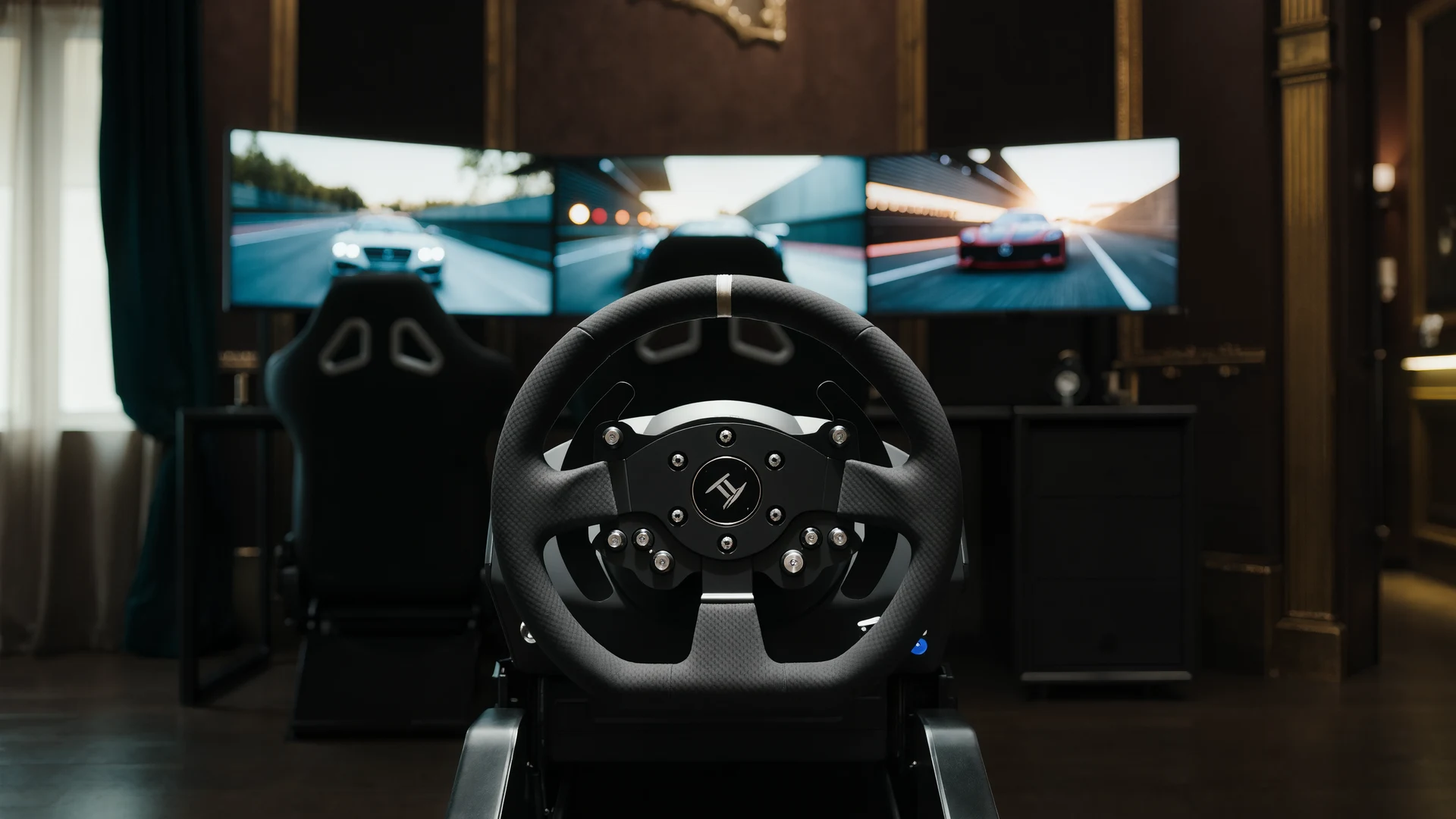
Sim Racing VR vs Triples Guide
VR vs triple monitors for sim racing in 2026: compare Quest 3, Pimax Crystal Light and triple 1440p setups on field of view, depth, comfort, cost and …
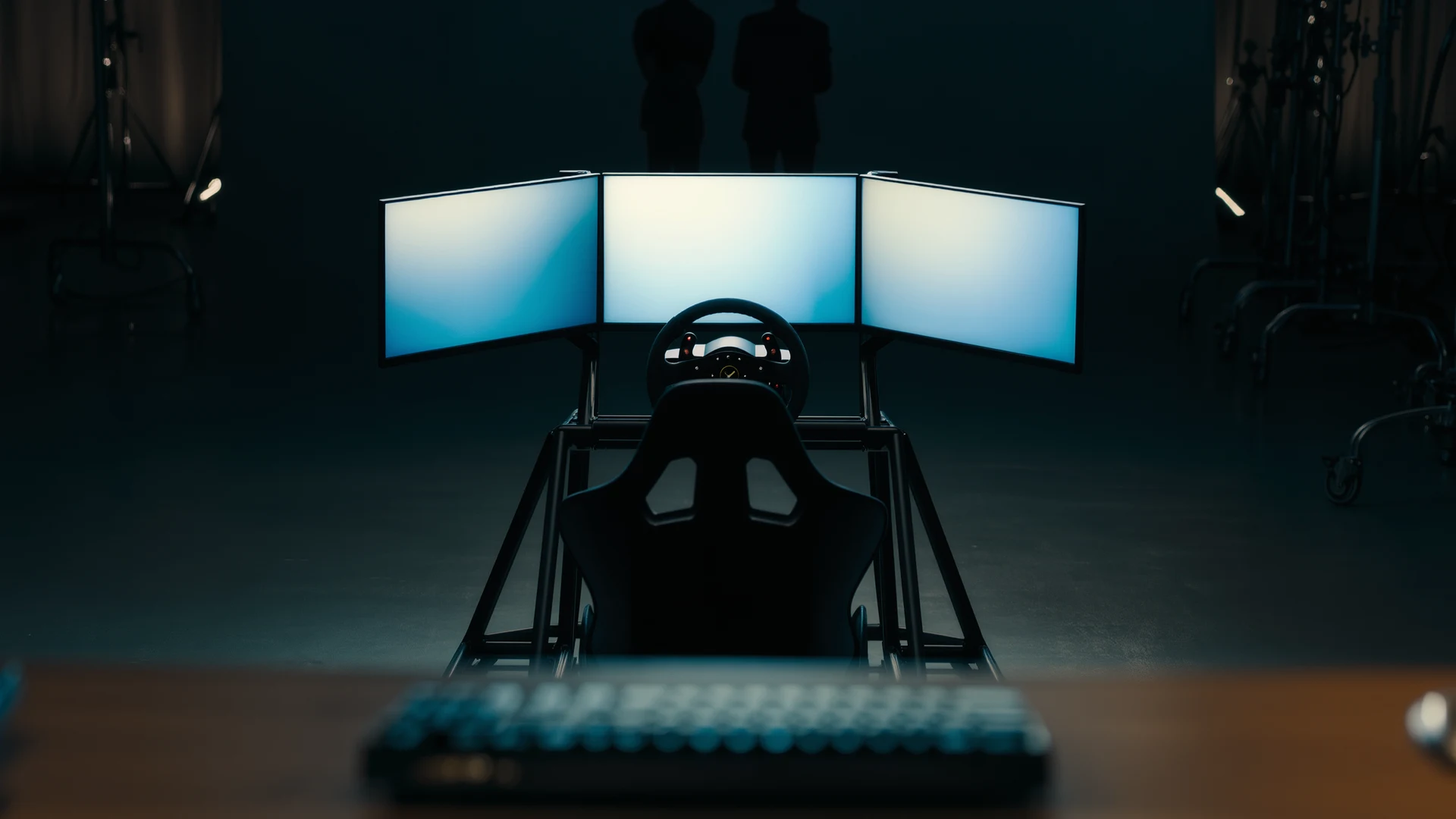
Sim Racing Cockpit Setup Guide
Sim racing cockpit setup guide: compare folding rigs, wheel stands, full cockpits and aluminum profile, plus seats, ergonomics and field-of-view tips.…
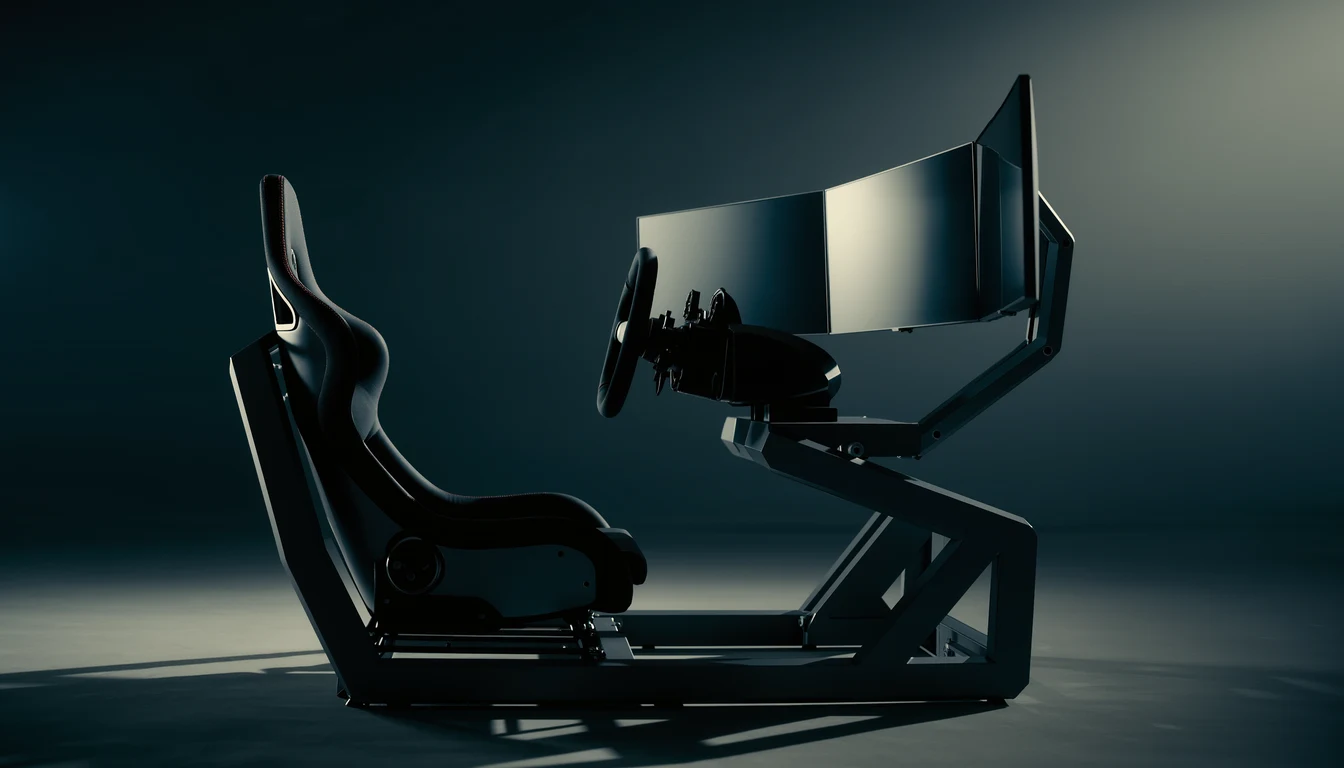
Maximizing Efficiency with Aluminum Profile Rigs
Here’s an article about maximizing efficiency with aluminum profile rigs. Getting More Done with Aluminum Profile Rigs If you’re looking t…