Motion platforms: degrees of freedom explained honestly
Motion platforms explained honestly: what each degree of freedom adds, where the threshold of usefulness sits and what the published travel figures mean.
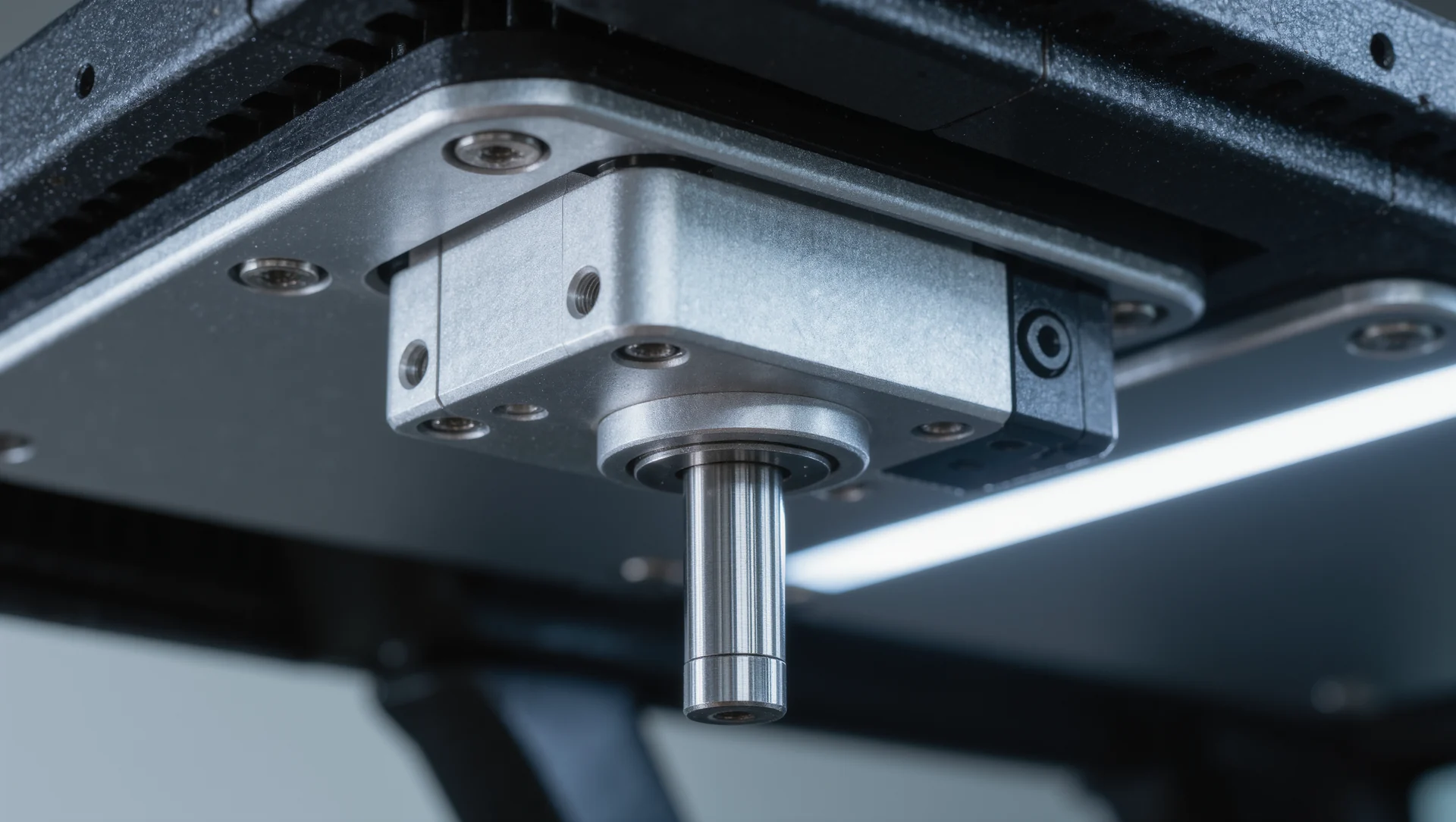
Six degrees of freedom exist, most platforms have two or three, and the one that matters most is the third. Below that threshold a motion platform is atmosphere; at and above it, it starts telling you things the wheel cannot.
The six axes and what they are
Three are rotations and three are translations. The rotations are pitch, nose up and down; roll, leaning left and right; and yaw, rotating about the vertical axis. The translations are surge along the X axis, forward and backward; sway along the Y axis, left and right; and heave along the Z axis, up and down.
A two degree of freedom platform handles pitch and roll, which communicates the fundamental weight transfer of braking, accelerating and cornering. What it cannot do is control heave independently, so the vertical component of kerbs, bumps and load changes is missing.
A three degree of freedom platform adds a third actuator and with it independent heave. That is the threshold: with heave the platform can reproduce the vertical displacement of a kerb strike or a compression, and the experience stops feeling like a fairground ride and starts feeling like driving.
| Axis | Type | What it represents |
|---|---|---|
| Pitch | rotation | braking and acceleration weight transfer |
| Roll | rotation | cornering lean |
| Yaw | rotation | the car rotating, rarely available |
| Surge | translation along X | forward and backward |
| Sway | translation along Y | left and right |
| Heave | translation along Z | kerbs, bumps, compressions |
| Typical three degree of freedom system | four actuators, 150 mm travel | pitch, roll and heave |
What the published figures mean
Travel is the number to read first. A four actuator system with 150 mm of travel, such as the MOZA HMA150, delivers a three degree of freedom configuration covering pitch, roll and heave. That 150 mm is the total range each corner can move, and it is what limits how large an event the platform can represent before it runs out of stroke.
Actuator count and degrees of freedom are not the same thing. Four actuators can produce three degrees of freedom, because heave is all four moving together while pitch and roll are pairs moving in opposition. More actuators buy resolution and load capacity rather than automatically buying axes.
The arithmetic of stroke is worth doing once. 150 mm of travel split around a centre position is 75 mm in each direction, and a kerb strike that would displace a real car by 40 mm uses more than half of that in 1 event. Over a lap with 6 kerbs the platform returns to centre 6 times, and each return is a movement you did not ask for.
And the axes you are missing matter more than the ones you have. A platform without yaw cannot represent the rotation of the car, which is precisely the signal a driver uses to catch a slide, so a three degree of freedom platform improves the sense of the road and not the sense of the rear stepping out.
What motion cannot do
It cannot sustain a force. Real cornering load lasts for seconds; a platform with 150 mm of travel can only tilt you and let gravity do the work, and it has to return to centre before the next event. What you feel is the onset of a load rather than the load itself.
Count the load as well. A 41 kg frame, a 15 kg pedal set, a 20 kg seat and an 80 kg driver is about 156 kg that 4 actuators have to accelerate and stop 6 times a lap, and that is before 3 screens are added. Platforms are rated for a load, and 156 kg is the figure to check against, not the 80 kg of the person in the seat.
It also cannot be added to a rig that flexes. A platform moves the whole assembly, so every gramme of frame, seat and screens moves with it, and any looseness in the structure arrives as a rattle rather than as information.
And it forces a decision about the screens. If the monitors move with the seat, the visual horizon stays fixed relative to your eyes while your inner ear reports movement, which is both less convincing and a reliable way to feel unwell. Screens go on their own stand.
Deciding whether it is worth it
Ask what you are missing first. A driver who cannot yet catch slides reliably will get more from a stiffer rig, better pedals and practice than from motion, because motion adds information about the road rather than about the tyres.
Then be honest about the two degree of freedom entry point. Without heave it is a sensation rather than a tool, and the money is often better spent on the third actuator later than on the first two now.
And plan the whole installation. Cable routing across the moving joint, decoupled screens and a floor that can take the load are all part of the purchase, and the published rules for cables in motion apply: separation becomes necessary above 0.5 metres per second combined with more than ten thousand load changes a year.
Sources
Frequently asked questions
Is two degrees of freedom enough?
For weight transfer, yes. Without independent heave you lose kerbs, bumps and the vertical part of load changes, which is where most of the information sits.
Do more actuators mean more axes?
No. Four actuators commonly produce three degrees of freedom; the extra ones buy resolution and load capacity rather than new axes.
Should the screens move with the seat?
No. A fixed visual horizon against a moving inner ear is less convincing and a reliable route to feeling unwell.
Will motion help me catch slides?
Not directly, because most platforms have no yaw. It improves the sense of the road surface rather than the sense of the car rotating.
More in Technology
Founding a team: roles, rules and the first season
Founding a team: the roles that actually matter, the rules that bind a team and the first season planned so it survives to the second.

Prize money in sim racing: the sober numbers
What sim racing actually pays: the published prize pools, what they look like divided by the field and why prize money is not an income.
Stewarding: how a protest is judged, step by step
How a protest is judged, step by step: who may file, what evidence is required, the deadlines and what happens when a protest is found frivolous.