Best Sim Racing Wheels Guide
Best sim racing wheels of 2026 ranked: Logitech G923, Fanatec CSL DD, Moza R9 and Simucube 2 Pro. Compare direct-drive torque, price and console support.…
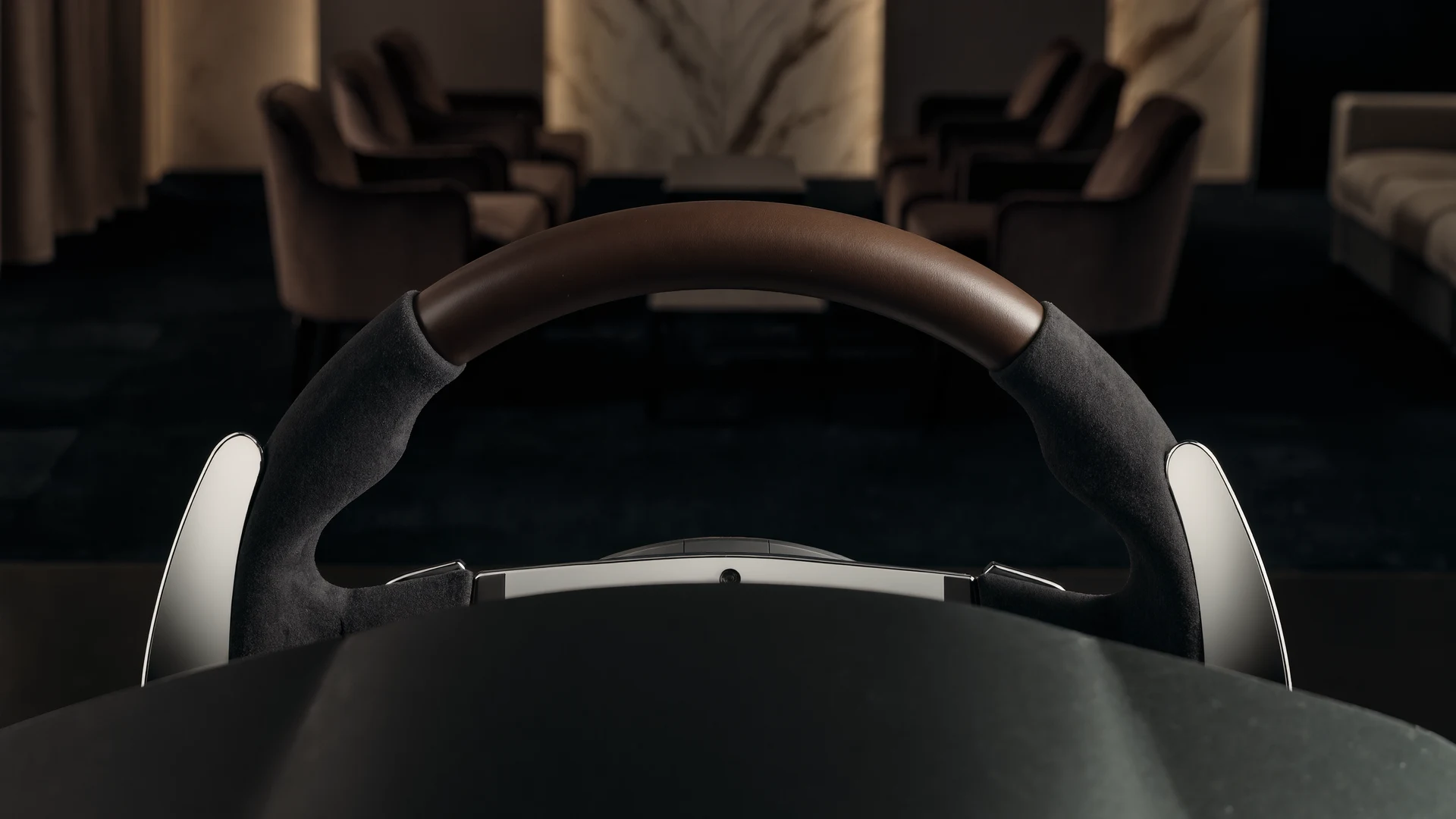
Direct-drive is now the baseline: pick the Logitech G923 under $350, the Fanatec CSL DD or Moza R9 around $500, or the Simucube 2 Pro for the absolute best feedback.
Key Takeaways
- Entry-level direct-drive bases from reputable makers now start around $350 to $400, barely more than a high-end belt-driven wheel cost five years ago.
- The Logitech G923 is the best entry pick under $350, delivering 2.1 Nm of torque, TrueForce haptics, and universal platform compatibility despite its gear-driven cogging.
- The Fanatec CSL DD starts at $349.95 for 5 Nm, but the $150 Boost Kit 180 raising it to 8 Nm is universally recommended to prevent force-feedback clipping.
- The Moza R5 bundle at $439 includes a 5.5 Nm direct-drive base, ES wheel, and SR-P Lite pedals, while the Moza R9 delivers 9 Nm passively cooled.
- Moza supports PC exclusively with no console compatibility, whereas the Fanatec GT DD Pro at $699.95 is the only direct-drive base that works natively on PlayStation 4 and 5.
- The Simucube 2 Pro is the high-end reference at $1,379 with 25 Nm of peak torque, used by Formula 1 teams and NASCAR technical partners.
- The most common performance error is running force feedback gain too high; reduce it until the FFB meter only briefly touches 100 percent and add 5 to 10 percent damping.
Why Your Steering Wheel Choice Defines Your Entire Sim Racing Experience
The steering wheel is the most intimate, most continuously engaged, and most consequential component of your entire sim racing rig. It is the hardware interface you physically interact with for every single second of every single lap you ever drive, from the moment the starting lights illuminate until the moment you cross the finish line, and during every practice session, every qualifying run, and every moment of setup testing in between. A high-quality force-feedback wheel communicates information of extraordinary richness and subtlety directly into your hands: the precise instant front-end tire grip begins its transition from adhesion to slip, the texture and severity of every curb and every variation in track surface, the subtle but critical weight transfer that occurs as the car transitions from straight-line braking into trail-braking rotation, the progressive, building loss of rear traction that precedes and warns of an impending spin. It does all of this through the language of force feedback, a continuous, high-bandwidth haptic conversation between the virtual vehicle’s physics simulation engine and the driver’s neuromuscular system. A poor-quality wheel, by contrast, feels fundamentally dead, vague, disconnected, and uninformative, forcing the driver to rely entirely on visual and auditory cues for information that should be arriving through their hands, which is both objectively slower and subjectively less satisfying. The difference between a gear-driven entry-level wheel base and a direct-drive high-end wheel base is neither subtle, nor marginal, nor something that requires expertise or experience to perceive, it is immediate, visceral, and dramatically obvious from the first turn of the first corner of a driver’s first lap, and it fundamentally and permanently changes one’s understanding of what sim racing can and should feel like.
The sim racing wheel market in 2026 is the most competitive, diverse, technologically sophisticated, and financially accessible it has ever been at any point in the history of this hobby. The direct-drive revolution, once the exclusive, aspirational domain of boutique European manufacturers charging $2,000 and more for a single wheel base, has now fully and permanently trickled down to genuinely affordable budget price points. Entry-level direct-drive wheel bases from established, reputable manufacturers now start at approximately $350 to $400, which is barely more than what a high-end belt-driven wheel cost just five years ago and less than what the original Fanatec CSL Elite belt-driven base retailed for at launch. Companies like Moza Racing, a Chinese manufacturer that emerged from near-total obscurity in 2022 and has since disrupted the market so thoroughly that every incumbent competitor has been forced to accelerate product roadmaps and reduce pricing, have fundamentally altered the economics of high-quality force feedback. The traditional gear-driven and belt-driven wheel base categories still occupy an important and valid position for absolute beginners working within tightly constrained budgets, and they remain capable of producing fast, competitive lap times in skilled hands. But the performance gap between entry-level and mid-range hardware has never been narrower in absolute terms, and the value proposition of spending an extra $100 to $150 to enter the direct-drive ecosystem has never been stronger.
Wheel Base Technologies: Understanding the Engineering Beneath Your Hands
Gear-Driven Systems: The Affordable Entry Point
Gear-driven wheel bases utilize a small, typically brushed electric motor connected to the steering shaft through a train of plastic or, in some older designs, metal reduction gears. The most famous and commercially successful examples are the Logitech G29, G920, and the current-generation G923, which collectively have introduced more human beings to sim racing than every other wheel base manufacturer combined across the entire history of the hobby. The fundamental advantages of gear-driven technology are straightforward, significant, and entirely legitimate: these products are affordable, typically retailing between $250 and $350 for a complete bundle including wheel base, steering rim, and three-pedal set; they are remarkably, almost absurdly reliable, there are functional Logitech G25 units manufactured in 2006 that remain in regular, competitive use today; they are universally compatible with every racing simulator and every gaming platform on the market; and they are available for immediate purchase at every electronics retailer, every online marketplace, and in every country on Earth. The disadvantages are inherent to the technology and cannot be fully mitigated by engineering effort at any price: the physical gear train creates a distinctive, immediately noticeable notchy, grainy, stepped sensation as you rotate the steering wheel, and you can literally feel the individual gear teeth meshing and unmeshing through the steering rim. This phenomenon, commonly described as “cogging,” is most intrusive during slow, precise, small-amplitude steering movements, the exact situations where steering smoothness matters most for lap time, such as mid-corner trajectory corrections and subtle slip-angle management. Force feedback strength is relatively modest at approximately 2.1 Newton-meters of peak torque for the G923. The gear mechanism also inevitably introduces a small but perceptible dead zone at the steering center position, where the forces produced by the motor are insufficient to overcome the combined static friction of the entire gear train, bearings, and motor shaft. When the wheel base is powered on but stationary, the gears produce an audible, constant low-volume mechanical hum that becomes part of the ambient soundscape of your racing environment. For a total budget constrained to under $350 including pedals, a gear-driven Logitech is your only realistic option, and it is a perfectly capable, perfectly respectable one. But if your budget can stretch by even $100 to $150, the improvement offered by belt-driven or entry-level direct-drive alternatives is dramatic and immediately rewarding.
Belt-Driven Systems: The Refined Middle Ground Under Pressure
Belt-driven wheel bases, exemplified by the Thrustmaster T300 RS GT at $449.99 and the more powerful, more expensive TS-XW at approximately $599 to $699 depending on the bundle configuration, replace the mechanical gear train with a belt-and-pulley system that transmits rotational torque from the electric motor to the steering shaft through a tensioned rubber or polyurethane belt riding on machined pulleys. This single engineering substitution eliminates gear notchiness entirely and completely. The tactile sensation transmitted through the steering wheel rim becomes smooth, continuous, progressive, and free of any mechanical texture or interruption between the motor’s torque output and the driver’s hands. The T300 produces approximately 3.9 Nm of peak torque, nearly double the output of the Logitech G923, which translates directly into stronger, more authoritative, more physically engaging force feedback that can communicate a meaningfully wider dynamic range of vehicle behavior before signal clipping occurs. The TS-XW, Thrustmaster’s higher-tier belt-driven product, can sustain approximately 6 Nm of peak torque and incorporates a substantially improved active cooling system utilizing a continuously operating internal fan that prevents the thermal throttling issues that the T300 can experience during extended high-load driving sessions. Belt-driven wheels dominated the mid-range market segment from approximately 2015 through 2022, but they are now being aggressively, perhaps existentially squeezed from below by affordable, high-performance direct-drive bases including the Moza R5 bundle at $439 and the Fanatec CSL DD starting at $349.95. A belt-driven Thrustmaster T300 at its current price of $449 still represents an excellent value proposition, particularly with its included T3PA pedal set of genuine quality and the ability to swap steering wheel rims across Thrustmaster’s extensive ecosystem, but it no longer represents the obvious, automatic default recommendation for a $450 budget that it unambiguously did five years ago.
Direct-Drive: The Present and Future of Sim Racing Force Feedback
Direct-drive wheel bases connect the steering shaft directly and rigidly to the output shaft of a large, powerful, precision-controlled brushless servo motor. There are no gears. There are no belts. There is no mechanical reduction, no transmission, no intermediate linkage of any kind between the electromagnetic torque generated by the motor and the steering wheel rim bolted to the motor shaft. The result of this elegantly minimalist mechanical design is instantaneous, latency-free response to force feedback commands arriving from the simulation software; immense, functionally unlimited torque output ranging from a modest but adequate 5 Nm on entry-level direct-drive products to a genuinely dangerous, wrist-fracturing 32 Nm on the most powerful professional-grade Simucube hardware; and the finest, highest-resolution, most information-dense force feedback reproduction available at any price point in the consumer market. Because there is absolutely zero mechanical play, zero compliance, and zero elasticity anywhere in the system, no gear lash to absorb and blur small forces, no belt to stretch and damp high-frequency transients, the driver feels every subtle ripple in track surface texture, every tiny tire slip angle variation, every curb impact and every sausage-kerb strike with crystalline, unfiltered clarity. Until approximately 2021, direct-drive wheel bases were aspirational luxury items: the Fanatec Podium DD1 cost $1,199 for the base alone, the Simucube 2 Pro cost $1,379 plus the cost of a separate steering wheel rim, and the idea of purchasing a genuine direct-drive wheel base for under $500 seemed like pure science fiction fantasy. The market today is unrecognizable. Moza Racing offers the R5 bundle, a complete, ready-to-use direct-drive ecosystem including wheel base, steering rim, and pedal set, for $439. Fanatec sells the CSL DD base starting at $349.95. Direct-drive is no longer an aspirational luxury category reserved for the most dedicated and well-funded enthusiasts; it is rapidly becoming the baseline, default expectation for any sim racer spending more than $400 on their wheel base.
The Best Sim Racing Wheels of 2026: Complete Rankings and Analysis
Best Entry-Level: Logitech G923, $299 to $349
The Logitech G923, available in PlayStation-compatible and Xbox-compatible variants at slightly different prices, produces 2.1 Nm of peak torque across a 900-degree rotation range, connects via USB 2.0, and includes a three-pedal set with progressive-rate brake spring incorporating a rubber stop block. Its defining technological feature is TrueForce, a proprietary haptic feedback system developed in partnership with game audio middleware providers that analyzes a supported simulator’s audio engine output in real time and generates corresponding high-frequency vibrations transmitted directly through the steering wheel rim structure. In TrueForce-compatible titles, which currently include iRacing, Assetto Corsa Competizione, GRID Legends, and the EA Sports F1 series from F1 2021 forward, the driver perceives engine combustion vibrations as a subtle background hum through the wheel, road surface texture as a continuous low-level tactile presence, tire scrub and slip as a rasping, textural sensation, and gear shifts as sharp, satisfying mechanical impulses. The force feedback strength and fundamental mechanism are mechanically unchanged from the preceding G29 and G920 models, but the additional informational layer provided by TrueForce makes the overall driving experience feel significantly more alive and responsive. The G923’s fundamental limitation, the gear-driven mechanism and the cogging sensation it inevitably produces, cannot be resolved at this price point. For $300, however, a driver receives a complete, reliable, universally compatible force-feedback ecosystem that will provide years of faithful service while they save for the direct-drive upgrade that will inevitably follow.
Best Budget Direct-Drive: Fanatec CSL DD, $349.95 (5 Nm) or $499.95 (8 Nm Boost Kit)
The Fanatec CSL DD, powered by a custom FluxBarrier-optimized servo motor developed entirely in-house by Fanatec’s German engineering team, is the product that permanently and irrevocably changed the economics of the sim racing hardware industry. At $349.95 for the 5 Nm variant, which is the base itself plus the standard 90-watt power supply, the CSL DD costs only marginally more than a belt-driven Thrustmaster T300 but delivers authentic, uncompromised direct-drive force feedback performance. The 5 Nm configuration is functionally competent for most driving scenarios but leaves meaningful performance unrealized; it will audibly and tactilely clip, running out of dynamic range and losing all feedback detail, in high-downforce racing cars through sustained high-speed corners. The 8 Nm Boost Kit 180, which is functionally a larger, 180-watt external power supply brick costing an additional $150, is universally and emphatically recommended by every professional reviewer, every experienced user, and Fanatec’s own product documentation. The additional 3 Nm of headroom provided by the Boost Kit prevents signal clipping in all but the most extreme, outlier force feedback scenarios across every major simulator, and it widens the usable dynamic range between the minimum perceptible force and the maximum representable force, allowing the wheel base to communicate finer gradations of vehicle behavior. The QR1 Lite quick-release system, the injection-molded plastic quick-release mechanism included as standard, is the CSL DD’s single most significant, most frequently criticized design compromise. Under sustained heavy use, particularly with physically heavier steering wheel rims or over extended multi-hour sessions, the plastic QR1 Lite can develop mechanical play between the wheel rim and the base shaft, and in documented cases has suffered structural failure. The all-metal QR1 quick-release, available as a $99 upgrade, definitively resolves this weakness and is strongly recommended for any driver planning long-term use. Fanatec’s product ecosystem is the largest, most mature, and most diverse in the entire sim racing industry, with dozens of steering wheel rims spanning $129 to $599, multiple pedal sets covering every price and performance segment, and a complete range of shifters, handbrakes, and accessories.
Best Value Direct-Drive: Moza R5 Bundle ($439) and Moza R9 ($439 base)
Moza Racing has executed one of the most remarkable and rapid market penetrations in the history of sim racing hardware. The R5 bundle at $439 is an extraordinary, perhaps unprecedented value proposition: a 5.5 Nm sustained-torque direct-drive wheel base, a 280-millimeter diameter ES steering wheel with forged carbon fiber faceplate and aluminum frame, and the SR-P Lite three-pedal set with Hall-effect sensors on every axis, all for less money than many belt-driven wheel-and-pedal bundles currently sell for. The R9, priced at $439 for the wheel base alone or approximately $599 in bundle configuration with the excellent CS V2 steering wheel, delivers 9 Nm of sustained torque in a remarkably compact, completely passively cooled chassis requiring no fans and producing absolutely no acoustic noise. Moza’s Pit House software suite is among the finest in the industry: it provides per-simulator force feedback profiles with individually adjustable parameters, telemetry-driven dashboard displays configurable on integrated wheel rim screens, automatic firmware updates for all connected Moza devices, and a clean, responsive, intuitively organized user interface. The Moza product ecosystem is expanding with impressive velocity, the Moza FSR formula-style steering wheel at $599 incorporates a 4.3-inch configurable touchscreen display, genuine carbon fiber structural construction, and dual-clutch paddles enabling millisecond-precision race starts. The CRP three-pedal set at $499 employs load-cell sensors on all three pedal axes housed in a fully CNC-machined aluminum chassis with industrial sealed bearings at every pivot, competing directly with the long-established Heusinkveld Sprint at a $130 price advantage. Moza’s primary and currently sole significant limitation is platform compatibility: the entire Moza product line supports PC exclusively, with zero current or publicly announced console compatibility for any product. For the overwhelmingly PC-centric sim racing market, this limitation is academic. For anyone splitting driving time between PC and either PlayStation or Xbox consoles, Moza cannot serve as a complete solution.
Best High-End Reference: Simucube 2 Pro, $1,379 and Simucube 2 Sport, $1,099
Simucube, designed and manufactured in Finland by engineers with deep professional roots in industrial servo motor control systems, represents the absolute gold standard against which every other direct-drive wheel base in the world is measured. The company’s products are deployed in professional racing simulators operated by Formula 1 teams at their factory headquarters, by NASCAR technical alliance partners, by automotive original equipment manufacturers for vehicle dynamics development, and by the most demanding private sim racing enthusiasts on the planet. The Simucube 2 Pro produces 25 Nm of peak torque, a force sufficient to cause genuine physical injury including wrist sprains and finger fractures if the driver crashes without maintaining proper hand position, and is engineered to operate at approximately 40 to 60 percent of its maximum torque capacity during normal driving conditions. This enormous performance headroom ensures that even the most violent, most extreme force feedback events, striking a solid barrier at 300 kilometers per hour, riding a sausage curb at maximum suspension compression, catching and correcting a snap-oversteer moment, never clip, never exhaust the available dynamic range, and never sacrifice fine detail. The True Drive configuration software is the most powerful, most sophisticated force feedback processing pipeline in the consumer market, offering per-vehicle force reconstruction filters that synthesize raw physics telemetry data into a coherent, natural-feeling force feedback signal, independently adjustable damping, friction, and inertia parameters with per-axis control, slew rate limiting that smooths abrupt force transitions for comfort without masking essential information, and direct, low-latency integration with iRacing’s 360 Hz physics telemetry stream. The Simucube 2 Sport utilizes identical internal hardware, the same motor, the same motor controller, the same servo drive electronics, but ships with a lower-wattage power supply unit that limits peak torque output to 17 Nm. For an estimated 99 percent of all sim racers, 17 Nm represents more torque than they will ever utilize or require, and the $280 savings relative to the Pro variant is better allocated to higher-quality pedals, a more rigid cockpit, or additional display hardware. The Simucube ecosystem is fully open and interoperable: any USB-connected steering wheel rim can be directly plugged into the wheel base’s integrated USB hub, and Simucube’s proprietary wireless wheel protocol supports third-party rims through the Simucube Tahko wireless adapter or standard 70-millimeter bolt-pattern mechanical adapters accepting rims from Cube Controls, Ascher Racing, Gomez Sim Industries, Precision Sim Engineering, and numerous other boutique manufacturers.
Best Console Direct-Drive: Fanatec Gran Turismo DD Pro, $699.95 (5 Nm) to $849.85 (8 Nm Boost Kit)
The GT DD Pro is mechanically and electronically identical to the CSL DD wheel base but integrates a PlayStation-compatible security chipset directly into the wheel base housing, as opposed to Fanatec’s Xbox strategy, which places the platform chipset in individual steering wheel rims. This makes the GT DD Pro, as of 2026, the only direct-drive wheel base on the market that functions natively and fully with PlayStation 4 and PlayStation 5 consoles. It is the officially licensed steering wheel of the Gran Turismo franchise and ships bundled with a GT-style steering wheel rim featuring the iconic Gran Turismo control layout. For a Gran Turismo 7 player who has experienced direct-drive force feedback, at a friend’s house, at a sim racing experience center, or at a trade show, and finds themselves unable to return to the comparatively crude, information-poor experience of a gear-driven or belt-driven wheel, the GT DD Pro represents the only currently available upgrade pathway. The 8 Nm Boost Kit 180 is effectively mandatory for GT7, whose force feedback demands are unusually aggressive and frequently cause signal clipping with the standard 5 Nm power configuration.
Force Feedback Configuration: The Single Most Important Software Setting
The single most common and most performance-costly configuration error that sim racers at every experience level make is running force feedback gain excessively high. When the FFB signal clips, flatlining continuously at 100 percent of the wheel base’s available torque through any sustained cornering load, the driver loses all force feedback information, all texture, and all detail during the very moments when that information is most urgently needed. The correct, empirically validated configuration procedure is: set the wheel base to its maximum torque output in its manufacturer driver software; locate the force feedback gain or strength setting within your simulator; enable the FFB meter heads-up display element if the simulator provides one; drive a high-downforce, high-grip car through a sustained, high-load corner such as Eau Rouge at Spa-Francorchamps or Turn 8 at Istanbul Park; reduce the gain setting incrementally until the FFB meter only briefly and momentarily contacts 100 percent at the absolute peak of cornering load and never flatlines for any sustained duration; and finally add minimal damping at 5 to 10 percent to suppress the steering oscillation that occurs when the wheel is released on a straight. Disable all artificial, non-physics-derived force feedback effects, centering spring, enhanced understeer, canned vibration, as these mask and corrupt the real tire feedback signal that constitutes the actual information you require to drive at your potential.
Final Purchase Recommendations
If your total wheel-and-pedal budget is strictly $350 or below, purchase the Logitech G923. It works reliably, it is available everywhere, it is compatible with everything, and it will serve faithfully while you accumulate funds for your inevitable upgrade. If your budget reaches approximately $500, purchase either the Fanatec CSL DD with the Boost Kit 180 power supply or the Moza R9, both deliver authentic, high-quality direct-drive performance today and provide access to an upgrade ecosystem that will accommodate every future ambition. If your budget extends to $1,400 and you seek never to think about upgrading your wheel base again for the remainder of your sim racing life, purchase the Simucube 2 Pro and experience the finest force feedback currently achievable in consumer simulation. The direct-drive revolution has permanently democratized high-quality force feedback, and there has never existed a better moment to build a sim racing rig than the present.
Frequently Asked Questions (FAQ)
What is the best entry-level sim racing wheel under $350?
The Logitech G923 is the best entry-level choice for budgets at or below $350. It produces 2.1 Nm of peak torque across a 900-degree range, includes a three-pedal set, and works with every platform. Its TrueForce haptic system adds audio-derived vibration, though its gear-driven mechanism still produces cogging that cannot be removed at this price.
Is the Fanatec CSL DD worth it for sim racing?
Yes, the Fanatec CSL DD is excellent value, starting at $349.95 for the 5 Nm variant and delivering authentic direct-drive feedback for barely more than a belt-driven wheel. Reviewers and Fanatec itself strongly recommend adding the $150 Boost Kit 180 for 8 Nm, since the 5 Nm version clips in high-downforce cars through fast corners.
What is the difference between gear-driven, belt-driven, and direct-drive wheel bases?
Gear-driven bases use plastic or metal reduction gears, producing a notchy cogging sensation and modest torque around 2.1 Nm. Belt-driven bases use a tensioned belt for smooth feedback, with the Thrustmaster T300 reaching 3.9 Nm. Direct-drive bases connect the wheel directly to a servo motor, eliminating gears and belts for instant, high-resolution feedback up to 32 Nm.
Which Moza Racing wheel base offers the best value for sim racing?
The Moza R5 bundle at $439 is an outstanding value, packaging a 5.5 Nm direct-drive base, a 280mm ES wheel with carbon faceplate, and Hall-effect SR-P Lite pedals. The Moza R9 delivers 9 Nm of sustained torque, passively cooled with no fan noise. Both run on Moza's strong Pit House software, but Moza supports PC only with no console compatibility.
Can you use a direct-drive wheel with a PlayStation 5?
Yes, the Fanatec Gran Turismo DD Pro is the only direct-drive wheel base that works natively with PlayStation 4 and PlayStation 5, priced from $699.95 for 5 Nm to $849.85 with the Boost Kit. It embeds a PlayStation security chipset in the base and is the officially licensed Gran Turismo wheel. The 8 Nm Boost Kit is effectively mandatory for Gran Turismo 7.
What is the best high-end sim racing wheel base in 2026?
The Simucube 2 Pro is the high-end reference at $1,379, producing 25 Nm of peak torque and used by Formula 1 teams, NASCAR partners, and automakers. Its True Drive software offers the most advanced feedback processing available. The Simucube 2 Sport uses identical hardware but caps torque at 17 Nm for $280 less, which is enough for an estimated 99 percent of racers.
How should I set force feedback to avoid clipping in sim racing?
Set the wheel base to maximum torque in its driver software, then reduce the in-sim gain while watching the FFB meter through a sustained high-load corner like Eau Rouge at Spa. Lower the gain until the meter only briefly touches 100 percent and never flatlines, then add 5 to 10 percent damping. Disable artificial effects like centering spring and canned vibration.
How much torque do I really need in a sim racing wheel?
Most drivers need far less than the maximum available. Entry-level direct-drive bases offer 5 Nm, the Moza R9 delivers 9 Nm, and 17 Nm from the Simucube 2 Sport is more than 99 percent of racers will ever use. The 25 Nm Simucube 2 Pro and 32 Nm professional hardware are strong enough to cause wrist injury and run well below full capacity in normal driving.
More from Equipment & Gear
Sim Racing PC Build Guide
Sim racing PC build guide: why the AMD Ryzen 7 7800X3D wins on single-thread cache, how to match your GPU to your display, plus four complete budget b…
Sim Racing VR vs Triples Guide
VR vs triple monitors for sim racing in 2026: compare Quest 3, Pimax Crystal Light and triple 1440p setups on field of view, depth, comfort, cost and …
Sim Racing Motion Platforms Guide
Sim racing motion platforms guide: compare seat movers, chassis movers, D-BOX, PT Actuator, and bass shakers, with prices from $150 to $20,000-plus an…