Force feedback settings explained, slider by slider
Force feedback settings explained slider by slider: what each one does to the signal, the published ranges and the order in which to set them.
Almost every force feedback slider does one of three things: it scales the signal, it removes part of it, or it adds something the car never produced. Once you know which category a slider belongs to, the order to set them in follows by itself, and most of them turn out to belong at zero.
The three categories
Scaling comes first. Strength, gain and wheel force all multiply the whole signal, and they decide only one thing: whether the strongest event in a lap fits inside what the base can deliver. iRacing asks for the wheel force in newton metres and its list runs from 2.2 Nm for a Logitech G25, G27, G29 or G920 up to 13 Nm for an Accuforce, so the simulator knows exactly how much headroom exists before you touch anything.
Removal comes second. Minimum force lifts the smallest signals above the point where a gear or belt drive cannot move at all, and on a direct drive it is usually unnecessary. Static force reduction, which Simucube publishes as an active filter on the 2 Sport, removes the constant cornering load so the detail on top of it stays visible.
Addition comes last and is the category people overuse. Damping, inertia and friction filters, all three published as active filters on the same base, add forces the simulation never sent. They make a wheel feel heavier and calmer, and every unit of them buries a real signal underneath an invented one.
What the hardware side actually offers
The published figures for the Simucube 2 Sport show what the base contributes on its own: 17 Nm of maximum torque, a maximum torque slew rate of 4.8 Nm per millisecond that is itself adjustable from 1 to 4.8, a 22 bit absolute angle sensor, a 280 watt power supply and torque reconstruction processing. Alongside that sit the filters: static force reduction and natural damping, inertia and friction.
The slew rate adjustment is the setting most drivers never touch and the one that changes character most. Set to the full 4.8 Nm per millisecond a kerb strike arrives as a wall; set to 1, the same event arrives as a shape. Neither is wrong, and it is a far more useful control than adding damping to calm a wheel down.
The update rate matters too. The same source notes 360 Hz force feedback in iRacing, which means a new force value every 2.8 milliseconds. Every filter you enable works inside that budget, and a heavily filtered signal is not a slower signal, it is a signal with less in it.
| Setting or figure | Published value |
|---|---|
| Maximum torque, Simucube 2 Sport | 17 Nm |
| Torque slew rate | 4.8 Nm/ms, adjustable from 1 |
| Angle sensor | 22 bit absolute |
| Power supply | 280 W |
| Force feedback rate in iRacing | 360 Hz |
| Wheel force list in iRacing | 2.2 Nm to 13 Nm depending on hardware |
Setting them in the right order
Start with everything at neutral. In the simulator, set the wheel force to whatever your base actually produces, enable linear mode if the base is direct drive, and set damping to zero. In the base software, set all filters to zero and the slew rate to maximum.
Now set the strength alone, using the clipping meter rather than your hands. Drive the corner that produces the highest load on your usual track, and raise the strength until the meter just touches its ceiling there. That number is your strength, and every further adjustment happens below it.
Only then add filters, one at a time, and only to fix a named problem. Oscillation at the straight is a damping problem. A wheel that feels nervous over kerbs is a slew rate question first. A wheel that feels dead in the centre is a minimum force question on a geared base and a static force reduction question on a direct drive.
The settings that should stay at zero
On a direct drive base, damping, inertia and friction should all start at zero and most of them should stay there. They exist because a light gear driven wheel needs artificial weight to feel like a car, and a 17 Nm base with a 22 bit sensor does not have that problem. Every unit you add makes the wheel feel more like the thing the filters were invented to imitate.
Sources
Frequently asked questions
What should minimum force be on a direct drive?
Usually zero. It exists to overcome friction in geared and belt driven wheels, and a direct drive has almost none to overcome.
Is linear mode always right?
On a direct drive, yes. It stops the simulator applying a curve that a strong base does not need, so what you feel matches what the tyre model sent.
Why does my wheel oscillate on the straight?
Too little damping combined with too much strength. Reduce strength first, because damping hides the symptom and costs detail.
Should every car get its own profile?
It helps, because peak torque differs enormously between a formula car and a road car. Automatic profile switching exists for exactly this reason.
More in Wheels & Pedals
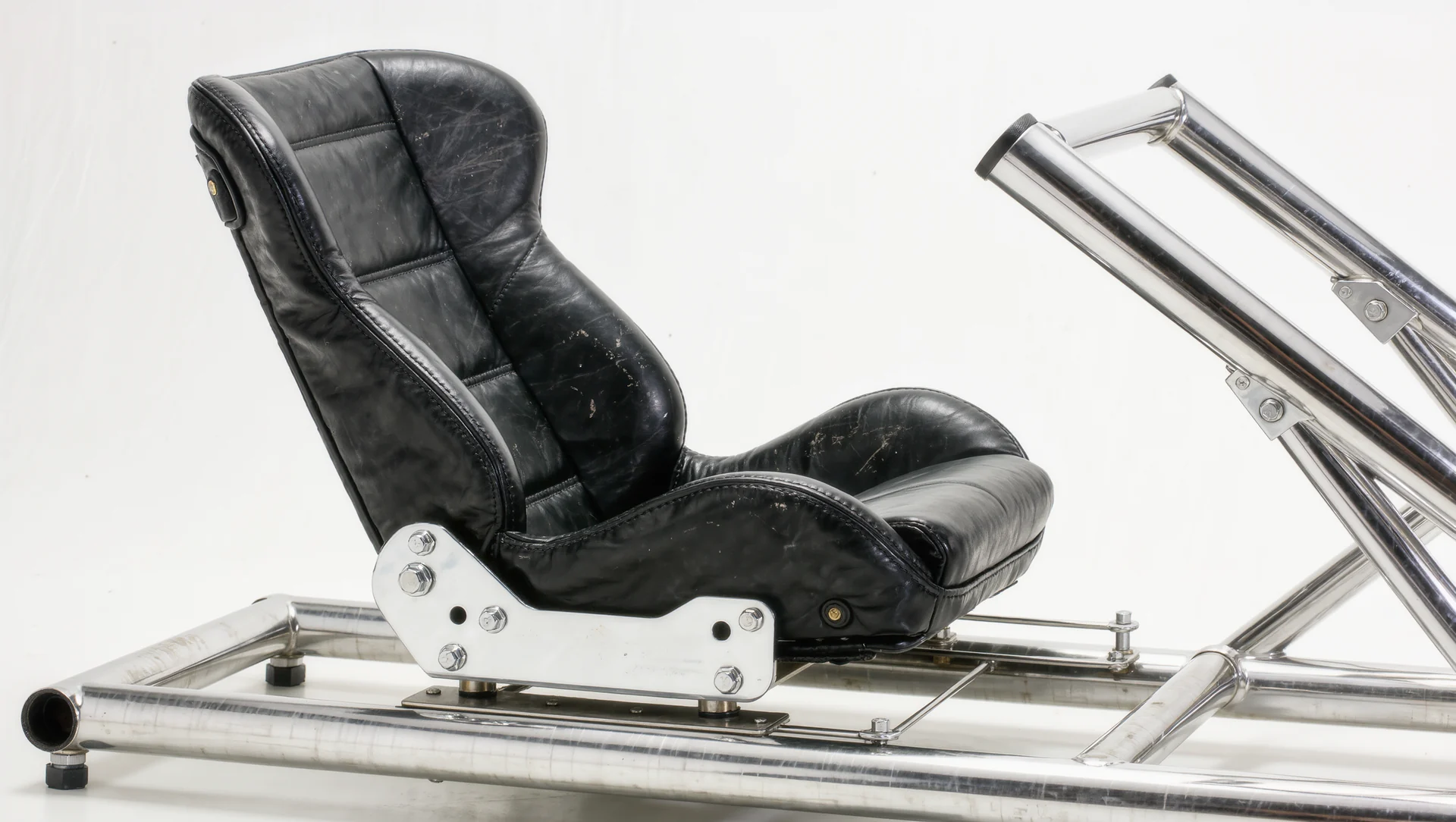
The used car seat that beats a branded bucket
A used road car sport seat against a branded sim bucket: the published weights, prices and homologation rules, and where the cheap option genuinely wins.
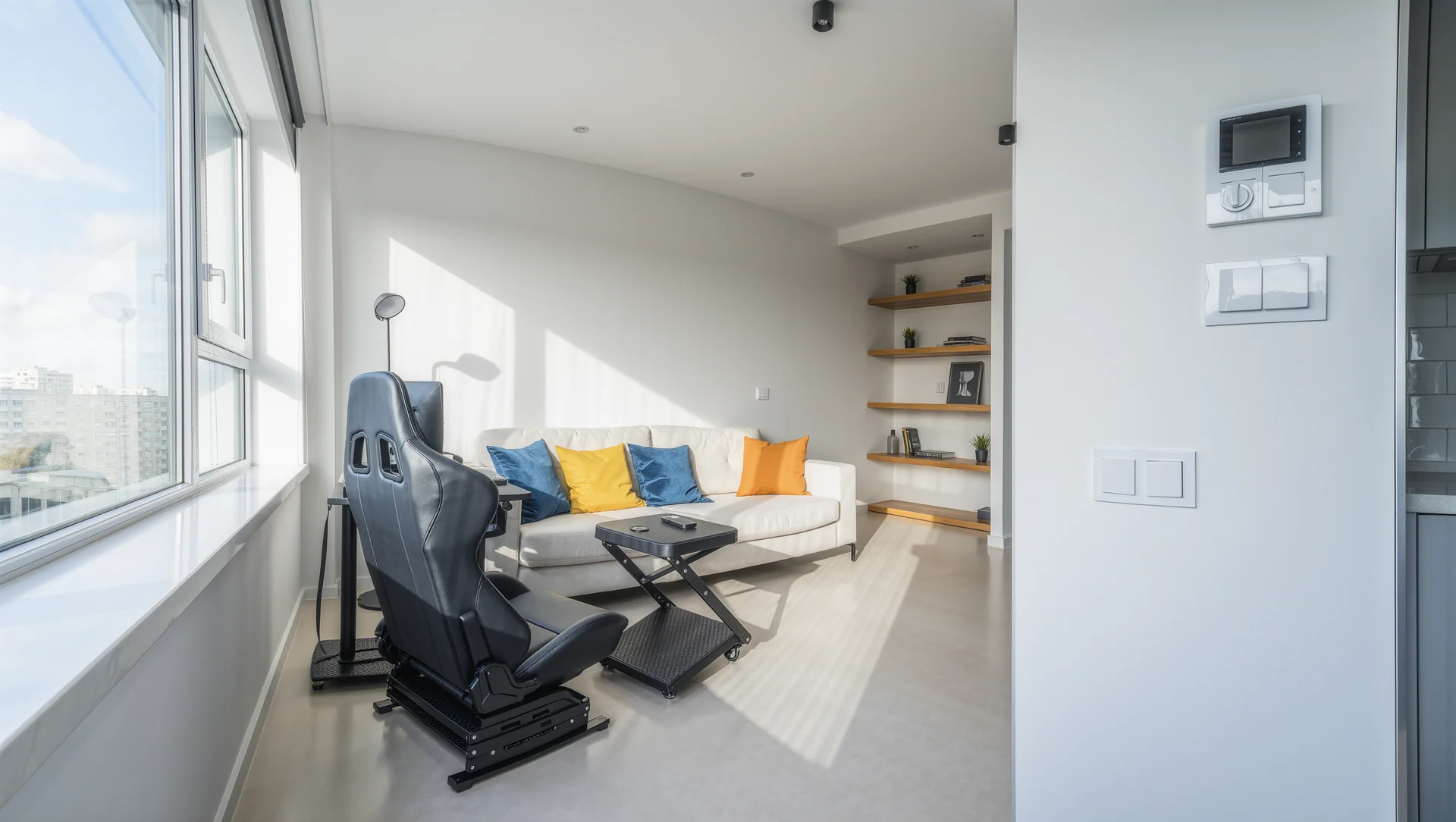
A rig that fits a flat: folding, wheel stand or profile
Folding cockpit, wheel stand or a full profile rig in a small flat: the published dimensions, the storage figures and what each option really costs in floor space.
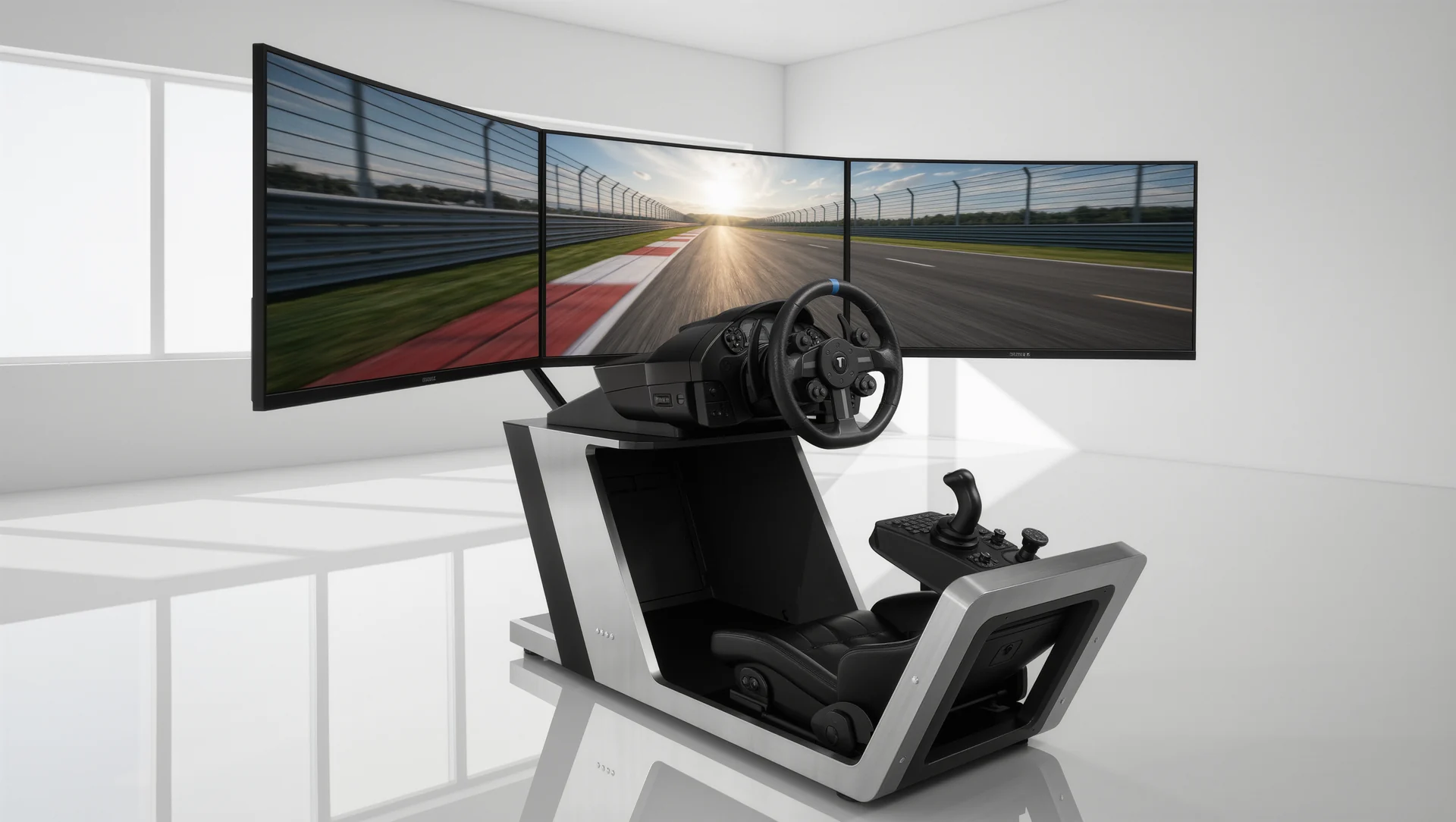
Freestanding monitor stands and why motion needs them
Free standing monitor stands against rig mounted arms: the published load ratings, VESA ranges and the reason motion platforms leave no choice.