Catching oversteer before the car decides for you
Catching oversteer before the car decides for you: the timing, why most catches arrive late and the drill that shortens your reaction.
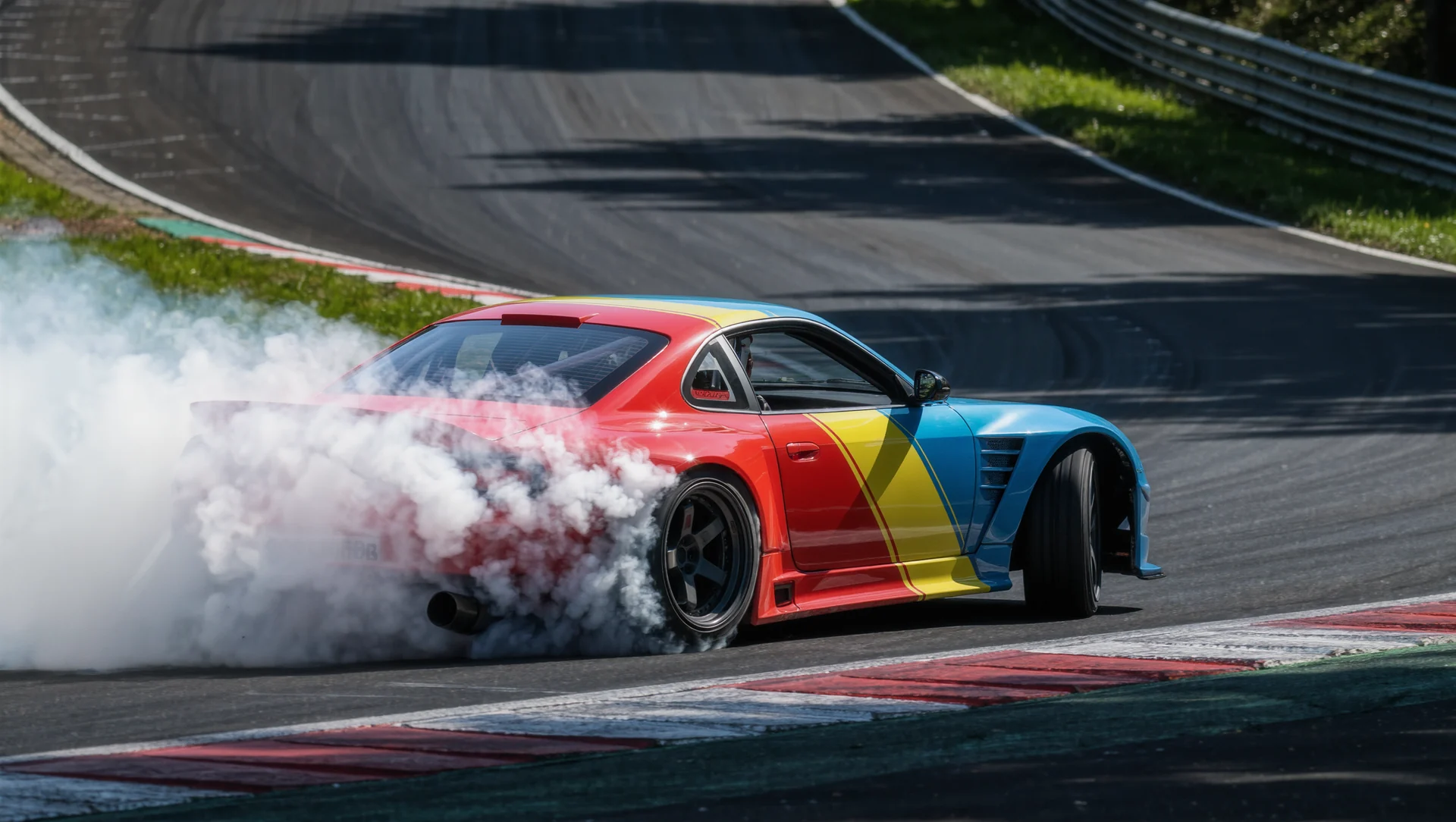
A slide you catch is a slide you started correcting before you consciously noticed it. Human reaction time to a visual cue is around a quarter of a second, and a car at 150 km/h travels ten metres in that time, which is why the correction has to come from the hands rather than from the eyes.
The timing problem
Reaction to something you see takes roughly 250 milliseconds. At 150 km/h, which is 41.7 metres per second, that is 10.4 metres of travel before your hands have moved at all, and a rear that has stepped out by five degrees in that distance is usually past the point where a small correction works.
Force feedback arrives faster than sight, and that is the whole reason it matters. A base publishing 17 Nm of torque with a 22 bit angle sensor and a slew rate of 4.8 Nm per millisecond can report a change in load in single milliseconds, and a driver whose hands respond to a drop in self aligning torque is correcting before the picture on the screen has changed noticeably.
That is why filters cost lap time in a way settings screens never show. Damping and inertia smooth the signal, and a smoothed signal reports the loss of grip later. The delay is small in milliseconds and large in metres.
| Item | Figure |
|---|---|
| Visual reaction time | about 250 milliseconds |
| Speed of 150 km/h | 41.7 metres per second |
| Distance covered during reaction | about 10.4 metres |
| Torque slew rate of a strong base | 4.8 Nm per millisecond |
| Angle sensor resolution | 22 bit absolute |
| Force feedback update rate in iRacing | 360 Hz, a value every 2.8 ms |
What the car is telling you before it slides
The wheel goes light. As the rear starts to lose grip the self aligning torque falls, and the force in your hands drops before any rotation is visible. This is the earliest signal available and the one most drivers overwrite with damping.
The steering angle stops producing yaw. If you add angle and the car does not rotate more, the front is at its limit; if the car rotates more than the angle you added, the rear is going. Both are readable through the hands in a way the screen cannot show.
And the sound changes. Tyre noise rises before slip becomes visible, which is why headphones and a properly set audio balance are worth more than most hardware upgrades for this specific skill.
The correction, in order
Hands first, and only as much as needed. The classic error is a large, fast correction that catches the slide and then throws the car the other way, which is worse than the original problem because the second slide arrives with the car already unsettled.
Feet second. Lifting the throttle in a rear wheel drive car transfers weight forward and increases the rear slide, so the correct response is usually to hold the throttle steady rather than to lift, and in some cars to add a little. This is counterintuitive and it is the part that separates drivers who catch slides from drivers who describe them.
Eyes third and continuously. Look where you want the car to go, not at what it is doing. A driver looking at the outside wall steers at the outside wall, and this is measurable rather than mystical.
The drill that shortens the reaction
Find a slow corner and deliberately provoke oversteer twenty times in a row. Not to catch it heroically, but to build the association between the drop in force and the movement of your hands. Twenty repetitions in ten minutes teaches more than twenty accidental slides over a month, because the interval between them is short enough to learn from.
Then remove the filters and repeat. If the slides become easier to catch with damping at zero, that is your answer about what the filters were costing. Most drivers find the car harder to drive and easier to save, which is exactly the trade the technique is about.
Sources
Frequently asked questions
Should I lift off the throttle when the rear goes?
Usually not. Lifting transfers weight forward and increases the slide. Holding steady is the default and adding a little is right in some cars.
Do force feedback filters make catching slides harder?
Yes, measurably. Damping and inertia delay the report of a falling load, and the delay is small in milliseconds and large in metres.
Why do my corrections cause a second slide?
Because they are too large and too fast. Correct as little as necessary and unwind gradually rather than snapping back to centre.
Can this be practised deliberately?
Yes, and it is the fastest improvement available. Provoke twenty slides in one slow corner rather than waiting for accidental ones.
More in Driving Technique

Assetto Corsa mods: quality, safety and the legal edge
Assetto Corsa mods between quality, safety and copyright: what the official tools allow, where converted content crosses a line and how to judge a mod before installing it.
rFactor 2 in 2026: still the reference for feel
rFactor 2 in 2026: what it still does better than anything else, what the published requirements tell you and whether it is worth starting now.

Automobilista 2: strengths, weaknesses, who it suits
Automobilista 2 examined honestly: the published requirements and features, where its breadth pays off and which drivers it genuinely suits.