rFactor 2 in 2026: still the reference for feel
rFactor 2 in 2026: what it still does better than anything else, what the published requirements tell you and whether it is worth starting now.
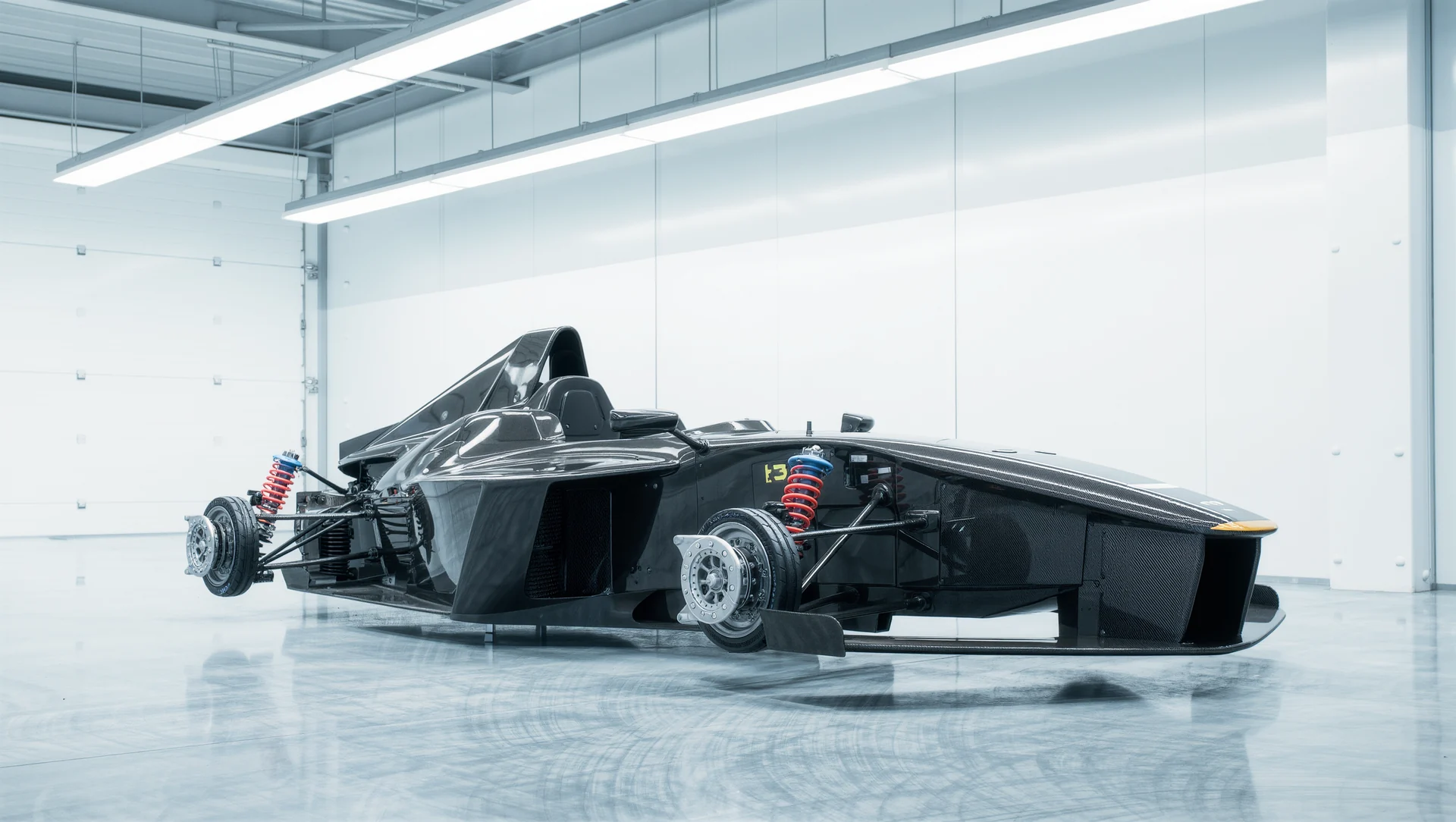
rFactor 2 is the simulator people describe as feeling right and looking wrong, and after all these years both halves of that sentence are still accurate. The question in 2026 is not whether the tyre model holds up, but whether the surrounding software is worth the friction it still costs.
What it is still built around
The reputation rests on the tyre model. Studio 397 named its approach the Contact Patch Model, which computes what happens in the tyre's footprint rather than approximating the result, and that is the reason drivers describe the limit as readable rather than sudden. Where other simulators tell you the tyre is sliding, this one tells you it is about to.
The published system requirements support that. The minimum is an i5-4460 or FX-8120 with 16 GB of memory and a GTX 950 or RX 550, and the recommendation is an i5-9600 or Ryzen 5 3600X with 32 GB and a GTX 1070 8 GB or RX 580 8 GB, with 40 to 60 GB of storage. A 32 GB recommendation on a simulator with modest graphics points at where the computation actually goes.
The content model is open in a way modern simulators are not. Over 35 free and paid licensed cars and tracks ship or are available, and a large community adds more, which means the practical content depends on what you install rather than what you buy.
| Item | Figure |
|---|---|
| Minimum processor | Intel i5-4460 or AMD FX-8120 |
| Minimum memory | 16 GB |
| Recommended processor | Intel i5-9600 or AMD Ryzen 5 3600X |
| Recommended memory | 32 GB |
| Recommended graphics | GTX 1070 8 GB or RX 580 8 GB |
| Storage | 40 GB minimum, 60 GB recommended |
| Licensed content | over 35 free and paid cars and tracks |
What has changed around it
The same studio now also builds Le Mans Ultimate, and that simulator publishes figures rFactor 2 never did: 400 Hz physics for force feedback and an advanced brush tyre model, on 11 laser scanned circuits. A driver deciding between the two is partly choosing between an open older platform and a narrower newer one built by the same people.
The practical consequence is that endurance racing has moved. If your interest is Hypercar, LMP2 and GT racing over long distances with a live championship's content, the newer simulator is where the development effort is going. rFactor 2 remains the place for everything else its community has built.
What has not changed is the interface. rFactor 2 still asks more of a new driver than any of its competitors, and the time between installing it and racing is measured in evenings rather than minutes. That is a real cost and worth stating plainly.
Who should still start with it
Drivers who want feel above everything else, and who are willing to spend time on setup and configuration to get it. If the reason you race is the information arriving through the wheel, this simulator still rewards that priority more than its polish suggests.
Drivers who want content nobody else offers. Historic cars, unusual series and circuits that no commercial simulator licenses exist here because the platform stayed open, and for some disciplines it is the only option at all.
Not drivers who want to race tonight. If the goal is a full grid in a well organised series within an hour of installing, other simulators do that better, and there is no shame in choosing the one that gets you racing.
Setting it up so it behaves
Do the force feedback first and leave it alone afterwards. This simulator responds badly to layered filtering; set the strength against the clipping meter, disable the artificial effects, and let the tyre model do the talking. Most complaints about the feel trace back to settings that were copied from a different simulator.
Then install content in small batches with a written list, exactly as with any open platform. And check the memory: with 32 GB recommended for the base simulator, a heavily loaded install is not a place to be economical with hardware.
Sources
Frequently asked questions
Is rFactor 2 still worth buying in 2026?
For feel and for community content, yes. For a quick route into organised online racing, other simulators are the better first purchase.
Do I need 32 GB of memory?
That is the published recommendation, and a modded installation will use it. 16 GB is the stated minimum and behaves like one.
Should I buy this or Le Mans Ultimate?
If you want endurance racing with current championship content, the newer one. If you want breadth and community content, this one.
Why does the force feedback feel strange at first?
Usually because settings were carried over from another simulator. Reset the filters, set the strength alone, and judge it after five laps.
More in Games & Platforms
Hydraulic brakes in a sim: worth the mess
True hydraulic brake pedals against a good load cell: the published pressures, prices and maintenance, and who genuinely gains from the upgrade.
Handbrake and sequential shifter: which discipline needs them
Handbrake and sequential shifter: which discipline actually needs them, the published forces and angles, and the order to buy them in.

H pattern and clutch: heel and toe in a sim
H pattern shifting with a clutch in a simulator: which cars need it, what the hardware costs and how heel and toe actually works without a real gearbox.