Wheel rim diameter: formula, GT and rally
Wheel rim diameter for formula, GT and rally: the published sizes and weights, what each one changes in the force and how to choose without buying four.
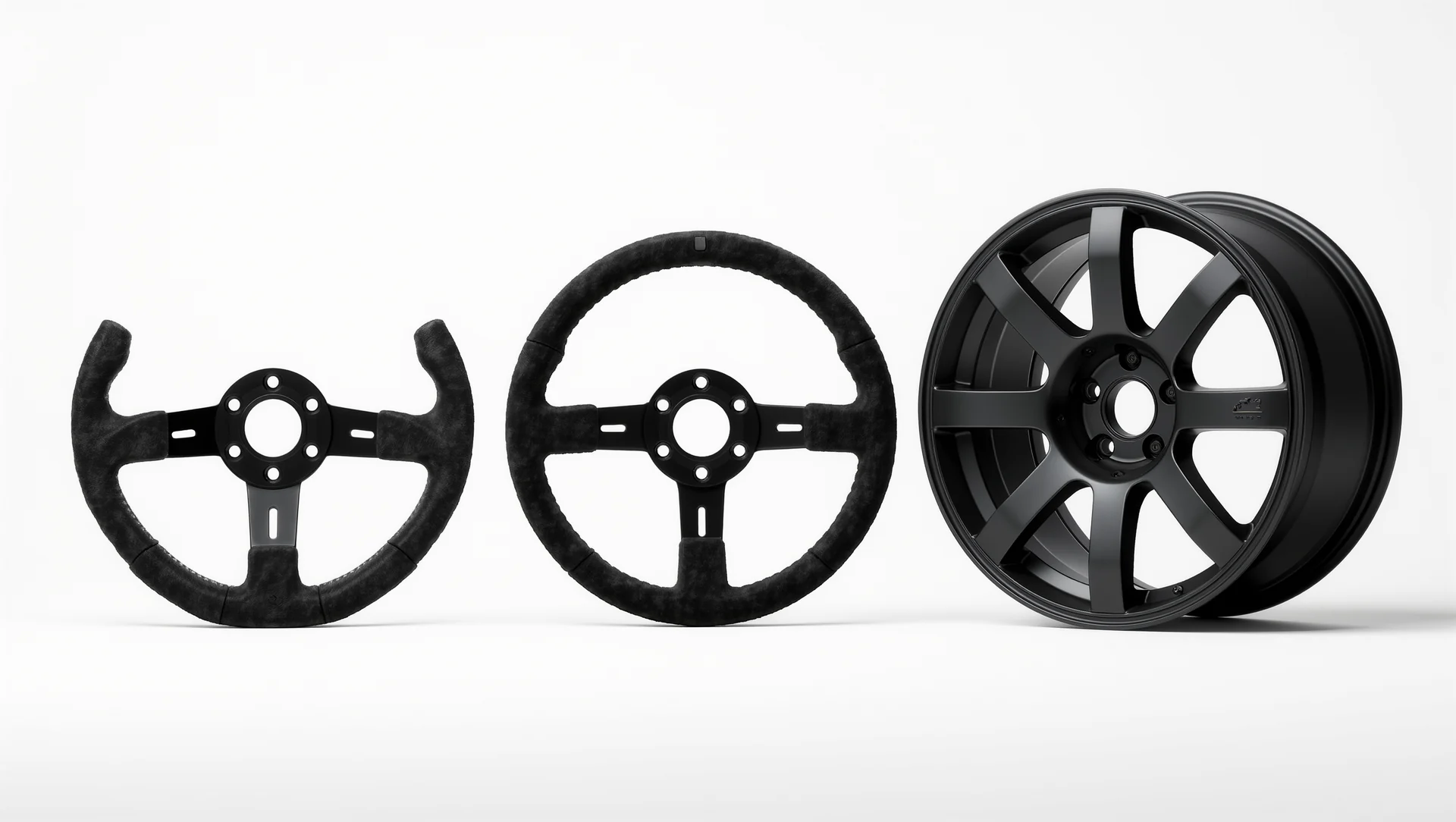
Rim diameter changes three things at once: the force at your hands, the distance to your elbows and how much steering angle one hand movement produces. The published range runs from 275 to 350 mm, and the difference between the ends of that range is larger than most force feedback settings.
The published sizes
Fanatec publishes a spread that covers every discipline. The ClubSport Wheel Rim Flat 1 measures 27.5 cm, that is 275 mm, and weighs 692 grammes in leather. The ClubSport GT V2 is 330 mm and 979 grammes. The Sparco Rally rim is also 330 mm but 885 grammes in brushed aluminium with Alcantara, at 179.99 dollars. The Sparco Karting rim is 350 mm and only 593 grammes, also at 179.99 dollars.
The weights are as instructive as the diameters. A 350 mm karting rim at 593 grammes is lighter than a 275 mm flat rim at 692 grammes, because the karting rim is a thin tube and the flat rim carries a hub plate and paddles. Diameter and mass are independent, and both matter for different reasons.
Formula sits at the small end for a reason that has nothing to do with fashion. A formula car turns lock to lock in far less than one full rotation, so a large rim would put your hands outside a comfortable arc. Rally sits at the large end because the opposite is true: a rally driver needs a lot of angle quickly and uses hand over hand movement.
| Rim | Diameter | Weight | Force at 17 Nm |
|---|---|---|---|
| ClubSport Flat 1 | 275 mm | 692 g | about 124 newtons |
| ClubSport GT V2 | 330 mm | 979 g | about 103 newtons |
| ClubSport Sparco Rally | 330 mm | 885 g | about 103 newtons |
| ClubSport Sparco Karting | 350 mm | 593 g | about 97 newtons |
What the diameter does to the force
Force at the rim is torque divided by radius. At 17 Nm, a 330 mm rim has a radius of 0.165 m and delivers about 103 newtons at your hands. The same 17 Nm on a 275 mm rim is a radius of 0.1375 m and about 124 newtons, and on a 350 mm rim it is 0.175 m and about 97 newtons. That is a spread of nearly 30 per cent from the same base with the same setting.
The practical consequence is that a rim change is a force feedback change. Moving from a 350 mm rally rim to a 275 mm formula rim without touching anything makes the wheel feel roughly a quarter stronger, and drivers usually blame the base or the profile rather than the geometry.
Mass acts on a different axis. A 979 gramme rim resists a fast direction change more than a 593 gramme one, which reads as a calmer wheel and slower catches. For rally, where catches are the job, the lighter rim is not a compromise but the point.
Choosing without buying four
Start from the cars you drive most. If more than half your seat time is GT and touring cars, buy a 330 mm rim first and treat everything else as an addition. If more than half is formula, buy 275 mm or a formula style rim and accept that GT cars will feel nervous on it.
Then check the ergonomics before the aesthetics. A larger rim brings your hands closer to your elbows and can turn a correct elbow angle into a cramped one, and a smaller rim does the reverse. This is why a rim change often requires the seat to move, and why the seat should be set before the rim is bought.
And plan the coupling cost. Each rim needs its own wheel side coupling, at 60 to 200 dollars, so a driver with four rims has spent between 240 and 800 dollars on couplings alone. Two rims that genuinely cover your disciplines beat four that overlap.
The setting to change with the rim
Whenever the rim changes, revisit the strength. Because force at the hands changes with radius, the number that produced a clean clipping meter on a 330 mm rim will overrun on a 275 mm one. Saving a profile per rim rather than per car is often the more useful division.
Sources
Frequently asked questions
Does a bigger rim mean less force?
Yes, at the same torque. The radius divides the torque, so 350 mm delivers about a quarter less force at the hands than 275 mm.
Which size for GT racing?
330 mm covers GT3, GT4 and touring cars, and it is the size most GT rims are built to.
Is a light rim better?
For fast corrections, yes, because there is less to accelerate. For a calm, heavy feel in a road car, a heavier rim suits better.
Do I need a different profile per rim?
Often more useful than a profile per car, because the change in force at the hands is purely geometric and affects every car equally.
More in Wheels & Pedals
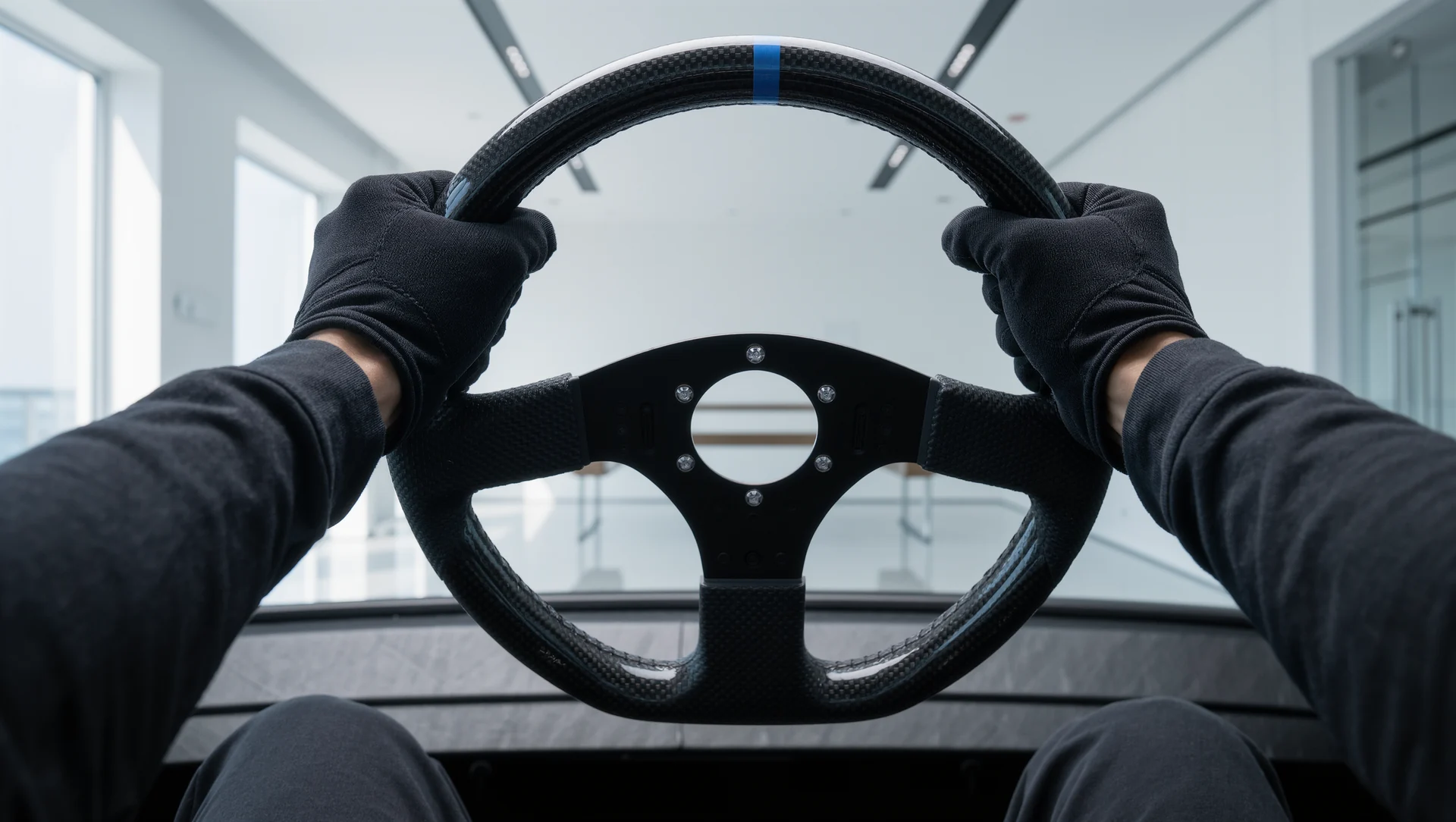
Wheel distance and the ninety degree elbow
Wheel distance decides whether your shoulders or your elbows do the steering. The angle to aim for, the published rim sizes and how to measure it in five minutes.
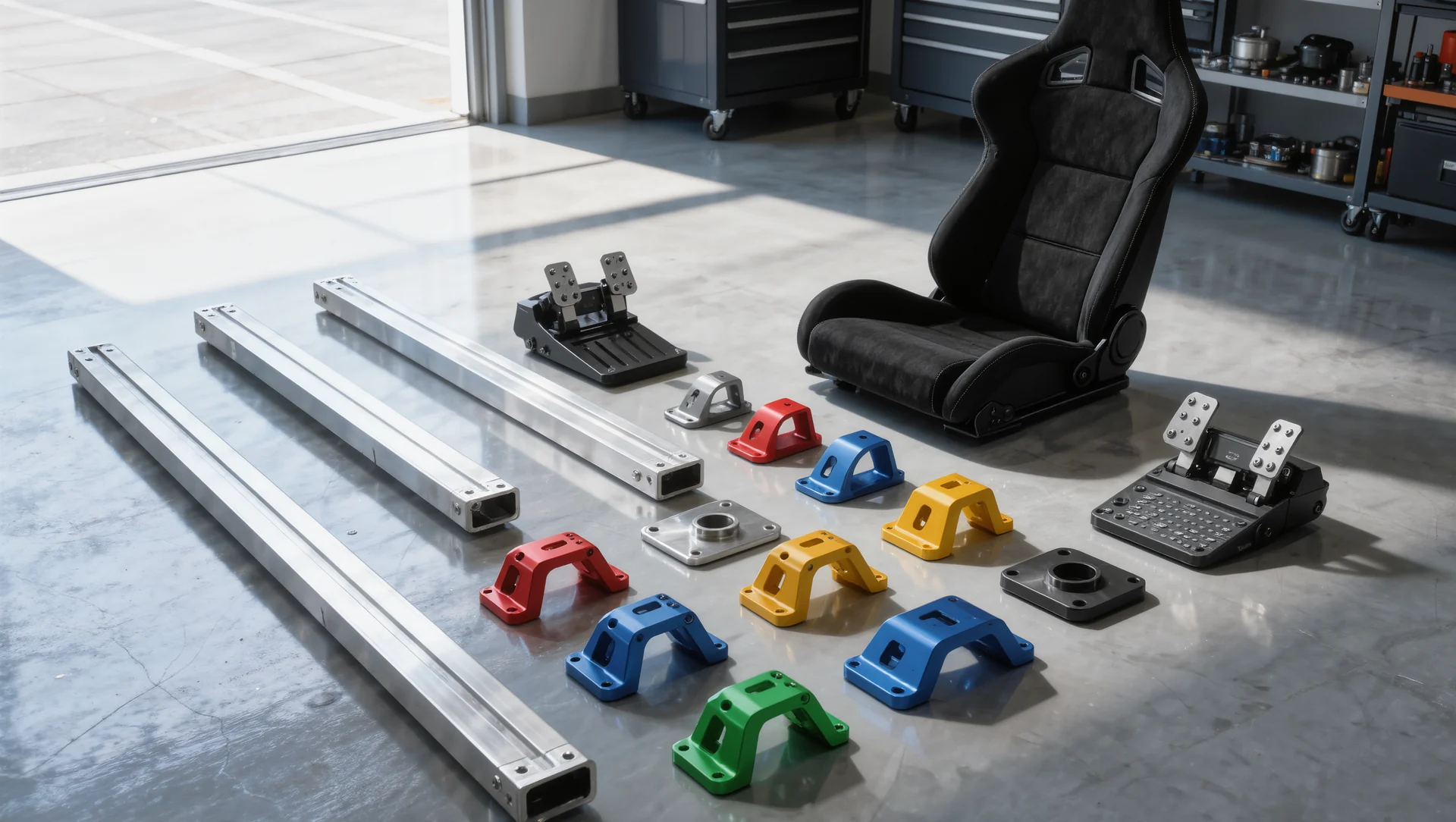
Buying a used rig: what to check before you pay
Buying a used sim rig: the parts that carry value, the damage that is invisible in photographs and the price arithmetic that decides whether it is a bargain.
What iRacing really costs in the first year
What iRacing costs in the first year: subscription tiers from 13 to 199 dollars, car and track prices, the volume discount ladder and the free content included.