Simulator sickness: causes you can actually remove
Simulator sickness: the causes you can actually remove, in the order that removes the most, and the ones that are a hardware limit rather than a settings problem.
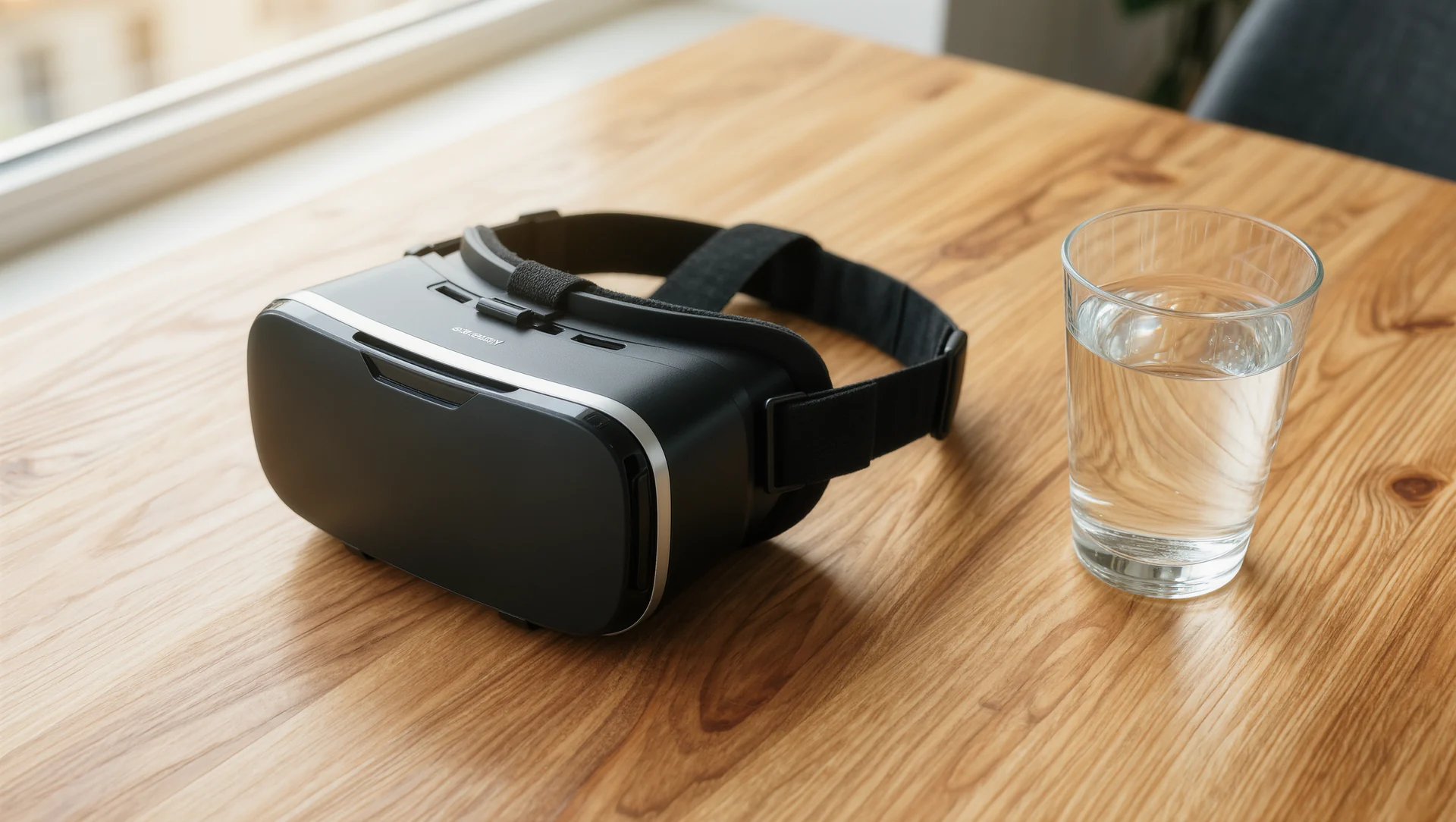
Simulator sickness is a conflict between what your eyes report and what your inner ear reports, and almost every fix is about reducing that conflict rather than about toughening up. Most of the causes are settings, and settings are free.
Why it happens at all
Your inner ear reports acceleration and your eyes report movement, and when the two disagree for long enough the body treats the mismatch as a warning. In a static rig your eyes see cornering and your ear feels nothing; in a moving rig with fixed screens your ear feels movement and your eyes see a horizon that did not move.
That second case is worth stating clearly because it is self inflicted. If the monitors move with the seat, the visual horizon stays fixed relative to your eyes while the inner ear reports movement, which is both less convincing and a reliable way to feel unwell. Screens belong on their own stand.
The third source is timing. A frame that arrives late is a moment where the picture and the motion disagree, and the published thresholds put a number on it: a full bar on the renderer or physics meters is about 16.7 ms at 60 Hz, and a machine that drops frames in traffic is producing exactly the conflict that causes the symptom.
The causes you can remove, in order
Field of view first, because a wrong one is the single largest contributor. Too wide compresses distances and exaggerates the sense of speed, which is a mismatch your inner ear notices immediately. The correct value is a calculation from screen width and eye distance rather than a preference.
Frame time second. Stable frames matter more than many frames, and in VR the published requirement is the recommended system tier rather than the minimum precisely because a dropped frame in a headset is felt rather than seen.
Put the settings in order of size. A field of view of 90 degrees where 53 is correct is an error of 37 degrees, or about 70 per cent too wide. Dropping from 60 frames to 45 in traffic is a jump from 16.7 ms to 22 ms per frame, a 32 per cent increase. Camera shake adds motion of a few degrees. Fixing the first 2 removes more conflict than the other 4 combined.
Then the camera. Head movement effects, camera shake and simulated g force head tilt all add motion your ear did not feel. Turning them off costs nothing and removes a category of conflict entirely.
Then the horizon. A locked horizon setting, where the view stays level with the world rather than with the car, reduces conflict for many drivers, and it is worth trying in both positions rather than assuming.
| Cause | Fix | Cost |
|---|---|---|
| Field of view too wide | calculate it from width and distance | free |
| Dropped frames in traffic | reduce settings until frame time is stable | free |
| Head movement and camera shake effects | turn them off | free |
| Screens moving with the seat | put them on their own stand | a stand |
| No airflow | a fan aimed at your face | small |
| Platform without yaw | a hardware limit, not a setting |
What helps that is not a setting
Airflow. A fan aimed at your face is the single most reported non software remedy, and wind simulators exist partly for this reason: they give the body a physical cue that matches the visual one.
Session length. The symptom builds, so twenty minutes with a break is far more tolerable than sixty straight, and tolerance genuinely increases with exposure over weeks. Starting with short sessions is a strategy rather than a concession.
And a stable seating position. A driver who is braced and still has fewer conflicting signals than one who moves in the seat, which is one more argument for a proper seat rather than an office chair.
What is a hardware limit
A motion platform without yaw cannot represent the car rotating, so the visual rotation of a slide has no matching physical cue. That is a limit of a two or three degree of freedom platform rather than a setting, and it is why some drivers feel worse with motion than without.
And a headset that cannot hold its frame rate is a hardware limit too. If the published recommendation is 6 cores and 8 GB of video memory and your machine is below it, the answer is the machine rather than a tolerance problem.
Sources
Frequently asked questions
What should I change first?
Field of view. A wrong one exaggerates speed and compresses distance, which is the mismatch your inner ear notices fastest.
Does a fan really help?
For many drivers, yes. It gives the body a physical cue that matches the visual one, which is the same principle a wind simulator uses.
Will it get better with practice?
Tolerance genuinely increases with exposure over weeks. Short sessions with breaks build it; long sessions that end badly do not.
Why do I feel worse with a motion platform?
Often because the screens move with the seat, or because the platform has no yaw and the rotation you see has no physical counterpart.
More in Technology

Prize money in sim racing: the sober numbers
What sim racing actually pays: the published prize pools, what they look like divided by the field and why prize money is not an income.
Stewarding: how a protest is judged, step by step
How a protest is judged, step by step: who may file, what evidence is required, the deadlines and what happens when a protest is found frivolous.
Running a league: the software that saves the weekend
The tools a league actually needs: what has to be tracked, what a spreadsheet still does better than an application and where automation earns its keep.