Sim Racing Cockpit Setup Guide
Sim racing cockpit setup guide: compare folding rigs, wheel stands, full cockpits and aluminum profile, plus seats, ergonomics and field-of-view tips.…
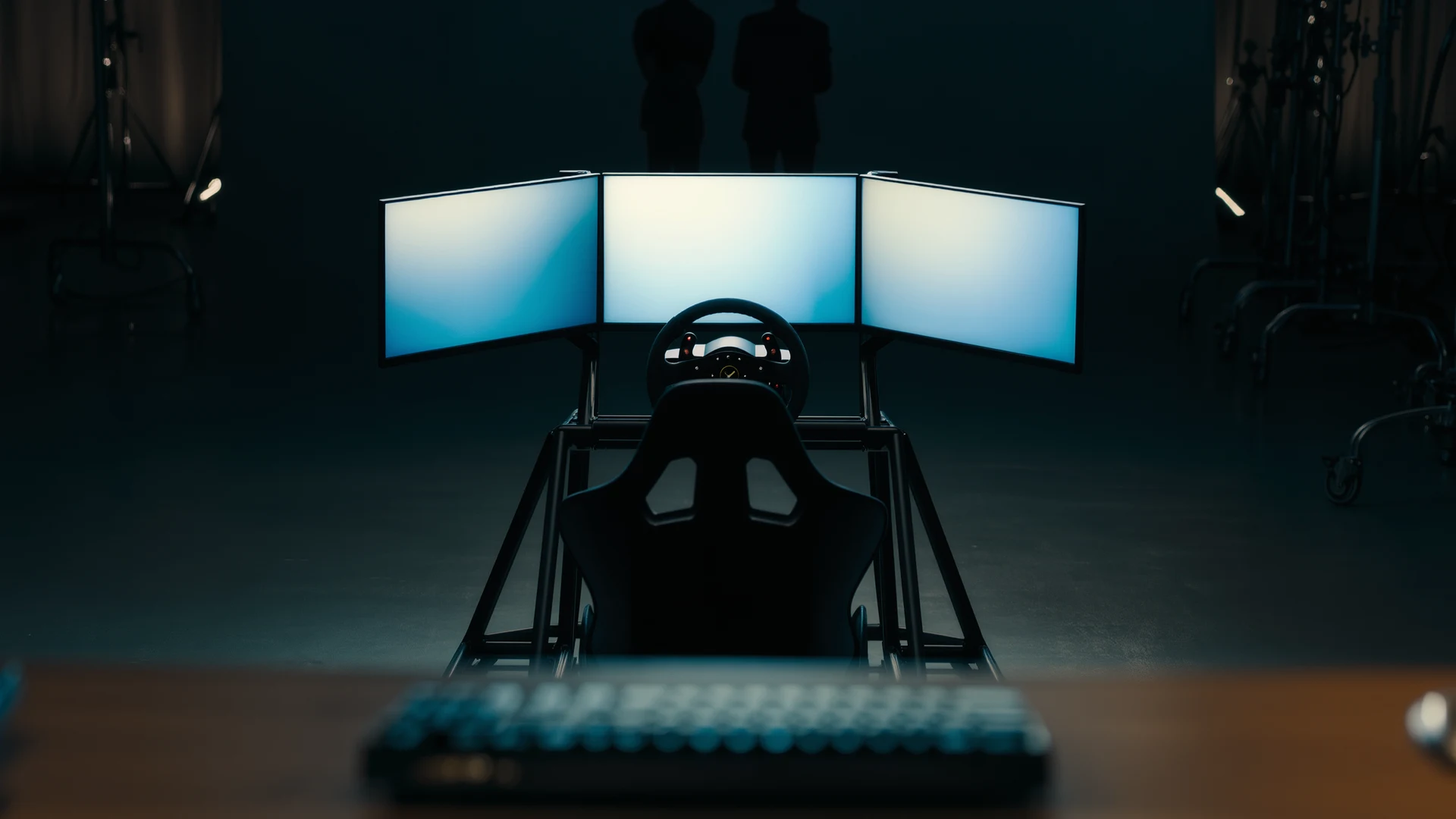
A rigid, purpose-built sim racing cockpit is the structural foundation that transmits force feedback cleanly and keeps pedals stable, since every millimeter of flex is lost detail.
Key Takeaways
- Folding cockpits ($200-$350) like the Playseat Challenge ($249) and Next Level Racing F-GT Lite ($299) fold flat in under sixty seconds and suit wheel bases up to roughly five Newton-meters of torque.
- Wheel stands ($150-$300) such as the Next Level Racing Wheel Stand 2.0 ($249) add rigid mounting plus a chair cradle that stops you sliding backward under braking; the GT Omega Apex ($149.99) is the budget alternative.
- Aluminum extrusion profile cockpits ($450-$1,500+) offer infinite T-slot adjustability; popular models include the Sim-Lab GT1 Evo ($499), Sim-Lab P1-X ($849), Trak Racer TR80 ($549), Advanced Sim Racing ASR 3 ($499) and RigMetal Plus ($449).
- The best-value seat is a used manually adjustable car seat from a BMW 3 Series, Mazda MX-5 Miata, Honda Civic Si or VW GTI at $50-$150, bolting on with standard M8 bolts.
- Fixed-back FIA-homologated bucket seats can cause back pain past sixty to ninety minutes; choose a reclining sport seat like the Sparco R100 ($399) or OMP Design 2 ($349) for aesthetics with comfort.
- Correct ergonomics: a 10-15 degree knee bend at full brake, roughly ninety-degree elbows, wheel center at chin height, seat cushion tilted 5-10 degrees up, and seat back reclined 100 to 120 degrees.
- Set single screens fifty to sixty centimeters from your eyes; angle triple side monitors fifty to sixty degrees inward to create a 150 to 180 degree field of view.
Why a Proper Cockpit Is the Foundation of Your Entire Sim Racing Experience
The seat you occupy and the physical structure that holds your steering wheel, your pedals, and ultimately your entire body in position relative to your controls is the literal and figurative foundation of your sim racing experience. It is the component that determines whether the substantial forces generated by your wheel base and pedal set are transmitted cleanly and efficiently into your body, providing clear, undistorted force feedback information, or are dissipated uselessly into structural flex, wobble, and movement that corrupts the very signals you depend upon to drive at your potential. A wobbly desk clamp combined with an office chair on plastic casters rolling across a hard floor might function adequately for casual gaming sessions of thirty minutes or less. But any form of serious sim racing, particularly when paired with direct-drive wheel bases capable of producing eight to twenty-five Newton-meters of sustained torque and load-cell pedal sets requiring fifty to ninety-plus kilograms of consistent brake pressure, demands a rigid, ergonomically optimized, and purpose-built cockpit structure. Every single millimeter of flex, play, or compliance anywhere in the mounting system is lost force feedback detail that your brain never receives. Every single millimeter of unintended pedal base movement under braking is inconsistency injected directly into the most critical control input in all of motorsport. A proper cockpit is not a luxury accessory purchased after everything else has been acquired; it is the structural prerequisite that enables your other hardware to perform to its design specification.
Cockpit Categories: From Space-Saving Foldable to Professional Aluminum Profile
Folding Cockpits: The Space-Efficient Solution at $200-$350
The Playseat Challenge at $249 is the original and still most popular folding cockpit design on the global market. Its fundamental concept is elegantly simple: a tubular steel frame resembling a lightweight camping chair, fitted with a breathable fabric seat stretched between the frame members, with a wheel-mount plate at the front and pedal straps at the base. The entire assembly folds flat in under sixty seconds and can be stored in a standard household closet, behind a door, or under a bed. It is comfortable for driving sessions up to approximately two hours, surprisingly stable for its weight class, and compatible with wheel bases producing up to roughly five Newton-meters of torque, covering every Logitech product and most entry-level Thrustmaster offerings. The limitations are structural: lateral flex in the wheel mount plate becomes apparent with stronger wheel bases, and the fabric pedal straps, while functional, cannot provide the absolute rigidity that a bolted connection delivers. The Next Level Racing F-GT Lite at $299 is the Playseat Challenge’s primary competitor and offers a more rigid frame structure plus the genuinely useful ability to convert between a Formula-style seating position, with the pedal deck elevated and the seat reclined toward horizontal, and a conventional GT-style upright position. For apartment residents, students in dormitories, or anyone whose living situation physically cannot accommodate a permanent, dedicated cockpit occupying several square meters of floor space, folding cockpits are not a compromise, they are the only viable solution, and both the Playseat Challenge and the F-GT Lite perform admirably within their design constraints.
Wheel Stands: The Mid-Range Bridge at $150-$300
A wheel stand is a dedicated metal frame that provides rigid mounting points for your wheel base and pedals but does not include an integrated seat, you continue to use your existing office chair or gaming chair. This configuration represents the single most cost-effective and space-efficient upgrade path from a bare desk-clamp arrangement to a proper, rigid mounting solution. The Next Level Racing Wheel Stand 2.0 at $249 is the category benchmark and recommended default choice. It features a fully welded, heavy-gauge steel construction with a wide, stable footprint, independently adjustable wheel deck height and angle settings, a pedal plate with angle adjustment and pre-drilled mounting patterns compatible with every major manufacturer’s hardware, and, this feature alone justifies the product’s existence, a built-in chair cradle that captures the casters or legs of your office chair, physically preventing you from pushing yourself backward under hard braking. Without this cradle, or an equivalent solution such as placing the rear legs of your chair into a pair of dedicated wheel chocks or removing the casters entirely, every forceful brake application will gradually, incrementally push you away from the pedals, destroying any possibility of consistent braking performance. The GT Omega Apex at $149.99 provides a similar feature set with slightly less refined adjustability and a narrower footprint, representing a legitimate budget alternative that sacrifices no structural integrity.
Full Cockpits: The Dedicated Rig at $400-$1,000
A full cockpit integrates both the structural frame and a dedicated racing-style seat into a single, unified assembly. This is the purchase that transforms sim racing from a peripheral-enhanced gaming activity into a dedicated, furniture-grade installation occupying a defined space in your home. The Next Level Racing GTtrack at $899 is a popular and well-regarded mid-range option built around a square-tube steel frame with welded joints, an authentic racing-style seat featuring adjustable backrest recline and sliding seat rails for fore-aft positioning, and integrated mounting provisions for a shifter, handbrake, keyboard tray, and monitor stand. The structure is rigid enough to support direct-drive wheel bases producing up to twenty Newton-meters of sustained torque and load-cell pedals requiring ninety-plus kilograms of brake force, with zero detectable structural flex anywhere in the load path. The Playseat Trophy at $599 adopts a fundamentally different design philosophy: a lightweight tubular steel space frame suspending a breathable fabric seat in tension, creating a visually striking, almost sculptural appearance. It is exceptionally rigid for its total weight, remarkably comfortable over extended endurance sessions thanks to the ventilated, pressure-distributing fabric, and compact enough to fit into spaces where bulkier cockpits would be impractical. Its limitations include fixed seat positioning, the frame geometry is not adjustable beyond pedal distance, and the absence of integrated shifter or handbrake mounts as standard equipment.
Aluminum Profile Cockpits: The Professional Standard at $450-$1,500+
Aluminum extrusion profile: the 8020-series T-slot aluminum structural framing system originally developed for industrial automation, machine guarding, and scientific laboratory equipment, is the ultimate cockpit construction material. Its defining characteristic is infinite, continuous adjustability: every component, the pedal deck, the wheel base mounting platform, the seat rails, the shifter mount, the monitor stands, the keyboard tray, the button box bracket, slides freely along the T-slot channels milled into the aluminum extrusion profiles and locks immovably into position with hardened steel T-nuts and bolts. You can adjust pedal distance, pedal angle, wheel height, wheel angle, seat position, and seat recline to sub-millimeter precision. You can mount any accessory, from any manufacturer, in any position, at any angle. You can add length to the chassis by bolting on additional extrusion segments. You can attach a motion platform, a wind simulation system, a fourth telemetry monitor, a cup holder, a headphone hook, anything that can be bolted to a flat surface can be bolted to aluminum profile.
The dominant manufacturers in this category include Sim-Lab, based in the Netherlands, whose GT1 Evo at $499 is the single most popular aluminum cockpit in the world and whose P1-X at $849 is the chassis found in professional sim centers and racing team facilities across the globe. Trak Racer, based in Australia, offers the TR80 at $549 and the heavy-duty TR160 at $949, with a slightly different design philosophy emphasizing integrated shifter mounts and cable management channels. Advanced Sim Racing, based in Canada, provides the ASR 3 at $499 with free shipping throughout North America and uses US-standard 15-series extrusion that is marginally larger and stiffer than the European 40-series metric standard. RigMetal, based in the United States and shipping from Seattle, offers the RigMetal Plus at $449, the most affordable North American-manufactured aluminum cockpit that makes no functional compromises.
Seats: What to Purchase and What to Avoid
The single best value in sim racing seating is not found in any sim racing product catalog. It is found at your local automotive salvage yard, on Facebook Marketplace, or on eBay Motors: a used, manually adjustable passenger seat extracted from a sporty production car. A seat from a BMW 3 Series, Mazda MX-5 Miata, Honda Civic Si, or Volkswagen GTI, manufactured by actual automotive engineers to support a human body comfortably for hours of continuous driving, typically costs between $50 and $150. It will include adjustable backrest recline, sliding fore-aft rails, and often adjustable lumbar support and seat cushion angle. It will bolt directly to your aluminum profile cockpit using the seat’s original mounting points and standard M8 bolts available at any hardware store. It will be more comfortable, more adjustable, and more durable than any sim-racing-branded seat costing three to five times as much.
Dedicated sim racing seats manufactured by motorsport safety equipment companies, Sparco, OMP, NRG, Corbeau, and similar brands, cost between $300 and $900 and are visually styled to resemble the FIA-homologated competition seats installed in actual race cars. They look authentic, and for many builders the visual aesthetic is an essential component of the sim racing experience. However, these seats are designed and certified for motorsport safety. FIA 8855-1999 or 8862-2009 standards governing impact protection, fire resistance, and harness compatibility, not for comfort during extended stationary sitting. A fixed-back bucket seat with aggressive side bolsters and zero recline adjustment, designed to hold a driver in place during five-G cornering loads while wearing a six-point racing harness, can cause genuine back pain and discomfort during sim racing sessions longer than sixty to ninety minutes. If you insist on a motorsport-styled seat for aesthetic reasons, purchase a reclining sport seat, the Sparco R100 at $399 or the OMP Design 2 at $349, rather than a fixed-back competition bucket.
Ergonomics: The Science of Sitting Correctly and Driving Fast
Your seating position directly determines how effectively you can operate your controls, how long you can drive without fatigue or discomfort, and whether you develop repetitive stress injuries over months and years of regular use. The correct ergonomic configuration is not a matter of preference or personal comfort, it is defined by anatomical and biomechanical principles that have been validated across decades of motorsport and automotive engineering.
Pedal distance. With the brake pedal fully depressed to your calibrated maximum force position, your braking leg should be almost, but not completely, fully extended. There must remain a slight, visible bend in the knee joint, measuring approximately ten to fifteen degrees of flexion. A fully locked, straight leg cannot modulate force with precision and fatigues rapidly. A knee bent at more than approximately thirty degrees cannot generate sufficient sustained force and places excessive strain on the quadriceps and patellar tendon.
Wheel distance. With your shoulders pressed firmly against the seat back in your normal driving posture, and your arms extended straight forward without leaning, your wrists should rest naturally across the top of the steering wheel rim at the twelve o’clock position. When you then grip the wheel at the correct nine-and-three hand positions, your elbows should form an angle of approximately ninety degrees. This position provides the optimal combination of leverage, range of motion, and endurance for sustained precision steering.
Wheel height. The geometric center of the steering wheel should be positioned approximately at the height of your chin. This is substantially higher than most beginners instinctively set their wheel, a wheel positioned too low forces the driver to hunch forward, rounding the shoulders and upper back, causing progressive fatigue and eventually pain across the trapezius and cervical spine. The wheel should feel as though it is positioned slightly above relaxed arm height, requiring a modest but not uncomfortable shoulder elevation.
Seat angle. The front edge of the seat cushion should be tilted slightly upward, five to ten degrees above horizontal, creating what automotive seating engineers term the bucket position. This tilt supports the underside of the thighs, prevents the driver from sliding forward under hard braking, and maintains proper pelvic alignment. The seat back should be reclined to an angle between 100 and 120 degrees from horizontal. More upright positions suit GT-style driving with a higher steering wheel. More reclined positions suit formula-style driving with an elevated pedal deck and a lower steering wheel position.
Pedal face angle. When your foot is positioned at the point of maximum sustained braking force, the brake pedal face should be oriented as close to perpendicular relative to the sole of your shoe as your pedal set’s adjustability permits. If the pedal face tilts significantly away from your foot, your foot will tend to slide upward and off the pedal under maximum load, a dangerous and distracting phenomenon. If the pedal face tilts significantly toward your foot, the upper edge will create a pressure concentration point that becomes painful during endurance sessions.
Monitor Mounting for Correct Field of View
Your display mounting solution directly determines whether you can achieve and maintain correct field of view, arguably the single most important visual configuration setting in any simulator. Options include an integrated monitor mount that bolts directly to the cockpit frame, creating a clean, single-unit installation, but this configuration is incompatible with motion platforms, which move the entire cockpit structure including the monitors, creating a physically incorrect relationship between visual and vestibular motion cues. A freestanding monitor stand positions the displays independently of the cockpit, enabling motion platform compatibility and isolating the screens from any cockpit vibration or flex. Freestanding triple monitor stands from Sim-Lab and Trak Racer cost $250 to $450. The most critical dimensional parameter is screen distance from the driver’s eyes: for single-screen configurations, position the monitor directly behind the wheel base at a distance of fifty to sixty centimeters. For triple-screen configurations, each side monitor should be angled inward at fifty to sixty degrees relative to the center monitor, creating a continuous visual arc of 150 to 180 degrees of horizontal field of view.
Budget Recommendations Organized by Total Cockpit Investment
At a $250 budget: purchase the Next Level Racing Wheel Stand 2.0. Combine it with your existing office chair and existing television or monitor. You will have a rigid, rattle-free mounting foundation that eliminates the desk-clamp-and-sliding-chair problems entirely. At a $500 budget: purchase a RigMetal Plus or Sim-Lab GT1 Evo aluminum profile cockpit plus a used passenger car seat from a salvage yard, Craigslist, or Facebook Marketplace. You will own a rigid, infinitely adjustable, completely future-proof chassis that can accommodate any wheel base, any pedal set, and any future upgrade for the remainder of your sim racing life. At a $1,500 budget: purchase a Sim-Lab P1-X chassis, a Sparco R100 reclining sport seat, and a freestanding single or triple monitor stand. You will have a professional-grade simulator foundation indistinguishable from the equipment used in commercial sim racing centers.
Advanced Cockpit Accessories and Cable Management
A clean, well-organized cockpit is not merely aesthetically pleasing, it is functionally superior. Cable management eliminates trip hazards, prevents snagged cables from pulling connections loose during motion-platform movement, and simplifies the troubleshooting process when a peripheral malfunctions. Use self-adhesive cable raceways, plastic channels with snap-on covers, mounted along the underside of aluminum profile extrusions to route cables invisibly. Use zip ties with integrated mounting holes, secured into T-slot channels with T-nuts, to bundle cables at regular intervals. Install a powered, externally-supplied USB 3.0 hub, models from Sabrent or Anker at $20 to $40, and mount it to the underside of the pedal plate or the inside of a seat rail, reducing the multiple USB cables from your wheel base, pedals, shifter, handbrake, button box, and other peripherals to a single high-quality USB cable running to the PC. This approach dramatically reduces cable clutter, simplifies PC connection and disconnection, and provides cleaner power delivery to peripherals than relying on multiple motherboard USB ports with potentially varying power budgets.
Accessories that significantly improve the cockpit experience include a swivel-mount keyboard tray at $30 to $60, enabling typing, web browsing, and simulator menu navigation without leaving the seat; a cup holder at $15 to $25, which is not a joke, staying hydrated during endurance races of two hours or longer is essential for maintaining concentration and consistent lap times; a headphone hook mounted to the cockpit frame, keeping your audio equipment within reach but off the floor; and a dedicated button box, purpose-built units from DSD, Derek Speare Designs, or Apex at $100 to $300, providing physical buttons, rotary encoders, and toggle switches for adjusting brake balance, traction control, ABS, engine mapping, and other in-car settings without using a keyboard or mouse. For builders using aluminum profile cockpits, corner brackets, gusset plates, and additional short extrusion segments can be purchased individually to create custom mounting solutions for any accessory, from a tablet holder for telemetry display to a dedicated mount for a streaming camera.
Frequently Asked Questions (FAQ)
Why is a proper sim racing cockpit so important for force feedback?
A rigid, purpose-built cockpit transmits the substantial forces from your wheel base and pedals cleanly into your body rather than losing them to flex and wobble. Every millimeter of play anywhere in the mounting system is lost force feedback detail your brain never receives, and any unintended pedal movement injects inconsistency into braking, the most critical control input.
What is the best budget sim racing cockpit if I have limited space?
Folding cockpits are the answer for apartments, dormitories or tight spaces. The Playseat Challenge at $249 is the original and most popular, folding flat in under sixty seconds, while the Next Level Racing F-GT Lite at $299 offers a more rigid frame and converts between Formula and GT seating positions. Both suit wheel bases up to roughly five Newton-meters.
Is the Next Level Racing Wheel Stand 2.0 worth it over a desk clamp?
Yes. The Wheel Stand 2.0 at $249 is the category benchmark, with welded heavy-gauge steel, adjustable wheel and pedal decks, and universal mounting patterns. Its built-in chair cradle captures your office chair, physically preventing you from pushing backward under hard braking, which eliminates the desk-clamp and sliding-chair problems that destroy consistent braking.
Why are aluminum profile cockpits considered the professional standard?
Aluminum extrusion profile, the 8020-series T-slot framing from industrial automation, offers infinite continuous adjustability. Every component slides along T-slot channels and locks with steel T-nuts, letting you set pedal distance, wheel height and seat recline to sub-millimeter precision. You can mount any accessory and extend the chassis, making it completely future-proof. Top makers include Sim-Lab, Trak Racer, Advanced Sim Racing and RigMetal.
Should I buy a used car seat or a sim racing branded seat for my rig?
A used manually adjustable passenger seat from a sporty car like a BMW 3 Series, Mazda MX-5 Miata, Honda Civic Si or VW GTI costs $50-$150 and is more comfortable, adjustable and durable than branded seats costing three to five times as much. It bolts to an aluminum profile cockpit using its original points and standard M8 bolts.
Are FIA racing bucket seats good for long sim racing sessions?
No. FIA-homologated competition buckets are certified for impact protection and harness use, not comfort during extended stationary sitting. A fixed-back bucket with aggressive bolsters and zero recline can cause genuine back pain past sixty to ninety minutes. If you want the motorsport look, choose a reclining sport seat such as the Sparco R100 at $399 or the OMP Design 2 at $349.
What is the correct ergonomic seating position for sim racing?
With the brake fully depressed your knee should keep a slight 10-15 degree bend. Gripping the wheel at nine-and-three, your elbows form roughly ninety degrees, and the wheel center sits at chin height. Tilt the seat cushion 5-10 degrees up and recline the seat back to between 100 and 120 degrees from horizontal.
How far away and at what angle should I mount monitors for correct field of view?
For a single screen, position the monitor directly behind the wheel base at fifty to sixty centimeters from your eyes. For triple screens, angle each side monitor fifty to sixty degrees inward relative to the center, creating a continuous visual arc of 150 to 180 degrees of horizontal field of view. Freestanding stands also allow motion-platform compatibility.
More from Cockpits & Rigs
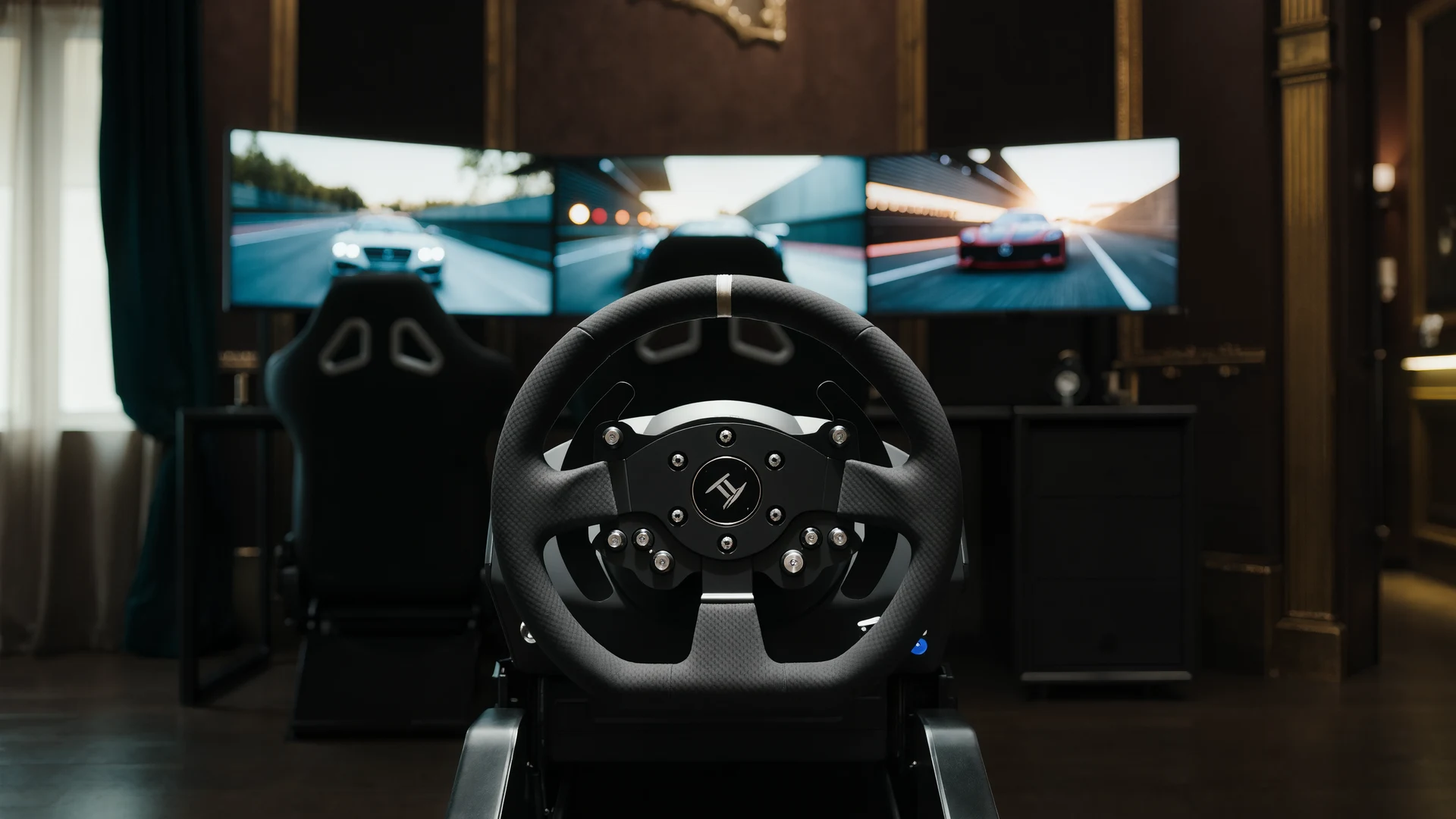
Sim Racing VR vs Triples Guide
VR vs triple monitors for sim racing in 2026: compare Quest 3, Pimax Crystal Light and triple 1440p setups on field of view, depth, comfort, cost and …
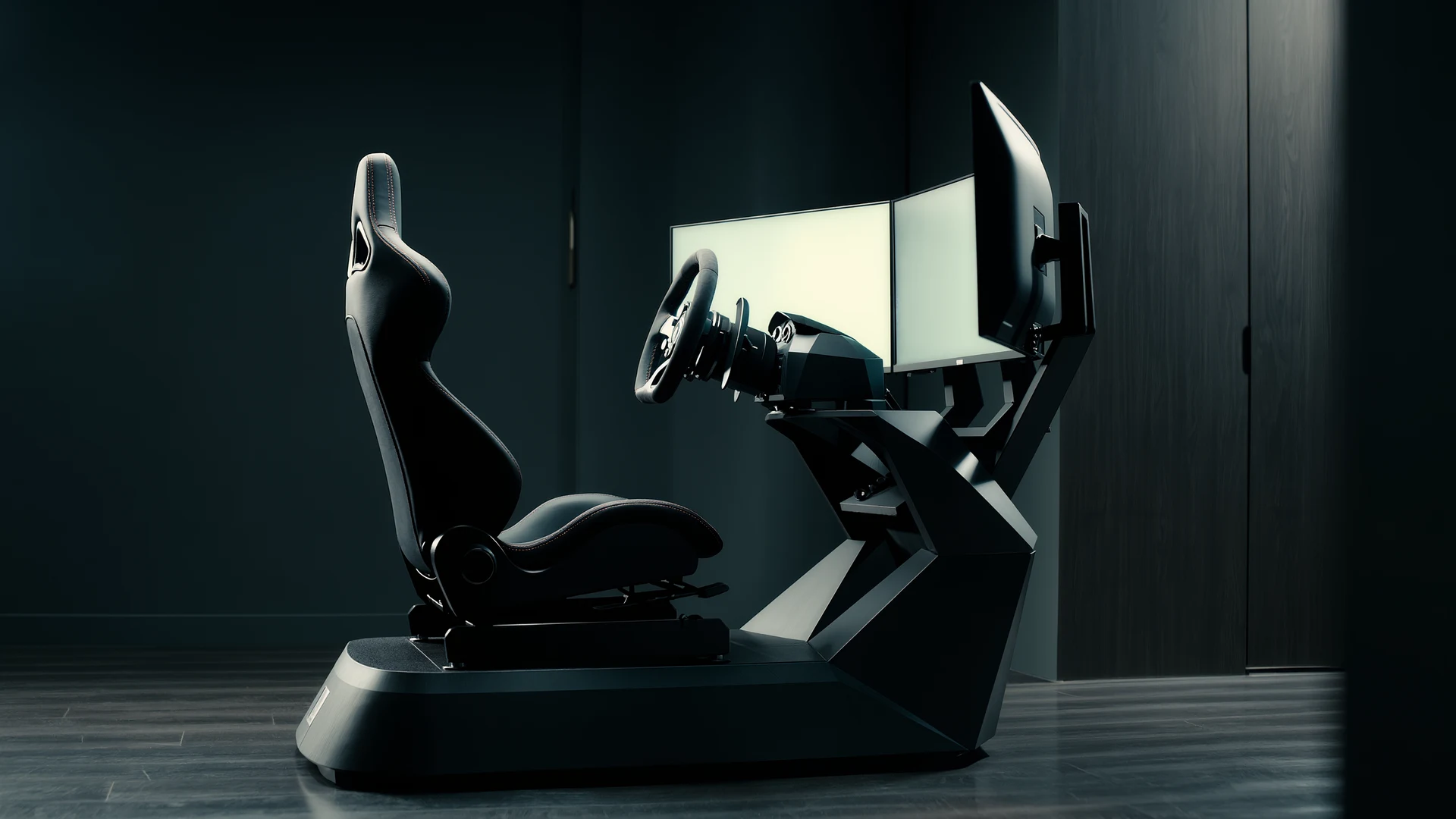
Sim Racing Motion Platforms Guide
Sim racing motion platforms guide: compare seat movers, chassis movers, D-BOX, PT Actuator, and bass shakers, with prices from $150 to $20,000-plus an…
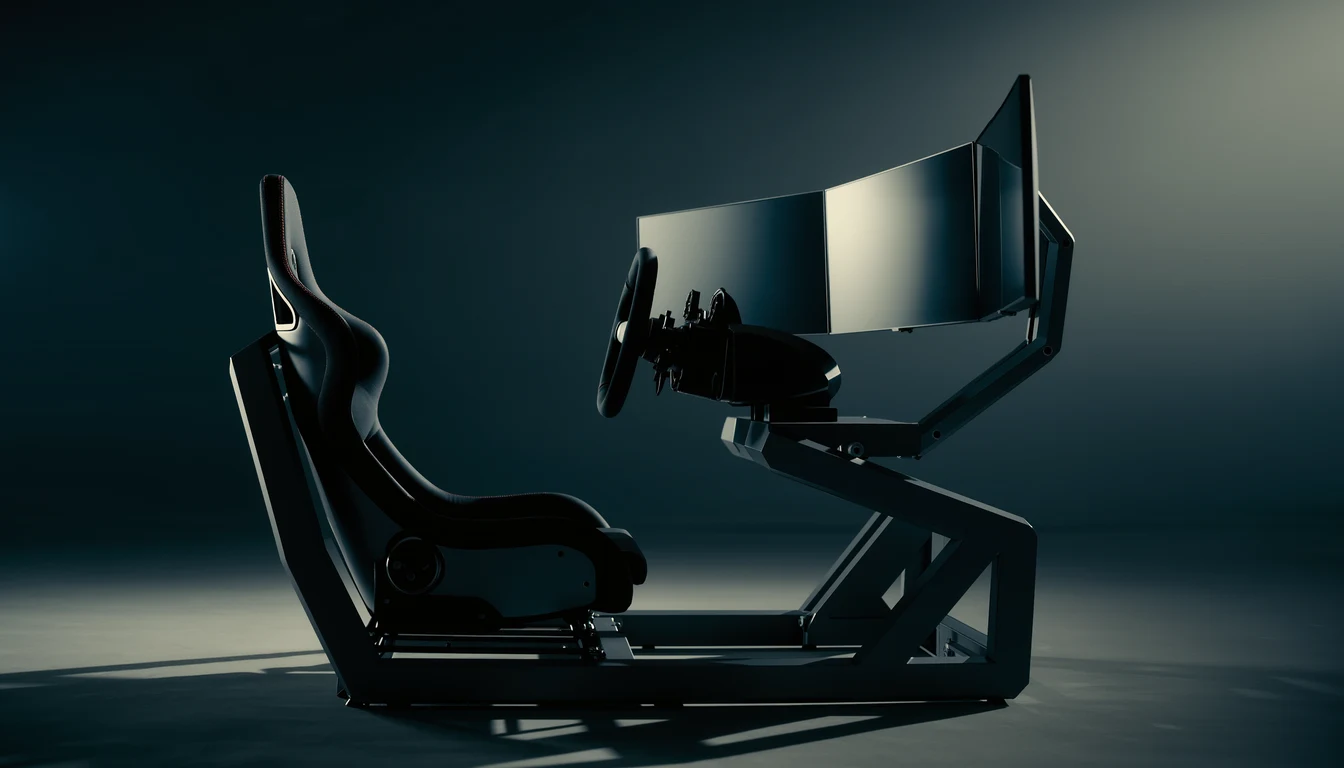
Maximizing Efficiency with Aluminum Profile Rigs
Here’s an article about maximizing efficiency with aluminum profile rigs. Getting More Done with Aluminum Profile Rigs If you’re looking t…