F1 Sim Racing Guide
F1 sim racing guide: compare F1 24, iRacing, RSS and AMS2, choose the right wheel and load-cell brake, and master braking, ERS and tire strategy.…
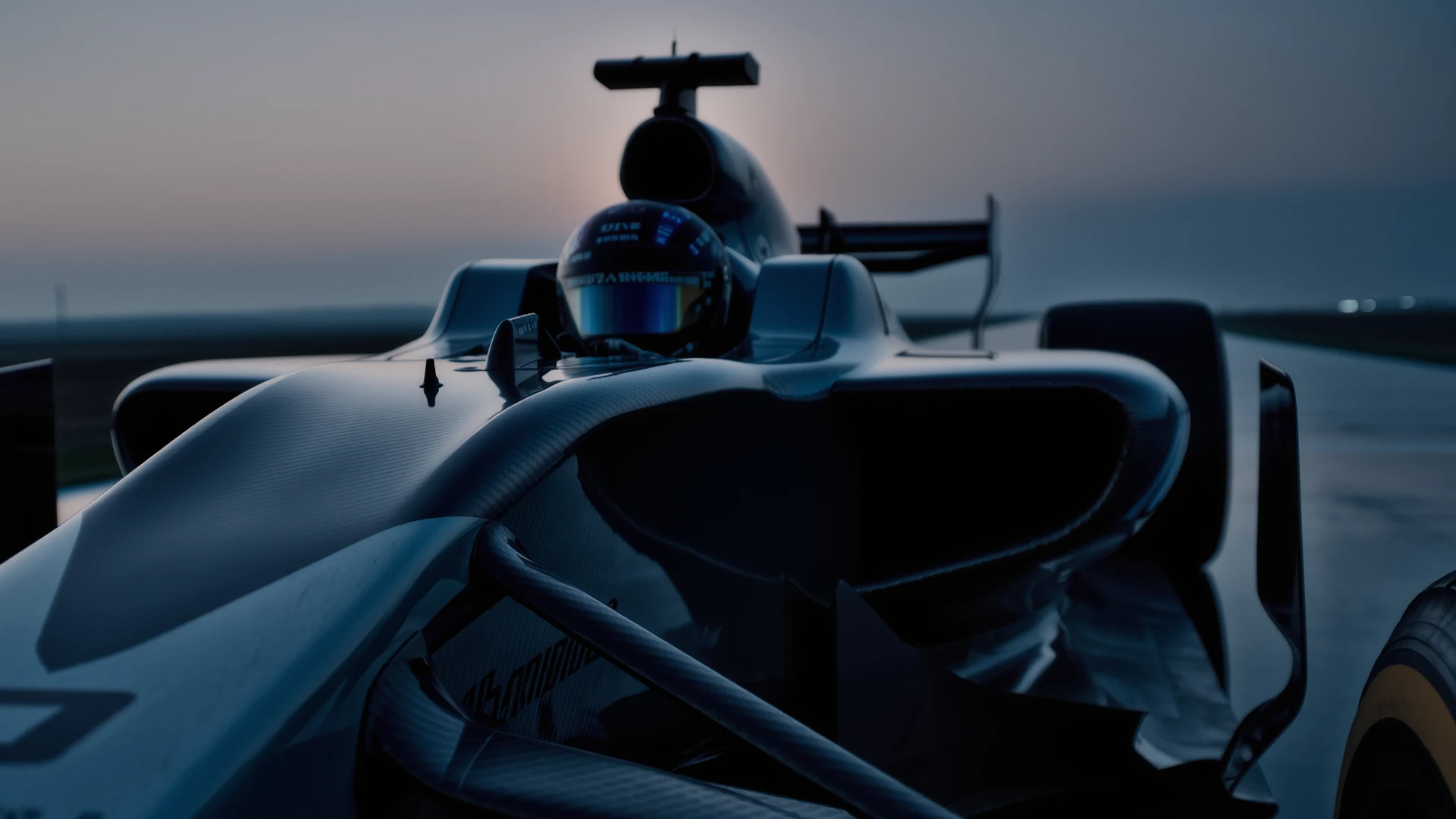
F1 sim racing recreates a 1,000-plus-horsepower hybrid Formula 1 car in software, demanding specialized titles, a load-cell brake, a small Formula-style wheel, and unique braking and ERS technique.
Key Takeaways
- A 2024-spec F1 car produces over 1,000 horsepower from a 1.6-liter turbocharged V6 hybrid, generates roughly three times its weight in downforce, and brakes at over five times the force of gravity.
- EA Sports F1 24 at $69.99 is the most accessible official title, featuring all ten teams, twenty drivers, and twenty-four circuits, plus a multi-season career mode, but its VR support is severely limited.
- iRacing offers the most realistic F1 car, the Mercedes-AMG F1 W13 built with the Mercedes-AMG Petronas team, plus the Super Formula SF23 as the recommended non-hybrid stepping stone toward it.
- Race Sim Studio's RSS Formula Hybrid 2024 mod for Assetto Corsa costs $7.49 and pairs validated physics with AC's vast laser-scanned track library; Automobilista 2 leads on dynamic weather and VR.
- A Formula-style wheel rim should measure 270 to 290 millimeters with a flat bottom; options include the Fanatec Formula V2.5 at $369 and the Moza FSR at $599.
- A load-cell brake pedal such as the Fanatec CSL Pedals LC ($200), Moza CRP ($499), or Heusinkveld Sprint ($629) is non-negotiable, replicating the near-positionless, pressure-modulated F1 brake.
- The F1 Sim Racing World Championship is an FIA-sanctioned series with all ten teams, a $750,000 prize pool, and around thirty Pro seats; two-time champion Jarno Opmeer has earned over $200,000.
Formula 1 Sim Racing: The Ultimate Expression of Speed and Technology
Formula 1 represents the absolute pinnacle of motorsport: the fastest racing cars on the planet, the most advanced automotive engineering ever applied to competition vehicles, the highest financial stakes, the most intense physical and mental demands on drivers, and the most passionate, knowledgeable, and global fan base in all of sport. Sim racing a modern Formula 1 car is a fundamentally different experience from driving a GT3 sports car, a touring car, a prototype, or any other category of racing vehicle. The numbers alone are staggering and bear repeating to properly contextualize the challenge: a 2024-specification Formula 1 car produces well over 1,000 horsepower from a 1.6-liter turbocharged V6 hybrid power unit combining internal combustion with a 160-horsepower electric motor, accelerates from a standstill to 200 kilometers per hour in under five seconds, generates sufficient aerodynamic downforce, approximately three times the car’s own weight at maximum speed, to theoretically drive upside down in a tunnel at speeds above approximately 150 kilometers per hour, and brakes with such extraordinary violence that drivers experience sustained deceleration forces exceeding five times the force of gravity, their bodies straining against six-point racing harnesses as their vision tunnels and their neck muscles fight to keep their heads upright. Translating this otherworldly performance envelope into a consumer simulator, and developing the driving technique to extract even a fraction of the car’s capability, demands specialized software, carefully selected hardware, and a fundamentally different approach to vehicle control than any other form of sim racing.
F1 Sim Racing Software: The Major Options Evaluated
EA Sports F1 24 at $69.99: The Official, Accessible F1 Experience
The annual EA Sports F1 title, developed by Codemasters under license from Formula One Management, is the most accessible and most feature-complete entry point for F1 simulation. The 2024 edition includes all ten constructor teams, all twenty race drivers, and all twenty-four circuits from the official FIA Formula One World Championship calendar. The game’s career mode, the defining feature that distinguishes it from more austere simulators, spans multiple sequential seasons with driver transfers between teams, research and development upgrades that improve car performance over time, contract negotiations, and the full narrative texture of a Formula 1 season including media interviews, rivalries, and team dynamics. F1 World is the live-service content hub offering rotating daily and weekly challenges, a seasonal battle pass progression system, and ranked multiplayer matchmaking. The physics model occupies a deliberate, carefully calibrated middle ground between arcade accessibility and genuine simulation, the cars exhibit realistic power delivery characteristics including the MGU-K and MGU-H hybrid energy recovery system components, the Energy Recovery System deployment modes are modeled with reasonable fidelity, the Drag Reduction System operates on the correct activation zones with the correct deployment rules, and the five dry-weather tire compounds from C1 through C5 exhibit meaningfully distinct wear rates and temperature characteristics. However, the tire model is substantially simplified compared to dedicated simulators such as iRacing or Assetto Corsa Competizione, the detailed thermal behavior, graining, blistering, and compound-specific grip characteristics that define real F1 tire strategy are represented in abstracted, gameplay-optimized form rather than physically simulated. The damage model is forgiving by design, full-contact collisions that would destroy a real F1 car beyond recognition result in repairable damage or a reset to the track. The handling at the absolute limit of grip is more predictable and recoverable than reality, making the cars accessible to players without hundreds of hours of specialized practice. F1 24 is the correct choice for players who want the complete Formula 1 weekend experience, practice sessions, qualifying in Q1-Q2-Q3 knockout format, full-length or scaled Grand Prix races with tire strategy and pit stops, and season-long championship narratives, wrapped in an accessible driving model that permits close, exciting racing without demanding professional-level car control. A critically important caveat: F1 24’s virtual reality support is severely limited, functioning only on PC, only with specific headset models, and with a menu system that does not render in VR, requiring the player to remove the headset between sessions. If VR is central to your sim racing experience, F1 24 is effectively unusable for F1 simulation.
iRacing: The Mercedes-AMG W13 and Super Formula SF23. Uncompromising Realism
iRacing offers the most authentic, most physically accurate, and most demanding official Formula 1 car available in any consumer simulation product: the Mercedes-AMG F1 W13 E Performance, developed in direct, ongoing collaboration with the Mercedes-AMG Petronas Formula One Team, the most successful constructor in the history of the sport. This car is genuinely, intimidatingly accurate to its real-world counterpart. The hybrid power unit requires active, continuous management by the driver, the Motor Generator Unit, Kinetic deployment mode must be manually cycled between Attack mode for maximum electrical power delivery on straights and out of slow corners, Balanced mode for efficient deployment across a full lap, Build mode for harvesting energy during braking and off-throttle periods, and the qualifying-only Hotlap mode that deploys maximum electrical power regardless of battery state of charge until the battery is fully depleted. The tire model, iRacing’s latest-generation v2 tire architecture, simulates realistic warm-up behavior requiring two to three laps to bring the tires into their operating temperature window, surface graining when the tread surface overheats from excessive sliding, blistering when the internal carcass temperature exceeds safe limits, and progressive thermal degradation across a race stint. The car produces approximately 1,000 horsepower in its maximum deployment configuration with DRS open and full electrical assist. The cornering speeds achievable in high-downforce, high-speed sequences. Silverstone’s Maggotts-Becketts-Chapel complex, Suzuka’s Esses, the Circuit de Barcelona-Catalunya’s Turn 9, will permanently redefine your understanding of what is physically and mechanically possible for a wheeled vehicle to achieve. The Formula A Grand Prix Series on iRacing runs scheduled races with full-length Grand Prix distances of 305 kilometers plus one additional lap, requiring at least one mandatory pit stop for a tire compound change as mandated by Formula 1 sporting regulations requiring the use of two different dry-weather tire compounds during a dry race.
The Super Formula SF23 serves as iRacing’s intermediate open-wheel category and the recommended stepping stone for drivers progressing toward the W13. It produces slightly less downforce than a contemporary F1 car, eliminates the hybrid system complexity entirely, the SF23 uses a conventional turbocharged internal combustion engine without electrical assist, and as a result produces closer, more competitive racing with larger grid sizes and less performance stratification between drivers. Any iRacer considering the W13 should first demonstrate competence and consistency in the SF23 over multiple seasons.
Assetto Corsa: The RSS Formula Hybrid 2024 at $7.49. Community-Created Excellence
Race Sim Studio’s Formula Hybrid series of paid car mods for the original Assetto Corsa represents the finest community-created Formula 1 simulation content available on any platform. The FH2024 models the current generation of ground-effect technical regulations, the Venturi tunnel underfloor aerodynamics, the beam wing, the front and rear wing adjustability ranges, the DRS activation system with correct detection zones and deployment rules, the ERS deployment and harvest modes with configurable strategies, and a tire model parameterized against Pirelli’s 2024 construction specifications and compound behavior data. RSS has access to real F1 telemetry data for physics validation, though the company cannot and does not legally disclose which specific team or teams provide this access, and their physics models are validated through back-to-back comparison testing by professional drivers who have experience in both the simulated cars and their real-world equivalents. The FH2024’s crucial advantage is its integration with Assetto Corsa’s vast modding ecosystem: you can race a 2024-specification F1 car on laser-scanned or meticulously hand-modeled versions of every circuit on the calendar, often with superior track surface detail to the laser-scanned official content in other simulators. The combination of RSS’s vehicle physics depth and AC’s track library breadth is uniquely powerful.
Automobilista 2: Formula Ultimate Gen 2
Reiza Studios’ Formula Ultimate Gen 2 represents their interpretation of the 2022-and-beyond ground-effect-era F1 technical regulations, executed within the Madness Engine that also powers the Project CARS series. AMS2’s defining competitive advantages for F1 simulation are its class-leading dynamic weather simulation, rain that falls with realistic spatial and temporal distribution, a racing line that physically dries as cars circulate, and puddle formation modeled on actual track surface camber and drainage characteristics, and its exceptional VR performance and image quality, which is widely considered the best in the consumer sim racing industry. The F-Ultimate Gen 2’s ERS system is simplified relative to iRacing or RSS, but the fundamental driving experience, the extraordinary downforce, the violent braking performance, the razor-thin margin between maximum grip and catastrophic loss of control, is thrilling and authentic. AMS2 additionally includes officially licensed historic Formula 1 cars spanning multiple eras, 1967, 1974, 1983, 1988, 1995, 2002, 2011, 2019, making it the single best platform for experiencing the evolution of Formula 1 car behavior across the entire history of the world championship.
Formula 1-Specific Hardware: What Your Equipment Must Deliver
Driving a modern Formula 1 car in a simulator imposes genuinely unique demands on your hardware that differ from the requirements of GT, prototype, or touring car simulation. A proper Formula-style steering wheel rim should be 270 to 290 millimeters in diameter, smaller than the 300-to-320-millimeter rims used for GT cars, providing faster steering response and reduced rotational inertia. Real F1 steering wheels measure approximately 280 millimeters. The rim should feature a flat bottom and often a flat top as well, clearing legroom in the confined F1 cockpit and improving forward visibility under the rim. An integrated display is essential for monitoring gear selection, engine RPM, current speed, ERS battery state of charge, ERS deployment mode, and delta time to target lap, information that, in a real F1 car, is displayed on the steering wheel’s integrated screen directly in the driver’s line of sight. The Fanatec Formula V2.5 at $369 provides a one-inch OLED display, magnetic paddle shifters with satisfying tactile feedback, and multiple rotary encoders and toggle switches assignable to brake balance, differential preload, ERS mode, and engine braking settings. The Moza FSR at $599 is the premium option with a 4.3-inch configurable touchscreen display, genuine carbon fiber structural construction, dual-clutch paddles enabling millisecond-precision race starts, and full wireless connectivity to Moza wheel bases.
Brake pedal requirements for F1 simulation are extreme. Real F1 drivers apply between 130 and 160 kilograms of force to the brake pedal in maximum-deceleration zones. Your sim racing brake pedal should be configured to the highest force level you can comfortably, consistently, and repeatedly apply using normal seated posture, typically 60 to 90 kilograms for most physically fit adults. A load-cell pedal set, Fanatec CSL Pedals LC at $200, Moza CRP at $499, or Heusinkveld Sprint at $629, is absolutely non-negotiable for credible F1 simulation. The rock-hard, minimal-travel feel of elastomer-stack load-cell brake configurations closely replicates the essentially positionless brake pedal of a genuine Formula 1 car, where the braking system’s hydraulic rigidity means the pedal barely moves and the driver modulates pressure, not distance.
Driving Technique: How to Pilot a Modern Formula 1 Car in Simulation
Braking technique in a Formula 1 car is unlike any other vehicle category. From maximum speed on a long straight, 320 kilometers per hour and above, the initial brake application is violent and immediate: essentially 100 percent of available pedal pressure applied as quickly as the driver’s foot can physically move, because the enormous aerodynamic downforce at that speed provides the tires with sufficient grip to accept maximum braking force without locking. However, as the car decelerates and aerodynamic downforce reduces proportionally with the square of speed, the available tire grip decreases continuously. The driver must trail-brake, gradually, smoothly, and precisely releasing brake pressure as speed decreases, to prevent the now-reduced downforce from being overwhelmed by brake torque that was appropriate two seconds earlier at 300 kilometers per hour but is now excessive at 120 kilometers per hour. This continuously variable brake-pressure profile, applied with millisecond precision corner after corner, is the single most difficult physical skill in motorsport and the area where F1 drivers most distinguish themselves from competitors in junior categories.
ERS management is a continuous, lap-long strategic exercise. The driver must decide, corner by corner and straight by straight, whether to deploy stored electrical energy for maximum acceleration and overtaking, to conserve energy in Balanced mode for efficient lap time, or to actively harvest energy in Build mode during braking zones and off-throttle periods. Top-tier F1 sim racers adjust their ERS deployment strategy multiple times per lap, maximizing deployment on the straights where horsepower most directly translates to lap time and minimizing deployment in technical sections where mechanical grip, not power, is the limiting factor. The qualifying Hotlap mode deploys maximum electrical power continuously regardless of battery state, fully depleting the battery over a single lap in exchange for the absolute maximum lap time, a strategic trade-off that adds another layer of depth to the qualifying simulation.
The Pathway to F1 Esports: Real Competitive Opportunities
Formula 1 as an organization takes sim racing with genuine competitive seriousness. The F1 Sim Racing World Championship, formerly branded as the F1 Esports Series, is an officially FIA-sanctioned championship competition in which all ten Formula 1 constructor teams field dedicated sim racing driver squads. The total annual prize pool is $750,000. Drivers are scouted and recruited through the F1 24 ranked competitive ladder and through open qualifier events that anyone may enter. Champions including Lucas Blakeley in 2022 and two-time champion Jarno Opmeer have become legitimate public figures within the motorsport community, with Opmeer earning over $200,000 in cumulative career prize money and securing a professional role as the lead sim racing driver for the Mercedes-AMG Petronas Esports Team. The competitive progression pathway, reach the Pro tier in F1 24 ranked multiplayer, compete in the Challenger Series events, be noticed and recruited by an F1 team’s esports division, participate in Pro Exhibition races, earn a Pro Championship seat, is extraordinarily selective, with tens of thousands of competitors pursuing approximately thirty total Pro-tier seats across all teams. The odds are daunting, but the pathway is genuine, the compensation is real, and the opportunity to represent an official Formula 1 constructor team in an FIA-sanctioned world championship is unique in all of esports.
F1 Race Strategy in Simulation: Tire Management, Pit Stops, and Fuel
Formula 1 race strategy in simulation is a complex, multi-variable optimization problem that rewards preparation, adaptability, and real-time decision-making. Understanding the tire compound regulations is fundamental: Pirelli supplies five dry-weather compounds, C1 through C5, from hardest to softest, with three compounds nominated for each Grand Prix weekend as Hard, Medium, and Soft. The sporting regulations require that, in a dry race, each driver must use at least two different dry-weather tire compounds, mandating at least one pit stop. The strategic decision is not simply when to stop, but which compounds to use in which order, and how to balance the lap-time advantage of softer, faster-degrading compounds against the consistency and extended stint length of harder compounds. In simulation, this strategic calculation is identical to reality: starting on Soft tires provides maximum early-race pace and overtaking opportunity but commits to an earlier pit stop; starting on Medium tires sacrifices early pace for strategic flexibility and a potentially advantageous overcut or undercut relative to Soft-starting competitors.
Fuel management in F1 simulation involves a similar optimization. Cars are fueled for the full race distance, refueling during pit stops is prohibited under current regulations, and carrying excess fuel imposes a continuous lap-time penalty from the additional weight. The driver can adjust the engine’s fuel mixture between performance-oriented rich settings that produce maximum power and lean settings that conserve fuel. Effective fuel management requires monitoring projected consumption against remaining race distance and adjusting mixture accordingly, typically running rich early in the race when overtaking opportunities are most available and transitioning to lean settings in the closing laps when positions have stabilized. In iRacing’s Mercedes W13 simulation, the hybrid system’s energy management adds yet another strategic layer: deploy electrical energy aggressively during the opening laps to gain positions, then transition to a sustainable deployment strategy that maintains consistent lap times across the full race distance without depleting the battery before the checkered flag. The best F1 sim racers manage all three strategic variables, tire compound selection, fuel mixture adjustment, and ERS deployment strategy, simultaneously and adaptively, adjusting their strategy corner by corner and lap by lap in response to the evolving competitive situation around them.
Frequently Asked Questions (FAQ)
What is the best software for F1 sim racing?
It depends on your goal. EA Sports F1 24 ($69.99) is the most accessible official title with full career mode. iRacing's Mercedes-AMG W13 is the most realistic. RSS Formula Hybrid 2024 ($7.49) for Assetto Corsa pairs deep physics with a huge track library, while Automobilista 2 leads on weather and VR.
How fast and powerful is a modern Formula 1 car in F1 sim racing?
A 2024-specification Formula 1 car produces well over 1,000 horsepower from a 1.6-liter turbocharged V6 hybrid power unit and reaches 200 kilometers per hour from a standstill in under five seconds. It generates roughly three times its weight in downforce and brakes at over five times the force of gravity.
Why is iRacing's Mercedes-AMG W13 considered the most realistic F1 car?
The Mercedes-AMG F1 W13 E Performance is built in ongoing collaboration with the Mercedes-AMG Petronas team. It demands continuous hybrid management across Attack, Balanced, Build, and Hotlap modes, uses iRacing's v2 tire model with realistic warm-up, graining, and blistering, and produces about 1,000 horsepower with DRS open and full electrical assist.
What hardware do you need for F1 sim racing?
You need a small Formula-style wheel rim of 270 to 290 millimeters with a flat bottom and an integrated display, such as the Fanatec Formula V2.5 ($369) or Moza FSR ($599). A load-cell brake pedal set is non-negotiable, with options including the Fanatec CSL Pedals LC ($200), Moza CRP ($499), or Heusinkveld Sprint ($629).
Why is a load-cell brake pedal essential for F1 simulation?
A load-cell pedal is essential because it replicates the rock-hard, near-positionless brake of a real F1 car, where hydraulic rigidity means the pedal barely moves and the driver modulates pressure, not distance. Real drivers apply 130 to 160 kilograms of force; sim racers should configure 60 to 90 kilograms.
How do you brake correctly when driving a Formula 1 car in a simulator?
From top speed you apply essentially 100 percent of pedal pressure instantly, because high aerodynamic downforce gives the tires enough grip to brake without locking. As the car slows, downforce falls with the square of speed, so you must trail-brake, smoothly releasing pressure to avoid overwhelming the now-reduced grip.
Can you become a professional F1 esports driver through sim racing?
Yes, the pathway is genuine. The FIA-sanctioned F1 Sim Racing World Championship fields squads for all ten teams with a $750,000 prize pool. Drivers are scouted via the F1 24 ranked ladder and open qualifiers, but the roughly thirty Pro seats are pursued by tens of thousands of competitors.
How does tire strategy work in F1 race simulation?
Pirelli supplies five dry compounds, C1 to C5, with three nominated per weekend as Hard, Medium, and Soft. Sporting regulations require using at least two different dry compounds in a dry race, mandating a pit stop. The choice involves which compounds to use, in what order, balancing soft-tire pace against harder-tire durability.
More from Games & Platforms
Assetto Corsa Ultimate Guide
Assetto Corsa ultimate guide: the best mods (Content Manager, CSP, SOL, Pure), free cars and tracks, online racing, performance tuning, and AC vs ACC …
iRacing Complete Guide
IRacing complete guide: how the online racing sim works, real pricing, iRating vs Safety Rating, the Rookie path, and whether iRacing is worth the cos…
The Ultimate Guide to iRacing: Mastering the Virtual Track
So, you’re curious about iRacing, huh? You’ve seen the awesome videos, heard the hype, and maybe even thought, “Could I do that?…