GT or formula seating: what the angle changes
GT and formula seating are two different jobs for the same body. The published angles, what each position gives you and what it costs over a two hour stint.
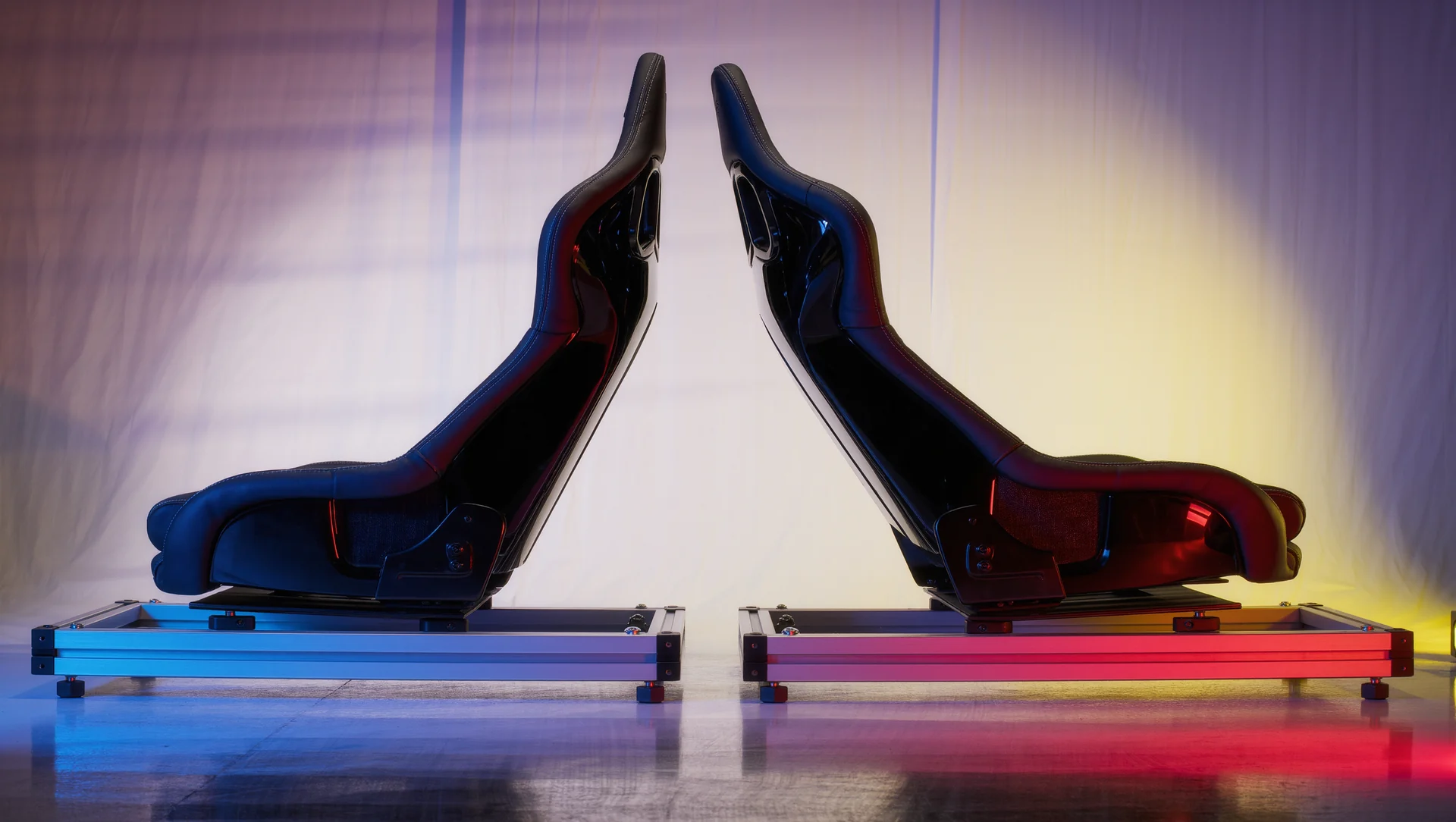
The difference between a GT and a formula seating position is roughly sixty degrees of backrest, and everything else in the rig follows from that one decision. Wheel height, pedal angle, screen position and even how long you can drive before your neck complains are all downstream of the backrest.
The two positions in numbers
For GT driving Fanatec publishes a reclined angle of about 100 to 110 degrees, measured between the seat base and the backrest. That is close to a firm office chair and only slightly laid back, which is what a GT3 car actually offers: the driver sits high, looks over a bonnet and has the wheel roughly at chest height.
A formula position is far more extreme. The backrest comes down towards 45 degrees from horizontal, the legs come up rather than down, and the wheel sits close to the chest with the arms bent hard. The pedals are no longer below you but in front of and above your hips, which is why a formula rig needs an inverted pedal mount rather than a plate on the floor.
The practical spread between the two is large enough that most manufacturers treat them as separate products. Trak Racer sells a dedicated hybrid GT and formula pedal bracket at 229 dollars weighing 20 kg, built for an internal chassis spacing of 500 mm and 8 mm slotted profile, precisely because the two positions cannot share one simple plate.
| Setting | GT | Formula |
|---|---|---|
| Backrest angle | about 100 to 110 degrees | towards 45 degrees |
| Pedals | below the hips, on the floor | in front of and above the hips |
| Wheel | chest height, arms extended | close to the chest, arms bent |
| Head rest | optional | necessary |
What each position gives you
GT is the forgiving one. The upright back supports itself, the head stays over the shoulders, and a two hour stint costs nothing more than a stiff lower back. Visibility over a triple screen is natural because the eyes sit high, and getting out of the rig takes one motion. For a driver whose racing covers GT3, touring cars, rally and endurance in the same week, it is simply the right default.
Formula pays back in two currencies. The first is immersion: an open wheel car genuinely feels different when the legs are up and the wheel is close, and the steering inputs get smaller and more precise because the arms work from the elbows rather than the shoulders. The second is stability: pressed into a reclined seat, the body moves less under heavy braking, so the leg force stays repeatable for longer.
The costs are equally concrete. The neck carries the head at an angle for the whole stint, so a head rest is not optional. Entry and exit become a manoeuvre. And every other car in the sim now feels wrong, which is the reason many drivers with one rig stay in GT even though they mostly race formula.
Setting it up in the right order
Start at the backrest, because it decides everything else. Set the angle first, then move the seat fore and aft until your knee sits at roughly 120 degrees with the brake fully pressed, not with the pedal at rest. A universal seat slider gives around 110 mm of travel, which is enough for two drivers of similar height but not for a shared rig across a 20 cm difference.
Then set the wheel. The elbow should be bent, not straight, with the hands at nine and three; a straight arm means the shoulder does the correcting and the shoulder is slow. Only after the wheel is right should the pedals move, because pedal position is the consequence of leg length in the seat you have just set, not an independent choice.
Count the adjustment budget before you start. The backrest moves through 55 to 65 degrees between the two positions, the knee wants 120 degrees under full braking, the hands sit 180 degrees apart at nine and three, and the seat slider gives you 110 mm of that total. A body 20 cm taller needs roughly 8 cm more leg room than the slider alone provides, so on a shared rig the pedal plate has to move as well, and on a 500 mm internal spacing that is two bolts in the profile rather than a new bracket.
Finally set the screen height so that the horizon sits slightly above the centre of the picture. Change the backrest later and all four settings have to be redone, which is the practical argument for a rig where the change between GT and formula is four bolts rather than a rebuild.
If you can only have one
Choose GT unless you race open wheel almost exclusively. GT positions cover more cars, cost less in accessories and are easier on the body over a season. The compromise position that sits between the two serves neither well: the legs are too low for formula and the back too flat for GT, and the driver ends up adjusting something every week.
Sources
Frequently asked questions
Can one rig do both positions?
A profile rig can, and the change is four bolts plus the pedal bracket. A tube frame usually cannot, which is why makers list the changeover as not applicable.
Does a formula position make me faster?
Not by itself. It makes small steering inputs easier and heavy braking more stable, which helps in open wheel cars and does nothing in a GT3.
How reclined is too reclined?
When your neck has to hold the head forward for the whole stint. If a head rest does not fix it, the backrest has gone past what your body will carry for two hours.
What about the pedals in a formula position?
They have to be inverted, mounted in front of and above the hips. A floor plate in a formula seat puts the knees in the wrong place and kills the brake feel.
More in Cockpits & Rigs
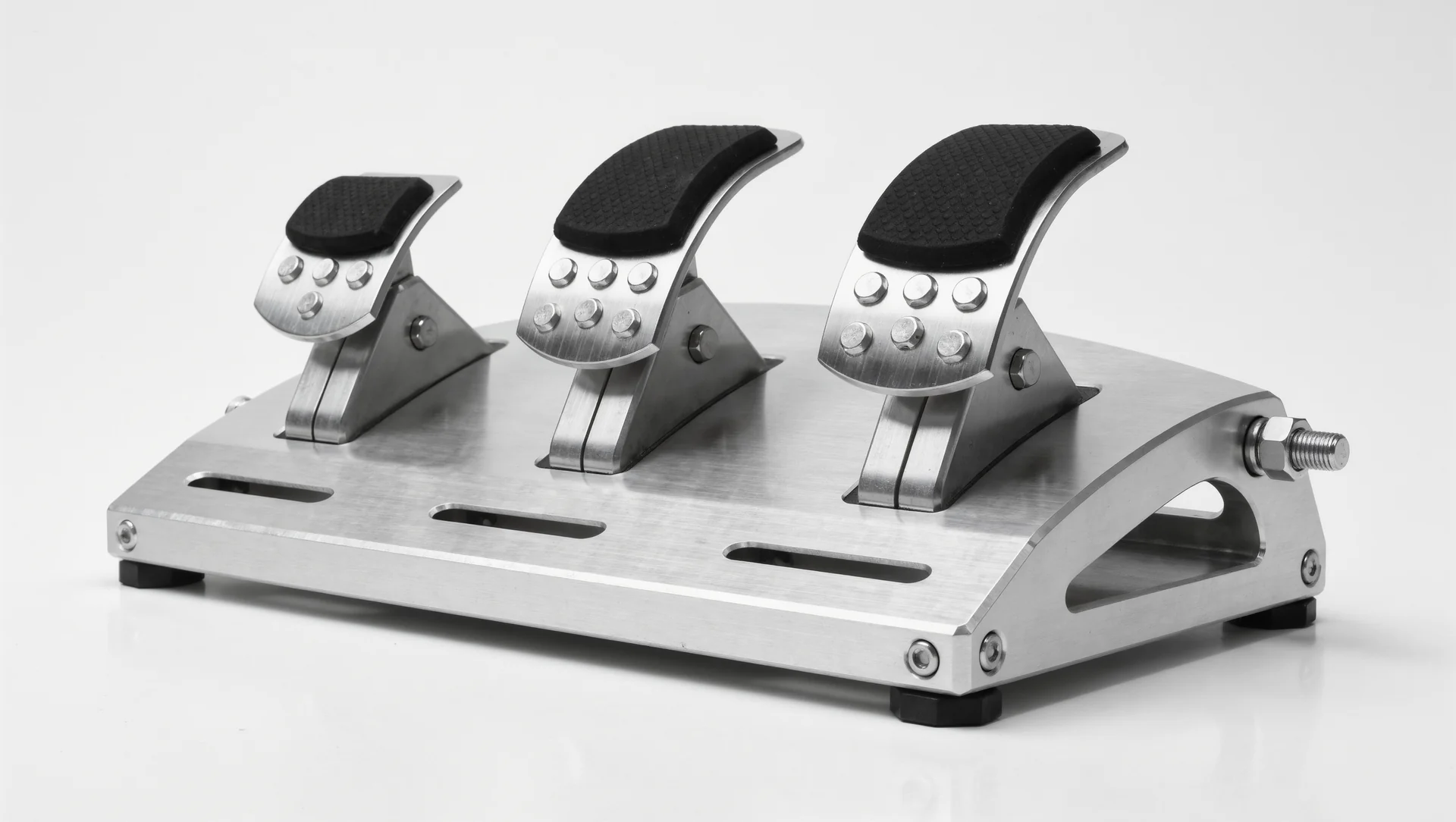
Pedal plate angle: the setting most rigs get wrong
Pedal plate angle decides how much of your leg strength reaches the load cell. The geometry, the published adjustment ranges and how to set it in one session.
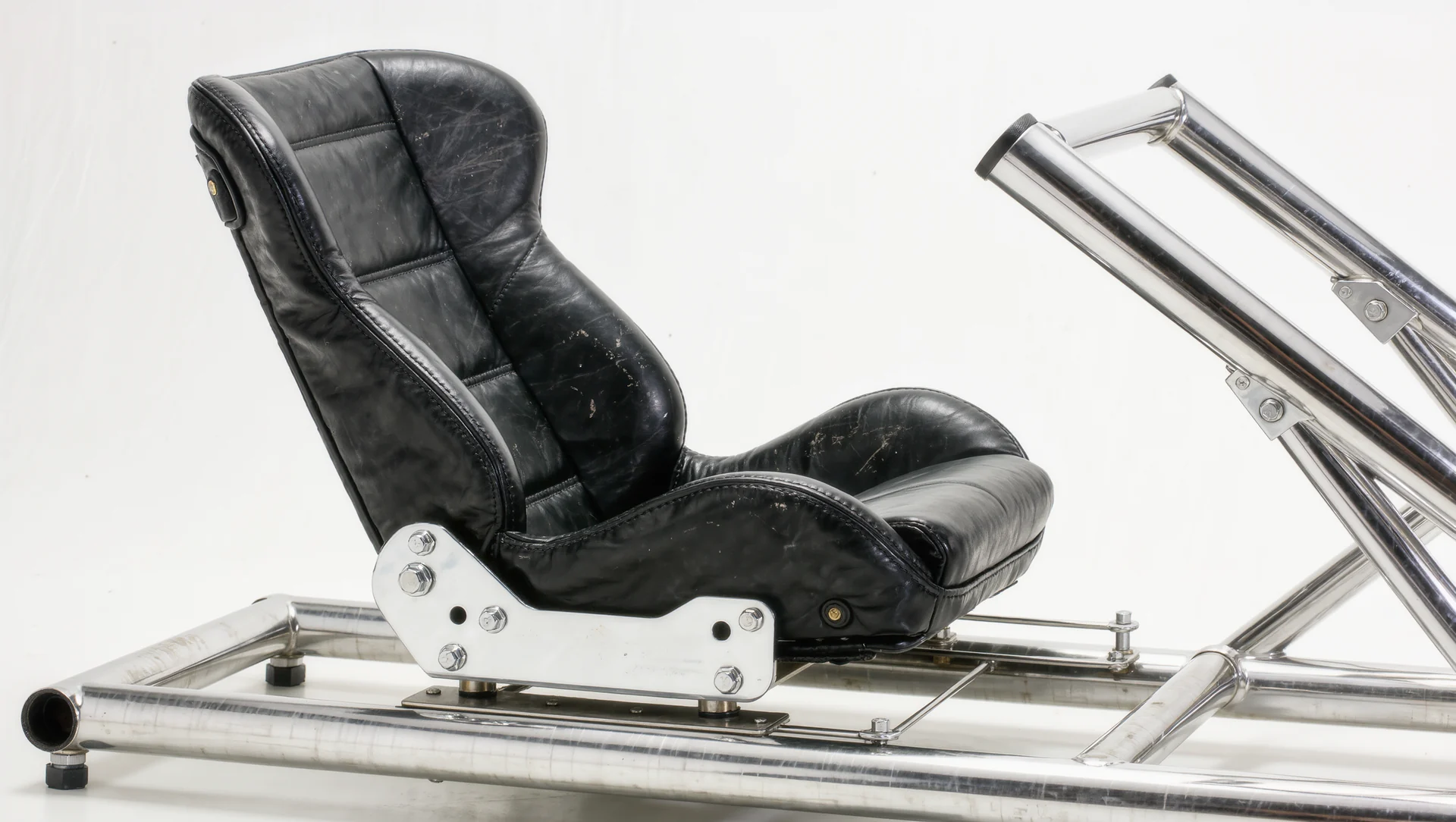
The used car seat that beats a branded bucket
A used road car sport seat against a branded sim bucket: the published weights, prices and homologation rules, and where the cheap option genuinely wins.
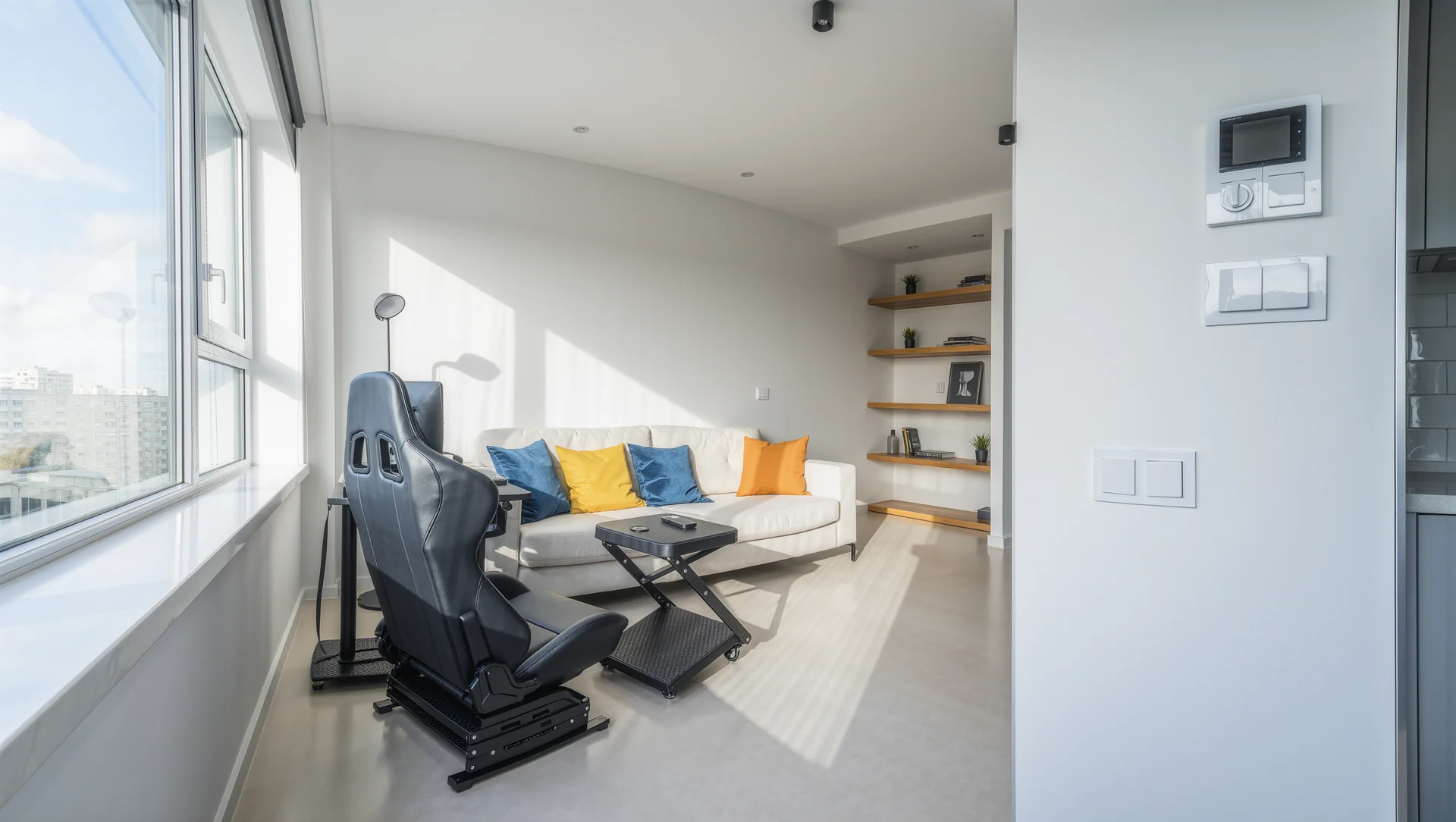
A rig that fits a flat: folding, wheel stand or profile
Folding cockpit, wheel stand or a full profile rig in a small flat: the published dimensions, the storage figures and what each option really costs in floor space.