Pedal plate angle: the setting most rigs get wrong
Pedal plate angle decides how much of your leg strength reaches the load cell. The geometry, the published adjustment ranges and how to set it in one session.
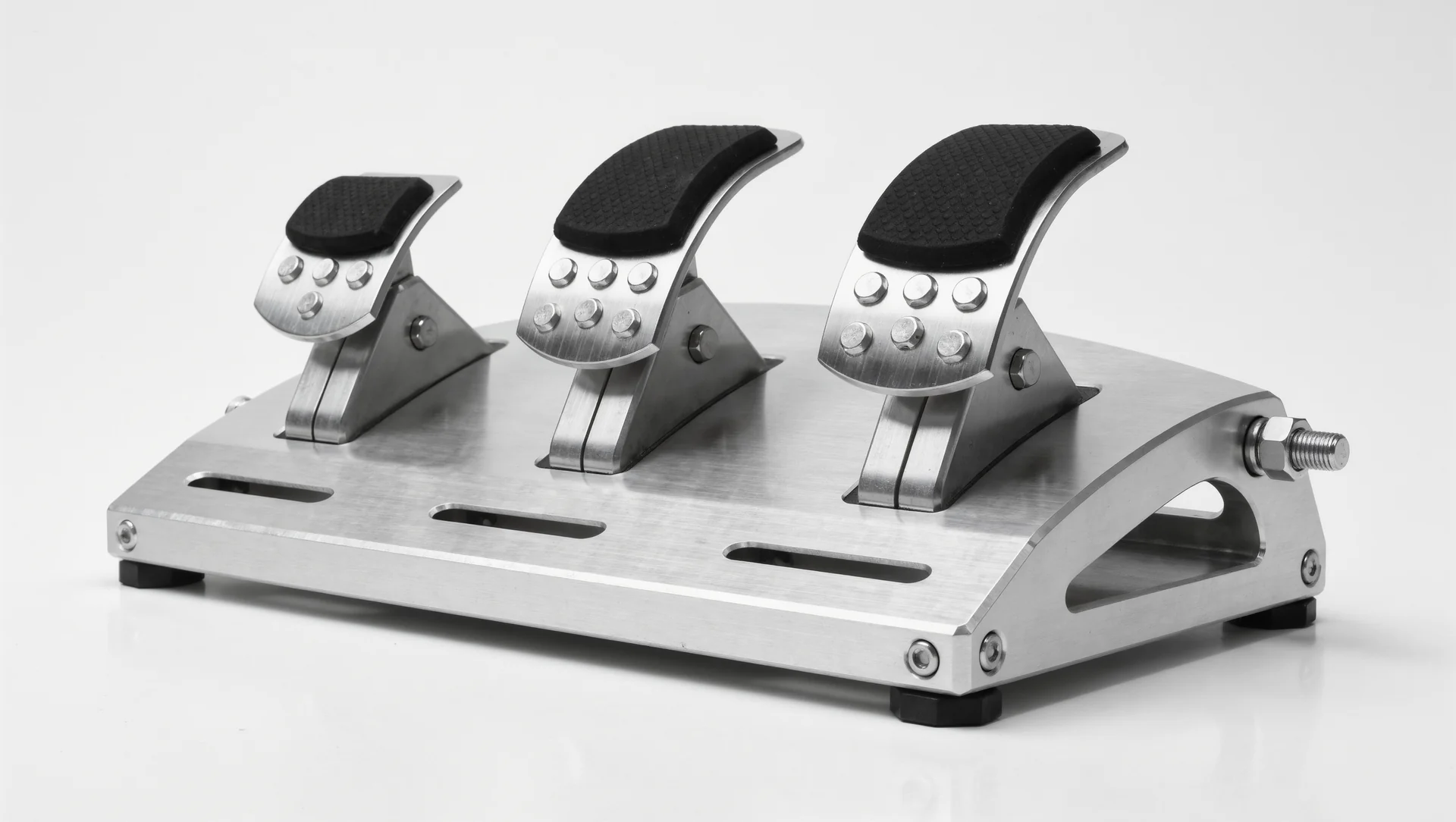
Your leg is strongest when it pushes along its own axis, and a pedal plate at the wrong angle asks it to push across that axis instead. The correction costs four bolts and a quarter of an hour, and it is the cheapest brake upgrade in the whole rig.
What the angle actually controls
A pedal set converts leg force into a number. How much force arrives depends on the angle between the direction your leg pushes and the surface it pushes against. When the two are aligned, the whole force goes into the sensor. When they are twenty degrees apart, part of it slides across the pedal face and is lost as friction and as movement in your ankle.
The second effect is fatigue. A plate that is too flat forces the ankle to bend far on every stop, and the ankle is a small joint doing the work of a large one. Over a ninety minute stint that is the difference between a repeatable brake pressure and a leg that drifts twenty per cent lighter towards the end.
The third effect is the one people notice first: heel position. If the plate angle leaves no natural resting point for the heel, the foot floats, and a floating foot has no reference. That is why heel rests exist as a separate accessory rather than being an afterthought.
What the manufacturers give you
Sim-Lab states a range of adjustment of twenty degrees for the pedal angle on the XP1 set, changed by loosening four bolts and rotating the pedal while the base stays fixed. The same set uses a 200 kg load cell that translates to 100 kg of pedal pressure, read with a 16 bit analogue input, and is listed at 399 dollars against a regular 499. The matching slider baseplate is 12 mm thick, up from 10 mm on the previous version, at 169 dollars.
Trak Racer takes the other route and sells a dedicated hybrid bracket that carries an inverted formula position and a GT position on one part, at 229 dollars and 20 kg, designed for 500 mm of internal chassis spacing and 8 mm slotted profile. The weight is the point: an angle that holds under 100 kg of leg force needs material behind it, and a thin plate flexes exactly where the sensor is trying to measure.
Between those two there is a cheap third path. Bucket seat brackets from the same maker are 4 mm aluminium plate with four M8 bolts fitting 40 mm, 45 mm or 1.5 inch profile at 39 dollars, and the same logic applies to pedal mounting: the bolt pattern and the plate thickness decide whether your angle survives the first hard stop.
| Part | Key figure | Price |
|---|---|---|
| Sim-Lab XP1 pedal set | 20 degrees of angle adjustment, 16 bit | 399 dollars |
| Sim-Lab slider baseplate | 12 mm plate, up from 10 mm | 169 dollars |
| Trak Racer hybrid bracket | GT and inverted formula, 20 kg | 229 dollars |
| Bucket seat bracket set | 4 mm aluminium, 4x M8 | 39 dollars |
Setting it in one session
Sit in the rig in your final seating position, because pedal angle is a consequence of seat angle and never the reverse. Press the brake to your normal maximum and hold it. Your knee should sit at roughly 120 degrees at that moment, and your shin should point at the pedal face rather than across it.
Now look at your ankle. If it is bent sharply forward, the plate is too flat and needs to come up. If your heel lifts off the floor plate, the angle is too steep or the pedals sit too high. Adjust in steps of about five degrees, which is a quarter of the twenty degree range most sets offer, and drive five laps between each change rather than guessing from the chair.
Recalibrate the load cell after every angle change. The maximum you can produce shifts with the geometry, and a set calibrated at the old angle will either saturate early or never reach one hundred per cent. This is the step that gets skipped, and it is why people conclude that the angle made no difference.
The mistakes that repeat
The first is copying somebody else's angle from a photograph, which ignores that their leg length and seat angle are not yours. The second is setting the angle with the pedals at rest instead of under full braking load, because the geometry that matters is the one at 100 kg, not at zero. The third is leaving the heel plate out of the calculation entirely, which turns a correct angle into a wrong one the moment the foot has nowhere to sit.
Sources
Frequently asked questions
Is there one correct angle?
No, because it follows from your seat angle and leg length. There is a correct method, which is to set it under full braking load in your final seating position.
How steep is too steep?
When your heel leaves the floor plate under braking. At that point the foot has no reference and the pressure stops being repeatable.
Do I have to recalibrate after changing the angle?
Yes, every time. The maximum force you can produce changes with the geometry, so the top of the scale moves with it.
Does the angle matter on a potentiometer set?
Less, because those measure travel rather than force. It still matters for the ankle and for fatigue over a long stint.
More in Cockpits & Rigs
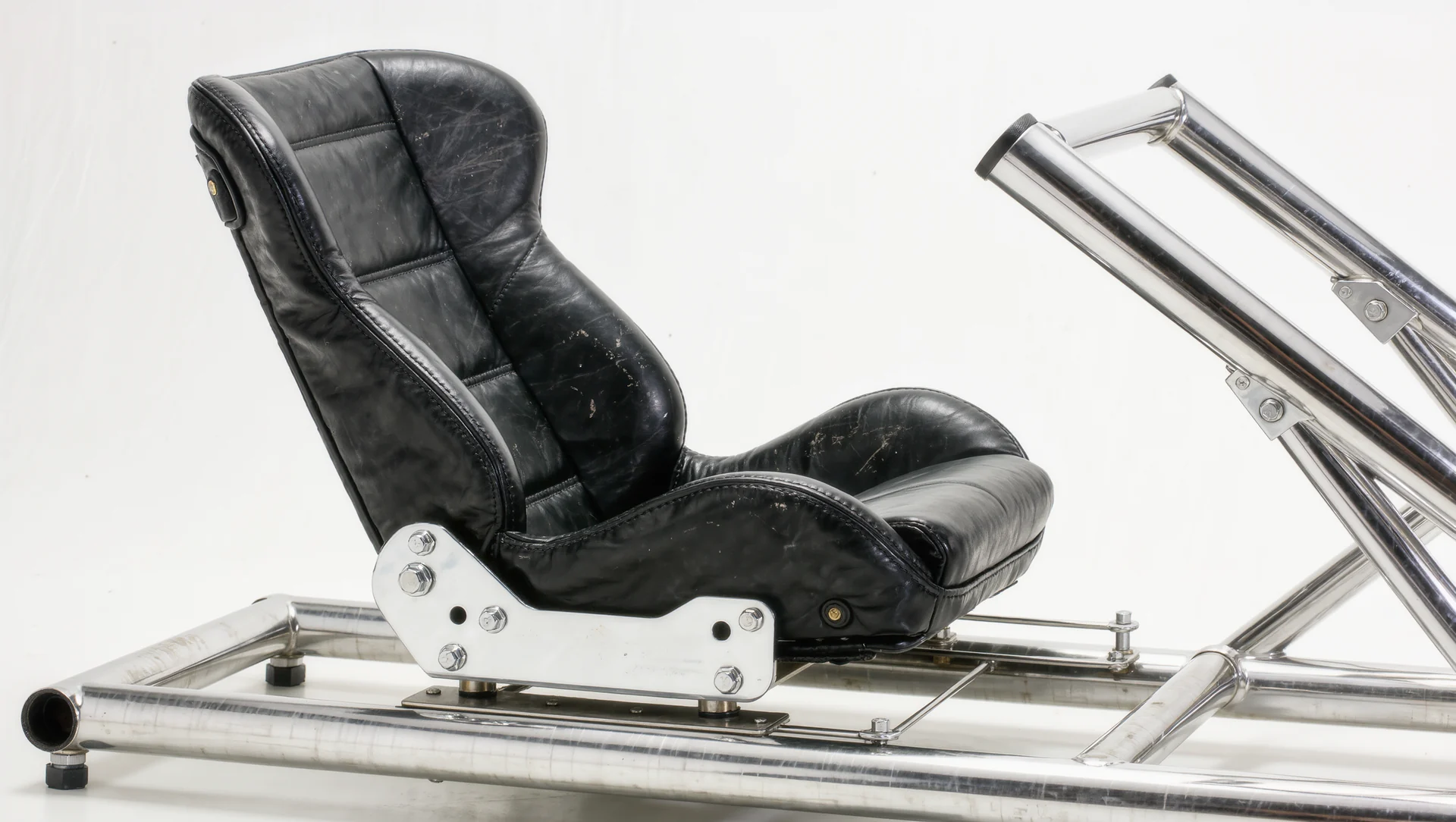
The used car seat that beats a branded bucket
A used road car sport seat against a branded sim bucket: the published weights, prices and homologation rules, and where the cheap option genuinely wins.
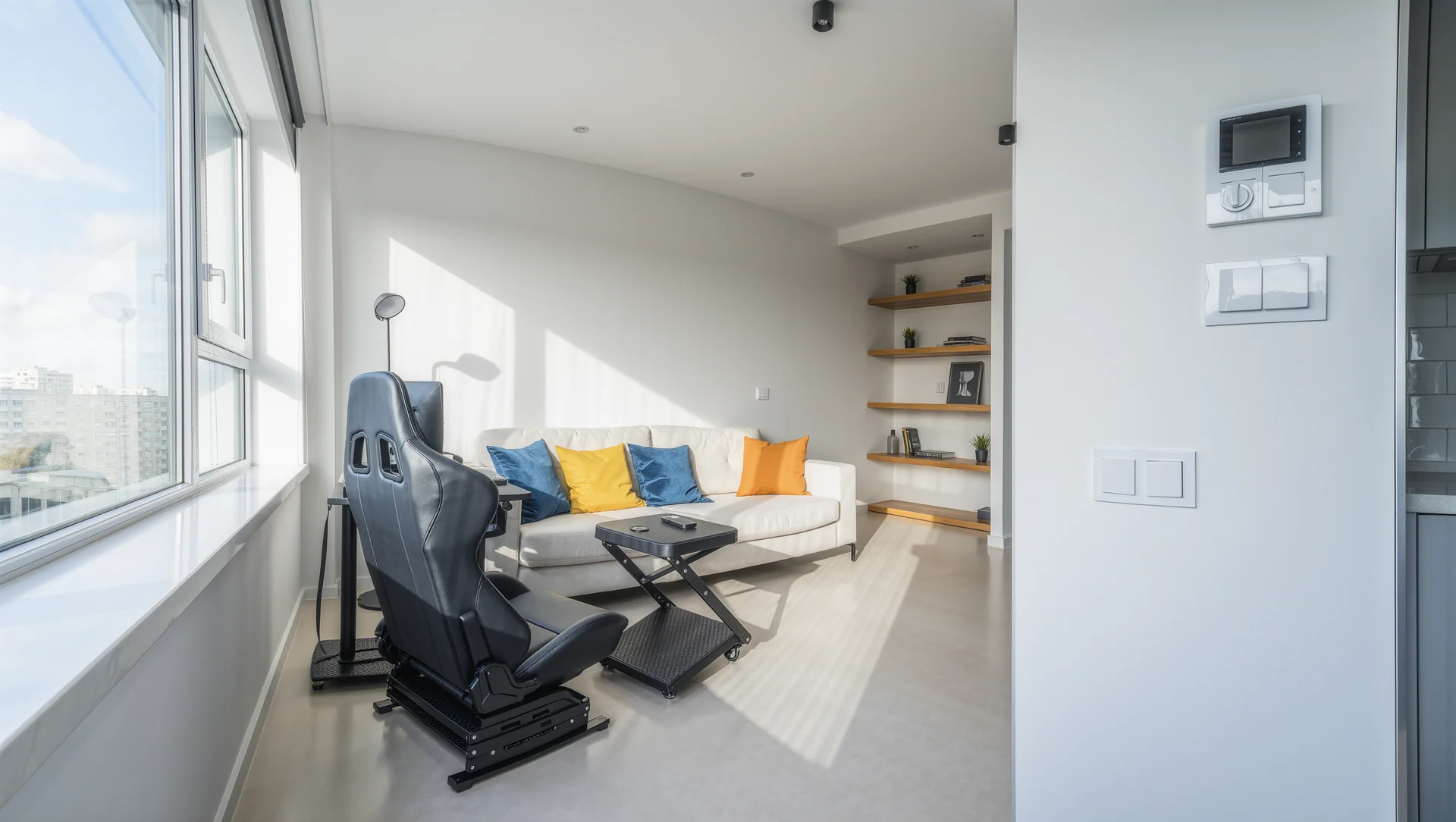
A rig that fits a flat: folding, wheel stand or profile
Folding cockpit, wheel stand or a full profile rig in a small flat: the published dimensions, the storage figures and what each option really costs in floor space.
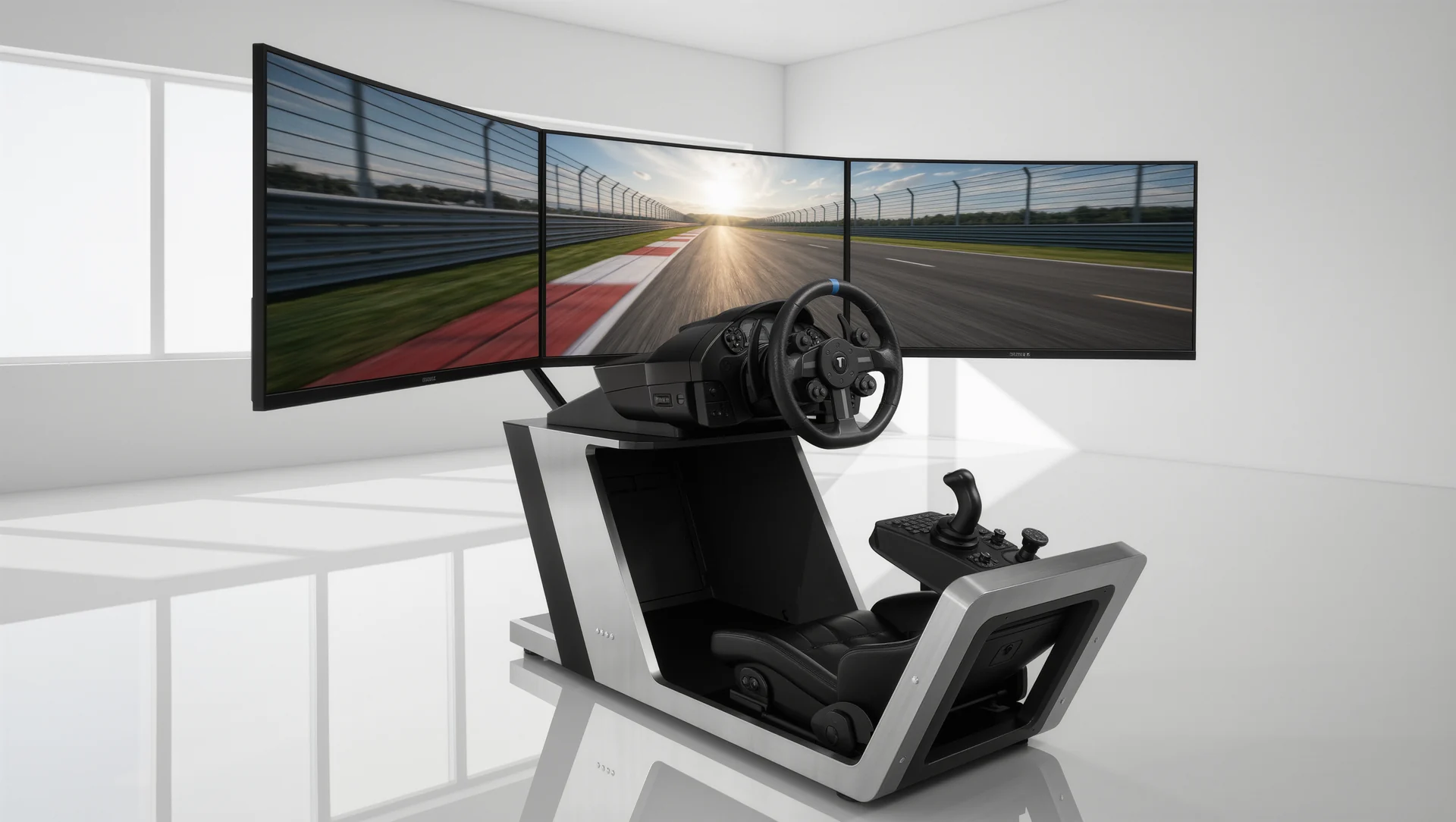
Freestanding monitor stands and why motion needs them
Free standing monitor stands against rig mounted arms: the published load ratings, VESA ranges and the reason motion platforms leave no choice.