Calibrating the brake curve to your own leg
Calibrating the brake curve to your own leg: where to set the maximum, why the curve shape matters and how to test it in three laps instead of guessing.
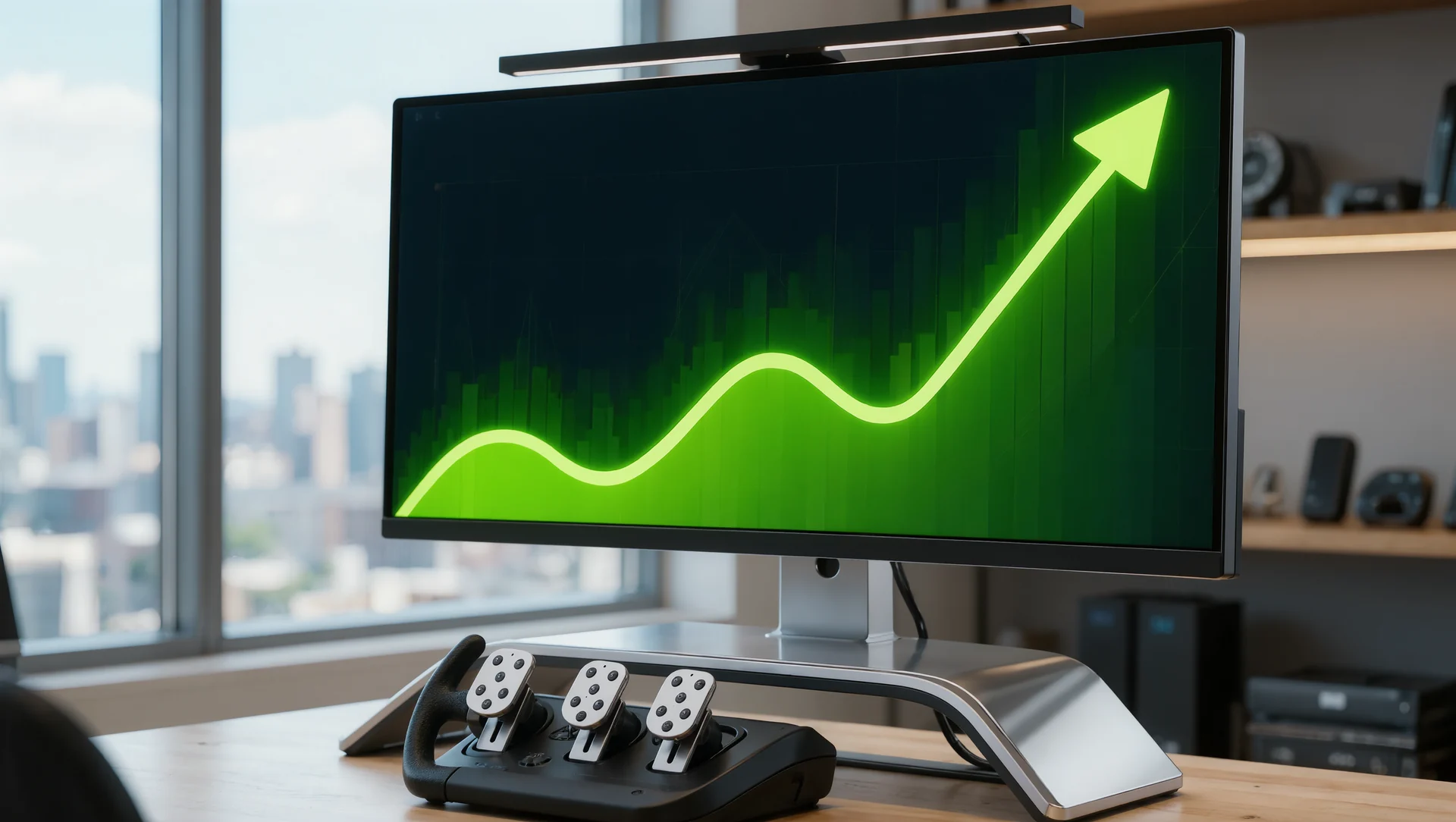
Set the top of the brake scale to the force you can hold for a full stint, not to the hardest single push you can manage. A maximum you can only reach once compresses the whole useful range into the bottom of the pedal, and everything you do after that is a workaround for a calibration mistake.
The maximum is a decision, not a measurement
Every load cell pedal set asks you to define the top of the scale, and most drivers set it by pushing as hard as they can once. That produces a scale whose upper third is unreachable in a race and whose lower third contains all the braking you actually do. The consequence is a pedal that feels vague at exactly the pressures you use most.
The better method is a stint test. Drive ten minutes at racing pace, note the pressure you are actually applying at the heaviest braking zone, and set the maximum a little above that. Published capacities give the range the hardware can cover, 90 kg for the Fanatec ClubSport V3, up to 100 kg for the MOZA SR-P and 0 to 200 kg for the CRP2, but none of those numbers is a target. The number you want is your own sustainable maximum, and it is usually far below the ceiling.
Why the curve shape matters
Most software offers a curve between input force and brake output. A linear curve means the relationship is one to one across the range. A progressive curve gives you more resolution at low pressures and compresses the top, and a degressive curve does the opposite. Neither is correct in general, because the right curve depends on what your leg does badly.
If you lock the fronts on turn in, the top of your range is too easy to reach and a progressive curve helps. If you cannot get the last ten per cent of braking performance, the top of your range is too hard and a slightly degressive curve or a lower maximum helps. The distinction between those two problems is visible in the telemetry as either a spike above your intended pressure or a plateau below it.
Resolution decides how much the curve can do. A 12 bit sensor gives 4096 steps across the range, a 15 bit angle sensor gives 32768, and a curve that stretches the lower half of a coarse scale can make the steps visible as steps. Change the maximum before you change the curve, because the maximum moves the whole scale and the curve only redistributes it.
The arithmetic makes the point concrete. A 12 bit sensor across a 90 kg cell gives 4096 steps, which is about 22 grammes of leg force per step. A 15 bit angle sensor across 100 kg gives 32768 steps, about 3 grammes each. Now set the maximum wrongly: calibrate a 90 kg cell to a 40 kg leg and the useful part of the scale is 1820 steps instead of 4096, so more than half the resolution you paid for sits above anything you will ever press.
A test that takes three laps
Lap one: brake as hard as you comfortably can into the heaviest zone and hold it. Note whether the pedal reaches one hundred per cent and whether the fronts lock. Lap two: brake at what feels like eighty per cent and check the telemetry number. Lap three: repeat lap two and compare. If the two eighty per cent laps differ by more than a few per cent, the problem is the calibration rather than your leg.
Then leave it alone for a week. Every calibration change resets the motor learning that makes braking repeatable, and a driver who adjusts the curve daily never accumulates the consistency that the hardware was bought to provide.
| Symptom | Likely cause | Correction |
|---|---|---|
| Fronts lock on turn in | Maximum set too low | Raise the maximum or use a progressive curve |
| Cannot reach full braking | Maximum set too high | Lower the maximum to a sustainable force |
| Braking varies lap to lap | Maximum set from a single hard push | Recalibrate from a stint |
| Steps audible in the input | Coarse resolution stretched by the curve | Flatten the curve, change the maximum |
Sources
Frequently asked questions
Should the maximum be my hardest push?
No. Use the hardest force you can repeat for a full stint, otherwise the top of the scale is unreachable in a race.
Linear or progressive curve?
Start linear. Change it only to fix a specific problem you can see in telemetry, and change the maximum before the curve.
How often should I recalibrate?
Rarely. Every change resets the motor learning, and consistency is the whole point of force sensing.
Does pedal position affect calibration?
Yes. Angle and distance change how much force your leg can produce, so recalibrate after moving the pedal plate.
More in Wheels & Pedals
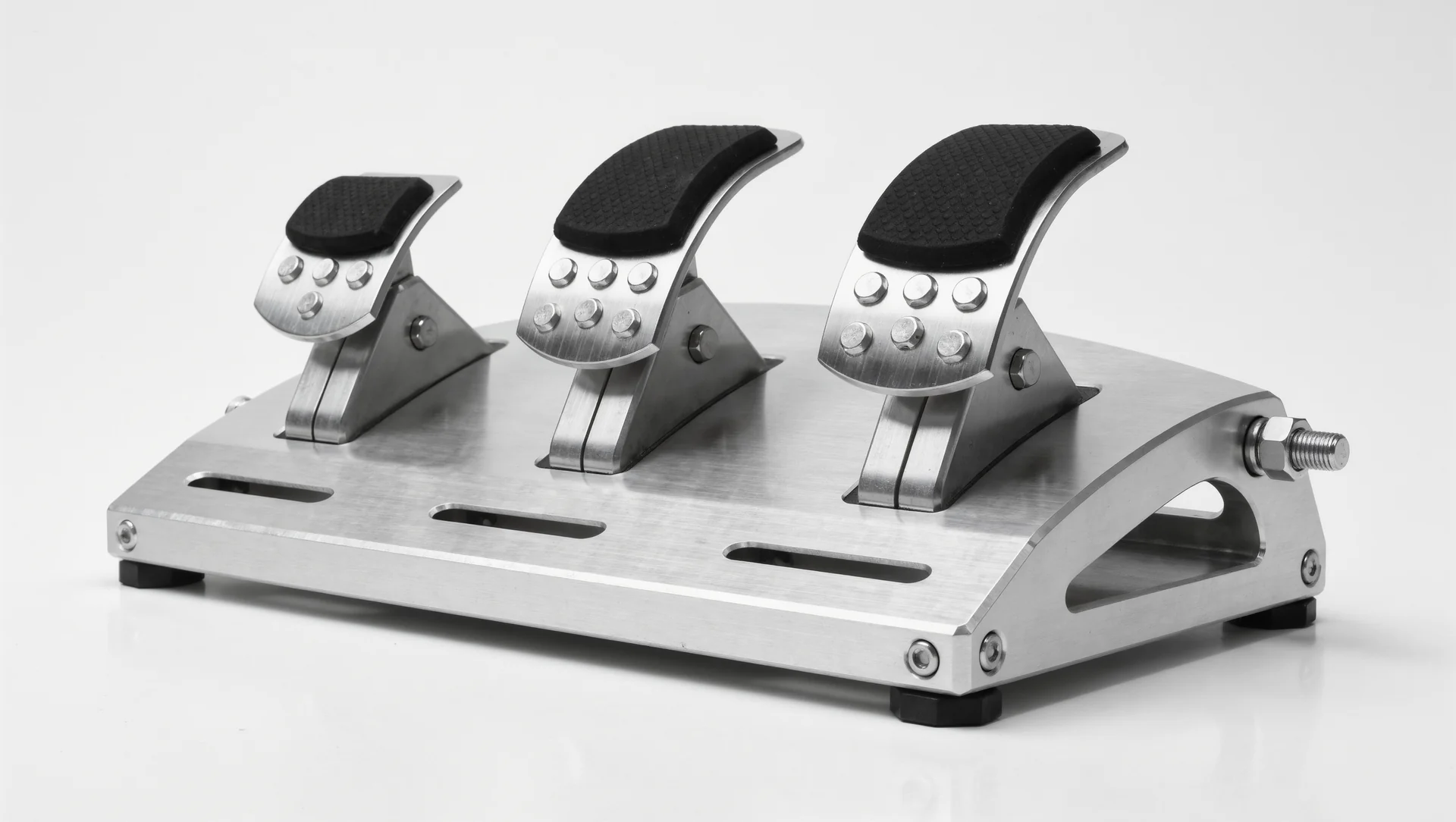
Pedal plate angle: the setting most rigs get wrong
Pedal plate angle decides how much of your leg strength reaches the load cell. The geometry, the published adjustment ranges and how to set it in one session.
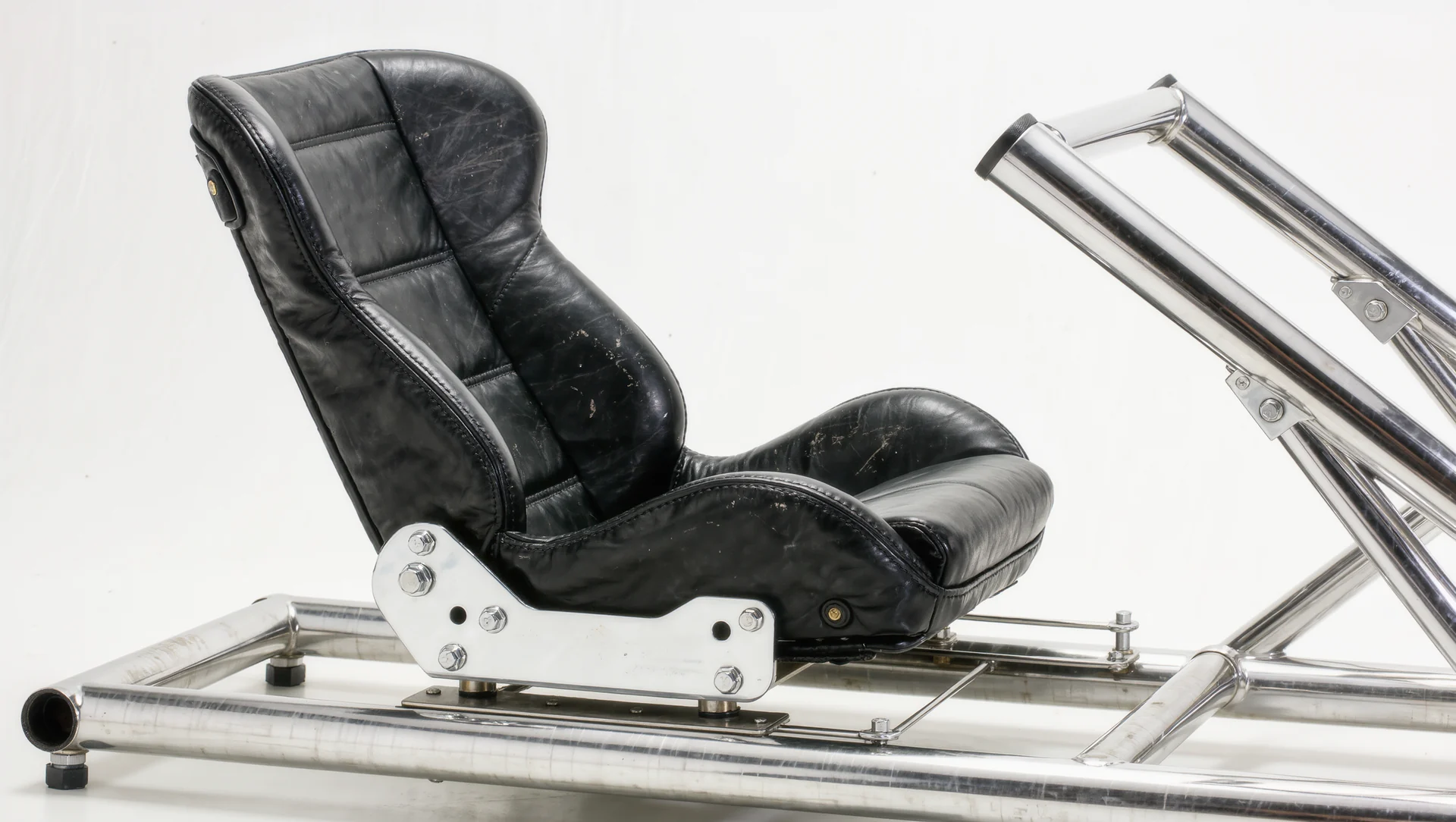
The used car seat that beats a branded bucket
A used road car sport seat against a branded sim bucket: the published weights, prices and homologation rules, and where the cheap option genuinely wins.
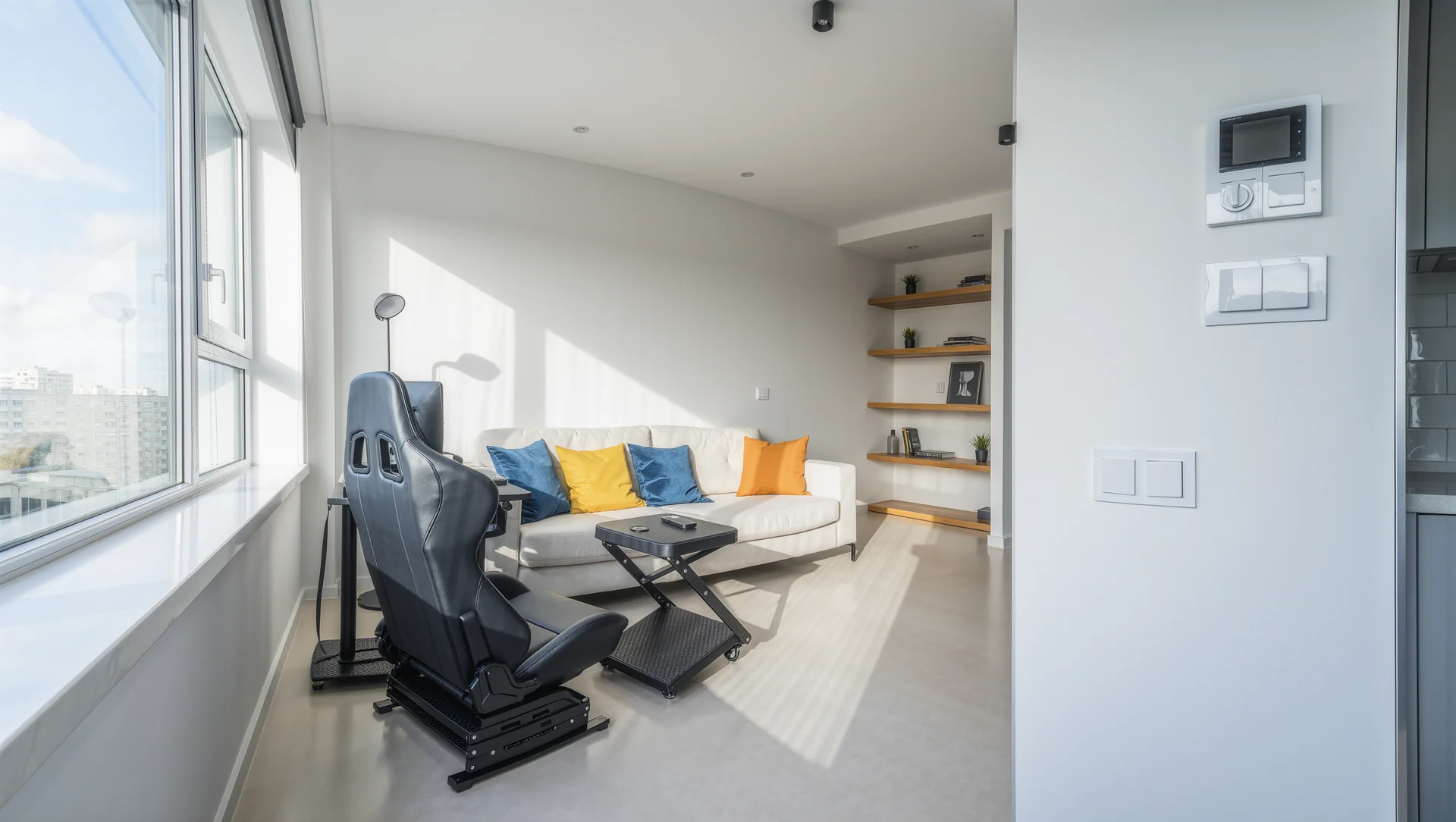
A rig that fits a flat: folding, wheel stand or profile
Folding cockpit, wheel stand or a full profile rig in a small flat: the published dimensions, the storage figures and what each option really costs in floor space.