Load cell or potentiometer pedals: the braking difference
Load cell against potentiometer pedals: what changes in the braking, which figures the manufacturers publish and why the upgrade is felt on the second lap.
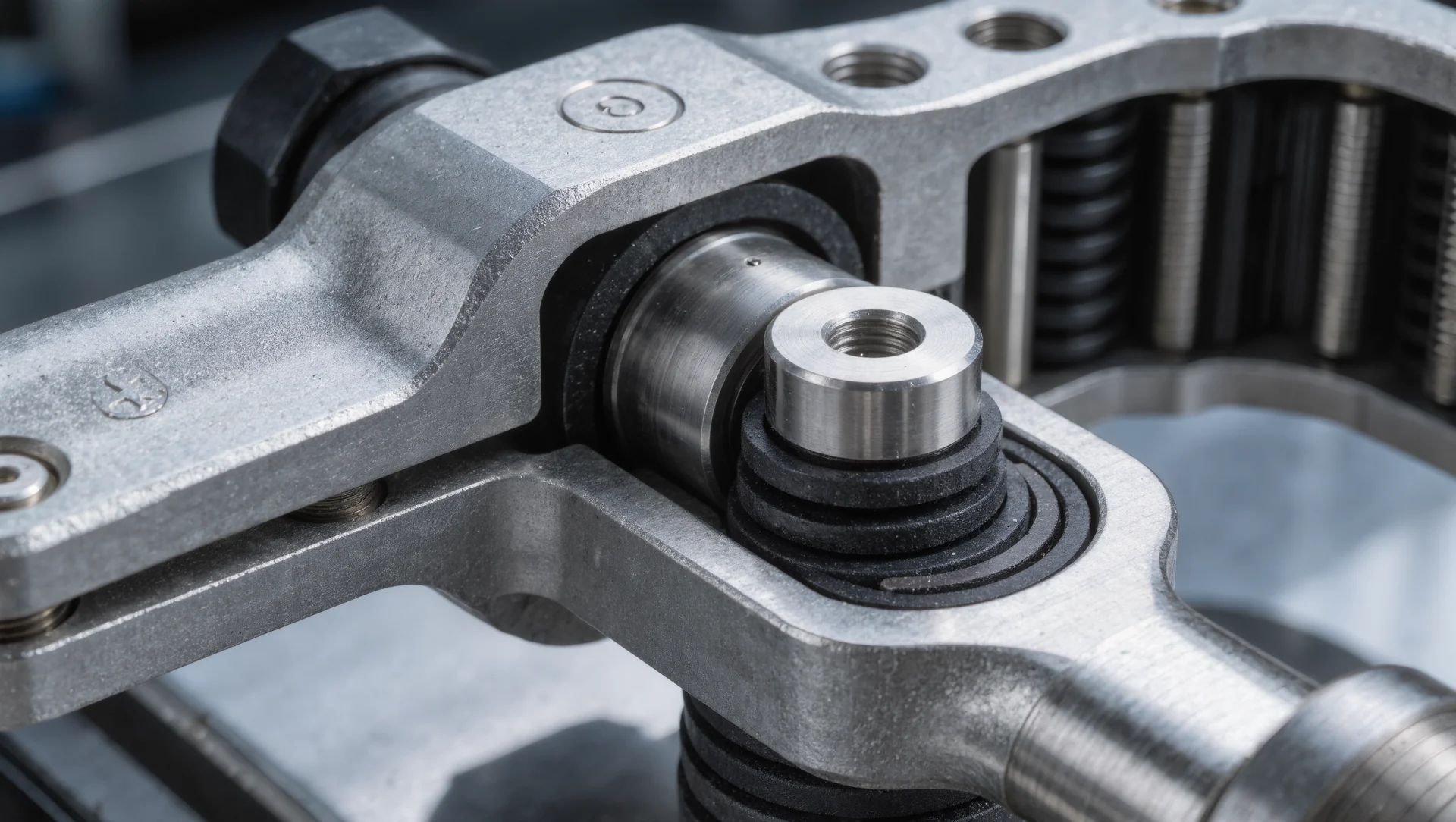
A potentiometer measures how far the pedal moved, a load cell measures how hard you pushed, and your leg is far better at repeating a force than a distance. That single difference is why load cell braking is the one upgrade almost every driver notices immediately.
Two different questions the pedal asks
A potentiometer is a travel sensor. It reports the angle of the pedal arm, and the software turns that angle into a brake input. Nothing in that chain knows how much force your leg applied, so a soft spring and a hard spring produce the same input at the same travel. Your foot, meanwhile, has no reliable sense of distance at all. It has an excellent sense of pressure, which is the sense the sensor is ignoring.
A load cell measures force directly. The pedal barely moves, and the input is calculated from the load applied to the cell. That matches how a real brake works: hydraulic pressure follows pedal force, not pedal travel. It also matches how a human learns. After a few laps your leg reproduces a given pressure with surprising precision, which is exactly the consistency that trail braking and repeatable braking points depend on.
What the manufacturers publish
The published figures give a useful map of the market. Fanatec states a custom made 90 kg load cell for the ClubSport Pedals V3, with 12 bit resolution, that is 4096 values, on all axes and a full metal construction of CNC machined aluminium, listed at 329.95 euro. MOZA states a maximum capacity of 100 kg for the SR-P brake, combined with a 15 bit angle sensor at 32768 pulses per revolution in a dual sensor arrangement, and the newer CRP2 raises the load cell range to 0 to 200 kg with the same 15 bit angle sensor.
Two numbers matter more than the headline capacity. The first is resolution: 12 bit gives 4096 steps across the whole range, 15 bit gives 32768, and finer steps mean the difference between 60 and 62 kilogrammes of leg force is still a different brake input rather than the same one. The second is the maximum itself, because it sets the scale. A 200 kg cell used by a driver who brakes with 60 kg is working in the lowest third of its range, which is why every serious pedal set lets you calibrate the top of the scale to your own leg.
| Pedal set | Brake sensing | Resolution |
|---|---|---|
| Fanatec ClubSport V3 | 90 kg load cell | 12 bit, 4096 values |
| MOZA SR-P | Load cell up to 100 kg plus angle sensor | 15 bit angle sensor |
| MOZA CRP2 | Load cell 0 to 200 kg plus angle sensor | 15 bit angle sensor |
| Typical potentiometer set | Travel only | Depends on the interface |
What actually changes in the driving
The first change is repeatability. With travel sensing, a slightly different seating position or a slightly tired leg changes where the pedal ends up, and the brake input changes with it. With force sensing, the same push produces the same input whatever the day, which turns braking points from a memory exercise into a motor skill.
The second change is modulation under load. Trail braking asks you to bleed pressure off gradually while the front tyres are still loaded, and a travel sensor makes that a guess because the last few millimetres of travel cover a large part of the range. A load cell gives you the whole upper half of your leg strength to work with, which is where the useful resolution sits.
The third change is the ceiling. A potentiometer pedal with a soft spring lets you reach one hundred per cent brake with very little effort, and everything above that effort is wasted. A load cell calibrated to your maximum means one hundred per cent is genuinely your maximum, and every level below it is available and distinguishable.
Who should not upgrade yet
A driver whose rig moves under braking gains less than the specification suggests, because the frame absorbs part of the force and the reference point shifts. Fix the mounting first, then the pedals. The same applies to a wheel stand carrying a heavy base: pedal force is the largest single load in the whole rig, and a set of load cell pedals will find any weakness in the structure within an hour.
Sources
Frequently asked questions
Is a load cell worth it on a basic wheel?
Usually more than an upgraded base. The brake is where lap time is lost, and the pedal does not care which wheel is in front of it.
How much force should I brake with?
Whatever you can repeat for a full stint. Calibrate the top of the scale to that force, not to the hardest push you can manage once.
Do I need 200 kg of capacity?
Only if you brake that hard. What matters is that your normal maximum sits near the top of the calibrated range, not near the bottom.
Can I convert a potentiometer pedal?
Kits exist for common sets. Check the mounting and the interface resolution first, because an 8 bit connection wastes most of what the cell can report.
More in Wheels & Pedals
GT or formula seating: what the angle changes
GT and formula seating are two different jobs for the same body. The published angles, what each position gives you and what it costs over a two hour stint.
Pedal plate angle: the setting most rigs get wrong
Pedal plate angle decides how much of your leg strength reaches the load cell. The geometry, the published adjustment ranges and how to set it in one session.
The used car seat that beats a branded bucket
A used road car sport seat against a branded sim bucket: the published weights, prices and homologation rules, and where the cheap option genuinely wins.