The F1 game against a hardcore sim: what transfers
The official F1 game against a hardcore simulator: what actually transfers between them, what does not and how to use both without confusing yourself.
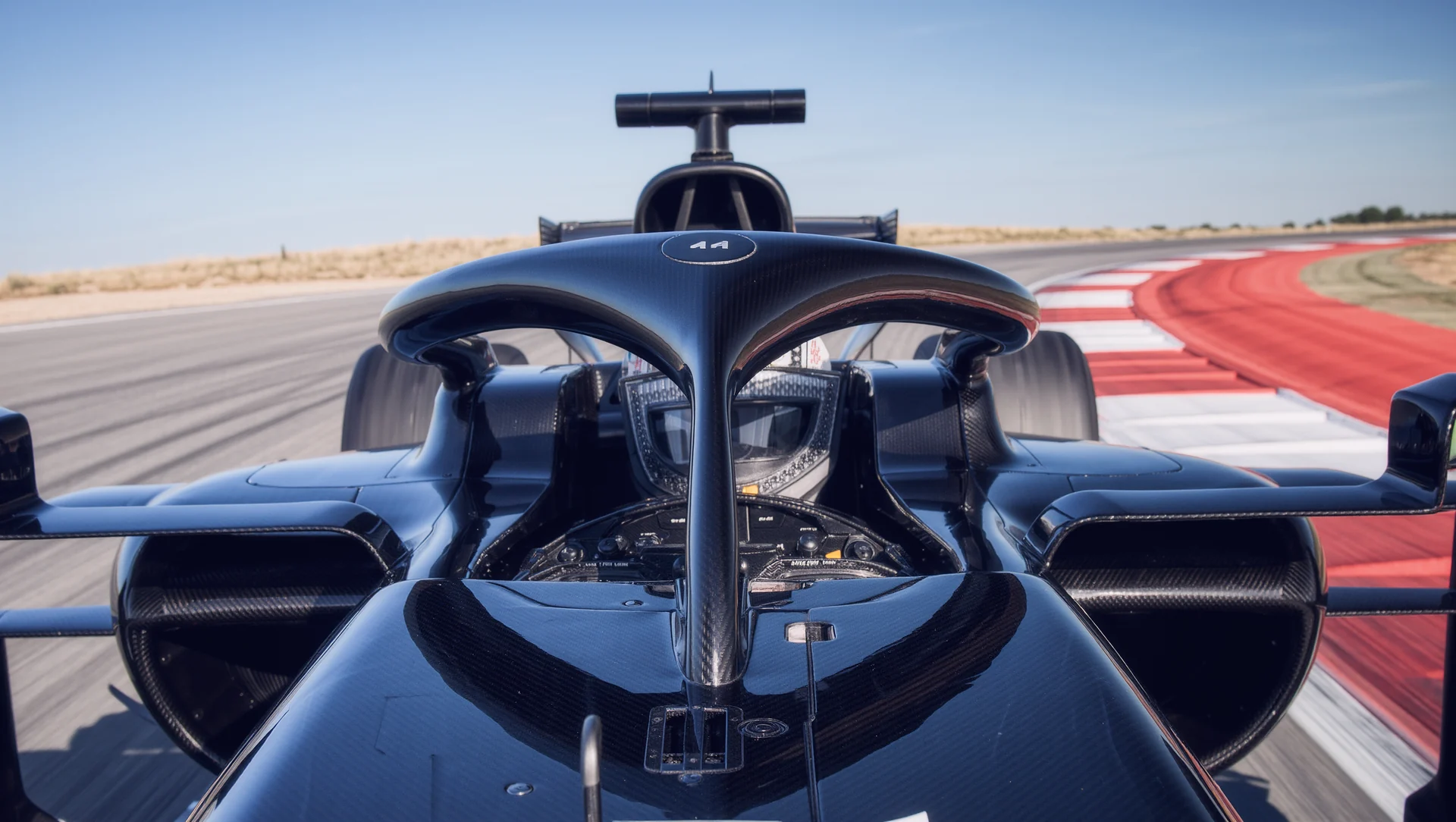
The official Formula 1 game and a hardcore simulator are built for different jobs, and comparing them on physics alone misses what each one is actually good at. One teaches you a championship, the other teaches you a car, and a driver who understands the split gets value from both.
What the official game is built to do
It reproduces a championship, including the parts a simulator normally ignores. The 2026 season pack covers a grid of eleven teams, with a custom My Team squad becoming the twelfth, and it added MADRING in Madrid, the first new Formula 1 circuit since 2023, a hybrid street and purpose built track of 5.4 km with 22 corners that is only drivable with the 2026 cars.
The car regulations are modelled rather than approximated. EA describes the 2026 cars as lighter and smaller with active aerodynamics, and lists a nearly 500 horsepower boost in overtake mode along with real time adjustment of front and rear wings. Those are rule changes with driving consequences, not cosmetic updates.
What that adds up to is a simulation of a season rather than of a car. Contracts, development, team dynamics and a calendar are modelled in ways no hardcore simulator attempts, and for a driver whose interest is the sport rather than the vehicle, that is the more complete product.
| Item | Figure |
|---|---|
| Teams on the grid | 11, plus a My Team squad as the twelfth |
| New circuit | MADRING, Madrid |
| Circuit length and corners | 5.4 km, 22 corners |
| First new circuit since | 2023 |
| Overtake mode boost | nearly 500 horsepower |
| Car characteristics | lighter, smaller, active aerodynamics |
What transfers to a hardcore simulator
Circuit knowledge transfers, and it is the largest single benefit. A driver who knows the sequence, camber and reference points of a track arrives at another simulator needing only to relearn braking distances, which is a fraction of the work of learning the layout.
Race procedure transfers. Starts, safety cars, pit windows, flags and penalties work similarly enough that a driver who has run a hundred races in the official game is not surprised by any of them elsewhere.
Wet weather judgement transfers well too, because the decision of when a wet line is faster than a dry one is about reading the surface rather than about the physics engine underneath it.
What does not transfer
The limit does not, and this is the honest core of the criticism. An official game is tuned so that a wide range of players can enjoy it, which usually means the approach to the limit is generous and the recovery from a slide is more forgiving than a simulator modelling contact patch behaviour at 400 Hz would allow.
Setup work transfers only in vocabulary. The named adjustments look similar, but a simulator that models tyre temperature developing across a stint asks for different decisions than one that treats it more simply.
And the consequences of a mistake do not transfer. In a game built for a broad audience, a small error costs a place; in a simulator with a full grid of people who have practised for a week, the same error ends somebody else's evening. That difference shapes how you race far more than physics does.
Using both deliberately
Use the official game to learn circuits and race procedure, and use the simulator to learn the car. A driver who does the season in one and the hot laps in the other builds both halves and never has to defend either choice.
Change one thing at a time when you switch. Do not move between them in the same evening while also changing car class or wheel settings, because the resulting confusion gets blamed on the physics rather than on the three variables you changed at once.
And read the regulation changes rather than assuming continuity. A season with lighter cars, active aerodynamics and around half the power output coming from the battery drives differently from the one before it, and that is true in every simulator that models it.
Sources
Frequently asked questions
Is the official game a simulator?
It is a simulation of a championship with approachable car physics. That is a different product from a simulator built around a tyre model, not a worse one.
Will it teach me bad habits?
Only if you assume the limit behaves the same way elsewhere. Circuit knowledge and race procedure carry over without any caveat.
Which should I buy first?
If your interest is Formula 1 as a sport, the official game. If it is driving at the limit, a hardcore simulator.
Do the 2026 regulation changes matter to a sim racer?
Yes. Lighter cars with active aerodynamics and a large share of power from the battery change braking and corner exit, and every simulator modelling them inherits that.
More in Games & Platforms
Button box mapping that survives a race
Button box mapping that survives a race: the published input limits, which functions belong where and the rule that keeps you from pressing the wrong one.
Wheel rim diameter: formula, GT and rally
Wheel rim diameter for formula, GT and rally: the published sizes and weights, what each one changes in the force and how to choose without buying four.
Maintenance that doubles the life of your hardware
Maintenance that doubles the life of sim racing hardware: what the manufacturers let you service yourself, what to check on a schedule and what to leave alone.