Experience Realistic Racing with Turnkey Simulator
So, you want to know if a turnkey racing simulator can truly deliver a realistic experience? The short answer is a resounding yes, but with a few important caveats we’ll expl…
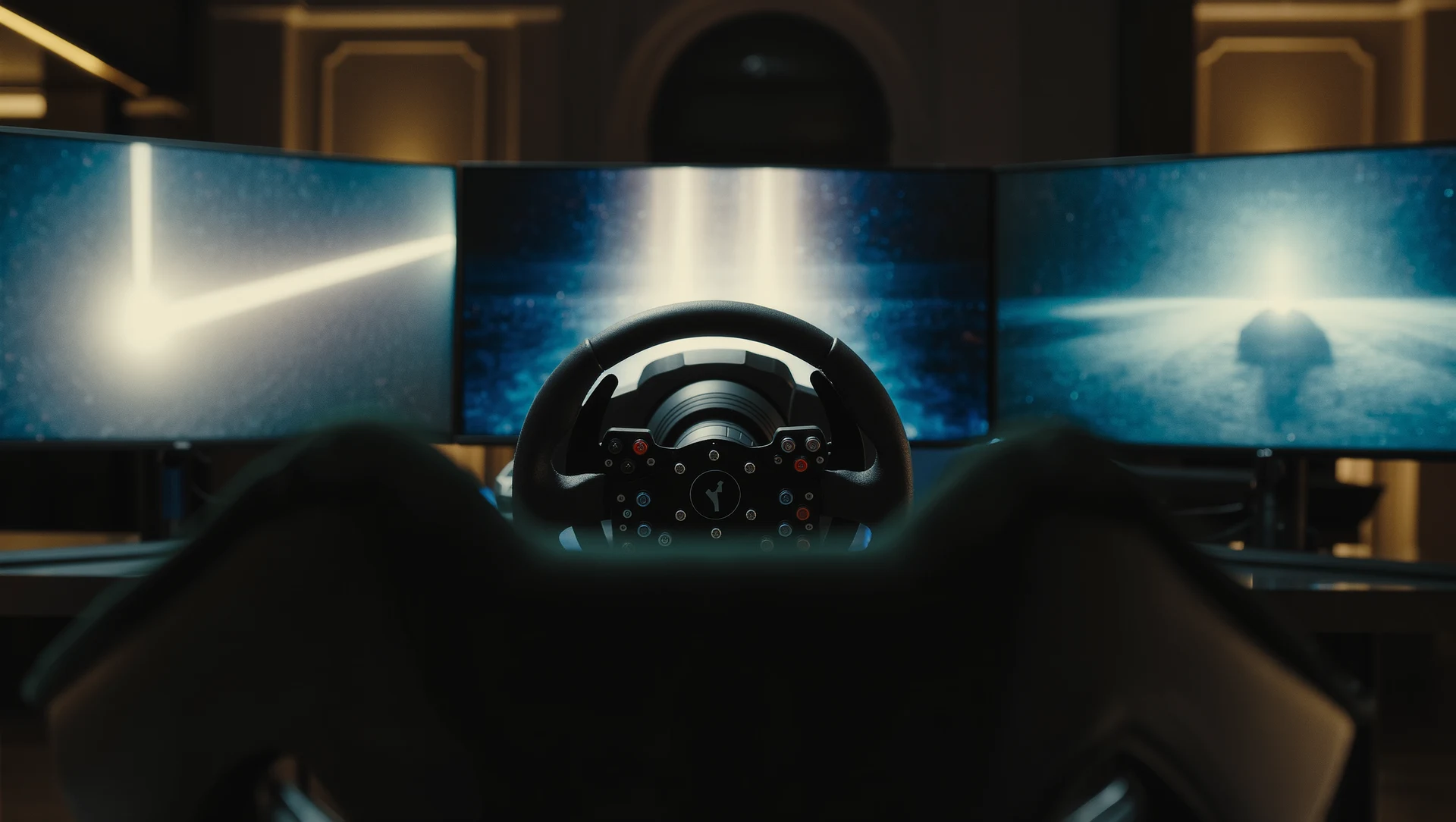
So, you want to know if a turnkey racing simulator can truly deliver a realistic experience? The short answer is a resounding yes, but with a few important caveats we’ll explore. It’s not just about a fancy display and a steering wheel anymore; modern turnkey systems are designed from the ground up to immerse you in the race, offering sensations and feedback that get remarkably close to the real thing, without the actual risk or expense.
Think of “turnkey” as ready-to-go, out of the box, with minimal fuss. Unlike building a sim rig piece-by-piece, which requires a good amount of technical know-how and compatibility research, a turnkey simulator comes as a complete, integrated package.
No Compatibility Headaches
One of the biggest advantages is that all components, hardware, software, and sometimes even the racing seat and chassis, are designed to work together seamlessly. You don’t have to worry about whether your racing wheel will communicate properly with your pedals, or if your motion platform drivers will conflict with your graphics card. This integration is crucial for maintaining performance and avoiding frustrating technical glitches.
Professional-Grade Calibration
These systems often come pre-calibrated by experts. This means the force feedback on your wheel, the sensitivities of your pedals, and the movements of your motion platform (if included) are all set up to provide a balanced and convincing experience right from the start. While you can often tweak these settings, having a solid baseline saves a lot of time and ensures you’re getting the most out of your investment immediately.
The Core Components of Realism
Realism in a racing sim isn’t a single feature; it’s a symphony of technologies working in concert. Each component plays a vital role in tricking your brain into believing you’re actually on the track.
Force Feedback Wheels and Pedals
This is arguably the most crucial element. A good force feedback wheel isn’t just about resistance; it’s about conveying detailed information from the virtual road surface to your hands.
Direct Drive Technology
If you’re serious about realism, direct drive wheels are the gold standard. Unlike belt-driven or gear-driven wheels, which use motors connected via a belt or gears, direct drive wheels have the motor directly attached to the steering shaft. This translates to incredibly high torque, lightning-fast response times, and the ability to reproduce subtle road textures, tire slip, and suspension movements with astonishing fidelity. You’ll feel every kerb, every slight loss of grip, and the nuances of the car’s handling as you push it to its limits.
Load Cell and Hydraulic Pedals
Your connection to the car isn’t just through your hands; it’s also through your feet. Standard gaming pedals often rely on spring resistance, which feels artificial. Load cell pedals, on the other hand, measure the actual force you apply, mimicking the feel of a real brake pedal more accurately. Hydraulic pedals take this a step further, using fluid resistance to replicate the progressive feel of a high-performance brake system. This precision allows for much finer control over braking and acceleration, vital for consistently hitting apexes and managing tire wear.
Visual Immersion
What you see significantly impacts your perception of realism. It’s not just about resolution, though that’s important.
Triple Screens or Ultrawide Monitors
Expanding your field of view beyond a single monitor radically changes the experience. Triple screens provide a panoramic view, allowing you to see approaching corners, gauge distances more accurately, and become more aware of competitors around you. The peripheral vision afforded by these setups makes a massive difference to immersion and situational awareness, which are critical in real racing.
Virtual Reality (VR)
For peak visual immersion, VR headsets are hard to beat. Stepping into a virtual cockpit where you can look around freely, judge depth like in real life, and feel a true sense of scale is an unparalleled experience. While high-end VR requires powerful graphics hardware and can sometimes come with a learning curve regarding comfort and setup, the payoff in terms of immersion is profound. The only real trade-off compared to screens is typically resolution and potential motion sickness for some, though advancements are rapidly improving both.
The Kinesthetic Connection: Motion Platforms
This is where turnkey systems really start to differentiate themselves and push realism into the realm of truly feeling the race. Motion platforms physically move your seat, or even the entire rig, to simulate the forces a driver experiences.
Types of Motion
Not all motion platforms are created equal. They vary in the number of axes they can move along and the types of sensations they aim to replicate.
2-DOF (Degrees of Freedom)
Typically, 2-DOF platforms provide pitch and roll movements. Pitch simulates acceleration and braking forces (your body being pushed back or forward), while roll simulates body lean during cornering. This is an excellent entry point into motion simulation, adding a tactile layer that dramatically enhances immersion without being overwhelmingly complex.
3-DOF
Adding a third axis, often heave (up and down), allows for the simulation of bumps, kerbs, and slight elevation changes on the track. This further cements the feeling of being connected to the car and the road surface, adding crucial sensory input that your inner ear interprets as real movement.
4-DOF+ (including Surge, Sway, Yaw)
Higher-end systems incorporate more axes like surge (forward/backward acceleration), sway (side-to-side movement), and yaw (rotation around a vertical axis, simulating G-forces during sustained turns). These platforms are incredibly sophisticated, using finely tuned algorithms to translate telemetry data from the simulation into precise physical movements. They can simulate everything from the jolt of hitting a kerb to the subtle sway of the car under high G-loads, creating a remarkably convincing physical experience.
Tactile Feedback
Beyond large-scale motion, smaller, more subtle vibrations also contribute to realism.
Buttkickers & Transducers
These devices bolt onto your seat or rig and use audio signals to create vibrations that you feel. They can simulate engine rumble, gear shifts, road texture, and even tire slip. While not “motion” in the traditional sense, they add a critical layer of tactile feedback that works in conjunction with force feedback wheels and motion platforms to complete the illusion. You feel the engine roaring through the chassis, the brake lock-up shaking the car, and the transmission doing its work.
The Software Engine: Simulation Physics
Even with the best hardware, the experience falls flat if the underlying software isn’t up to par. The simulation’s physics engine is the brain that dictates how the car behaves.
Accurate Car Models
High-fidelity simulators use meticulously detailed car models built on real-world data. This means factors like aerodynamics, suspension geometry, tire flex, weight distribution, and engine power curves are accurately represented. When you make an input, the car reacts as a real car of that type would, whether it’s a nimble open-wheeler or a heavy touring car.
Advanced Tire Models
This is perhaps the single most critical aspect of modern racing simulation physics. Tires are complex, dynamic components. An advanced tire model accurately simulates grip levels based on temperature, pressure, slip angle, and load. It accounts for how tires deform under stress, how they lose grip progressively, and how they recover. Feeling this lifelike tire behavior through your force feedback wheel and motion platform is what truly allows you to “drive by the seat of your pants” and push the car to its absolute limits, just like a real driver.
Environmental Factors
Realistic weather conditions, track surface variations, and even dynamic track evolution (where grip levels change as rubber is laid down or the track gets wet) all contribute to a more profound sense of realism. Driving the same track under different conditions provides fresh challenges and reinforces the feeling of a living, breathing race environment.
Integration and Optimization
The magic of a turnkey system isn’t just in its individual components, but how perfectly they work together.
Seamless Hardware-Software Communication
Turnkey solutions are often optimized for specific simulation software. This means the telemetry data from the sim (car speed, lateral G-forces, suspension compression, tire slip, etc.) is fed directly and efficiently to the motion platform, force feedback wheel, and haptic feedback devices. There’s minimal latency, ensuring that what you see and feel is synchronized. This tight integration is hard to achieve with a DIY setup.
Expert Setup and Support
A significant benefit of a turnkey solution is the expertise that often comes with it. Manufacturers usually provide detailed setup instructions, and often, professional installation and calibration services are available. More importantly, ongoing support for troubleshooting and software updates is typically part of the package, which can be invaluable when dealing with sophisticated equipment. This means less time fiddling with settings and more time racing.
Is It Exactly Like the Real Thing?
Let’s be clear: no simulator, no matter how advanced, can perfectly replicate every single sensation of driving a real race car at the limit. The missing links are primarily the sustained G-forces that press you into your seat, the smell of fuel and burning rubber, and the terrifying consequence of a real crash.
However, modern high-end turnkey simulators come incredibly close to replicating the visual, auditory, and kinesthetic aspects of racing to such an extent that they are invaluable training tools for professional drivers and provide an intensely realistic and thrilling experience for enthusiasts. The muscle memory and decision-making skills developed in a top-tier sim are highly transferable to the real world.
For most people, the difference becomes academic. What these systems do provide is an unparalleled level of immersion and feedback that allows you to experience the nuances of high-performance driving in a safe, controlled, and repeatable environment. You’ll develop a deeper understanding of car dynamics, learn racing lines, improve your consistency, and hone your reflexes to a degree impossible with simpler setups. It’s an investment in a genuinely profound and realistic racing experience.
FAQs
What is a turnkey racing simulator?
A turnkey racing simulator is a complete, ready-to-use system that includes all the necessary hardware and software for a realistic racing experience. This typically includes a racing seat, steering wheel, pedals, and a high-quality display.What are the key components of a turnkey racing simulator?
The key components of a turnkey racing simulator include a racing seat, a force feedback steering wheel, pedals for acceleration and braking, a high-definition display, and a powerful gaming PC or console. Some simulators may also include additional features such as motion platforms and virtual reality headsets.What are the benefits of using a turnkey racing simulator?
Using a turnkey racing simulator allows enthusiasts to experience the thrill of racing in a realistic and immersive environment without the need for a dedicated racing car and track. It also provides a safe and cost-effective way to practice and improve driving skills.What are some popular brands of turnkey racing simulators?
Some popular brands of turnkey racing simulators include SimXperience, Next Level Racing, Playseat, and Fanatec. These brands offer a range of simulators catering to different budgets and levels of realism.What are some considerations when choosing a turnkey racing simulator?
When choosing a turnkey racing simulator, it’s important to consider factors such as the level of realism, compatibility with gaming platforms, available space, and budget. Additionally, considering features such as motion simulation, virtual reality support, and customization options can help in making an informed decision.More from Racing Simulators
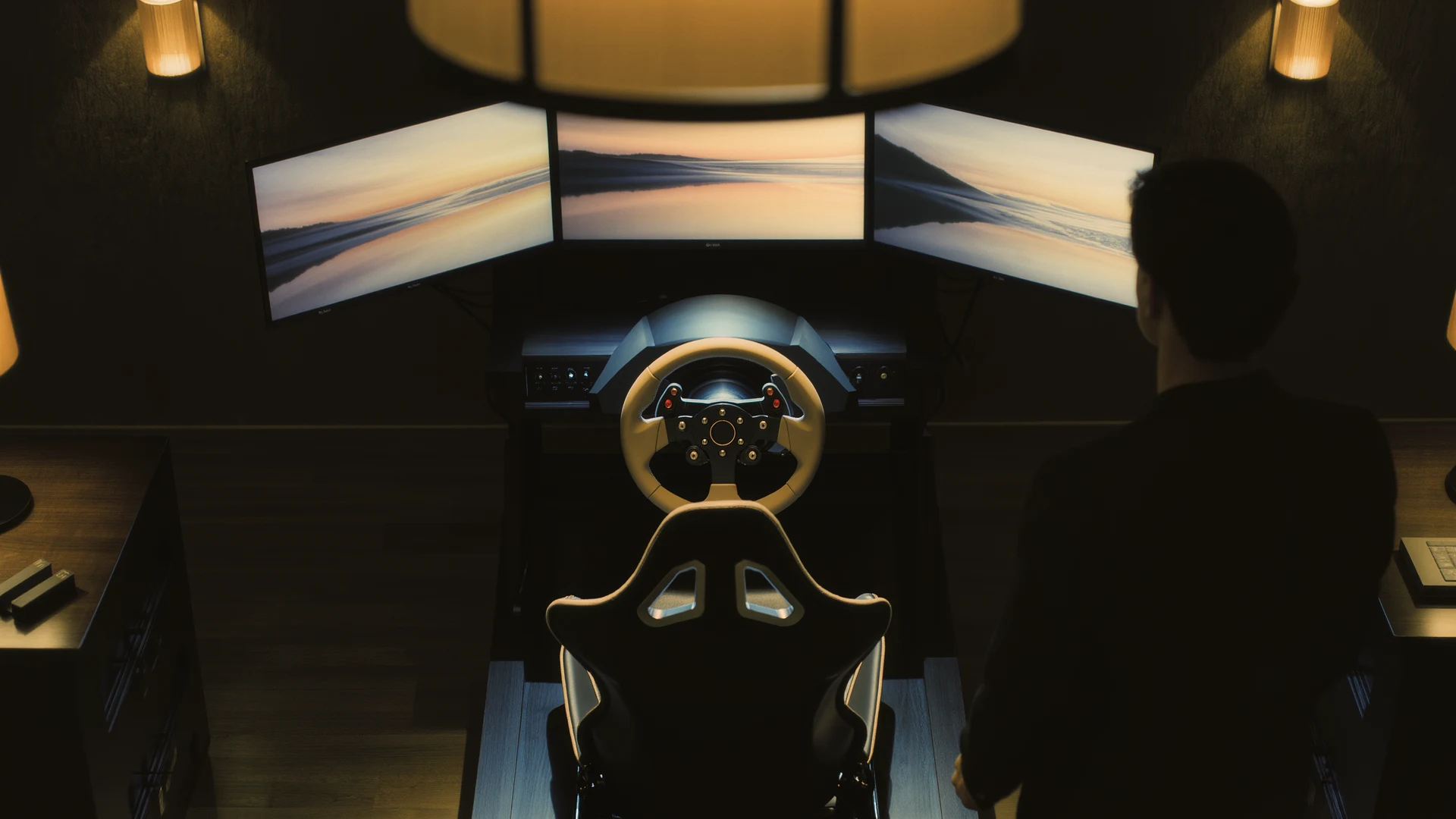
Future of Sim Racing
The future of sim racing: how AI tire models, mixed reality, cloud streaming, cheaper direct-drive hardware and the sim-to-real pipeline reshape motor…
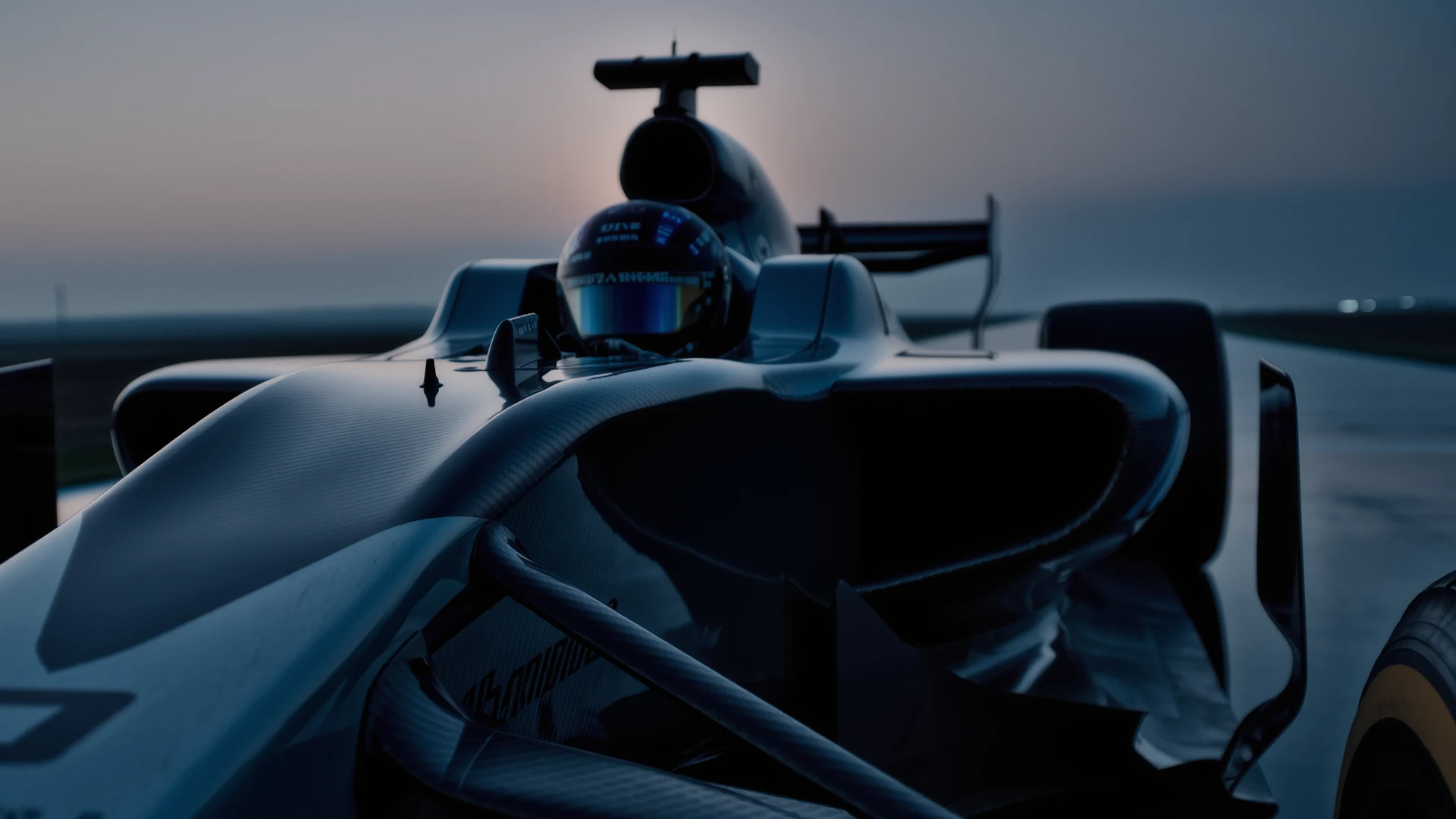
F1 Sim Racing Guide
F1 sim racing guide: compare F1 24, iRacing, RSS and AMS2, choose the right wheel and load-cell brake, and master braking, ERS and tire strategy.…
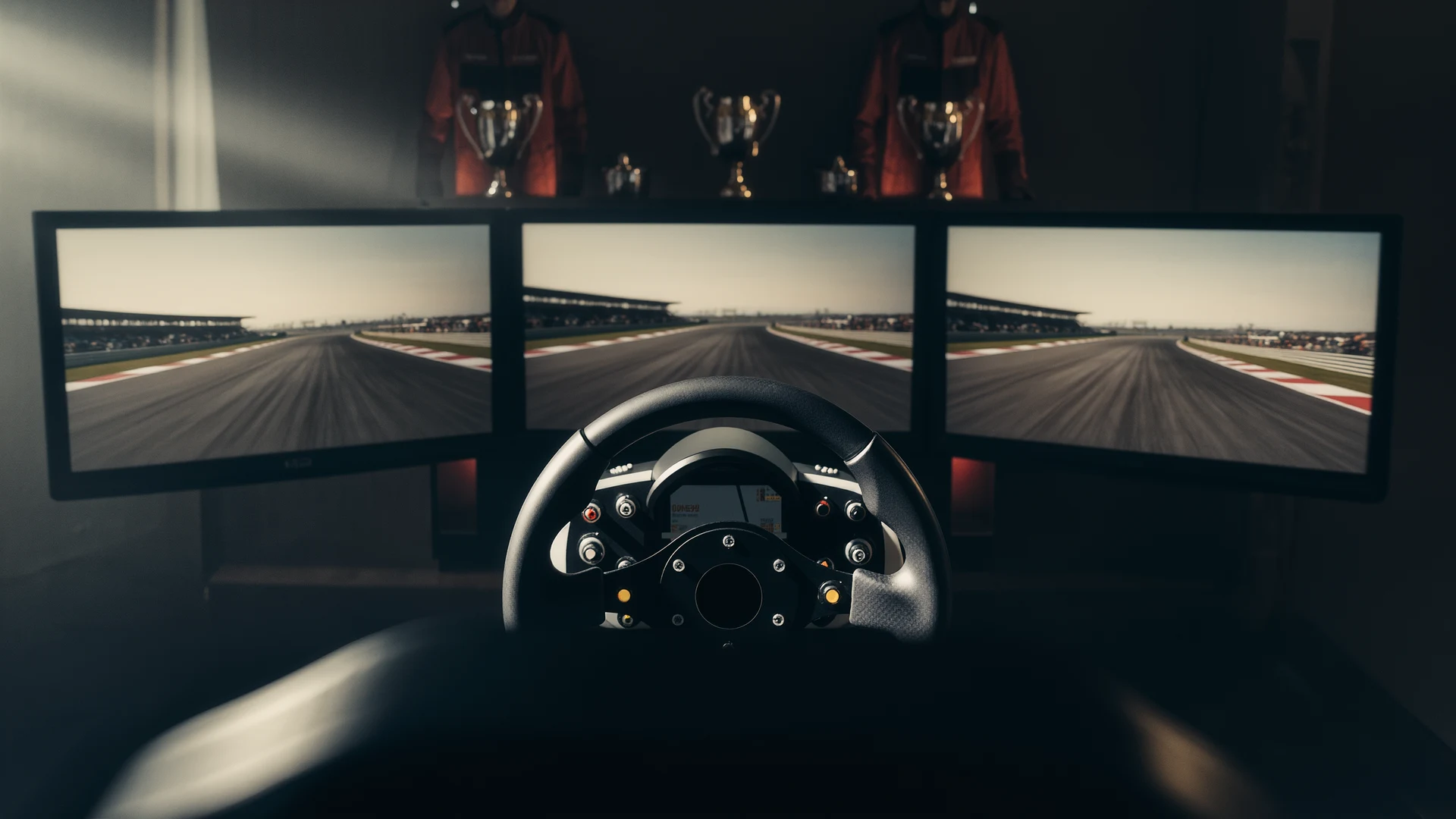
Assetto Corsa Ultimate Guide
Assetto Corsa ultimate guide: the best mods (Content Manager, CSP, SOL, Pure), free cars and tracks, online racing, performance tuning, and AC vs ACC …