Experience the Thrill: Motorsport Simulator
Ever found yourself glued to the TV during a Formula 1 race, wishing you could feel that raw speed, the G-force pulling you into the seat, the razor-sharp precision needed to nail …
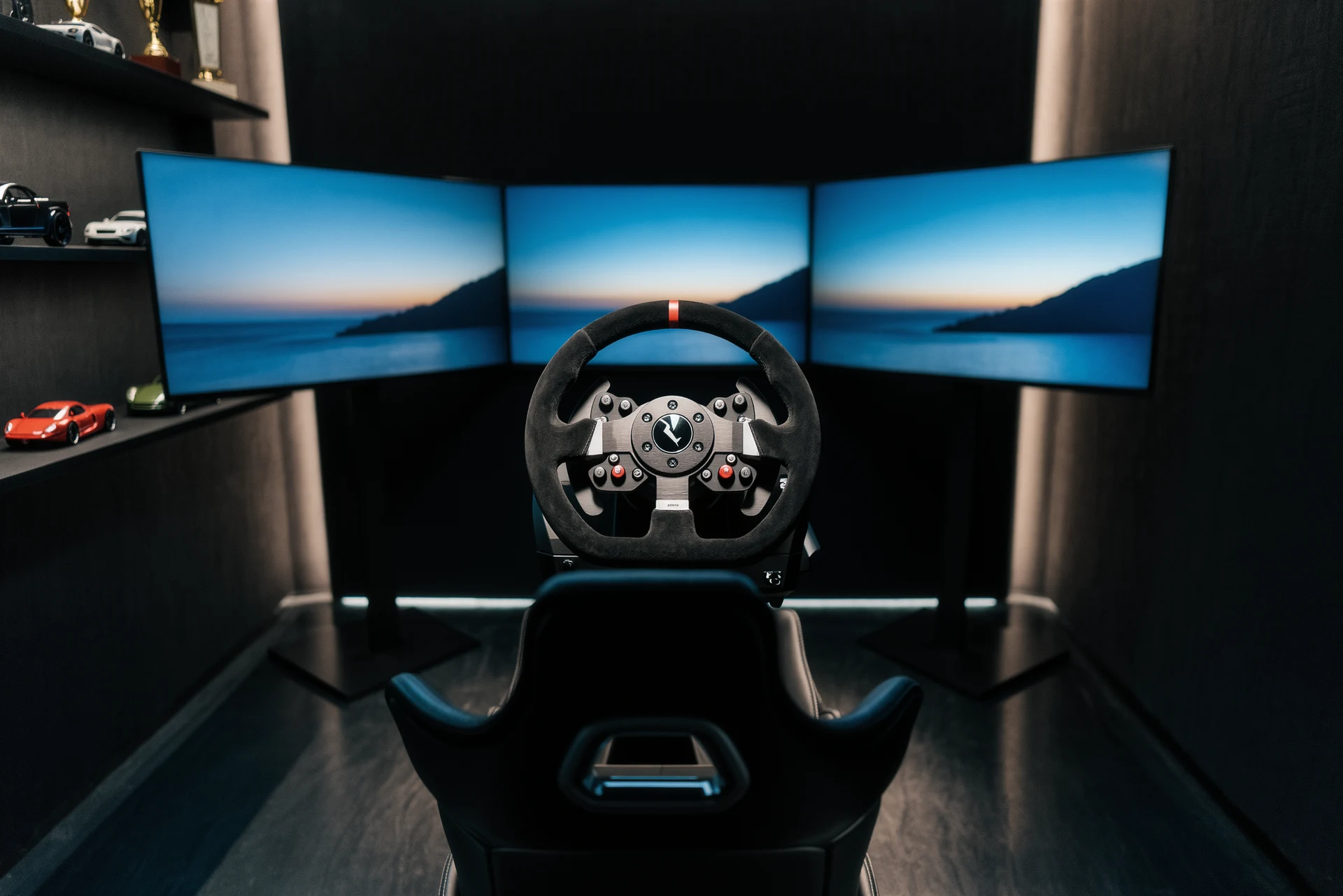
Ever found yourself glued to the TV during a Formula 1 race, wishing you could feel that raw speed, the G-force pulling you into the seat, the razor-sharp precision needed to nail a corner? Or maybe you’re more of a rally enthusiast, craving the dirt flying, the controlled slides, and the sheer adrenaline of pushing a car to its limits? If so, you’ve probably wondered how close you can actually get to that real-world motorsport experience without strapping into a full-blown race car. Well, buckle up, because we’re diving into the world of motorsport simulators.
What Exactly is a Motorsport Simulator?
Alright, let’s cut to the chase. A motorsport simulator isn’t just playing a racing video game on your TV. Think of it as a sophisticated, engineered system designed to replicate the physical and sensory feedback of driving a race car as accurately as possible. It’s about more than just pretty graphics; it’s about feeling the car, the track, and the race. This involves a combination of hardware and software working in tandem, aiming to immerse you in the experience and, crucially, improve your actual driving skills. It’s a serious hobby for many, and a valuable training tool for aspiring and even professional racers.
The Core Components: What Makes It Tick
So, what goes into building one of these immersive machines? It’s not just plugging in a steering wheel and pedals. A truly effective motorsport simulator is a carefully curated ecosystem of components, each playing a vital role in delivering that authentic feel.
The Rig: Your Driving Cockpit
The physical structure is your base, the foundation of your simulated racing world. This isn’t just a fancy chair; it’s designed to mimic the seating position and rigidity of a real race car.
Sim Racing Chassis and Seats
You’ll typically see specialized sim racing chassis, often made from sturdy aluminum extrusion or welded steel. These provide a solid platform to mount everything from your wheel and pedals to shifters and even motion platforms. The seat itself is usually a bucket-style racing seat, offering good support and a realistic driving posture. The key here is stability. Any flex or wobble in the rig will immediately break the immersion and make feedback less precise.
Pedal Sets: More Than Just Gas and Brake
This is where the nuances really start to show. High-end pedal sets aren’t just simple switches. They often feature load cells for the brake pedal, meaning they measure pressure rather than distance. This allows for much finer control and mimics the feel of a hydraulic brake system in a real car. Throttle pedals are also designed for smooth, precise input. Some even incorporate clutch pedals with realistic resistance. The quality and adjustability of your pedal set will directly impact your ability to manage power and braking effectively, which is paramount in racing.
Steering Wheels and Force Feedback
The steering wheel is your primary interface with the virtual track. Modern sim racing wheels feature advanced force feedback technology. This isn’t just a rumble; it’s a sophisticated system that communicates what the front tires are doing.
Direct Drive vs. Belt/Gear Driven Wheels
Direct drive wheels are the gold standard for enthusiasts. The steering wheel is directly attached to the motor, offering the most direct and realistic feedback possible. You’ll feel every texture of the track, the grip shifting, and the subtle movements of the car with incredible fidelity. Belt or gear-driven wheels are more affordable but tend to be a bit less precise and can have a slightly “mushier” feel.
Wheel Rim Options
Beyond the mechanics, there’s a huge variety of wheel rims available. From F1-style open-wheelers to GT cars and classic rally wheels, you can choose a rim that matches your preferred discipline. They often feature a range of buttons, dials, and switches that you can map to in-game functions, further enhancing immersion and control.
Visual Immersion: Seeing the Race
What you see is just as crucial as what you feel. The visual setup of a simulator aims to replicate the driver’s field of vision.
Monitors: From Single to Triple, to Ultrawide, to VR
This is where things get really interesting and often where significant investment happens.
Single Monitor Setups
The most basic setup will involve a single monitor. While perfectly functional for getting started, it can limit your peripheral vision, making it harder to judge braking points and corner entries accurately.
Ultrawide Monitors
These offer a wider field of view than traditional 16:9 monitors, providing a good balance of immersion and practicality. They can significantly improve your situational awareness.
Triple Monitor Setups
This is the step up for many serious sim racers. Three monitors mounted side-by-side wrap around your field of view, offering a much more natural and immersive perspective. You get a better sense of speed and spatial awareness, which is critical for racing. The challenge here can be calibrating the displays to create a seamless image and managing the bezels between the screens.
Virtual Reality (VR) Headsets
VR is arguably the ultimate in visual immersion. Placing a VR headset on essentially puts you inside the car. The sense of presence is unparalleled, with a 360-degree view and an incredible feeling of scale. However, VR can be demanding on your PC hardware, and some users experience motion sickness. It also means you can’t easily see your keyboard or controllers outside the simulation.
Audio and Haptics: The Fine Details
Beyond sight and touch through the wheel and pedals, other sensory inputs play a role in convincing you you’re on the track.
Sim Racing Audio Systems
Good audio is often overlooked, but it’s crucial for immersion. This involves not just the engine and tire sounds within the simulation but also the ambient track noise, the pit crew chatter, and even warnings from the car.
High-Quality Headphones and Speakers
A good set of headphones or a surround sound speaker system can significantly enhance the audio experience, helping you distinguish between different engine notes or identify when your tires are starting to slip.
Bass Shakers and Transducers
These devices attach to your rig and translate low-frequency audio cues into physical vibrations. You’ll feel the engine rumble through your seat, the road vibrations, and even the impact of hitting a curb, adding another layer to the tactile feedback.
Motion Platforms: The Pinnacle of Immersion
For those seeking the absolute closest experience to real racing without the danger, motion platforms are the ultimate upgrade.
How Motion Platforms Work
These complex systems use actuators to tilt, roll, and heave your entire rig, simulating the forces you’d experience in a real car. As you accelerate, the platform might push you back into your seat. When you brake, it pitches forward. Cornering will cause you to roll.
Types of Motion Platforms
There are various types, from basic haptic transducers to full-blown 6-DOF (Degrees of Freedom) motion simulators that can move in six different axes. The more degrees of freedom a platform has, the more accurately it can replicate complex racing maneuvers.
The Benefits and Drawbacks
The immersion provided by a motion platform is incredible. It helps you develop a much better feel for the car’s dynamics and weight transfer. However, they are expensive, require significant space, and can be power-hungry. They also add another layer of complexity to your setup.
Software: The Virtual World Underneath
All this hardware is useless without sophisticated software to drive it. This is where the magic of simulation truly happens.
Sim Racing Titles: More Than Just Games
The software, often referred to as sim racing titles, is the engine that powers the entire experience. These are developed with a focus on realism, often using advanced physics engines.
Physics Engines: The Heart of Realism
The physics engine is responsible for calculating how every aspect of the car and track interacts. This includes tire models, suspension dynamics, aerodynamics, drivetrain simulation, and even damage modeling. The more accurate the physics, the more realistic the driving experience and the more beneficial it is for skill development.
Tire Models: The Foundation of Grip
Tire models are arguably the most critical component of a sim’s physics. They dictate how tires grip the road, how they degrade over time, and how they behave under different conditions like temperature and pressure. A good tire model will allow you to feel when you’re pushing the limit of grip.
Aerodynamics and Downforce
For cars with significant aerodynamic components (like F1 or sports prototypes), realistic simulation of downforce is essential. This affects how the car handles at high speeds, how it behaves in corners, and how it reacts to turbulence from other cars.
Track Scans and Laser Scanning
Most modern racing simulators use meticulously recreated tracks. This often involves laser scanning real-world circuits to capture every bump, curve, and elevation change with incredible accuracy. Developers then build their virtual environments based on this data, ensuring that even the smallest details are captured.
Supporting Software: Enhancing the Experience
Beyond the core racing simulators, there’s a whole ecosystem of supporting software that can further personalize and enhance your experience.
Driver and Calibration Software
This software allows you to fine-tune the performance of your hardware. You can adjust force feedback settings, calibrate your pedals, and ensure your steering wheel is centered correctly. Proper calibration is crucial for accurate feedback.
Overlay Software and Telemetry Tools
Overlay software can provide real-time data about your performance, such as lap times, tire temperatures, fuel levels, and more, which can be displayed on your monitor or even in VR. Telemetry tools allow you to analyze your driving data after a session, identifying areas for improvement with graphs and charts that show your throttle inputs, braking points, steering angles, and more. This is invaluable for serious drivers.
Customization and Modding
Many sim racing titles are highly customizable. Community-made mods can add new cars, tracks, or even entire racing series to the game, extending the longevity and variety of your simulator experience.
Who Uses Motorsport Simulators?
This isn’t just a hobby for basement dwellers with too much time and money. Motorsport simulators have a surprisingly broad user base.
The Enthusiast and Hobbyist
For most people interested in motorsport, a simulator is the most accessible way to get a taste of racing. It’s a fun and engaging way to compete with friends, join online leagues, and challenge yourself to improve. The sense of accomplishment when you finally nail a perfect lap is incredibly rewarding.
Aspiring Racers and Juniors
Many young drivers who can’t yet afford real-world karting or other racing disciplines start their journey on simulators. The skills learned, car control, race craft, understanding track limits, and managing tire wear, are directly transferable to a real car. It’s a cost-effective way to get thousands of hours of practice.
Professional Drivers and Teams
This is where simulators really shine as a training tool. Real-world racing is incredibly expensive and time-consuming. Simulators allow professional drivers to:
Practice New Tracks
Before arriving at a new circuit, drivers can spend hours getting to know its layout, braking points, racing lines, and key characteristics without leaving their training facility.
Test Car Setups
Teams can experiment with different car setups (suspension, aerodynamics, etc.) on the simulator to see how they affect performance before implementing them on the actual race car. This saves valuable track time and resources.
Develop Race Strategies
Simulators can be used to practice race scenarios, such as managing fuel, simulating pit stop strategies, or practicing overtaking maneuvers in a risk-free environment.
Maintain Muscle Memory and Reflexes
Even when not actively competing, professional drivers can use simulators to stay sharp, maintain their reaction times, and keep their driving “muscles” engaged.
For Manufacturers
Car manufacturers also use simulators to develop and test new vehicles, particularly their performance or racing variants. They can get early feedback on how a car handles and performs under extreme conditions before committing to expensive physical prototypes.
Getting Started: Your First Steps into the Sim Racing World
Feeling inspired? The idea of a full-blown motion rig might seem daunting, but getting started in sim racing is actually quite accessible.
Entry-Level Setups: Where to Begin
You don’t need to break the bank to start. A solid entry-level setup usually involves:
A Decent PC
Sim racing games are graphically intensive, so a reasonably modern gaming PC is a must. You don’t need the absolute top-end, but something that can run games smoothly at decent settings will make a big difference.
A Good Quality Wheel and Pedal Set
Look for reputable brands that offer force feedback. Logitech and Thrustmaster have popular entry-level options that will give you a real feel for simulated driving. Fanatec is a step up in quality and price.
A Compatible Game Title
Popular choices include Assetto Corsa, iRacing, rFactor 2, and Automobilista 2. Each has its strengths, but for beginners, Assetto Corsa is often recommended for its balance of realism, moddability, and accessibility.
Building Up Your Rig: The Gradual Approach
The beauty of sim racing is that you can start small and upgrade over time.
The Rig Itself
Initially, you might use a sturdy desk to mount your wheel and pedals. As you get more serious, you’ll consider an entry-level racing stand or a full chassis.
Monitor Upgrades
Once you’re comfortable with your basic setup, upgrading from a single monitor to an ultrawide or even a triple monitor setup will significantly enhance your immersive experience.
Beyond the Basics
When you’re hooked and want that extra level of realism, you can start looking at haptic transducers, better audio setups, and eventually, if budget and space allow, motion platforms. The journey is often as exciting as the destination.
The Future of Motorsport Simulation
The technology behind motorsport simulators is constantly evolving, pushing the boundaries of realism and accessibility.
Advancements in VR and AR
Virtual and augmented reality technologies are becoming more affordable and sophisticated. Expect even more immersive visuals and potentially integrated AR elements that overlay real-world data onto your view.
AI and Machine Learning
Artificial intelligence is being used to create more realistic AI competitors, making online races more challenging and engaging. Machine learning can also be applied to analyze driver performance and provide personalized training recommendations.
More Accessible and Affordable Hardware
As the market grows, we’re likely to see more powerful and affordable hardware options emerge, making high-fidelity simulation accessible to a wider audience.
Increased Integration with Real Motorsport
The lines between simulation and real-world racing will continue to blur. Expect to see more talent emerging from sim racing directly into professional careers, and more teams leveraging simulators for R&D and driver development.
So, whether you’re dreaming of winning the Indy 500, conquering a WRC rally, or simply want to experience the thrill of motorsport from the comfort of your own home, a motorsport simulator offers an incredible pathway to get as close as you can get. It’s a journey of continuous learning, refinement, and pure, unadulterated driving fun.
FAQs
What is a motorsport simulator?
A motorsport simulator is a system that replicates the experience of driving a race car in a realistic and immersive manner. It typically includes a combination of hardware such as steering wheels, pedals, and seats, as well as software that simulates the physics and dynamics of driving a race car.How does a motorsport simulator work?
A motorsport simulator works by using advanced software to replicate the physics and dynamics of driving a race car. This software is paired with hardware components such as steering wheels, pedals, and seats to create a realistic and immersive driving experience. Users can then practice and improve their driving skills in a safe and controlled environment.What are the benefits of using a motorsport simulator?
Using a motorsport simulator can provide several benefits, including the ability to practice and improve driving skills in a safe and controlled environment, the opportunity to familiarize oneself with different race tracks and car setups, and the ability to conduct virtual testing and development of race cars and setups.What are the different types of motorsport simulators available?
There are various types of motorsport simulators available, ranging from consumer-grade setups for home use to professional-grade simulators used by racing teams and drivers for training and development purposes. These simulators can vary in terms of their hardware components, software capabilities, and overall level of realism.Are motorsport simulators used in professional racing and training?
Yes, motorsport simulators are commonly used in professional racing and training. Many racing teams and drivers use simulators for training and development purposes, as they provide a safe and cost-effective way to practice driving skills, familiarize oneself with different race tracks, and conduct virtual testing and development of race cars and setups.More from Racing Simulators
Future of Sim Racing
The future of sim racing: how AI tire models, mixed reality, cloud streaming, cheaper direct-drive hardware and the sim-to-real pipeline reshape motor…
F1 Sim Racing Guide
F1 sim racing guide: compare F1 24, iRacing, RSS and AMS2, choose the right wheel and load-cell brake, and master braking, ERS and tire strategy.…
Assetto Corsa Ultimate Guide
Assetto Corsa ultimate guide: the best mods (Content Manager, CSP, SOL, Pure), free cars and tracks, online racing, performance tuning, and AC vs ACC …