Immerse Yourself with a Full Motion Racing Simulator
So, you’re thinking about diving headfirst into the world of full-motion racing simulators? That’s a great question! Basically, a full-motion racing simulator is more t…
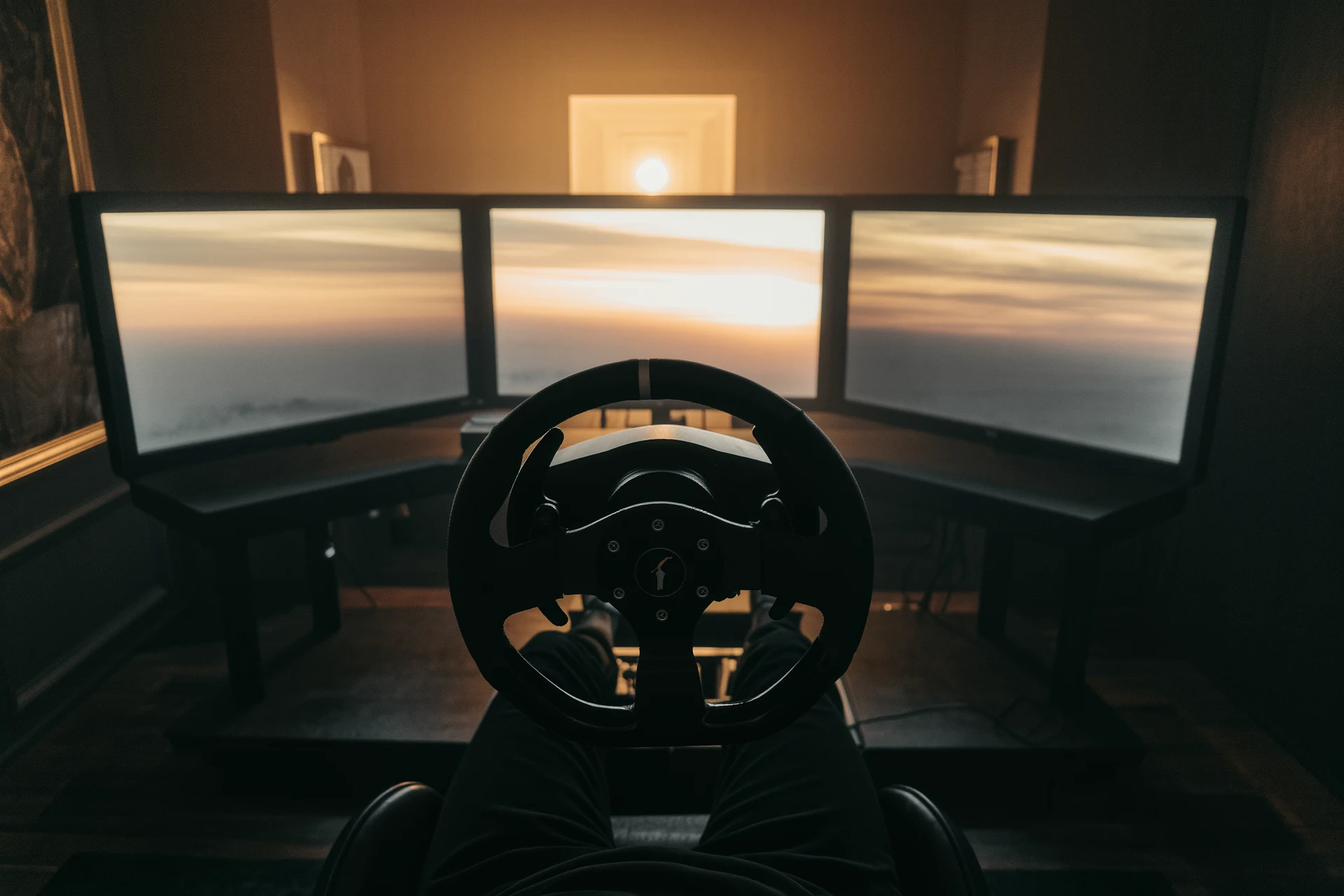
So, you’re thinking about diving headfirst into the world of full-motion racing simulators? That’s a great question! Basically, a full-motion racing simulator is more than just a fancy screen and a steering wheel. It’s a sophisticated rig designed to physically move, tilt, and vibrate in sync with what’s happening on the virtual track. Think of it as bringing the G-forces, the bumps, and the subtle shifts of a real race car right into your living room. It’s about taking your sim racing from a spectator sport to a full-body experience.
Let’s break down what makes these rigs so special. At their core, they’re built to replicate the physical sensations of driving a race car. This isn’t just about seeing the track; it’s about feeling it in a way that traditional setups can’t match.
The Core Components: More Than Just a Seat
When you picture a full-motion simulator, the most obvious part is the seat. But it’s how that seat is supported and how it moves that defines the experience.
Motion Platforms: The Heart of the Experience
This is where the magic happens. Motion platforms use a variety of actuators and mechanisms to move the entire cockpit. We’re talking about systems that can pitch forward and backward to simulate acceleration and braking, roll side-to-side like a real car cornering, and even heave up and down to mimic bumps and undulations in the track. The sophistication of these platforms varies wildly, from simpler two-DOF (Degrees of Freedom) actuators to complex six-DOF systems that attempt to replicate every nuance of movement.
Understanding Degrees of Freedom (DOF)
- 2-DOF: Typically involves pitch and roll. This is the most common entry point and provides a significant improvement over static rigs, allowing you to feel acceleration, braking, and cornering forces.
- 3-DOF: Adds yaw, allowing the rig to twist. This can provide a more intuitive sense of turning and car rotation.
- 4-DOF: Often combines pitch, roll, yaw, and a heave axis (vertical movement). This starts to get much more immersive.
- 5-DOF or 6-DOF: These are the most complex and aim to replicate virtually every movement a car can make, acceleration, braking, cornering, bumps, even subtle chassis flex. These systems are typically very expensive and require significant space and power.
The Cockpit Itself: A Solid Foundation
The seat and the frame holding it are crucial. They need to be sturdy enough to withstand the forces generated by the motion platform without feeling flimsy or wobbly. Many full-motion rigs are built around dedicated racing chassis, often made from steel or aluminum, that provide a solid mounting point for the seat, steering wheel, pedals, and the motion system itself.
Integrated Electronics: The Brains of the Operation
Beneath the surface, there’s a lot of complex electronics involved. This includes the motors or hydraulics that drive the motion platform, the control boards that translate game data into physical movements, and the power supply needed to run it all. This is what makes sure the “lean” you feel in a corner isn’t just a random tilt, but a precise translation of the forces your virtual car is experiencing.
Why Go Full Motion? The Benefits Beyond the Novelty
It’s easy to see full-motion simulators as a high-tech toy, but there are genuine, practical benefits for sim racers who want to take their performance and enjoyment to the next level.
Enhanced Immersion: It’s About Feeling the Drive
This is the most obvious and arguably the biggest draw. When the simulator moves with the car, your brain starts to believe it’s actually there.
Engaging More Senses for Deeper Realism
Traditional sim racing relies heavily on visual and auditory feedback. Full motion adds a third, crucial sensory input: proprioception, your sense of your body’s position and movement. This allows for a much deeper level of immersion, making you feel more connected to the virtual environment and the car.
The Psychological Impact of Physical Feedback
Feeling the subtle vibrations of the road, the sudden jolt of hitting a curb, or the sensation of the car’s weight shifting in a corner can significantly enhance your mental engagement. This heightened awareness can lead to a more focused and rewarding sim racing experience, making those long races feel less like sitting in a chair and more like actually being in the driver’s seat.
Improved Performance: Feeling Your Way to Faster Laps
This is where the practicality really shines. The physical feedback provided by a motion simulator can directly translate into quicker lap times and more consistent driving.
Intuitive Understanding of Car Dynamics
Instead of relying solely on visual cues to understand what the car is doing, you can feel it. This means you can better interpret tire grip levels, understand when the car is starting to slide, and feel the weight transfer during braking and cornering. This intuitive understanding of physics is invaluable for driving performance.
Learning and Adapting Faster
With physical feedback, you can often identify and correct mistakes much faster. For example, feeling the rear end start to step out before you see it on screen allows for quicker steering corrections. This rapid feedback loop accelerates the learning process, helping you master new cars and tracks more efficiently.
Reduced Reliance on Pure Visual Cues
In real racing, drivers use a combination of sight, sound, and feel. Motion simulators allow sim racers to tap into that feel, which can be particularly beneficial in situations where visual cues might be ambiguous or distracting, such as low-light conditions or close racing within a pack.
Training and Practice: Simulating Real-World Scenarios
For those who dream of or even participate in real-world motorsport, full-motion simulators offer an unparalleled training tool.
Cost-Effective Practice for Race Skills
Real-world track time is incredibly expensive. Full-motion simulators provide a highly realistic environment to hone racecraft, practice car control, develop race strategies, and work on consistency without the prohibitive costs associated with professional series.
Developing Muscle Memory for Race Scenarios
The physical nature of these simulators helps build crucial muscle memory. Repeatedly practicing specific maneuvers, such as throttle control out of a corner or braking points, can start to become second nature, just like it would in a real car. This is invaluable for training your body to react instinctively under pressure.
Simulating Specific Race Conditions
Many advanced simulators can be programmed to replicate specific track conditions, weather, or even car setups. This allows drivers to practice in scenarios they might encounter on race weekends, preparing them for anything the real racing world throws at them.
Types of Full-Motion Simulators: From DIY to Bespoke
The world of full-motion simulators isn’t a one-size-fits-all market. There’s a range of options to suit different budgets, skill levels, and technical proficiencies.
DIY and Budget-Friendly Options: Getting Your Feet Wet
For those on a tighter budget or who enjoy a good project, there are ways to get into motion simulation without breaking the bank.
Building Your Own Motion Platform
This is a popular route for dedicated enthusiasts. With a good understanding of electronics, mechanics, and software, individuals can build their own motion platforms using components like industrial actuators, Arduino boards, and custom software. This route offers the most customization but requires significant technical skill and time investment.
Modifying Existing Rigs to Add Motion
Some people start with a robust static racing rig and add a motion platform underneath it. This can be a more streamlined approach than building everything from scratch, but still involves integration and setup.
Entry-Level Motion Platforms
There are manufacturers that offer simpler, more affordable motion platforms that can be paired with existing cockpits. These often focus on 2-DOF or 3-DOF and offer a significant step up from static setups.
Mid-Range and Pre-Built Solutions: Convenience and Performance
If DIY isn’t your thing, or you want a more polished experience out of the box, there are excellent pre-built options available.
Dedicated Motion Simulators from Manufacturers
Companies specialize in building complete full-motion simulator packages. These often come as a fully integrated unit, including the chassis, seat, motion system, and sometimes even displays and peripherals. They offer a high degree of performance and reliability, designed for a plug-and-play experience.
Modular Systems for Upgradability
Some manufacturers offer modular systems where you can start with a basic motion platform and then upgrade to a more advanced version or add more DOF later. This can be a good compromise for those who want to invest over time.
High-End and Bespoke Systems: The Ultimate Immersion
For the truly dedicated and those with substantial budgets, the sky’s the limit.
Professional-Grade 6-DOF Simulators
These are the types of systems you might find in professional motorsport training facilities or for high-end sim racing teams. They use sophisticated hydraulics or powerful electric actuators to provide unmatched realism and fidelity.
Custom-Designed and Engineered Solutions
Some companies offer bespoke simulator design and building services. This allows for complete customization to a user’s specific needs, space constraints, and performance expectations, often involving extensive engineering and testing.
The Technical Side: What Makes it Move?
Understanding the underlying technology can help you appreciate the complexity and cost involved in these systems. It’s not just about plugging in a few wires; there’s a significant engineering effort involved.
Actuator Technologies: The Muscle of the Simulator
The way the simulator moves is dictated by the type of actuators used. Each has its pros and cons in terms of performance, cost, and maintenance.
Electric Actuators (Ball Screw or Belt Driven)
Electric actuators are becoming increasingly popular due to their precision, speed, and relatively low maintenance.
- Ball Screw Actuators: These use a threaded rod and nut to convert rotational motion into linear motion. They offer high precision and force but can be slower and noisier than other electric options.
- Belt-Driven Actuators: These use a belt and pulley system, similar to those found in 3D printers or CNC machines. They can be very fast and quiet but might have limitations in terms of force and long-term durability compared to ball screw systems.
- Linear Actuators: A broader category that encompasses those using screw drives or even rack and pinion systems, all driven by electric motors. They are known for their reliability and relatively simple integration.
Hydraulic Systems
Hydraulic systems use pressurized fluid to move cylinders, providing immense force and smooth motion.
- Pros: Incredible power and responsiveness, capable of simulating extreme G-forces. often used in high-end professional simulators.
- Cons: Can be noisy, prone to leaks, require regular maintenance, and often consume more power and generate more heat. They also tend to be more complex and expensive to set up.
Pneumatic Systems
Pneumatic systems use compressed air to drive actuators.
- Pros: Can be very fast and responsive.
- Cons: Can be noisy due to air exhaust, require an air compressor, and maintaining consistent pressure can be challenging for precise movements. Less common in modern high-end sim racing rigs.
Software and Control: Translating Game Data into Motion
The simulator needs a way to “talk” to the racing game and translate what’s happening on screen into physical movements. This is where specialized software comes in.
Motion Cueing Software
This software intercepts data from the racing game (like pitch, roll, yaw, acceleration, braking, etc.) and converts it into commands for the motion platform’s actuators. The quality of this software is critical for how realistic and nuanced the motion feels. Factors like filtering, latency, and the ability to tune specific effects play a big role.
Tuning and Calibration
Getting the motion just right requires a lot of tuning. Sim racers often spend hours adjusting parameters in the motion cueing software to fine-tune how the simulator responds to different cars, tracks, and driving styles. This can involve adjusting the intensity of forces, the delay in response, and how specific effects like bumps or vibrations are simulated.
Integration with Simulators
Not all racing simulators (games) are created equal when it comes to exposing their internal data for motion platforms. Some games have open APIs or readily available plugins, while others are more closed systems, requiring more effort to extract the necessary telemetry data.
Considerations Before You Buy: Is It Right for You?
Jumping into a full-motion simulator is a big step, and it’s worth carefully considering the realities before investing. It’s not just about the initial purchase price; there are ongoing costs and logistical considerations.
Space Requirements: More Than Just a Corner
These rigs are not small. You need to consider not only the footprint of the simulator itself but also the space required for the motion to operate freely in all directions.
Dedicated Room vs. Multi-Purpose Space
Ideally, a simulator would have its own dedicated space. This avoids having to constantly move things around and allows for a more permanent setup. If it’s in a multi-purpose room, consider how easily it can be stowed or moved if the space is needed for other activities.
Clearance for Motion Axes
For example, a pitching motion needs clearance in front and behind. A rolling motion needs space to the sides. Even heave can require a few inches of vertical clearance. Without adequate space, the simulator’s range of motion will be severely limited, diminishing the immersive experience.
Budget: It’s Not Always Cheap
While there are DIY options, quality full-motion simulators can represent a significant financial investment.
Initial Purchase Cost
This is the most obvious. Prices can range from a few thousand dollars for entry-level DIY components or basic pre-built platforms, to tens of thousands for high-end, professional-grade systems.
Ancillary Costs
Don’t forget the cost of a powerful PC to run the simulators and the motion software, a high-quality display (or VR headset), a good steering wheel and pedals, and potentially even audio equipment to complete the immersive setup. Power consumption for the motion system can also be a factor to consider in your electricity bill.
Maintenance and Longevity
Mechanical components, especially those with moving parts, will eventually require maintenance or replacement. Understanding the warranty and potential maintenance costs for a chosen system is important.
Technical Skill and Time Commitment: Are You Ready to Tinker?
Depending on the type of simulator, you might need a certain level of technical aptitude.
Setup and Configuration
Even “plug-and-play” systems will require some setup and calibration. DIY builds will certainly require a significant time investment in assembly, wiring, and software configuration.
Ongoing Tuning and Troubleshooting
Sim racing and motion simulation software are constantly evolving. You’ll likely spend time tuning settings for new games, new cars, or simply to refine the experience. Troubleshooting technical issues is also a part of the hobby.
Your Sim Racing Goals: What Are You Trying to Achieve?
Consider what you realistically want to get out of a full-motion simulator.
Casual Enthusiast vs. Competitive Sim Racer
If you’re primarily a casual gamer looking for a bit more fun, a simpler motion system might suffice. If you’re aiming for competitive online racing or even preparing for real-world events, a more advanced and precise system will be beneficial.
The Drive for Realism
Ultimately, the decision comes down to how much you value that extra layer of realism. If the idea of truly feeling the car on the track excites you and you’re willing to invest the time and resources, a full-motion racing simulator can offer an unparalleled sim racing experience.
Advanced Features and Future Trends: What’s Next?
The technology behind full-motion simulators is always evolving, pushing the boundaries of what’s possible in terms of realism and immersion.
Integrating Haptics and Tactile Feedback
Beyond just gross motor movements, there’s a growing interest in finer tactile sensations.
Beyond Simple Vibrations
This involves systems that can simulate the texture of the road surface, the feel of tire scrub, or even the impact of debris hitting the car. These are often achieved through dedicated haptic actuators integrated into the seat or floor.
Targeted Feedback Zones
Future systems might offer more targeted haptic feedback, allowing you to feel the engine vibration through the steering wheel and seat, while sensing the road surface through the pedals.
Enhanced Motion Cueing Algorithms
The software that translates game data into motion is a crucial area for development.
Latency Reduction and Predictive Motion
Reducing any lag between the game and the motion platform is key to a natural feel. Advanced algorithms are being developed to predict movements before they happen, making the feedback instantaneous.
Personalization and AI-Tuned Experiences
Imagine a simulator that learns your preferences and automatically tunes the motion to your liking, or even adjusts the feedback based on your driving style to help you improve. AI is starting to play a role in optimizing these experiences.
Integration with VR and AR
Combining motion with virtual and augmented reality offers the ultimate in immersion.
Deeper Visual and Physical Integration
When the physical motion perfectly syncs with what you see in a VR headset, the disconnect between your senses is minimized, leading to a profoundly believable experience.
Potential for Augmented Reality Overlays
While still in its early stages for sim racing, AR could eventually overlay real-world track data or car telemetry onto your view, further blurring the lines between virtual and reality.
The Evolution of Sim Racing as a Sport and Training Tool
Full-motion simulators are a significant part of sim racing’s progression from a niche hobby to a recognized competitive discipline and even a viable training ground for real motorsport. As these simulators become more sophisticated and accessible, they will likely play an even larger role in the future of both competitive gaming and driver development. Their ability to replicate real-world physics and forces makes them invaluable tools for practicing race craft, understanding car dynamics, and building the physical and mental resilience required in motorsport.
FAQs
What is a full motion racing simulator?
A full motion racing simulator is a system that replicates the experience of driving a race car by combining a racing seat, steering wheel, pedals, and a motion platform that moves in sync with the on-screen action.How does a full motion racing simulator work?
The simulator uses a combination of software, hardware, and motion technology to create a realistic driving experience. The software generates the visuals and physics of the racing environment, while the hardware includes the racing seat, steering wheel, and pedals. The motion technology moves the entire platform to simulate the feeling of acceleration, braking, and cornering.What are the benefits of using a full motion racing simulator?
Using a full motion racing simulator can help drivers improve their racing skills, as it provides a realistic and immersive experience without the risks associated with real racing. It can also be used for entertainment and training purposes.What are the different types of motion systems used in full motion racing simulators?
There are various types of motion systems used in full motion racing simulators, including electric, hydraulic, and pneumatic systems. Each type has its own advantages and limitations in terms of cost, complexity, and realism.Are full motion racing simulators only used for entertainment?
While full motion racing simulators are often used for entertainment purposes, they are also used for professional driver training, racing competitions, and research and development in the automotive industry.More from Racing Simulators
Future of Sim Racing
The future of sim racing: how AI tire models, mixed reality, cloud streaming, cheaper direct-drive hardware and the sim-to-real pipeline reshape motor…
F1 Sim Racing Guide
F1 sim racing guide: compare F1 24, iRacing, RSS and AMS2, choose the right wheel and load-cell brake, and master braking, ERS and tire strategy.…
Assetto Corsa Ultimate Guide
Assetto Corsa ultimate guide: the best mods (Content Manager, CSP, SOL, Pure), free cars and tracks, online racing, performance tuning, and AC vs ACC …