Immersive Racing: The Thrill of Motion Simulator Technology
So, why are motion simulators becoming such a big deal in racing? Simply put, they offer an incredible way to experience the G-forces, vibrations, and tactile feedback of driving a…
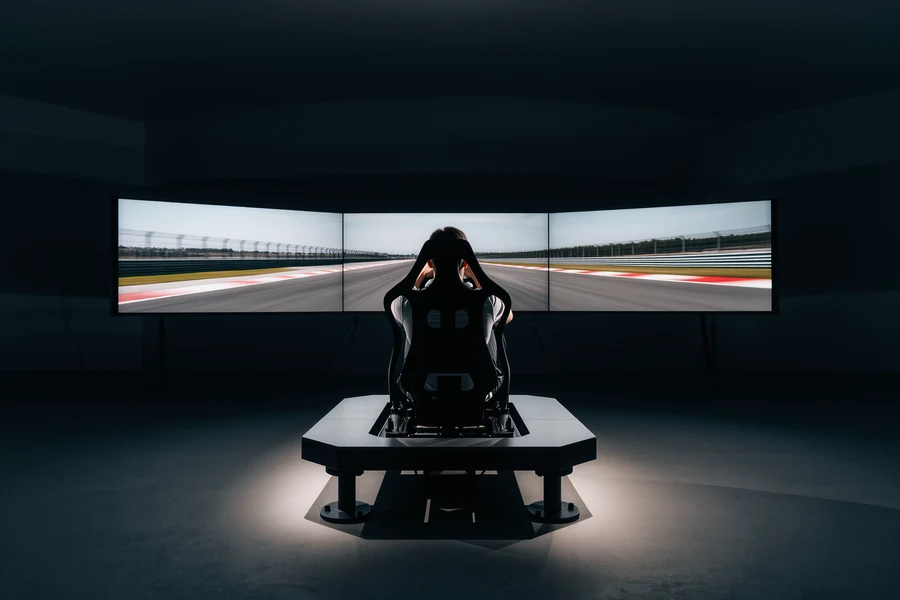
So, why are motion simulators becoming such a big deal in racing? Simply put, they offer an incredible way to experience the G-forces, vibrations, and tactile feedback of driving a race car without ever leaving your home or an arcade. It’s not just about what you see on screen anymore; it’s about what you feel. These systems literally move you, mimicking the bumps, turns, and acceleration that make real racing so thrilling.
This technology bridges the gap between traditional gaming and real-world driving. Whether you’re a seasoned sim racer looking for that extra edge or someone just curious about what it feels like to be in the cockpit, motion simulators bring a level of immersion that static setups just can’t match. They make the virtual real, transforming your living room into a dynamic and exciting racing environment.
Static sim racing is excellent, but it misses a crucial element: the physical sensations. Motion simulators add this back in, providing a richer, more accurate feedback loop to the driver. This isn’t just about fun; it’s about improving performance and understanding the car’s behavior.
Beyond the Visuals: Adding Another Dimension
When you’re racing, your brain isn’t just processing what your eyes see. It’s also taking in a wealth of information from your inner ear (vestibular system) and your body’s proprioceptors (sensors in your muscles and joints). These tell you about acceleration, braking, cornering forces, and even the texture of the track.
- Vestibular Input: Your inner ear detects changes in motion and orientation. In a real car, this tells you when you’re accelerating, braking hard, or drifting. A motion simulator replicates these changes, making your brain believe it’s actually experiencing those forces.
- Proprioceptive Feedback: This is about feeling the pressure on your body. Imagine being pushed into your seat under acceleration or leaning into a corner. Motion platforms provide this physical feedback, reinforcing the visual cues.
Without motion, your brain has to work harder to reconcile the visual information with the lack of physical feedback. This can lead to a disconnect, making it harder to anticipate slides or react instinctively.
Learning the Limits: Developing Car Control
One of the biggest benefits of motion simulation is its ability to help drivers understand and react to a car’s behavior at the limit.
- Feeling Understeer and Oversteer: In a static simulator, predicting a slide often relies solely on visual cues or the sound of tires. With motion, you feel the car starting to push wide (understeer) or the rear end beginning to step out (oversteer). This kinesthetic feedback is invaluable for learning how to catch and correct these situations.
- Weight Transfer Dynamics: As a car brakes, accelerates, or corners, its weight shifts. A motion platform can accurately simulate this weight transfer, giving you a better sense of how the car loads its tires. This understanding is key to smooth inputs and maximizing grip.
- Intuitive Reactions: When your body is being subjected to the same forces as it would in a real car, your reactions become more intuitive. You’re not just thinking about what to do; you’re feeling what needs to be done.
This heightened sense of immersion and feedback ultimately makes for a more engaging and effective training tool, whether you’re aiming for a virtual podium or preparing for a real track day.
The Tech Behind the Thrill: How Motion Simulators Work
Motion simulators aren’t just simple shakers; they’re sophisticated pieces of engineering designed to trick your brain into believing you’re in a real vehicle. The technology varies, but the core principle remains the same: translating virtual physics into physical movement.
From Software to Sensation: The Data Pipeline
The magic starts within the racing game or simulation software itself. These programs calculate incredibly detailed physics data: acceleration, braking forces, pitch, roll, yaw, road texture, and even impacts.
- Telemetry Extraction: Specialized software (often called “plugins” or “extractors”) pulls this real-time telemetry data direct from the game. This data stream is the lifeblood of the motion platform.
- Motion Cueing Algorithms: This is where the real intelligence lies. The raw telemetry data can’t just be directly translated into movement. For instance, if a game simulates a sustained 2G corner, a motion platform can’t replicate that indefinitely. It would quickly hit its physical limits. Motion cueing algorithms use clever tricks:
- Washout Filters: These gradually return the platform to its neutral position while maintaining the initial sensation of movement. For example, during a long corner, the platform might initially tilt significantly, but then slowly reduce that tilt while your brain still perceives the cornering force.
- Frequency Shaping: Different forces operate at different frequencies. High-frequency vibrations (like road texture) might be handled by small, rapid movements, while larger, slower movements simulate sustained acceleration or braking.
- Inertial Cues: The algorithms anticipate changes. If you suddenly brake, the platform might quickly pitch forward, and then gradually return to level, providing the sensation of inertia.
These algorithms are constantly refined to create the most realistic and convincing sensations within the physical limitations of the platform.
Types of Motion Platforms: Varieties of Verticality and Vibration
Motion platforms come in various configurations, each with its own advantages and costs. They are broadly categorized by their degrees of freedom (DOF).
- 2-DOF Platforms (Pitch & Roll): These are perhaps the most common entry point into motion. They typically have two actuators that control the pitch (forward/backward tilt for acceleration/braking) and roll (side-to-side tilt for cornering).
- Pros: Relatively affordable, significant immersion boost, good for conveying primary forces.
- Cons: Limited in simulating yaw (rotation around a vertical axis) or vertical heave (up/down movement for bumps).
- 3-DOF Platforms (Pitch, Roll, & Heave/Yaw): Adding a third actuator allows for more complex movements. This might be vertical heave (simulating bumps, dips, kerbs) or rotational yaw (simulating the sensation of the car rotating or drifting).
- Pros: Enhanced realism, better simulation of bumps and rotational forces, often more compact than higher DOF systems.
- Cons: Higher cost than 2-DOF, still can’t fully replicate all forces.
- 4-DOF Platforms (Pitch, Roll, Heave, & Yaw): These systems combine all the major rotational and vertical movements. They offer a very comprehensive simulation of vehicle dynamics.
- Pros: Highly immersive, excellent for capturing a wide range of forces, strong sense of being in the car.
- Cons: Significantly more expensive, often larger and heavier.
- 6-DOF Platforms (Hexapods): These are the gold standard in motion simulation, often used in professional training and research. They use six actuators that can move the platform in all six degrees of freedom: surge (forward/backward), sway (side-to-side), heave (up/down), pitch, roll, and yaw.
- Pros: Unparalleled realism, capable of simulating virtually any vehicle movement within its physical limits.
- Cons: Extremely expensive, large footprint, complex to set up and maintain.
- Tactile Transducers (Buttkickers): While not full motion platforms, these devices are worth mentioning as they complement any motion setup. They attach to seats or pedals and convert low-frequency audio signals (like engine rumble, tire scrub, gear shifts, or kerb impacts) into vibrations.
- Pros: Relatively inexpensive, adds significant tactile feedback even to static rigs, enhances immersion without needing full platform motion.
- Cons: No actual platform movement, just vibration.
The choice of platform depends heavily on budget, space, and the desired level of immersion. Even a basic 2-DOF system can transform the sim racing experience, while 6-DOF systems truly blur the lines between virtual and reality.
The Immersion Factor: Beyond Just Movement
While the physical movement is the star of the show, true immersion in sim racing involves more than just a moving seat. Integrating other technologies creates a holistic sensory experience that makes you forget you’re sitting in your living room.
Visual Realism: The Window to the World
No amount of motion will feel real if what you’re seeing doesn’t match up. The visual setup is paramount.
- Ultrawide or Triple Monitors: A wider field of view is crucial for peripheral vision, which helps with anticipating corners, spotting opponents, and reacting to slides. Ultrawide monitors (like 32:9 aspect ratio) provide a good single-screen solution, while triple monitors offer the most expansive and immersive field of view.
- Virtual Reality (VR): VR headsets take immersion to another level by completely enveloping your vision. When combined with motion, the effect can be incredibly convincing.
- Pros: Unmatched sense of presence, accurate depth perception, you can naturally look around the cockpit.
- Cons: Can cause motion sickness for some, lower resolution than monitors, comfort issues over long sessions, higher hardware demands.
- Consideration: If you get motion sickness easily, combining VR with motion can intensify it. Sometimes a less aggressive motion profile is needed for VR use.
- Projection: For dedicated sim rooms, large-scale rear or front projection can create a massive, enveloping visual. This often comes with significant space and cost requirements.
The goal is to eliminate as much of your real-world peripheral vision as possible, allowing your brain to fully buy into the virtual environment.
Audio Excellence: Hearing the Road and Engine
Sound is a critical, often underestimated, component of immersion. High-quality audio provides essential cues and enhances the overall sense of being there.
- Quality Headphones: A good pair of headphones isolates you from ambient noise and delivers clear, detailed audio. You’ll hear individual tire screeches, engine notes changing under load, and subtle impacts.
- Surround Sound: While headphones are often preferred for their isolation, a well-tuned surround sound system can contribute to a sense of spaciousness and positional audio, helping you locate other cars around you.
- Haptic Feedback through Sound: This is where devices like bass shakers (Buttkickers) come in. They take low-frequency audio signals and convert them into physical vibrations, complementing the motion platform. You might feel the engine rumble through your seat, the gear shifts, or the kerb impacts, even if the motion platform isn’t directly replicating them.
A truly immersive experience harmonizes what you see, feel, and hear.
Building Your Own Immersive Rig: A Practical Guide
Getting into motion simulation might seem daunting at first, but with a bit of planning, you can assemble a powerful and immersive setup. It’s about finding the right balance between budget, space, and desired performance.
Budgeting Your Build: Where to Invest
Motion rigs can range from a few hundred dollars for a basic seat mover to tens of thousands for a full 6-DOF system.
- Entry-Level (Under $2,000): Focus on a solid wheel/pedal set, a decent monitor, and perhaps a 2-DOF seat shaker (like a Next Level Racing Motion Platform V3 or similar). This gets you into motion without breaking the bank. Tactile transducers are a great addition here.
- Mid-Range ($2,000 – $10,000): This budget opens up more options:
- Higher-end direct drive wheelbases and load cell pedals.
- More robust 2-DOF or basic 3-DOF platforms (e.g. from PT Actuator, DOF Reality).
- Triple monitors or a good VR headset.
- A dedicated racing chassis or aluminium profile rig.
- High-End ($10,000+): At this level, you’re looking at professional-grade equipment:
- Advanced 4-DOF or 6-DOF platforms.
- Top-tier direct drive wheels (e.g. from Simucube, VRS DirectForce Pro) and hydraulic pedals.
- Custom-built cockpits, sophisticated audio, and advanced cooling.
- Professional-grade monitors or multiple 4K displays.
It’s wise to start with a good foundation (wheel, pedals, rig) and then upgrade the motion components as your budget and interest grow.
Choosing Components: Compatibility and Comfort
Every part of your rig plays a role in the overall experience.
- Rig/Chassis: This is the foundation. Aluminium profile rigs (e.g. from Sim Lab, Trak Racer, extruded aluminum from various suppliers) are highly recommended because they are infinitely adjustable, incredibly sturdy, and can easily accommodate motion platforms, shifters, and handbrakes. Pre-built racing seats with integrated mounts are also available. Ensure your chosen rig can handle the weight and forces of your motion platform.
- Wheel & Pedals: These are your primary interface with the car.
- Wheel: Direct drive wheels provide the most realistic and powerful force feedback. Belt-driven wheels are a good mid-range option, while gear-driven wheels are entry-level.
- Pedals: Load cell brake pedals are almost a requirement for serious sim racing as they measure force, not just travel, leading to much more consistent and realistic braking.
- Motion Platform: As discussed earlier, consider 2-DOF, 3-DOF, or 4-DOF based on your budget and desired realism. Read reviews, watch videos, and understand their limitations. Key factors include payload capacity, maximum pitch/roll/heave angles, and responsiveness.
- Display: Monitors (ultrawide, triple) or VR are the main choices. Consider resolution, refresh rate, and field of view.
- Audio: Good quality headphones or a surround sound system. Don’t forget tactile transducers like Buttkickers for added vibration.
- PC Hardware: Running modern racing sims on triple monitors or VR, especially with motion data being processed, requires a powerful PC with a strong CPU and a high-end graphics card.
Setup and Calibration: Tuning for Maximum Realism
Once you have your hardware, the setup and calibration are key to unlocking its full potential.
- Physical Mounting: Securely mount your motion platform to your rig, ensuring all cables are tidy and safely routed. Pay attention to balance and stability.
- Software Installation: Install all necessary drivers for your motion platform and the software that translates game telemetry into motion.
- Motion Software Calibration: This is arguably the most crucial step. Motion platforms typically come with software that allows you to adjust profiles for different games and cars.
- Gain Settings: These control the intensity of the movements. Start low and gradually increase to find a comfortable and realistic level. Too high can be nauseating or unrealistic.
- Filters: Adjust washout filters, smoothing, and other parameters to fine-tune how forces are represented.
- Specific Effects: Many software packages allow precise control over effects like road texture, kerb impacts, gear shifts, and braking/acceleration surges. Experiment to find what works best for you.
- Safety Checks: Always do a quick safety check before each session. Ensure nothing is obstructing the motion platform’s movement and that all electrical connections are secure.
Don’t be afraid to experiment with settings. What feels exhilarating to one person might feel overwhelming to another. Patience in calibration will pay off in a much more immersive and enjoyable experience.
The Future of Immersive Racing: What’s Next?
Immersive racing technology is far from stagnant. As computing power increases and new materials and actuator technologies emerge, we can expect even more realistic and accessible motion simulation.
Haptic Feedback Beyond Motion: Fine-Grained Sensations
Beyond gross motion, the future holds promise for even finer haptic feedback.
- Active Pedals and Steering Wheels: Imagine pedals that vibrate when ABS engages or a steering wheel that actively fights you when you hit a patch of ice, not just through force feedback but through localized vibrations. Companies are already working on sophisticated active pedal sets that can simulate hydraulic brake feel and even replicate specific tire slip events directly through your foot.
- Dynamic Seat Shapers: Rather than just tilting, seats could dynamically adjust their shape or inflate/deflate specific bladders to push into your body, mimicking sustained G-forces more accurately than just tilting.
- Temperature and Airflow Simulation: While niche, imagine systems that can blow air to simulate speed or even vary temperature to replicate braking zones or sunny pit lanes.
These advancements aim to engage more of the senses and provide even more nuanced feedback to the driver.
Accessibility and Miniaturization: Bringing Motion to More People
Currently, higher-end motion platforms can be large, heavy, and expensive. Future developments will likely focus on making this technology more accessible.
- Compact Designs: Smaller, lighter, and quieter actuators could lead to more compact motion platforms that fit into smaller spaces, making them more appealing for home use.
- Modular Systems: Easier-to-assemble and upgrade modular systems could reduce complexity and upfront costs.
- Integration with VR: As VR headsets become lighter, higher resolution, and more comfortable, the synergy with motion platforms will only grow, potentially leading to integrated VR-motion solutions.
- Affordable Actuator Technology: As the technology matures and manufacturing scales, the cost of powerful and responsive actuators will likely decrease, making advanced motion more affordable for the average consumer.
The dream is for highly realistic motion simulation to be as common and accessible as a good quality steering wheel and pedal set is today, opening up the thrilling world of immersive racing to a far broader audience. The journey from static screens to full bodily immersion is an exciting one, and we’re still just scratching the surface of what’s possible.
FAQs
What is a motion simulator racing?
Motion simulator racing is a type of racing simulation that uses a motion platform to replicate the movements and sensations experienced during real-life racing. It combines virtual reality technology with a motion system to provide a realistic and immersive racing experience.How does a motion simulator racing work?
A motion simulator racing system typically consists of a motion platform, a racing seat, steering wheel, pedals, and virtual reality headset. The motion platform is equipped with actuators that move the seat in sync with the virtual environment, providing the sensation of acceleration, braking, and cornering.What are the benefits of using a motion simulator racing system?
Motion simulator racing systems allow drivers to practice and improve their racing skills in a safe and controlled environment. They also provide a more immersive and realistic experience compared to traditional racing simulators, helping drivers to better understand vehicle dynamics and improve their performance on the track.What are the different types of motion simulator racing systems available?
There are various types of motion simulator racing systems available, ranging from entry-level systems with basic motion capabilities to high-end systems with advanced motion platforms and virtual reality technology. Some systems are designed for home use, while others are used in professional racing and training facilities.Are there any safety considerations when using a motion simulator racing system?
While motion simulator racing systems are generally safe to use, it’s important for users to follow the manufacturer’s guidelines for setup and operation. Users should also ensure that the system is properly maintained and that the racing environment is free from hazards to prevent accidents or injuries.More from Racing Simulators
Future of Sim Racing
The future of sim racing: how AI tire models, mixed reality, cloud streaming, cheaper direct-drive hardware and the sim-to-real pipeline reshape motor…
F1 Sim Racing Guide
F1 sim racing guide: compare F1 24, iRacing, RSS and AMS2, choose the right wheel and load-cell brake, and master braking, ERS and tire strategy.…
Assetto Corsa Ultimate Guide
Assetto Corsa ultimate guide: the best mods (Content Manager, CSP, SOL, Pure), free cars and tracks, online racing, performance tuning, and AC vs ACC …