Mastering the Art of Racing: The Power of Simulators
So, you’re curious about sim racing and whether it’s more than just a fancy video game. Can it really help you get better at driving a real race car? The short answer is a resoundi…
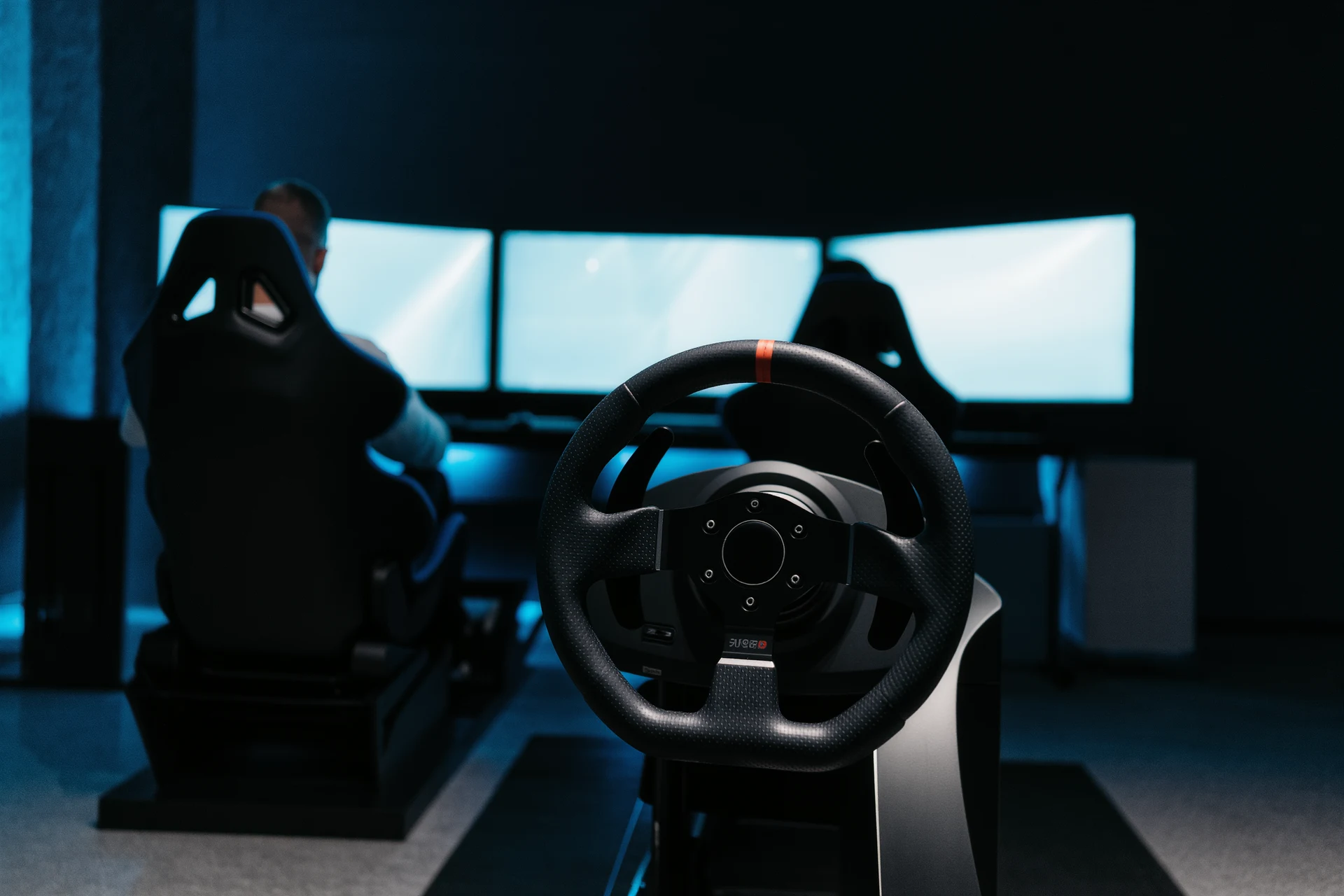
So, you’re curious about sim racing and whether it’s more than just a fancy video game. Can it really help you get better at driving a real race car? The short answer is a resounding yes. While it won’t replace the visceral feel of G-forces or the smell of burning rubber, a good sim racing setup is an incredibly powerful tool for honing your skills, understanding race craft, and even saving you some serious cash along the way. Think of it as a highly accessible, repeatable training ground that can dramatically accelerate your learning curve.
Getting into sim racing might seem a bit daunting at first. There are so many games, so many wheels, and the terminology can feel like a foreign language. But don’t let that stop you. The core idea is simple: replicate driving a car as closely as possible, and that’s where the real training begins.
What Constitutes a “Good” Sim Racing Setup?
You don’t need to spend a fortune to get started. The key is to find a setup that offers enough realism to be effective without breaking the bank.
The Essential Hardware: Beyond a Keyboard and Controller
While you can race with a keyboard or gamepad, it’s like trying to fly a plane with a joystick from a flight simulator. For any serious learning, you’ll want some dedicated hardware.
- Steering Wheel and Pedals: This is your absolute baseline. Look for wheels with force feedback. This is crucial because it simulates the forces you’d feel through a real steering wheel, the tire grip, the weight transfer, the road surface. Cheap, non-force feedback wheels just don’t provide this vital sensory input. Entry-level force feedback wheels from brands like Logitech or Thrustmaster are a great starting point. Aim for a wheel that uses gear or belt-driven force feedback rather than direct drive initially; it’s more affordable and still very effective for learning. Pedals are equally important. A two-pedal set (accelerator and brake) is the minimum. Three pedals (adding a clutch) become essential for certain types of racing, particularly open-wheel or historic cars where heel-and-toe downshifting is a must.
- Shifter (Optional, but Recommended): If you’re interested in cars that use a manual gearbox, a standalone shifter will add another layer of immersion and practice. H-pattern shifters mimic classic manual transmissions, while sequential shifters are more common in modern race cars.
- Monitor Setup: While a single monitor works perfectly well, the more immersive experience comes with triple monitors or an ultra-wide setup. This expands your field of view, allowing you to better judge braking points and track width, which directly translates to how you perceive the track in real life. VR (Virtual Reality) headsets offer the ultimate in immersion, but can be a barrier for some due to motion sickness or comfort.
Software: Choosing Your Digital Playground
The game or simulator you choose is just as important as your hardware. Some focus more on arcade-style fun, while others aim for strict scientific accuracy.
- The Big Players for Realism: For serious skill development, look at titles like iRacing, Assetto Corsa Competizione (ACC), and rFactor 2. These sims are built with physics engines that aim to meticulously replicate tire models, suspension geometry, aerodynamics, and engine dynamics. This means what you learn in them will have a much higher chance of translating to a real car.
- Accessibility vs. Simulation Depth: Gran Turismo and Forza Motorsport offer excellent experiences and are fantastic for learning basic driving principles, understanding track layouts, and getting a feel for different car types. However, their physics models, while good, are generally less granular and precise than the dedicated sims. They can be a great stepping stone into sim racing, especially if you already own one of these consoles.
- Content and Community: Consider the content offered. Do you want to race historical F1 cars? Modern GT3 machines? Rally cars? Some sims have vast libraries of official cars and tracks, while others rely heavily on user-generated content (mods). Community support is also vital; active forums and online communities can offer invaluable advice and help you troubleshoot any issues.
Your First Laps: Getting the Feel Right
Once you’ve got your gear set up, the real work begins. The goal isn’t to just drive fast, but to drive smoothly and consistently.
Calibrating Your Inputs: Finding Your Personal Tuning Dial
This is often overlooked but is absolutely critical. Your wheel and pedal sensitivity needs to be dialed in to match your preferences and the car you’re driving.
- Steering Sensitivity: Too high, and you’ll be jerky and oversteer. Too low, and you’ll be constantly making tiny, imprecise corrections. Most sims allow you to adjust this, and it’s worth spending time finding a comfortable setting. Many sim racers opt for a 1:1 steering ratio, meaning one degree of steering wheel rotation equals one degree of the virtual car’s wheels.
- Force Feedback Settings: Don’t just crank this to maximum. You need to feel the subtle cues the wheel is providing. If the feedback is too strong, you’ll miss the nuances. If it’s too weak, you won’t get the information you need about grip levels. Experiment to find a balance where you can feel what the tires are doing without it being overly fatiguing.
- Pedal Curves: You can often adjust how the game interprets your pedal inputs. Do you want a very light touch on the throttle, or a more aggressive response? For braking, some drivers prefer a more linear pedal feel, while others like a sharper initial bite. This allows you to tune your inputs to your personal driving style.
The Importance of Smoothness: The Foundation of Speed
In sim racing, just like in real racing, smooth inputs are paramount. Abrupt steering, sudden braking, or snapping the throttle can unsettle the car and lose you time.
- Smooth Steering Inputs: Imagine you’re stroking a cat. Gentle, flowing movements are key. Avoid sawing at the wheel. Focus on applying and releasing steering input progressively.
- Braking Technique: Learn to trail-brake. This means continuing to apply gentle brake pressure as you turn into a corner. It helps to shift weight to the front tires, improving grip and allowing you to turn more effectively. Abrupt braking before turning will cause the car to wash wide.
- Throttle Control: Be gentle on the exit of corners, especially when the tires are cold or out of their optimal temperature range. Too much throttle too early will lead to wheelspin, which is wasted energy and lost time.
Beyond Just Driving: Sim Racing as a Strategic Tool
Sim racing isn’t just about mastering car control. It’s also a fantastic environment to develop your race craft and strategic thinking, often in live racing scenarios.
Race Craft: Learning the Dark Arts (and the Clean Arts) of Racing
This is where sim racing truly shines. It allows you to practice scenarios that would be incredibly dangerous or prohibitively expensive in real life.
Overtaking and Defending: The Chess Match of the Track
- Overtake Practice: Being able to pass cleanly and effectively is a hallmark of a good driver. In sims, you can practice lunges into braking zones, dive-bombs (risky, but sometimes necessary!), slipstreaming, and setting up passes on the straights over and over again without real-world consequences. You learn to read the other car’s intentions and find the right moment.
- Defensive Driving: Learning to block effectively without being penalized (in sim racing, rules are often enforced!) is also a crucial skill. You can practice positioning your car to deny the opponent a clean line, forcing them to back off or try a more difficult maneuver. This teaches you to anticipate their moves and protect your position.
- Wheel-to-Wheel Action: Racing against other drivers online is essential. You’ll experience the pressure of being alongside another car, the need for precise car placement, and the challenges of navigating traffic. This builds confidence and teaches you how to manage risk in close-quarters racing.
Race Strategy Development: The Thinking Driver’s Advantage
Race strategy is more than just pit stops. It involves understanding tire wear, fuel consumption, and how to manage your pace throughout a race.
Tire Management: The Key to Consistency
For longer races, managing tire wear is critical. You can learn to drive in a way that minimizes degradation, preserving grip for the later laps.
- Finding the Optimal Slip Angle: Tires have an optimal slip angle, the difference between the direction the wheel is pointing and the direction the car is actually moving. Driving with too much slip angle scrubs your tires away much faster. Simulators, with their detailed tire models, allow you to feel and learn how to minimize this.
- Slowing Down to Speed Up: This sounds counterintuitive, but sometimes driving slightly slower in certain sections to reduce heat and wear in your tires can save you significant time over a race stint. You can experiment with different driving lines and braking points to see how they affect tire wear in your simulator.
- Fuel Management: For endurance races, fuel is a significant factor. Simulators often accurately model fuel consumption, allowing you to practice hypermiling techniques and determine optimal fuel loads for your strategy. You can learn how to feather the throttle, short-shift, and minimize high-RPM driving to save fuel.
Pit Stop Strategy: The Art of the Quick Stop
While you don’t physically change tires in a sim, the pit stop timing is crucial.
- When to Pit: Understanding when to pit based on tire wear, traffic, and fuel load is a strategic decision. You can run simulations of different pit stop scenarios to see which yields the best result.
- Undercutting and Overcutting: These are common racing strategies. An “undercut” involves pitting earlier than your rival to gain clear track ahead, hoping your fresh tires will allow you to build a gap. An “overcut” involves staying out longer, on older tires, in the hope that your rival will get stuck in traffic after their stop. You can test these extensively.
The Physics of Realism: How Sims Mimic the Real World
The progress in sim racing technology has been astounding. Modern simulators are remarkably sophisticated in their attempts to replicate the complex physics of a real race car.
Tire Models: The Heart of the Simulation
Tire behavior is arguably the most critical element of any racing simulator. It dictates grip, handling, and how the car feels.
Understanding Tire Grip and Slip
- The Magic Triangle of Grip: At its most basic, tire grip is a triangle consisting of braking, acceleration, and cornering forces. You can only use a certain amount of total grip at any given moment. If you apply too much of one force, you have less available for the others. Simulators try to model this relationship accurately.
- Heat and Pressure: Tire temperatures and pressures are simulated. Overdriving, sliding, or even just prolonged periods of high load can cause tires to overheat, reducing grip. Conversely, underinflated tires can also lead to poor handling. Learning how to keep your tires in their optimal temperature window (often called the “sweet spot”) is a critical skill.
- Road Surface Interaction: The simulation’s ability to replicate how tires interact with different track surfaces, painted lines, kerbs, gravel traps, and tarmac variations, adds another layer of realism. Feeling how the car reacts to these different surfaces can help you understand how to exploit them or avoid them in real life.
Aerodynamics: The Invisible Force
For high-performance cars, aerodynamics plays a massive role in how they corner, brake, and accelerate.
Drag and Downforce Explained
- Drag: This is the resistance the car encounters as it moves through the air. On straights, drag is a major factor limiting top speed. Simulators model drag based on the car’s shape and speed.
- Downforce: This is the force that pushes the car down onto the track, increasing the load on the tires and thus their grip. It’s generated by wings, diffusers, and the overall shape of the car. Simulators will replicate how downforce changes with speed and how it affects the car’s balance.
- Aerodynamic Wash/Dirty Air: Following another car closely disrupts the airflow over your own car, reducing downforce. This is known as “dirty air” and is a significant factor in racing. Simulators that accurately model this create a much more realistic racing experience and teach you how to manage the challenges of racing in traffic.
Beyond the Virtual Track: Transferring Skills to Reality
This is the ultimate question, isn’t it? Can what you learn on a screen truly make you a better driver on asphalt? For many drivers, the answer is a resounding yes, provided you approach it correctly.
Learning the Racing Line: The Fastest Path
Every racetrack has an optimal “racing line”: the path that maximizes cornering speed and minimizes braking.
Finding and Mastering the Apex
- Vision and Braking Points: Simulators train your eyes to look far ahead and identify key markers (like kerbs, marshal posts, or even cracks in the tarmac) that signal braking points and turn-in points. This visual practice is invaluable.
- Trail Braking and Mid-Corner Speed: You learn to carry brake pressure into the corner to load the front tires and maintain as much speed as possible through the apex. This technique is fundamental to quick cornering and is incredibly difficult to master without practice.
- Exit Traction: Understanding how much throttle you can apply on corner exit, and how to smoothly get the power down to accelerate out of the corner, is also honed in the sim.
Understanding Car Dynamics: The Feeling of Grip
Simulators allow you to explore the limits of grip in a safe environment.
Pushing the Envelope Without Fear
- The Point of No Return: You can, and should, push the car to its limits in a simulator. You can explore what happens just before the tires lose grip, what a slight oversteer feels like, and how quickly you can recover from a slide. This builds an intuitive understanding of grip that’s hard to get from simply driving fast on the road.
- Responsiveness to Inputs: You learn to feel how the car responds to subtle changes in steering, throttle, and braking. This sensitivity to input is crucial for smooth, controlled driving. A good sim will replicate the delay and feel of real-world inputs.
- Weight Transfer: You can feel how braking shifts weight to the front, how accelerating shifts it to the rear, and how cornering loads the outside tires. Understanding and being able to exploit this weight transfer is key to driving fast.
The Cost-Benefit Analysis: Sim Racing vs. Real-World Track Time
Let’s talk turkey. Real-world track days and racing are expensive. Sim racing offers a highly efficient and cost-effective alternative for skill acquisition.
The Financial Advantage
- Track Time Costs: An hour of track time with a racing school car can cost hundreds, if not thousands, of dollars. Crashes, which are inevitable for anyone learning, can add tens of thousands in repair bills.
- Sim Racing Investment: A decent sim racing setup, a good wheel, pedals, and a capable PC or console, can be purchased for a few hundred to a couple of thousand dollars. The cost per hour of practice is incredibly low, with some sims offering subscription models or one-time purchases.
- Wear and Tear: In a sim, the only “wear and tear” is on your components, which is minimal compared to a real car. Tire wear and fuel are simulated costs, not real ones.
Safety and Accessibility
- Zero Risk of Injury: You can spin out, crash, or even perform a rollover in a simulator without any risk of physical harm. This allows for fearless experimentation and learning.
- Time and Location Independence: You can practice whenever you want, wherever you want, without the need to schedule track time or travel. This flexibility is a massive advantage for busy individuals.
- Learning New Tracks: New tracks can be learned and mastered in the sim before you even set foot on them in real life, saving you valuable time and improving your immediate performance during actual track sessions.
In conclusion, sim racing is far more than just a virtual pastime. When approached with the right mindset and equipment, it’s a potent tool for developing real-world driving skills, understanding race craft, and strategically improving your performance on the track. It’s an investment in your driving future, offering a safe, accessible, and incredibly effective way to master the art of racing.
FAQs
What are racing simulators?
Racing simulators are video games that aim to simulate the experience of driving a race car. They often feature realistic graphics, physics, and vehicle handling to provide an immersive experience for players.What equipment is needed for a racing simulator?
To set up a racing simulator, players typically need a gaming console or PC, a racing wheel and pedals, and a display such as a TV or monitor. Some players also use additional accessories like a racing seat, shifter, and virtual reality headset for a more realistic experience.What are the benefits of using a racing simulator?
Racing simulators can help players improve their driving skills, learn race tracks, and understand vehicle dynamics. They also provide a safe and cost-effective way for racing enthusiasts to experience the thrill of driving high-performance cars.Are racing simulators used for professional training?
Yes, racing simulators are used by professional race car drivers and teams for training and practice. They can be a valuable tool for learning new tracks, testing vehicle setups, and honing driving techniques in a controlled environment.What are some popular racing simulators?
Popular racing simulators include titles like Gran Turismo, Forza Motorsport, Assetto Corsa, Project CARS, and iRacing. These games offer a wide range of cars, tracks, and gameplay modes to cater to different preferences within the racing community.More from Racing Simulators
Future of Sim Racing
The future of sim racing: how AI tire models, mixed reality, cloud streaming, cheaper direct-drive hardware and the sim-to-real pipeline reshape motor…
F1 Sim Racing Guide
F1 sim racing guide: compare F1 24, iRacing, RSS and AMS2, choose the right wheel and load-cell brake, and master braking, ERS and tire strategy.…
Assetto Corsa Ultimate Guide
Assetto Corsa ultimate guide: the best mods (Content Manager, CSP, SOL, Pure), free cars and tracks, online racing, performance tuning, and AC vs ACC …