Ultimate GT Racing Simulator: The Perfect Virtual Racing Experience
Thinking about upgrading your sim racing setup for some serious GT car action? You’re in luck! The ‘Ultimate GT Racing Simulator’ isn’t really a single, off…
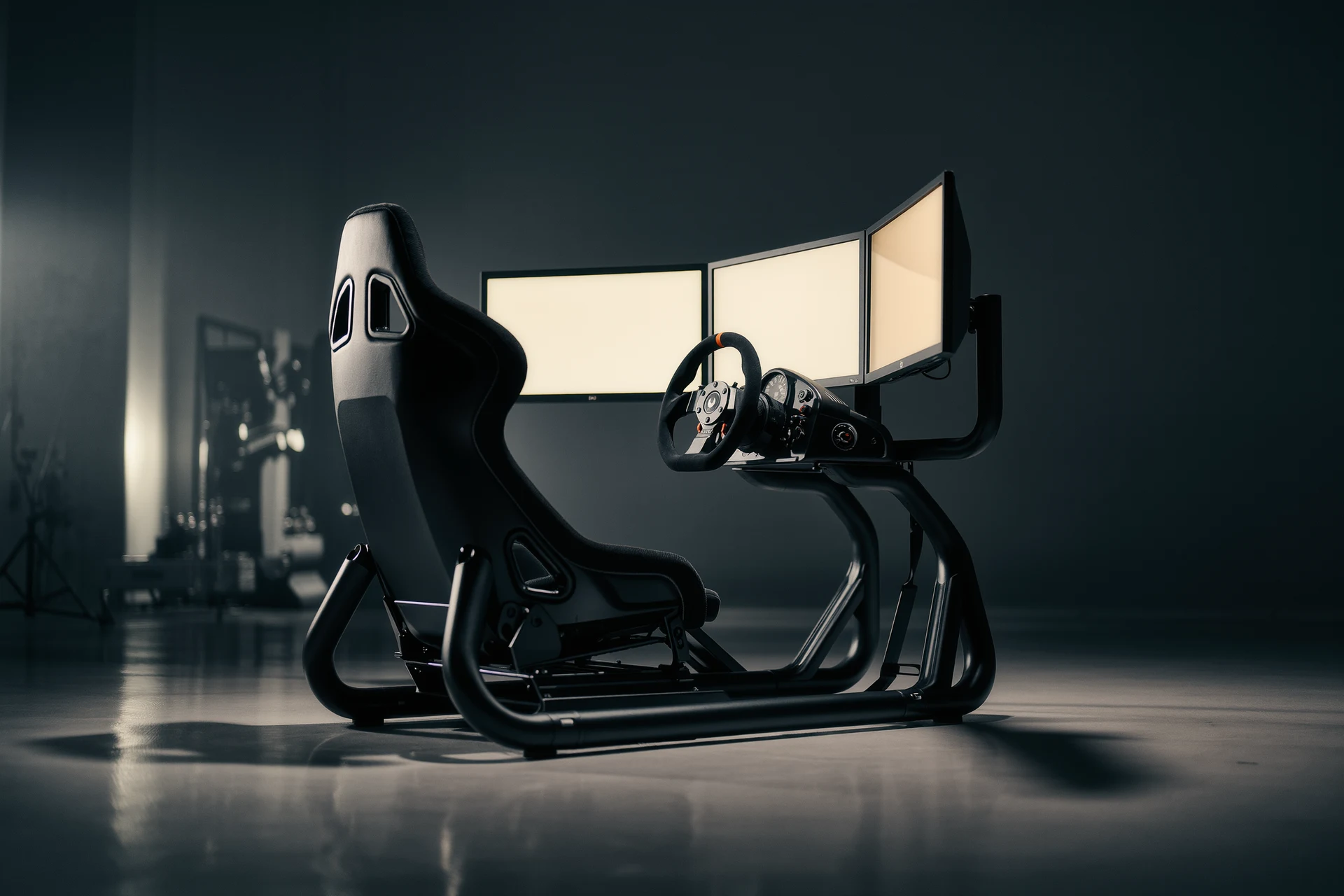
Thinking about upgrading your sim racing setup for some serious GT car action? You’re in luck! The ‘Ultimate GT Racing Simulator’ isn’t really a single, off-the-shelf product you can buy. Instead, it’s more about building a personalized rig that perfectly blends high-fidelity hardware, immersive software, and a dash of your own preferences. It’s about creating that precise feeling of being behind the wheel of a real GT3 or GTE machine, right in your own space.
So, what are we talking about when we say “ultimate GT racing simulator”? It’s a combination of elements that work together to trick your brain into believing you’re on the track. It’s not just about having the fastest PC; it’s about the holistic experience.
The Rig: Foundation of Immersion
This is where you’ll spend your time, so it needs to be comfortable, sturdy, and capable of replicating the forces you’d feel in a real car.
The Cockpit Chassis
This is the frame that holds everything. Think of it as the seat and steering column of your virtual race car.
- Formula Style vs. GT Style: While many racers love the open-wheel feel of Formula 1-style cockpits, for GT racing, a more enclosed or ‘tub’ style chassis often feels more authentic. These tend to place you lower, with your legs extended forward, mimicking the seating position of a road-based sports car. Brands like Sim-Lab, ASR, and MotionForce offer excellent options that are both robust and adjustable.
- Material Matters: Aluminum profiles are the go-to for most serious rigs. They’re strong, lightweight, and incredibly versatile for mounting all your components. Steel is also an option, often found in more budget-friendly or extremely heavy-duty setups.
- Adjustability is Key: You need to be able to dial in your driving position precisely. This means adjustable pedal trays, wheel mounts that can move in height and angle, and seat sliders. A comfortable position is crucial for long racing sessions.
The Seating
This is where comfort meets realism.
- Real Car Seats: Using an actual bucket seat from a road car or a dedicated racing seat can elevate the experience significantly. They provide the necessary support and that authentic feel. You can often find used racing seats for a good price, which can be a smart way to save some money while retaining quality.
- Sim-Specific Seats: Manufacturers like GT Omega and Playseat offer seats designed specifically for sim racing. These can be a good compromise if you don’t want to source a real car seat. They often integrate well with their chassis designs.
- Padding and Support: Ensure the seat has adequate padding and side bolstering. You want to feel that you’re ‘in’ the car, not just sitting on a flat surface.
The Pedals: Feeling the Drive
This is arguably the most crucial input device for GT racing. You need precise control over braking and throttle.
- Load Cell Brakes: This is non-negotiable for serious GT sim racing. Unlike simpler spring-based pedals, load cell pedals measure the force you apply, not just how far you press them. This allows for incredible modulation and is essential for replicating the feel of a real GT car’s powerful braking system, which often requires significant force. Brands like Heusinkveld, Fanatec, and VRS are leading the pack here.
- Throttle Sensitivity: While a load cell is dominant for brakes, the throttle should also offer smooth and predictable response. Many high-end pedal sets offer adjustable throttle resistance or can be configured to your preference.
- Clutch (Optional but Recommended for Realism): While many GT cars in modern sims are driven with paddle shifters only, having a functional clutch pedal adds a layer of realism, especially if you plan to race older GT cars or want to practice standing starts as they would happen in a real race.
The Wheel: Your Connection to the Road
This is how you steer, feel feedback, and interact with the car’s systems.
- Direct Drive Wheels: These offer the most realistic force feedback. The motor is directly connected to the steering shaft, meaning you get incredibly detailed and immediate feedback from the virtual track. Brands like Simucube, Fanatec (CSL DD/GT DD Pro), and Moza Racing have made direct drive much more accessible.
- Wheel Rim Choice: For GT racing, a round wheel rim or a D-shaped wheel is generally preferred over an open-wheel F1 style. Look for rims with a good diameter (around 300mm is common), comfortable grip, and well-placed buttons and shifters. Many high-end rims are inspired by real GT car wheels.
- Paddle Shifters: Responsive and tactile paddle shifters are a must. Magnetic shifters offer a satisfying ‘click’ and are generally more reliable and quicker than mechanical ones.
- Force Feedback Settings: This is where you tune the “feel.” You’ll want to adjust settings like gain, damping, and friction to match the characteristics of the specific car you’re driving and your personal preference. It’s a delicate balance between feeling detail and avoiding overwhelming clipping.
The Visuals: Seeing the Track
How you see the track impacts your immersion and your ability to react.
The Monitor Setup
This is how you’ll view the virtual world.
- Triple Monitors: For many sim racers, three screens offer the best balance of immersion and performance. They provide a wide field of view that mimics peripheral vision, making it easier to judge braking points and car placement. Ensure you match the resolution and refresh rate across all three monitors for a seamless experience.
- Ultrawide Monitors: A single ultrawide monitor can be a great compromise, offering a wider field of view than a standard monitor without the complexity and cost of a triple-screen setup. Look for monitors with a high refresh rate (144Hz or more) and low response times.
- Virtual Reality (VR) Headsets: VR offers unparalleled immersion. When done right, it’s like being transported directly into the cockpit. However, it requires a powerful PC to run smoothly at high resolutions and refresh rates, and some users find it can cause motion sickness. Brands like Meta (Quest 2/3), HP Reverb G2, and Valve Index are popular choices.
Graphics Card (GPU)
The GPU is your visual powerhouse.
- High-End Performance: To run complex GT racing simulations with high graphical settings and smooth frame rates, especially with triples or VR, you’ll need a powerful GPU. Think NVIDIA RTX 40 series or AMD RX 7000 series as a starting point for a truly “ultimate” experience.
- Resolution and Settings: The resolution of your monitor(s) and the graphics settings you choose will heavily influence the demands on your GPU. Higher resolutions and effects like anti-aliasing, shadows, and reflections will require more power.
The Sound: Hearing the Competition
Audio is often overlooked, but it’s a vital part of the racing experience.
Speaker System or Headset
This is how you’ll experience the engine notes and track ambience.
- Quality Headphones: A good pair of audiophile-grade headphones can deliver incredible detail in engine sounds, tire squeal, and environmental noise. This allows for subtle cues about what the car is doing. Look for headphones with good soundstage and clarity.
- Surround Sound System: A well-placed 5.1 or 7.1 surround sound system can enhance the feeling of being in the car, with engine noise coming from behind and other cars creating a sense of spatial awareness. You can even integrate tactile transducers (bass shakers) to the system for an even more immersive feel.
Audio Settings
- In-Game Audio: Most modern racing simulators have highly detailed audio engines. Experiment with the in-game audio settings to find the best balance between engine rumble, tire noise, and external sounds.
- Personal Preferences: Some racers prefer to focus on the engine sound, while others want to hear every bit of tire slip and aerodynamic noise. It’s about finding what helps you drive best.
Software: The Heart of the Simulation
Hardware is only part of the equation. The software you use dictates the realism, physics, and variety of your GT racing experience.
Racing Simulators: The Driving Force
These are the games themselves, and the choice has a huge impact.
The Heavyweights of Realism
When we talk about “ultimate GT racing simulator,” we’re usually talking about titles that push the boundaries of physics simulation.
- iRacing: This is often considered the gold standard for competitive online racing. Its subscription model and focus on accurate track scans, car physics, and tire models make it incredibly realistic. The GT3 and GT4 categories are exceptionally well-represented and highly competitive. It’s known for its structured competition and safety rating system, which encourages clean racing.
- Assetto Corsa Competizione (ACC): Developed specifically for the GT World Challenge series, ACC offers a laser-scanned representation of tracks and highly detailed physics for GT3 and GT4 cars. The emphasis here is on replicating the actual experience of driving these cars in specific championships. It’s known for its stunning visuals and detailed weather effects, adding another layer of realism.
- Automobilista 2 (AMS2): While not exclusively GT-focused, AMS2 has rapidly improved its GT offerings and boasts impressive physics and force feedback. It’s praised for its diversity of cars and tracks, often using a more dynamic track surface and weather system that evolves throughout a race. Its VR implementation is also considered top-tier by many.
Other Notable Mentions
While the above are often the top contenders, other sims offer valuable GT experiences:
- Assetto Corsa (Original): Even though it’s older, with the right mods, the original Assetto Corsa can still offer a fantastic GT experience. Its flexibility with user-created content is its major strength, allowing for a vast array of GT cars and tracks that might not be found elsewhere.
- rFactor 2: Known for its advanced tire model and dynamic track surface, rFactor 2 offers a deep simulation that can be incredibly rewarding. While its GT content might not be as polished out-of-the-box as ACC, the underlying physics are top-notch.
Customization and Mods: Personalizing Your Experience
For some, “ultimate” means having the freedom to tweak and expand.
Track and Car Mods
- Expanding Your Library: For sims like Assetto Corsa and rFactor 2, the modding community is a lifeline. You can find incredibly high-quality fan-made tracks and cars, including many iconic GT circuits and vehicles that might not be officially licensed. This dramatically increases the replayability and variety of your simulator.
- Quality Control: Be discerning with mods. Some are incredible, while others can be unoptimized or lack proper physics. Look for well-regarded modders and communities.
Physics Tweaking
- Fine-Tuning: In some sims, advanced users can even tweak car setups and some physics parameters. This allows for a deeper understanding of vehicle dynamics and the ability to tailor the driving experience precisely to your liking. This is more for the hardcore sim enthusiast.
The Immersion Factor: Beyond the Hardware
Having the best gear is great, but true immersion comes from making it all feel real.
Force Feedback (FFB) Tuning: Dialing in the Feel
This is where you translate the virtual world into physical sensations.
Understanding Your FFB
- Clipping: This is when your wheel is receiving more force feedback data than it can physically reproduce. It feels like the forces are “maxed out” and you lose fine detail. Your FFB settings should aim to avoid clipping while maximizing detail.
- Gain vs. Detail: The ‘gain’ setting controls the overall strength of the force feedback. Too high, and you clip. Too low, and you miss out on subtle cues. The goal is to find a sweet spot where you feel the road texture, tire slip, and weight transfer without overwhelming your senses.
- Damping and Friction: These effects can add weight and inertia to the wheel, mimicking the resistance you’d feel in a real car. Too much damping can make the wheel feel sluggish, while too little can make it feel too light.
Car-Specific Tuning
- Different Cars, Different Feelings: A heavy, powerful GT3 car will feel vastly different from a lighter GT4 car. You’ll need to adjust your FFB settings (and often in-car setups too) for each car to accurately replicate its unique characteristics.
- Experimentation: This is key. Spend time driving different cars on different tracks, making small adjustments to your FFB and observing how it affects the feel. Record your settings for different cars.
Audio Customization: Hearing the Nuances
Sound is a powerful driver of immersion.
Engine Notes and Transmission Whine
- Authenticity: The sound of a V8, V10, or even a V12 GT car is distinctive. High-quality audio in your simulator will capture these nuances, allowing you to know your engine’s revs just by listening.
- Upshift/Downshift Cues: The subtle sounds of gear changes and the roar of the engine as you accelerate are critical for driving rhythm and performance.
Tire and Chassis Sounds
- Tire Slip: The distinct sound of tires losing traction is a vital warning sign. Good audio will allow you to hear this before it becomes a major issue.
- Aerodynamic Noise: The rush of air around the car, especially at high speeds, adds to the sensation of speed and can provide visual cues when amplified.
- Suspension and Chassis Flex: Subtle creaks and groans can indicate what the car’s chassis is doing, especially over bumps or under hard cornering.
VR Specifics: Enhancing the Visual Immersion
If you’re using VR, there are extra layers to consider.
- Resolution and Refresh Rate: For VR, consistent high frame rates are paramount to avoid motion sickness. You’ll need a powerful PC and might need to dial back graphical settings to achieve playable frame rates at the headset’s native resolution.
- IPD (Interpupillary Distance) Adjustment: Correctly setting your headset’s IPD is crucial for clear vision and reducing eye strain.
- Heat and Comfort: VR headsets can get warm during long sessions. Proper ventilation and comfortable face gaskets can make a big difference.
The Software Ecosystem: Beyond Just Driving
A true GT racing simulator extends beyond just the driving application.
Setup and Telemetry Tools: Analyzing Your Performance
Understanding why you’re fast or slow is essential for improvement.
Car Setups
- Nuts and Bolts: Modern GT racing simulators offer incredibly detailed car setups. You can adjust tire pressures, suspension geometry, downforce levels, differential settings, brake bias, and much more. Learning how these adjustments affect the car’s behavior is a significant part of the sim racing journey.
- In-Game Adjustments: Many sims allow for real-time adjustments during a race, such as changing brake bias or tire pressures. This mirrors real-world pit stop strategies.
Telemetry Analysis
- Data is King: Telemetry software records vast amounts of data about your driving, speed, throttle, braking, steering angle, tire temperatures, suspension travel, and more, for every point on the lap.
- External Tools: Programs like VRS (Virtual Racing School), Motec, or just built-in sim telemetry viewers allow you to analyze this data. You can compare your laps to faster drivers, identify areas where you’re losing time, and understand cause-and-effect for setup changes.
- Understanding Tire Degradation: Crucial for endurance racing, telemetry helps you understand how tire wear affects grip and lap times, guiding your strategies.
Community and Competition: Racing with Others
Sim racing is often a social experience.
Online Racing Leagues
- Structured Competition: Joining online racing leagues provides a consistent and competitive environment. These leagues often have their own rules, race calendars, and driver rosters, offering a sense of belonging and purpose.
- GT-Specific Leagues: Many leagues focus specifically on GT racing, offering clean and challenging races that mirror real-world championships.
Sim Racing Platforms
- iRating and Safety Rating (iRacing): iRacing’s internal rating system encourages clean and skillful driving, creating a generally higher level of competition and sportsmanship.
- Endurance Races: Some leagues and platforms organize longer endurance races, simulating real-world GT challenges and requiring strategic pit stops, driver changes, and careful tire management.
Coaching and Learning Resources
- VRS and Other Services: Services like Virtual Racing School offer driver coaching, lap breakdowns, and setup guides that can significantly accelerate your learning curve and help you extract maximum performance from your simulator.
- YouTube and Forums: There’s a wealth of free information available through community content creators and sim racing forums, offering tips on driving techniques, setup advice, and general sim racing knowledge.
The “Ultimate” is Personal: Tailoring Your Rig
The definition of “ultimate GT racing simulator” isn’t a fixed point; it’s a journey tailored to your budget, your available space, and your personal preferences.
Budget Considerations
- Starting Point: Even a modest setup with a good wheel, pedals, and a single decent monitor can provide a very enjoyable GT racing experience for under $1000.
- Mid-Range: Investing in load cell pedals, a direct drive wheel, and potentially a triple monitor setup will push costs into the $2000-$4000 range.
- High-End/Enthusiast: For the absolute pinnacle, with advanced motion platforms, ultra-high-end wheels and pedals, and top-tier VR or multiple 4K monitors, costs can easily exceed $10,000.
Space Requirements
- Compact Setups: Many impressive sim rigs can be folded or disassembled for easier storage, making them suitable for smaller living spaces.
- Dedicated Room: A dedicated sim racing room allows for a more permanent and elaborate setup, potentially including motion platforms and multi-monitor configurations without compromise.
Your Driving Style and Goals
- Career Mode vs. Online Competition: Are you looking for a deep single-player career progression, or are you driven by head-to-head online battles? This will influence your choice of software and potentially hardware features like data logging.
- Specific GT Series: Do you have a favorite GT racing series (e.g. GT World Challenge, IMSA WeatherTech)? Opting for simulators that excel in those specific cars and tracks (like ACC for GT World Challenge) will enhance your experience.
- Learning and Improvement: If learning and improving is your primary goal, investing in telemetry tools and coaching resources will be more beneficial.
The Future of GT Sim Racing
The world of sim racing is constantly evolving.
Advancements in Hardware
- Motion Platforms: Integrated motion systems are becoming more sophisticated, replicating acceleration, braking, and cornering forces with increasing fidelity.
- Haptic Feedback: Beyond force feedback in the wheel, haptic transducers integrated into the seat and pedals are adding tactile sensations for road texture and impacts.
- Eye-Tracking: This technology is starting to be integrated, potentially allowing for more dynamic FOV adjustments and other immersive features.
Software Innovations
- AI and Social Integration: Expect more advanced AI drivers and better integration with online communities and social platforms.
- Procedural Generation and Real-World Data: The use of real-world scanning data and advanced procedural generation techniques will continue to push the boundaries of track and car realism.
- Cross-Platform Compatibility: While still a challenge, the trend towards greater cross-platform compatibility in multiplayer environments is likely to continue, expanding the player base for competitive events.
Ultimately, your “Ultimate GT Racing Simulator” is a project of passion. It’s about assembling the pieces that resonate most with you, building a system that provides that exhilarating feeling of driving a real GT car, lap after lap, all from the comfort of your home. It’s a journey, not just a destination, and the pursuit of that perfect virtual racing experience is what makes sim racing so compelling.
FAQs
What is a GT racing simulator?
A GT racing simulator is a type of racing simulator that is designed to replicate the experience of driving a high-performance GT (Grand Touring) car. It typically includes a racing seat, steering wheel, pedals, and a display screen to provide a realistic driving experience.What are the features of a GT racing simulator?
A GT racing simulator typically includes a high-quality racing seat with adjustable settings, a force feedback steering wheel, responsive pedals, and a large display screen for an immersive visual experience. Some simulators also feature motion platforms to simulate the feeling of acceleration, braking, and cornering.How does a GT racing simulator differ from other racing simulators?
GT racing simulators are specifically designed to replicate the experience of driving GT cars, which are known for their high performance and luxury features. This sets them apart from other racing simulators that may focus on different types of racing, such as Formula 1, rally, or endurance racing.What are the benefits of using a GT racing simulator?
Using a GT racing simulator can provide drivers with a realistic and immersive experience that can help improve their driving skills, decision-making abilities, and overall racing performance. It can also be a cost-effective way for racing enthusiasts to practice and enjoy the thrill of driving high-performance cars.Are GT racing simulators suitable for professional training and competition?
Yes, GT racing simulators are used by professional racing teams and drivers for training and practice. They can also be used for competitive esports events, where participants compete in virtual races using simulators to showcase their driving skills.More from Racing Simulators
Future of Sim Racing
The future of sim racing: how AI tire models, mixed reality, cloud streaming, cheaper direct-drive hardware and the sim-to-real pipeline reshape motor…
F1 Sim Racing Guide
F1 sim racing guide: compare F1 24, iRacing, RSS and AMS2, choose the right wheel and load-cell brake, and master braking, ERS and tire strategy.…
Assetto Corsa Ultimate Guide
Assetto Corsa ultimate guide: the best mods (Content Manager, CSP, SOL, Pure), free cars and tracks, online racing, performance tuning, and AC vs ACC …