The Ultimate Guide to Assetto Corsa Racing
So, you’re looking to dive into the world of Assetto Corsa? Excellent choice! It’s a fantastic simulator, and one that offers an incredibly deep and rewarding racing ex…
So, you’re looking to dive into the world of Assetto Corsa? Excellent choice! It’s a fantastic simulator, and one that offers an incredibly deep and rewarding racing experience. Whether you’re a complete beginner or looking to refine your skills, this guide will help you get the most out of your time behind the virtual wheel. The main thing you need to know upfront is that Assetto Corsa, at its core, is about realistic physics and driver immersion. It demands attention and practice, but repays it ten-fold with satisfying, challenging, and often thrilling racing.
Before you even think about setting lap records, there are a few foundational things to get sorted. Think of these as your building blocks for a more enjoyable and effective racing journey.
What You’ll Need
While you can play Assetto Corsa with a keyboard or a gamepad, for anything resembling a realistic or competitive experience, you’ll want a proper setup.
Wheel & Pedals
This is non-negotiable for serious sim racing. Force Feedback (FFB) is crucial for understanding what the car is doing. You don’t need to break the bank, but a decent entry-level wheel like a Logitech G29/G920 or a Thrustmaster T150/T300 will make a world of difference. Direct Drive wheels are the top tier, offering incredibly detailed FFB, but they come at a higher price point.
A Decent PC
Assetto Corsa isn’t the most graphically demanding sim out there, but to run it smoothly, especially with mods and other apps, you’ll want a reasonably modern CPU and GPU. Stable frame rates are important for consistent driving.
Monitor or VR
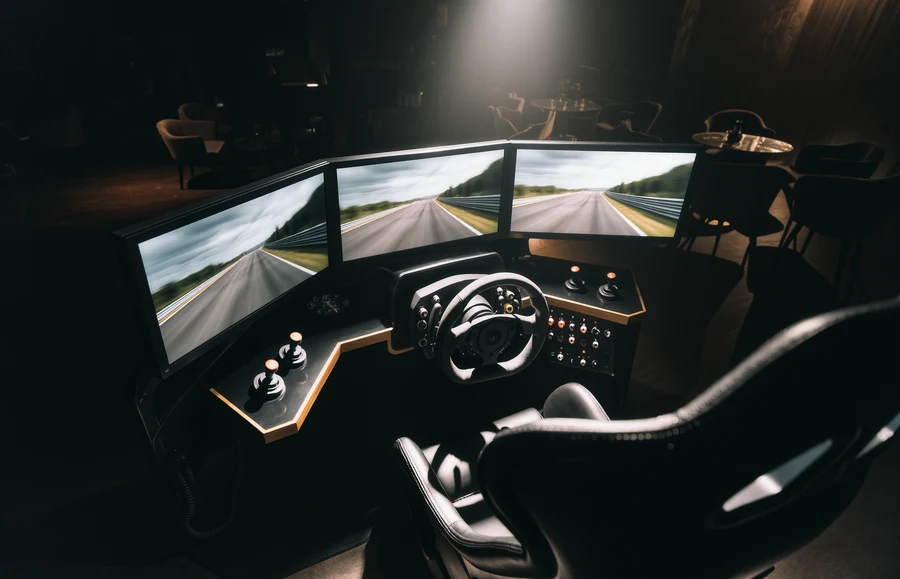
A single monitor is perfectly fine to start. A larger monitor or even a triple-screen setup will enhance immersion. If you have the hardware, VR is a game-changer for Assetto Corsa, the sense of presence and depth it provides is unparalleled.
Installation & Initial Setup
Once you’ve got Assetto Corsa installed, there are a few important settings to tweak before you hit the track.
Graphics Settings
Finding a balance between visuals and performance is key. Aim for a consistent frame rate above 60 FPS. Prioritize anti-aliasing and anisotropic filtering for better visual clarity. Experiment with settings like shadows and reflections, as these can be quite demanding.
Controller Settings
This is arguably the most important initial setup. Go into the “Controls” menu.
Calibrating Your Wheel
Ensure your wheel’s steering range matches the game’s settings (usually 900 degrees for most cars, though some race cars use less). Calibrate your pedals fully to ensure you get 0-100% input.
Force Feedback Settings
This is where the magic happens. Start with the “Gain” setting around 80-100% and adjust downwards if clipping (the FFB feeling like it’s bottoming out) occurs. Experiment with options like “Road Effects,” “Kerb Effects,” and “Slip Effects” to dial in the feel you prefer. Less can often be more when it comes to FFB effects, allowing you to feel the crucial information from the tires.
Understanding the Physics: More Than Just Steering
Assetto Corsa prides itself on its realistic physics engine. To truly master it, you need to understand how these physics translate into behavior on the track.
The Tire Model
This is the heart of Assetto Corsa’s simulation. The game’s “Pneumatic Tyre Model” (PTM) attempts to realistically simulate tire flex, heat, wear, and grip.
Slip Angle
Tires generate grip when they are slipping a tiny bit. This is called “slip angle.” Too much slip angle, and the tire loses grip completely. Learning to feel and manage this delicate balance is fundamental to fast driving. The FFB will communicate this, often becoming lighter as grip is lost, and heavier as it’s optimally loaded.
Tire Temperature & Pressure
These directly affect grip. Cold tires have less grip. Overinflated or underinflated tires will also perform sub-optimally. You’ll need to monitor these in telemetry during practice and adjust your setup accordingly.
Tire Wear
Tires wear out over a race stint, reducing grip. Understanding how different compounds wear on different tracks is crucial for race strategy.
Weight Transfer
Every car has weight, and as you accelerate, brake, and corner, that weight shifts. This is weight transfer, and it’s essential to control.
Longitudinal Weight Transfer
Braking shifts weight forward, increasing front tire grip but decreasing rear tire grip. Accelerating shifts weight backward, increasing rear grip but decreasing front grip. Smoothness is key here.
Lateral Weight Transfer
Cornering shifts weight to the outside tires, increasing their grip. Again, smooth transitions into and out of corners prevent sudden loss of grip.
Driving Techniques: Putting Theory into Practice
Knowing the physics is one thing; applying it on track is another. These techniques will form the core of your driving style in Assetto Corsa.
The Racing Line
This is the theoretical quickest path around a track. It involves maximizing your corner radius, carrying momentum, and setting yourself up for the next corner.
Apexes
The apex is the innermost point of a corner. Depending on the corner’s shape and what follows it, you’ll aim for an “early,” “late,” or “geometric” apex. Generally, late apexes are preferred for maximizing exit speed onto a straight.
Entry, Mid, Exit
Each corner can be broken down into these three phases. You brake and turn in (entry), manage the car through the middle of the corner (mid), and then apply power and straighten up (exit).
Braking Techniques
Braking isn’t just about stomping on the pedal. It’s a nuanced art.
Threshold Braking
Applying maximum brake pressure just before the tires lock up. This provides the most stopping power. Modern cars with ABS make this easier, but in Assetto Corsa, you often control it yourself.
Trail Braking
Gradually releasing brake pressure as you turn into a corner. This helps keep weight on the front tires for increased turning ability and helps rotate the car. It’s an advanced technique but incredibly rewarding once mastered.
Throttle Control
Just like braking, applying throttle smoothly is vital.
Progressive Throttle Application
Don’t just mash the pedal. Gradually feed in the throttle as you exit a corner, especially in powerful rear-wheel-drive cars. This prevents wheelspin and loss of control.
Modulating Throttle Mid-Corner
Sometimes you might need to lift off the throttle slightly mid-corner to prevent understeer or oversteer, or to adjust your line.
Car Setup: Tuning for Performance
While raw driving skill is paramount, a well-tuned car can shave precious tenths off your lap times. Assetto Corsa offers a deep setup menu.
Understanding the Basics
You don’t need to be an engineer, but knowing what each setting generally affects is a huge advantage.
Tire Pressures
Generally, adjust these to achieve optimal temperature across the tire’s surface. Too high, and the center wears; too low, and the edges wear.
Suspension
This is where you control how the car handles bumps and cornering forces.
Spring Rates & Dampers
Stiffer springs can improve responsiveness but make the car more susceptible to bumps. Dampers control the movement of the springs. Rebound controls how quickly the wheel extends, while bump controls how quickly it compresses.
Anti-Roll Bars (ARB)
These connect the left and right suspension and affect roll stiffness. Stiffer front ARB increases understeer; stiffer rear ARB increases oversteer.
Aerodynamics
For cars with wings, these settings dramatically impact grip versus drag.
Wing Angles
More wing angle means more downforce (grip) but also more drag (less top speed). Find the balance for each track.
Iterative Testing
Don’t change multiple settings at once. Make one change, do a few laps, analyze the data (telemetry), and then decide if it helped or hindered. This systematic approach is key.
Practice and Progression: The Path to Improvement
Sim racing, like real racing, requires dedication and a structured approach to practice. Don’t expect to be an alien overnight.
Lapping and Consistency
The first step is simply putting in laps. Learn the track, learn the car. Focus on hitting your marks and maintaining a consistent pace.
Reference Points
Identify braking points, turn-in points, and apexes. These visual cues will help you be consistent.
Smoothness Over Speed
Initially, prioritize smooth inputs over outright speed. Speed will come naturally with smoothness. Jerky inputs upset the car.
Utilizing Telemetry and Apps
Assetto Corsa, especially with content manager, offers a wealth of data.
Lap Timers & Sector Times
Track your progress. See where you’re gaining or losing time.
Tyre Apps
Monitor tire temperatures and pressures in real-time. This is crucial for setup adjustments.
Suspension Travel/G-Force Apps
These can help diagnose handling issues by showing how the car’s suspension is working or what forces are being exerted.
Watching Replays and Hotlaps
This is an invaluable learning tool.
Analyze Your Own Driving
Watch your own replays from different camera angles. Where are you making mistakes? Are you turning in too early or too late? Are your braking points consistent?
Observe Faster Drivers
Watch hotlaps from top sim racers. Pay attention to their lines, their braking points, and how they apply throttle. Don’t just copy blindly, but understand why they do what they do.
Community and Mods: Expanding Your Assetto Corsa Universe
One of Assetto Corsa’s biggest strengths is its incredibly active and creative modding community. This is where the sim truly shines.
Content Manager (CM) and Custom Shaders Patch (CSP)
If you take away one thing from this guide about mods, it’s these two.
Content Manager
This is an essential third-party launcher for Assetto Corsa. It makes installing cars, tracks, and apps incredibly easy, manages your content, and offers many quality-of-life improvements over the default AC launcher. Get it.
Custom Shaders Patch (CSP)
This is a game-changer. CSP enhances Assetto Corsa’s graphics dramatically, adding features like dynamic lights, wet weather effects, advanced physics extensions, and much more. It breathes new life into the sim.
Essential Mods
With CM and CSP installed, you’re ready to explore.
Cars
From obscure prototypes to classic touring cars, the variety is staggering. Look for reputable modders and communities that create high-quality, realistic models.
Tracks
Expand beyond the base tracks with iconic circuits from around the world. Again, quality varies, so choose wisely.
Apps
Beyond the default in-game apps, the community has created countless tools to enhance your driving experience, from advanced telemetry overlays to visual aids.
Online Racing
Once you feel comfortable with your driving, dive into online racing. It’s a whole different beast.
Public Servers
A good place to start, but often a mixed bag in terms of driver skill and etiquette. Be prepared for some chaos.
Leagues and Communities
This is where the real fun and challenge lie. Join a league that aligns with your skill level and car preferences. These provide structured racing, good competition, and often a friendly community.
Assetto Corsa is a journey, not a destination. It demands patience, practice, and a willingness to learn. But for those who embrace its challenges, it offers an incredibly immersive and rewarding simulation of motorsports. Happy racing!
FAQs
What is Assetto Corsa?
Assetto Corsa is a popular racing simulation video game developed by Kunos Simulazioni. It offers realistic driving experiences and features a variety of cars and tracks for players to enjoy.What platforms is Assetto Corsa available on?
Assetto Corsa is available on multiple platforms including PC, PlayStation 4, and Xbox One. It is also available in virtual reality for PC players.What features does Assetto Corsa offer?
Assetto Corsa offers a range of features including realistic physics, dynamic weather and time of day, customizable cars and tracks, and a variety of game modes such as career, multiplayer, and special events.Can players customize their cars in Assetto Corsa?
Yes, players can customize their cars in Assetto Corsa by adjusting various settings such as tire compounds, aerodynamics, and suspension. They can also create and download custom mods for additional customization options.Are there any expansion packs or DLCs available for Assetto Corsa?
Yes, there are several expansion packs and DLCs available for Assetto Corsa, offering additional cars, tracks, and features for players to enhance their gaming experience.More from Games & Platforms
F1 Sim Racing Guide
F1 sim racing guide: compare F1 24, iRacing, RSS and AMS2, choose the right wheel and load-cell brake, and master braking, ERS and tire strategy.…
Assetto Corsa Ultimate Guide
Assetto Corsa ultimate guide: the best mods (Content Manager, CSP, SOL, Pure), free cars and tracks, online racing, performance tuning, and AC vs ACC …
iRacing Complete Guide
IRacing complete guide: how the online racing sim works, real pricing, iRating vs Safety Rating, the Rookie path, and whether iRacing is worth the cos…