Ultimate Racing Experience: Commercial Racing Simulator
Ever wondered what it’s truly like to pilot a Formula 1 car, or push a GT3 machine to its absolute limit without the actual risk? That’s precisely what a commercial rac…
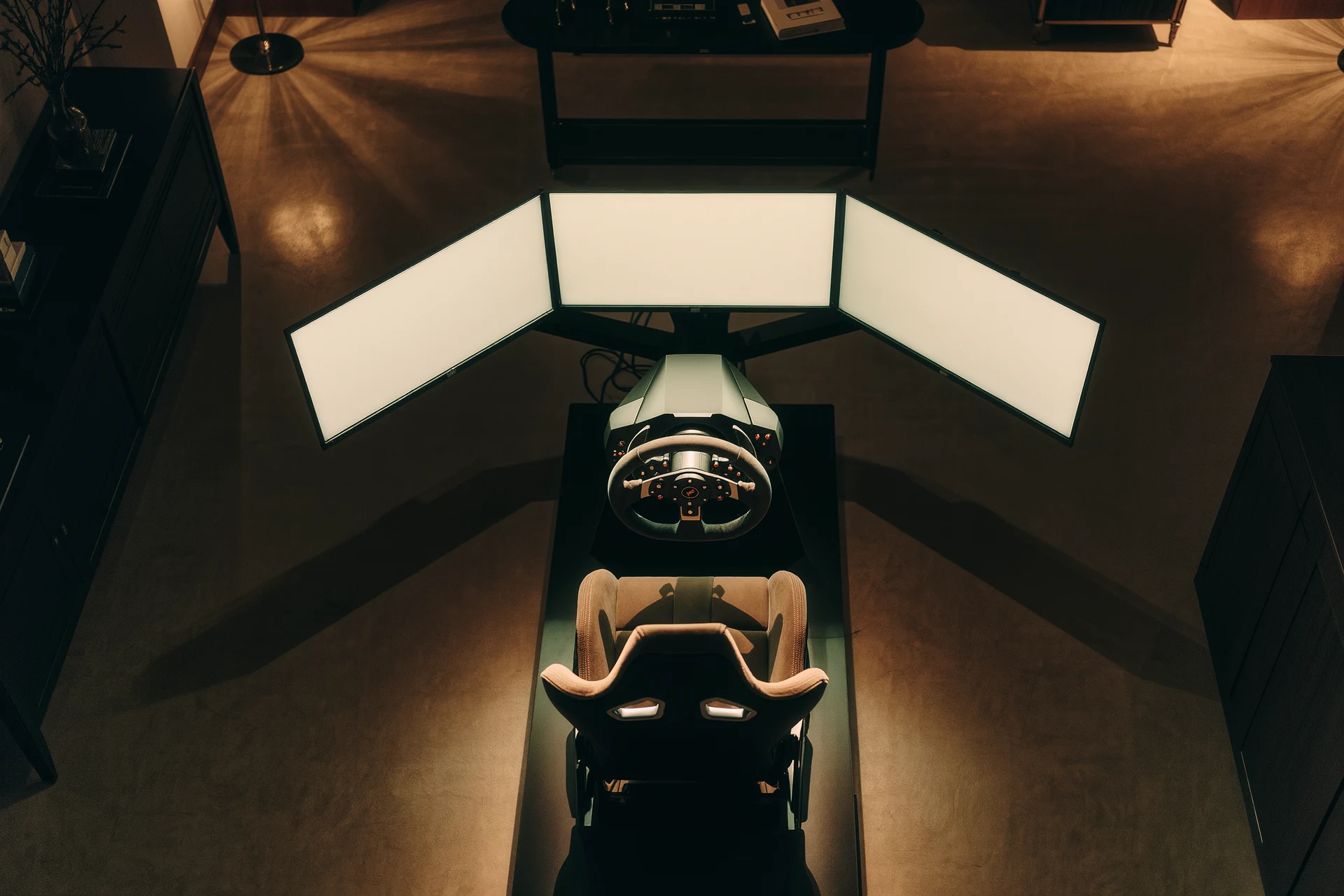
Ever wondered what it’s truly like to pilot a Formula 1 car, or push a GT3 machine to its absolute limit without the actual risk? That’s precisely what a commercial racing simulator offers. Forget those arcade machines at the mall; we’re talking about high-fidelity, professional-grade systems designed to replicate the sensation and performance of real-world racing. These aren’t just games; they’re sophisticated training tools and an incredibly immersive way to experience motorsport.
What Makes a “Commercial” Simulator?
So, what elevates a simulator from a fancy home setup to something “commercial”? It boils down to several key factors: technology, fidelity, and intended use. Commercial simulators often utilize precise motion platforms, high-end force feedback systems, and detailed visual and audio environments to create an incredibly realistic experience. They’re built for endurance and accuracy, designed to be used by professional drivers for training or by enthusiasts who demand the absolute best experience available.
Alright, let’s break down what actually goes into making one of these things tick. It’s more than just a steering wheel and a screen.
Motion Platforms: The Feeling of G-Forces (Kind Of)
This is perhaps the most defining characteristic of a high-end commercial simulator. It’s what gives you that crucial sense of movement, making the virtual world feel tangible.
Different Types of Motion
There’s a good range here. We typically start with 2-DOF (degrees of freedom), which usually handles pitch and roll, think accelerating and braking, and the car leaning into corners. Then you scale up to 3-DOF (adding heave, vertical movement for bumps and kerbs), 4-DOF (often including yaw, rotational movement for oversteer/understeer), and even 6-DOF, which adds surge and sway, replicating all six axes of motion. Higher DOF means a more complete and believable sensation.
How It Works
These platforms use powerful electric or hydraulic actuators to tilt, shake, and move the entire cockpit. The simulator software translates telemetry data from the virtual car, speed, braking force, cornering Gs, bumps, into real-time physical movements. It’s not quite the full G-force of a real car, but the brain is incredibly good at filling in the gaps, making you feel those forces through your body.
The Importance of Feedback
The quality of the motion platform directly impacts how quickly and accurately you can react. If you feel the car beginning to oversteer, for example, your natural instinct is to counter-steer. A well-tuned motion platform allows you to develop this muscle memory, which is invaluable for real-world driving.
Control Inputs: Your Connection to the Virtual Race Car
You can’t drive without something to control the beast. This is where high-quality peripherals come into play.
Steering Wheels and Force Feedback
This isn’t your average Logitech wheel. Commercial simulators use direct drive wheels, where the motor is directly connected to the wheel’s shaft. This eliminates belts and gears, providing incredibly strong, detailed, and lag-free force feedback. You’ll feel every bump, every loss of traction, every kerb and each bit of aero load. It’s crucial for understanding what the car is doing and reacting appropriately.
Pedal Sets: Pressure Matters
Again, we’re not talking about spring-loaded plastic pedals. High-end simulators use hydraulic or load cell pedals, especially for the brake. Load cell pedals measure the force you apply, not just the distance the pedal travels. This perfectly mimics real racing brakes, where consistent pressure is key to effective braking. The feel and resistance should be adjustable to replicate various racing cars.
Shifters and Handbrakes (Where Applicable)
For cars that aren’t paddle-shift, a high-quality sequential or H-pattern shifter is essential. These usually have a solid, mechanical feel, providing satisfying feedback when you slot into gear. Handbrakes, while less common for circuit racing, are critical for rally and drift simulators, offering progressive and responsive control.
Visual and Audio Immersion: Believing Your Eyes and Ears
No matter how sophisticated the motion or controls, without good visuals and sound, the illusion crumbles.
Display Systems: Seeing the Track
This is about getting as close to a real-world field of view as possible.
Single vs. Triple Screens
A single, large ultra-wide monitor is a decent start, but for true immersion, triple screens are superior. They wrap around you, providing crucial peripheral vision. This is essential for spatial awareness, seeing competitors alongside you, and judging corner entry and exit points more accurately.
Projector Setups and VR/AR
For the ultimate wide field of view, some high-end setups use multiple projectors to create a seamless, panoramic display. Alternatively, virtual reality (VR) headsets offer unparalleled immersion by completely encapsulating your vision. However, VR can have its own challenges, such as potential motion sickness for some, and lower resolution compared to dedicated displays (though this is improving rapidly). Augmented reality (AR) is emerging, promising to blend real and virtual, but is still very much in its infancy for this application.
Audio Systems: Hearing the Roar and the Grip
Sound is often overlooked but profoundly important in simulators.
Surround Sound and Tactile Transducers
High-quality surround sound isn’t just for cinematic effect; it helps you locate other cars, hear critical tire squeal, and differentiate engine notes. Tactile transducers (often called “bass shakers”) are mounted to the seat or pedals and convert low-frequency sound into vibrations. This lets you feel the engine RPM, the kerbs, and even the subtle vibrations of grip slipping away, much like you would in a real car.
The Importance of Engine and Tyre Sounds
Accurate engine sounds help with gear changes and understanding limits. More critically, tire squeal and scrub are vital audio cues for knowing how much grip you have left and when you’re pushing the car too hard.
The Software Engine: The Brain of the Operation
All the fancy hardware is useless without sophisticated software to run it. This is where the physics and the virtual world come alive.
Simulation Software: The Heart of Realism
This is where the magic happens, specifically in the physics engine.
Physics Models: Replicating Reality
Top-tier simulators don’t just use simple game physics. They employ complex mathematical models that simulate tire dynamics, aerodynamic forces, suspension behavior, engine torque curves, and even fuel slosh and tire degradation. These models are often developed with input from real motorsport engineers and drivers. The goal is to make the virtual car react precisely as its real-world counterpart would.
The Role of Laser-Scanned Tracks
Today’s best simulation software features tracks that are laser-scanned. This means every bump, every camber change, every kerb is replicated with millimeter accuracy. This level of detail is crucial for professional training, as drivers need to learn specific track characteristics that influence car setup and driving lines.
Customization and Extensibility: Tailoring the Experience
A commercial simulator needs to be adaptable.
Car and Track Libraries
The best simulators offer a vast library of cars, from Formula 1 and prototypes to GT3, touring cars, and rally machines, all meticulously modeled. The same goes for tracks, covering famous circuits around the world. Regular updates ensure new content and physics refinements.
Modding and User-Generated Content
While commercial simulators often come with extensive official content, some platforms allow for “modding”, user-created cars, tracks, and other assets. This can extend the life and variety of the simulator, though commercial operators will typically stick to officially sanctioned content for consistency and quality control.
Beyond the Hardware: The Full Experience
It’s not just about the tech; it’s about how it’s all integrated and used.
Ergonomics and Cockpit Design: Comfort and Functionality
You’ll be spending a fair bit of time in these simulators, so comfort and proper ergonomics are vital.
Seating Positions and Adjustability
Whether it’s a Formula-style reclined position or a more upright GT seating, the cockpit should mimic the real car as closely as possible. Crucially, it needs to be highly adjustable to accommodate different body types and preferences. Pedals, steering wheel distance, and even seat rake should all be tunable.
Integration of Displays and Controls
Everything needs to be within easy reach and sight. Crucial data displays, such as a motec-style dash, should be clear and configurable. The overall layout should feel intuitive and replicate the intensity of a real race car.
Data Acquisition and Analysis: Sharpening Your Skills
This is where commercial simulators truly bridge the gap between entertainment and professional training.
Telemetry Logging: What’s Your Car Doing?
Just like in real motorsport, these simulators log vast amounts of data: speed, throttle input, brake pressure, steering angle, G-forces, suspension travel, tire temperatures, and much more. This data is invaluable for understanding your driving style and car performance.
Analysis Tools: Understanding Your Performance
Sophisticated software allows you to overlay your laps, compare them against professional drivers or your own best efforts, and dive deep into sector times. You can analyze braking zones, cornering speeds, throttle application, and even look at how the car’s setup affects its behavior. This feedback loop is essential for identifying weaknesses and making targeted improvements to your driving technique.
Coaching Opportunities: Learning from the Best
Many commercial simulator centers offer coaching sessions with experienced drivers or simulator specialists. They can analyze your telemetry, provide real-time feedback, and guide you through techniques to improve your lap times and consistency. This structured learning environment is a huge advantage over just driving alone.
Applications Beyond Entertainment: Serious Training Tools
While incredibly fun, these simulators have a serious side.
Professional Driver Training
This is a huge one. Formula 1 teams, endurance racing outfits, and rally teams all use high-fidelity simulators for driver training. It allows them to:
- Learn new tracks: Drivers can effectively “pre-drive” a new circuit before ever setting foot on it, learning braking points, apexes, and optimal lines.
- Test car setups: Engineers and drivers can iterate through different suspension settings, aerodynamic configurations, and gear ratios without incurring expensive track time or risking damage to a real car.
- Practice race scenarios: Simulators are perfect for practicing pit stops, safety car restarts, and navigating traffic without the pressure or cost of a live session.
- Maintain sharpness: During off-season or breaks, drivers can keep their skills honed and their reaction times sharp.
Engineering and R&D
Automotive manufacturers and motorsport teams use these simulators to test new vehicle designs, aerodynamic concepts, and component reliability long before anything is built in the real world. This accelerates development cycles and reduces costs.
Esport Preparation
As esports racing grows, professional sim racers use these simulators to hone their skills, learn tracks, and test setups, much like their real-world counterparts. The lines between virtual and real racing are blurring rapidly.
Accessibility and Cost: Getting Your Hands on One
So, how does one get to experience this? And what does it set you back?
Commercial Venues and Simulator Centers
The most common way for the general public to experience these high-end simulators is through dedicated commercial venues. These centers typically offer:
- Hourly Rentals: You can book time slots, often with options for different cars and tracks.
- Championships and Leagues: Many centers run internal competitions, allowing enthusiasts to test their skills against others.
- Coaching Packages: As mentioned, professional coaching can be a worthwhile investment.
These venues ensure expert setup, maintenance, and often, a community of like-minded enthusiasts.
Personal Ownership: The Ultimate Dream (with a Price Tag)
For the truly dedicated, owning a commercial-grade simulator is possible, but it implies a significant investment.
Cost Breakdown
A full-blown 6-DOF motion platform, direct drive wheel, hydraulic pedals, triple screens, and powerful PC running specialist software can easily run the gamut from $30,000 to well over $100,000+. This doesn’t include the space required, ongoing maintenance, and software licenses. It’s truly a passion project for those with deep pockets.
Maintenance and Technical Expertise
These are complex machines. They require regular maintenance, software updates, and troubleshooting. Owning one means either having the technical know-how yourself or having access to support that can keep it running optimally.
In summary, a commercial racing simulator is far more than just a game. It’s a meticulously engineered system designed to replicate the nuances of real-world motorsport. Whether you’re a professional driver aiming for the podium, an engineer refining vehicle dynamics, or an enthusiast chasing the thrill of driving at the limit, these simulators offer an unparalleled, immersive, and incredibly informative experience.
FAQs
What is a commercial racing simulator?
A commercial racing simulator is a high-tech, immersive system that replicates the experience of driving a race car. It typically includes a cockpit, steering wheel, pedals, and a large screen or virtual reality headset to provide a realistic racing experience.What are the features of a commercial racing simulator?
Commercial racing simulators often feature realistic force feedback steering wheels, adjustable pedal sets, high-quality graphics, and advanced motion systems to simulate the feeling of driving at high speeds and taking sharp turns. Some simulators also offer customizable settings and the ability to race on famous tracks from around the world.How are commercial racing simulators used?
Commercial racing simulators are used by racing enthusiasts, professional drivers, and racing teams for training, practice, and entertainment. They can also be used for promotional events, team building exercises, and competitive racing events.What are the benefits of using a commercial racing simulator?
Using a commercial racing simulator can help drivers improve their racing skills, learn new tracks, and practice different racing scenarios in a safe and controlled environment. It can also provide a cost-effective alternative to real-world racing, as it eliminates the need for expensive track time and vehicle maintenance.Where can commercial racing simulators be found?
Commercial racing simulators can be found in dedicated racing simulation centers, entertainment venues, arcades, and even in some racing teams’ facilities. They are also available for purchase for personal use at home.More from Racing Simulators
Future of Sim Racing
The future of sim racing: how AI tire models, mixed reality, cloud streaming, cheaper direct-drive hardware and the sim-to-real pipeline reshape motor…
F1 Sim Racing Guide
F1 sim racing guide: compare F1 24, iRacing, RSS and AMS2, choose the right wheel and load-cell brake, and master braking, ERS and tire strategy.…
Assetto Corsa Ultimate Guide
Assetto Corsa ultimate guide: the best mods (Content Manager, CSP, SOL, Pure), free cars and tracks, online racing, performance tuning, and AC vs ACC …