Ultimate Racing Experience with Premium Simulator
So, you’re wondering if a premium racing simulator is worth the hype? The short answer is a resounding “yes,” but with a few important caveats. These aren’t…
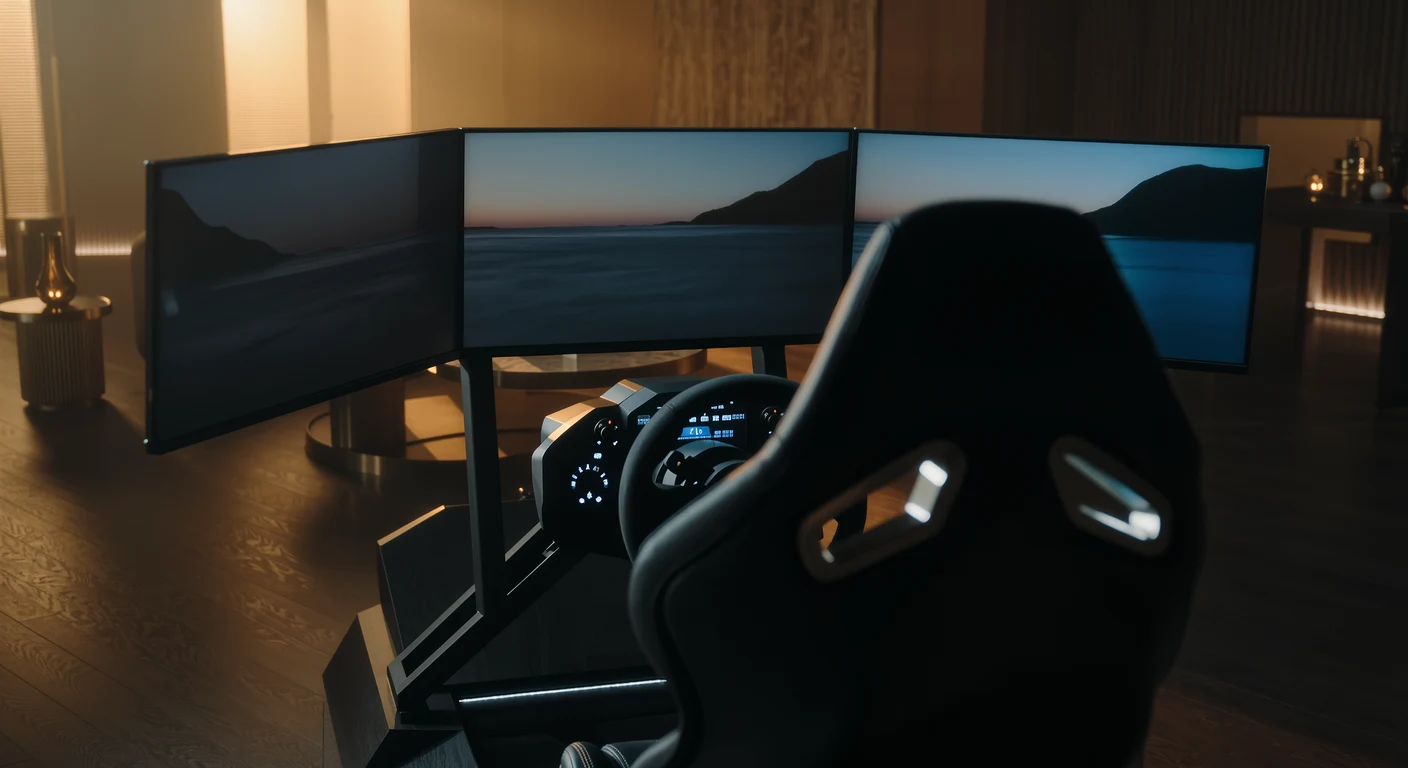
So, you’re wondering if a premium racing simulator is worth the hype? The short answer is a resounding “yes,” but with a few important caveats. These aren’t just fancy game controllers; they’re sophisticated pieces of engineering designed to replicate the real-world driving experience as closely as possible. For serious sim racers, aspiring drivers, or even just gearheads who want to push the limits from the comfort of their home, a premium simulator offers an unparalleled level of immersion, skill development, and pure fun that standard gaming setups simply can’t touch.
What Makes a Simulator “Premium”?
It’s easy to throw around terms like “premium,” but what does it actually mean in the context of a racing simulator? We’re talking about a significant step up from your average gaming wheel and pedal set. Think high-end, purpose-built components designed for durability, precision, and a feedback loop that genuinely mimics the forces and sensations of a real car. This isn’t about flashy RGB lighting; it’s about the tangible improvements in how you interact with the virtual world.
The Core Components: Beyond the Basics
Forget flimsy plastic; premium simulators are built with robust, high-quality materials. This ensures not only longevity but also the ability to withstand the forces generated by advanced feedback systems.
The Steering Wheel and Wheelbase: Feeling the Road
This is arguably the most crucial component. Premium setups use direct-drive wheelbases. Instead of belts or gears transferring motor power, the steering wheel is directly attached to the motor shaft. This translates to incredibly detailed, instantaneous, and strong force feedback. You’ll feel every bump, every loss of traction, and every nuance of the car’s behavior.
- Direct Drive Technology: This is the gold standard. It provides a level of fidelity in force feedback that gear or belt-driven wheels simply cannot match. The motor directly communicates road imperfections, slip angles, and G-forces to your hands.
- High Torque Output: Premium direct-drive wheels offer substantial torque, allowing you to experience the physical struggle of wrestling a high-performance car. This isn’t just about making it harder; it’s about providing accurate resistance that informs your driving decisions.
- Interchangeable Wheel Rims: Most premium direct-drive systems allow for quick-release wheel rims. This means you can swap between a formula-style wheel, a GT-style wheel, or an oval-style wheel, each offering a distinct feel and button layout relevant to the type of car you’re driving.
Pedals: Your Connection to Power and Braking
The pedal set in a premium simulator is worlds apart from cheaper alternatives. They’re designed for precision, consistency, and a realistic feel, especially when it comes to braking.
- Load Cell Brakes: This is a non-negotiable feature for premium pedals. Instead of sensing pedal position, a load cell measures the force you apply. This mimics real-world braking, where muscle memory and pressure are key, rather than how far the pedal travels.
- Adjustability and Customization: Premium pedal sets offer extensive adjustability for spring stiffness, damping, and even pedal throw. This allows you to fine-tune the feel to your personal preference and replicate the brake feel of various cars.
- Robust Construction: Expect metal construction, high-quality sensors, and durable components that can withstand intense, repeated use.
The Cockpit/Chassis: A Stable Foundation
A premium simulator isn’t just a wheel and pedals clamped to a desk. It’s a dedicated structure designed to hold all components firmly in place, resisting the forces generated by the direct-drive wheel and strong brakes.
- Rigid Construction: Aluminum extrusion profiles or sturdy steel frames are common. This rigidity prevents flex and movement, ensuring that all feedback is accurately conveyed to the driver, not lost in a wobbling setup.
- Adjustability: A good cockpit will allow for extensive adjustment of the wheel, pedal, and seat positions. This is crucial for achieving a comfortable and ergonomic driving posture, essential for long sessions.
- Integrated Monitor Mounts: Many cockpits include integrated mounts for single or triple monitors, allowing for a seamless and immersive visual experience without external stands.
Beyond the Basics: Taking Immersion to the Next Level
Once you have the core components dialed in, there are several advanced features that elevate the premium simulator experience from “very good” to truly “ultimate.”
Motion Platforms: Feeling Every G-Force
This is where the distinction between a simulator and a glorified game setup becomes crystal clear. Motion platforms physically move the sim racer, providing tactile feedback that complements the visual and audio experience.
- Degrees of Freedom (DOF): Motion platforms come in various configurations, often described by their “degrees of freedom.” A common starting point is 2DOF (pitch and roll), mimicking acceleration, braking, and cornering forces. Higher-end systems can offer 3DOF, 4DOF, and even full 6DOF, replicating a much wider range of movements, including heave (up and down), sway (side-to-side), and surge (forward and backward).
- Tactile and Haptic Feedback: Beyond simple movement, some platforms incorporate tactile transducers (butt-kickers) to simulate engine vibrations, gear shifts, and impacts, adding another layer of realism.
- Enhanced Immersion: The combination of visual, auditory, and physical feedback creates an unparalleled sense of presence. Your brain is tricked into believing it’s actually in a car undergoing these forces.
Visuals: A Window to the Track
While hardware is key, what you see is equally important for immersion. Premium simulator users often go beyond a single screen.
- Triple Monitor Setups: Three monitors arranged in an arc significantly expand your field of view, providing crucial peripheral vision for spotting apexes and other cars. This drastically improves spatial awareness.
- VR (Virtual Reality): For the ultimate immersion, VR headsets offer a truly 1:1 scale representation of the cockpit and track. The sense of depth and scale is unmatched. However, it requires significant GPU power and can sometimes lead to motion sickness for some users.
- High Refresh Rate Monitors: Regardless of your chosen setup, high refresh rate monitors (120Hz, 144Hz, or higher) are essential for smooth, fluid visuals, which are critical for accurate timing and preventing motion blur during fast-paced driving.
Audio: Listening to the Limit
Often overlooked, high-quality audio is crucial for identifying tire slip, engine RPM, and the proximity of other cars.
- Dedicated Sound System or High-End Headphones: A good sound system with a subwoofer will allow you to feel the rumble of the engine and impacts. Alternatively, high-quality studio headphones can provide excellent directional audio cues.
- Simulated Engine and Tire Sounds: Modern sim racing titles often feature sophisticated audio engines that accurately replicate engine notes, tire squeal, and the sound of mechanical components.
The Benefits: Why Invest in a Premium Simulator?
Beyond the “cool factor,” a premium simulator offers tangible advantages for various types of users.
Skill Development: Sharpening Your Driving Prowess
This is where premium simulators truly shine. They’re not just games; they’re sophisticated training tools.
- Muscle Memory and Reflexes: The consistent and accurate feedback allows you to develop muscle memory for braking points, throttle application, and steering inputs that translate surprisingly well to real-world driving.
- Track Familiarity: You can learn track layouts, braking zones, and optimal lines without the cost or risk of real-world track time.
- Car Control and Limit Exploration: Safely explore the limits of car control, oversteer, understeer, trail braking, in a controlled environment where mistakes are cheap. This builds a deeper understanding of vehicle dynamics.
- Data Acquisition and Analysis: Many premium setups and sim software integrate with data logging tools, allowing you to analyze your lap times, braking points, throttle inputs, and compare them with professional drivers or your own fastest laps. This provides invaluable insights for improvement.
Pure Immersion and Entertainment: Escaping Reality
Let’s be honest: a big part of the appeal is the sheer fun and escapism.
- Unparalleled Realism: The combined sensory input from direct-drive force feedback, load cell pedals, motion, and high-fidelity visuals creates an incredibly convincing illusion of driving a real car.
- Access to Dream Cars and Tracks: Drive any car you desire, F1, GT3, rally cars, vintage racers, on legendary tracks from around the world, all from your home.
- Community and Competition: Join online leagues, compete in esports events, or simply enjoy friendly races with drivers from across the globe.
Cost-Effectiveness (Long Term): A Different Perspective
While the upfront cost is significant, consider it an investment.
- Alternative to Track Days: Real-world track days, car maintenance, tires, and fuel are incredibly expensive. A simulator provides a boundless alternative for honing skills without recurring costs.
- Safety Factor: There’s no risk of injury or expensive car damage from mistakes made in a simulator.
Considerations Before Buying: Is It Right for You?
A premium simulator is a significant investment. Before diving in, consider these factors.
Space Requirements: Do You Have Room?
These setups are not small. A dedicated space is almost essential, especially if you’re considering a motion platform or triple monitors. Measure carefully!
- Footprint of Cockpit: Even a basic aluminum extrusion cockpit takes up a fair amount of floor space.
- Monitor/VR Distance: Triple monitors need a wide field, and VR often requires enough space to comfortably move your head without hitting anything.
- Motion Platform Clearance: If you add motion, ensure there’s enough clearance around the platform for its movement.
Budget: A Significant Investment
“Premium” often translates to “expensive.” Be prepared for a substantial outlay.
- Starting Costs: A high-end direct-drive wheel, load cell pedals, and a sturdy cockpit can easily run into several thousands of dollars/euros.
- Motion Platform Addition: A 2DOF motion platform will add another several thousands to that figure, with higher DOF systems being significantly more.
- Peripherals and PC: Don’t forget a powerful gaming PC capable of running demanding sim titles at high frame rates, especially for VR or triple monitors. High-quality monitors, headphones, and potentially sim-specific software also add to the cost.
Time Commitment: Practice Makes Perfect
Like any skill, sim racing requires practice to improve. This isn’t a “pick up and master in an hour” experience.
- Learning Curve: Getting used to the nuances of force feedback, braking consistency, and car dynamics takes time and dedication.
- Setup and Maintenance: While not constant, there’s occasional software setup, driver updates, and potentially minor hardware adjustments.
Technical Aptitude: Some Assembly Required
While many premium components are plug-and-play, building a cockpit and configuring advanced software settings requires a certain level of comfort with technology.
- Assembly: Most cockpits come unassembled, often requiring Allen keys and some patience.
- Software Configuration: Fine-tuning force feedback settings, configuring button boxes, and managing display settings in games can be complex. There’s a learning curve involved with specific sim racing software.
The Verdict: Is it Worth It?
If you’re deeply passionate about motorsports, committed to improving your driving skills, and have the financial means and space, then a premium racing simulator is absolutely worth the investment. It’s not just a toy; it’s a powerful tool and an incredibly immersive entertainment platform that offers rewards far beyond what standard gaming can provide. It’s a gateway to understanding the intricacies of driving at the limit, without ever leaving your home. For that truly “ultimate racing experience,” a premium simulator delivers in spades.
FAQs
What is a premium racing simulator?
A premium racing simulator is a high-end, realistic racing simulation system that provides an immersive experience for users. It typically includes a racing seat, steering wheel, pedals, and high-quality graphics and sound.What features are typically included in a premium racing simulator?
Premium racing simulators often include features such as force feedback steering wheels, realistic pedal sets, high-resolution displays, surround sound systems, and compatibility with popular racing simulation software.How does a premium racing simulator differ from a standard gaming setup?
A premium racing simulator offers a more realistic and immersive experience compared to a standard gaming setup. It typically includes high-quality components and peripherals designed specifically for racing simulation, providing a more authentic driving experience.What are the benefits of using a premium racing simulator?
Using a premium racing simulator can improve driving skills, provide a more realistic and immersive gaming experience, and offer a safe and convenient way to enjoy racing simulation without the risks associated with real-world racing.What are some popular brands of premium racing simulators?
Popular brands of premium racing simulators include Fanatec, Thrustmaster, Logitech, and SimXperience, among others. These brands offer a range of high-quality racing simulation products for enthusiasts and professional racers.More from Racing Simulators
Future of Sim Racing
The future of sim racing: how AI tire models, mixed reality, cloud streaming, cheaper direct-drive hardware and the sim-to-real pipeline reshape motor…
F1 Sim Racing Guide
F1 sim racing guide: compare F1 24, iRacing, RSS and AMS2, choose the right wheel and load-cell brake, and master braking, ERS and tire strategy.…
Assetto Corsa Ultimate Guide
Assetto Corsa ultimate guide: the best mods (Content Manager, CSP, SOL, Pure), free cars and tracks, online racing, performance tuning, and AC vs ACC …