Ultimate Racing Simulator: The Pinnacle of High-End Virtual Racing
So, you’re wondering what makes an “Ultimate Racing Simulator” truly ultimate? It boils down to one thing: immersion so deep it blurs the line between virtual and…

So, you’re wondering what makes an “Ultimate Racing Simulator” truly ultimate? It boils down to one thing: immersion so deep it blurs the line between virtual and real. We’re talking about a complete sensory assault that replicates the feeling of being in a high-performance race car, making you forget you’re in your living room. This isn’t just a gaming setup; it’s a dedicated environment designed to provide the most authentic, challenging, and exhilarating virtual racing experience possible. It’s for those who demand precision, detailed feedback, and an experience that goes far beyond what a typical gaming wheel and pedal set can offer.
An ultimate racing simulator isn’t built on one single magical component, but rather a carefully integrated ecosystem of high-end hardware. Each piece plays a crucial role in delivering that unparalleled sense of realism and feedback. Think of it as a symphony of technology working in harmony.
Direct Drive Wheelbase: The Heart of the Experience
Forget gear-driven or belt-driven wheels. A direct drive (DD) wheelbase is non-negotiable for an ultimate simulator. Instead of translating motor movements through gears or belts, a powerful electric motor is directly connected to the steering column. This provides immediate, unadulterated force feedback (FFB).
- Unrivaled Force Feedback: You feel every nuance of the track surface, every bump, every loss of traction, and the precise weight transfer of the car. There’s no lag, no filtering, just pure, direct information.
- High Torque Output: Direct drive wheels can deliver significantly higher torque than consumer-grade wheels, simulating the heavy steering of a real race car with incredible accuracy. This isn’t just about making it harder to turn; it’s about conveying the forces acting on the tires.
- Durability and Precision: With fewer moving parts, direct drive systems are generally more robust and offer greater rotational precision. This translates to incredibly smooth and consistent steering input.
- Common Brands to Look For: Fanatec (especially their ClubSport and Podium series), Simucube, VRS DirectForce Pro, andAccuForce are some of the dominant players in this high-end segment. Each has its own ecosystem of wheels, pedals, and accessories.
Load Cell Pedals: Feeling The Brakes & Throttle
Just like a real race car, braking is a critical skill. Standard gaming pedals often rely on potentiometers or basic spring mechanisms, which lack the fine control needed for serious racing. Load cell pedals measure the actual force you apply to the pedal, not just its position.
- Realistic Braking Feel: With a load cell, the harder you press, the more braking force is applied. This allows for superior trail braking, threshold braking, and consistent lap times. It simulates the hydraulic pressure build-up in a real brake system.
- Adjustable Resistance: Most high-end load cell pedal sets allow for extensive customization of resistance and travel, often with swappable elastomers or springs to mimic various brake caliper setups.
- Precise Throttle Control: While the load cell is most crucial for braking, high-end pedal sets also offer precise and well-sprung throttle pedals, allowing for minute adjustments to power delivery, a critical factor in managing traction.
- Clutch Engagement: A realistic clutch pedal, often with a biting point simulation, is essential for cars with manual transmissions, adding another layer of challenge and immersion.
- Key Players: Heusinkveld, Fanatec (ClubSport V3 pedals), SimForge, and Thrustmaster (T-LCM pedals are a good entry point into load cell) are often cited for their quality.
Immersive Visuals: Seeing The Race in Detail
You can have the best force feedback in the world, but if your visuals aren’t up to par, the illusion breaks. An ultimate simulator demands a display setup that fills your field of view and provides buttery-smooth framerates.
Triple Monitors: A Panoramic View
A popular choice for many, triple monitors offer a wide, immersive field of view (FOV) that mimics the peripheral vision you’d have in a real car. This peripheral information is crucial for anticipating corners, seeing opponents, and judging distances.
- Enhanced Situational Awareness: The side monitors provide crucial information about what’s happening to your left and right, allowing you to react faster and make more informed decisions.
- Increased Depth Perception: A wider field of view inherently helps with judging speed and distance more accurately than a single screen.
- Hardware Demands: Running three monitors at high resolution and refresh rates requires a powerful graphics card (GPU). You’ll need at least an RTX 3080 or RX 6800 XT, or newer, to drive this comfortably in most modern Sims.
- Calibration is Key: Proper alignment and bezel compensation are vital to achieve a seamless image across all three screens.
Ultrawide Monitor: A Simpler Approach
For those who want a wider FOV without the complexity of triple monitors, a large ultrawide monitor (typically 32:9 aspect ratio) can be an excellent option.
- Reduced Setup Complexity: One monitor, one cable, fewer adjustments. This can be appealing for those who want a strong experience without the intricacies of multiple displays.
- No Bezels: The absence of bezels between screens creates a continuous, uninterrupted image.
- Less Demanding Than Triples: While still requiring a good GPU, it’s generally less taxing than running three individual monitors at similar resolutions.
- FOV Limitations: While very wide, it still doesn’t quite match the lateral FOV provided by properly set up triple monitors.
Virtual Reality (VR): The Ultimate Immersion (with caveats)
VR headsets offer an unparalleled level of immersion, wrapping the driver completely within the virtual cockpit. You can look around naturally, lean into corners, and truly feel like you’re inside the car.
- True 3D Perception: VR provides genuine depth perception, making judging distances and apexes incredibly intuitive.
- Natural Head Movement: The ability to look around freely significantly enhances situational awareness and track comprehension.
- Potential Downsides:
- Motion Sickness: Some users experience simulator sickness, especially initially.
- Resolution and Visual Fidelity: While improving rapidly, VR headsets still don’t offer the raw pixel density of good monitors, leading to a slightly “screen-door” effect or reduced distant clarity. Anti-aliasing helps, but can impact performance.
- Comfort and Heat: Wearing a headset for extended periods can be uncomfortable, and the heat generated can be an issue.
- Hardware Demands: Running VR smoothly requires an extremely powerful PC, often more so than triple screens at similar visual settings.
- Recommended Headsets: Valve Index, Meta Quest 2 and 3, Pimax Crystal, HP Reverb G2 are common choices.
Motion Systems: Feeling the G-Forces
This is where the “ultimate” truly elevates itself beyond a high-end gaming setup. Motion systems move the driver’s seat or even the entire rig to simulate the forces experienced in a real car.
Seat Movers: The Entry Point to Motion
These systems typically attach to the underside of your racing seat and move it independently of the rest of the rig. They often use two or three degrees of freedom (DOF).
- Pitch and Roll: Simulate the incline/decline of the track, braking dive, and acceleration squat.
- Surge and Sway (Limited): Some seat movers can also provide limited back-and-forth (surge) and side-to-side (sway) movements to simulate acceleration/braking and cornering forces.
- Cost-Effective Motion: A good starting point for experiencing motion without breaking the bank.
- Brands: Next Level Racing (e.g. Motion Platform V3), D-Box (high-end haptic systems), and various DIY options.
Full Chassis Motion: The Apex of Immersion
Full chassis motion systems move the entire rig, including the wheel, pedals, and monitors (if mounted to the rig). These often feature three to six degrees of freedom, offering the most comprehensive simulation of car dynamics.
- 6 Degrees of Freedom (6 DOF): This is the holy grail.
- Pitch: Forward/backward tilt (braking/acceleration).
- Roll: Side-to-side tilt (cornering, camber).
- Yaw: Rotation around the vertical axis (loss of traction, spinning).
- Surge: Forward/backward movement (acceleration/braking).
- Sway: Side-to-side movement (lateral G-forces in corners).
- Heave: Up/down movement (bumps, crests, jumps).
- Unparalleled Realism: These systems can trick your brain into truly believing you’re in a moving vehicle, enhancing proprioception and muscle memory.
- Space and Power Requirements: These rigs are generally large, heavy, and require significant power.
- Substantial Investment: This is often the most expensive component of an ultimate simulator.
- Notable Manufacturers: D-Box, SimXperience (AccuForce is often integrated), PT Actuator, and various highly customized solutions.
Tactile Feedback and Audio: The Subtle Yet Crucial Elements
While direct drive wheels and motion platforms provide the primary sensory input, subtle tactile and audio cues significantly contribute to the overall immersion.
Bass Shakers (Haptic Transducers): Feeling The Engine
These devices, similar to speaker woofers but designed for vibration, attach to the seat or pedal plate and transmit low-frequency sounds directly into your body.
- Engine Vibrations: Feel the roar and rumble of the engine through your seat.
- Road Texture: Experience kerbs, bumps, and rough surfaces as vibrations, not just auditory cues.
- Gear Shifts: A satisfying thud can accompany each gear change.
- Loss of Traction: Subtle vibrations can indicate when tires are beginning to lose grip.
- Integration: Often driven by an amplifier and sound card, with dedicated software like SimHub for fine-tuning.
High-Fidelity Audio: Hearing Every Detail
Good audio isn’t just about explosions and music. In sim racing, it provides critical information.
- Engine Notes: Listen to the engine revs and clutch engagement to anticipate gear shifts and manage power.
- Tire Squeal: Hear the precise moment your tires begin to lose traction, informing your driving inputs.
- Environmental Sounds: The crackle of gravel, the roar of other cars, and even the subtle wind noise contribute to the atmosphere.
- Headphones vs. Speakers: High-quality headphones often provide better spatial audio and isolate you from external noise, enhancing focus. However, good surround sound speakers can also be very immersive, especially with bass shakers complementing them.
The Sim Rig Itself: The Foundation
All these high-tech components need a solid, robust foundation. A flimsy desk or a wobbly seat simply won’t cut it.
Aluminum Profile Rigs: The Industry Standard
These modular rigs, built from extruded aluminum profiles (often 80/20 style), are the backbone of most ultimate simulators.
- Rock-Solid Stability: They eliminate flex and wobble, ensuring that all forces from your direct drive wheel and pedals are transmitted accurately to you.
- Highly Adjustable: The modular nature allows for infinite adjustability of seat position, wheel height, pedal distance, and screen placement. You can perfectly dial in your ergonomics.
- Expandability: Easy to integrate new components like shifters, handbrakes, button boxes, and even motion systems.
- Cable Management: Channels within the profiles make cable routing clean and efficient.
- DIY or Pre-Built: You can design and build your own, or purchase pre-cut kits from companies like Sim-Lab, Trak Racer, Fanatec, and Oplite.
Racing Seat: Comfort and Support
A proper racing seat isn’t just for show; it’s essential for long, intense racing sessions.
- Ergonomics: Designed to hold you firmly in place, mimicking a real racing bucket seat. This prevents fatigue and allows you to focus on driving.
- Rigid Mounting: Attaches securely to the aluminum profile rig, ensuring no unwanted movement.
- Material Choices: From budget-friendly fabric to high-end carbon fiber or fiberglass, choose based on comfort, weight, and aesthetics.
- Brands: Sparco, Recaro, OMP, and specialized sim racing seat manufacturers.
Software and Configuration: Bringing It All Together
Hardware is only as good as the software that drives it. Optimizing your simulator involves careful selection and configuration of games, drivers, and utility programs.
Sim Racing Titles: The Virtual Arenas
While many games feature racing, true sim racing titles prioritize realism and physics over arcade-style fun.
- Assetto Corsa Competizione (ACC): Considered by many as the gold standard for GT3 racing physics and force feedback.
- iRacing: A subscription-based platform known for its hyper-realistic physics, laser-scanned tracks, and competitive multiplayer.
- Assetto Corsa: A versatile sim with a massive modding community, offering a huge array of cars and tracks.
- rFactor 2: Praised for its tire model and dynamic track conditions.
- Automobilista 2: Excellent with VR, offering great physics across various categories.
- Dirt Rally 2.0: The premier rally simulation, demanding precise control and quick reactions.
Driver Management and Tuning: Unleashing Performance
Each piece of high-end hardware comes with its own drivers and configuration software.
- Wheelbase Software: Essential for adjusting force feedback strength, damping, friction, and other subtle effects. This is where you fine-tune the wheel’s feel.
- Pedal Software: Used to calibrate pedal travel, set deadzones, and adjust load cell sensitivity.
- Motion Platform Software: Crucial for setting the intensity and characteristics of pitch, roll, heave, and other movements. This often involves motion cueing profiles specific to each sim.
- SimHub: A powerful third-party tool that integrates data from your sim into various outputs, including bass shakers, display dash telemetry, and even some DIY motion systems. It’s almost a must-have for an ultimate sim.
Operating System and PC Optimization: The Unsung Hero
Don’t neglect the underlying PC. Even with the best hardware, a poorly optimized system will hinder performance.
- Powerful CPU/GPU: As mentioned, high-end components are essential, especially for VR and triple screens. An Intel Core i7/i9 or AMD Ryzen 7/9 (current generation or recent) and an Nvidia RTX 30-series/40-series or AMD RX 6000/7000 series GPU are generally recommended.
- Sufficient RAM: At least 32GB of RAM is advisable, especially for demanding sims or multitasking.
- Fast Storage: NVMe SSDs are critical for quick loading times of tracks and cars.
- Clean OS Installation: A fresh Windows installation with minimal background processes and up-to-date drivers will ensure maximum performance. Disabling unnecessary features and optimizing power settings can also help.
The Cost: Understanding The Investment
Let’s be upfront: building an ultimate racing simulator is a significant financial commitment. This isn’t a casual purchase; it’s an investment in a dedicated hobby.
Breakdown of Typical Costs (Estimates)
- Direct Drive Wheelbase & Wheel: £1,000 – £4,000+
- Load Cell Pedals: £500 – £2,000+
- Sim Rig (Aluminum Profile): £500 – £2,000+ (depending on size and complexity)
- Racing Seat: £200 – £1,000+
- Monitors (Triple) or Ultrawide: £600 – £2,000+
- VR Headset: £300 – £1,500+
- Motion Platform: £1,500 – £15,000+ (from seat movers to full 6 DOF systems)
- High-End PC: £2,000 – £4,000+
- Shifter, Handbrake, Button Boxes, Bass Shakers, Etc.: £300 – £1,500+
Realistically, for a truly “ultimate” setup (including mid-range motion), you’re looking at a total investment that often starts from £8,000-£10,000 and can easily climb to £20,000-£30,000+ for the absolute pinnacle with 6 DOF motion and top-tier components.
It’s a Journey, Not a Destination
Many enthusiasts don’t start with everything. It’s often an evolutionary process, upgrading components over time as budget allows and interest deepens. Start with a solid direct drive, good pedals, and a sturdy rig foundation, then build from there. The beauty of modular systems is that they allow for this progressive upgrading.
The ultimate racing simulator is more than just a collection of expensive parts; it’s a meticulously crafted environment designed to deceive your senses and deliver an unparalleled virtual racing experience. If you’re serious about sim racing and crave the most authentic, challenging, and exhilarating experience possible, then this is the path for you.
FAQs
What is a high end racing simulator?
A high end racing simulator is a sophisticated piece of equipment designed to replicate the experience of driving a race car. It typically includes a realistic steering wheel, pedals, and a seat, as well as advanced software and hardware to create a lifelike driving experience.What features are typically included in a high end racing simulator?
High end racing simulators often include features such as force feedback steering wheels, realistic pedal sets, adjustable seating positions, high-resolution displays, and advanced motion systems to simulate the feeling of acceleration, braking, and cornering.How does a high end racing simulator differ from a standard video game racing setup?
High end racing simulators are designed to provide a more immersive and realistic driving experience compared to standard video game racing setups. They often feature higher quality components, more advanced motion systems, and more realistic physics and graphics.What are the benefits of using a high end racing simulator?
Using a high end racing simulator can help drivers improve their racing skills, learn new tracks, and practice race strategies in a safe and controlled environment. It can also provide a more immersive and realistic experience compared to traditional video game racing setups.What are some popular high end racing simulator brands?
Some popular high end racing simulator brands include Fanatec, Thrustmaster, SimXperience, and Vesaro. These brands offer a range of products designed to cater to different levels of realism and immersion for racing enthusiasts.More from Racing Simulators
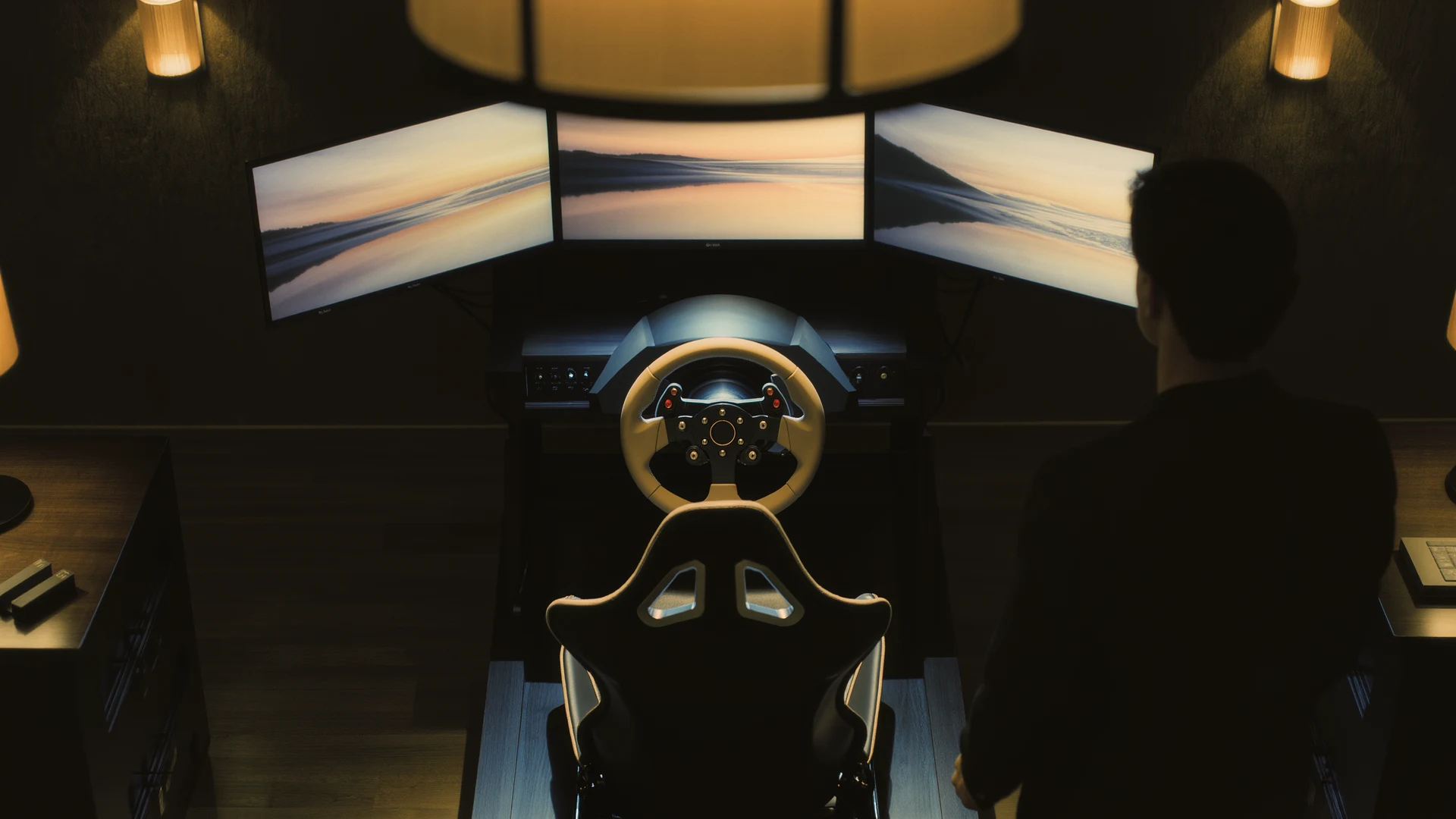
Future of Sim Racing
The future of sim racing: how AI tire models, mixed reality, cloud streaming, cheaper direct-drive hardware and the sim-to-real pipeline reshape motor…
F1 Sim Racing Guide
F1 sim racing guide: compare F1 24, iRacing, RSS and AMS2, choose the right wheel and load-cell brake, and master braking, ERS and tire strategy.…
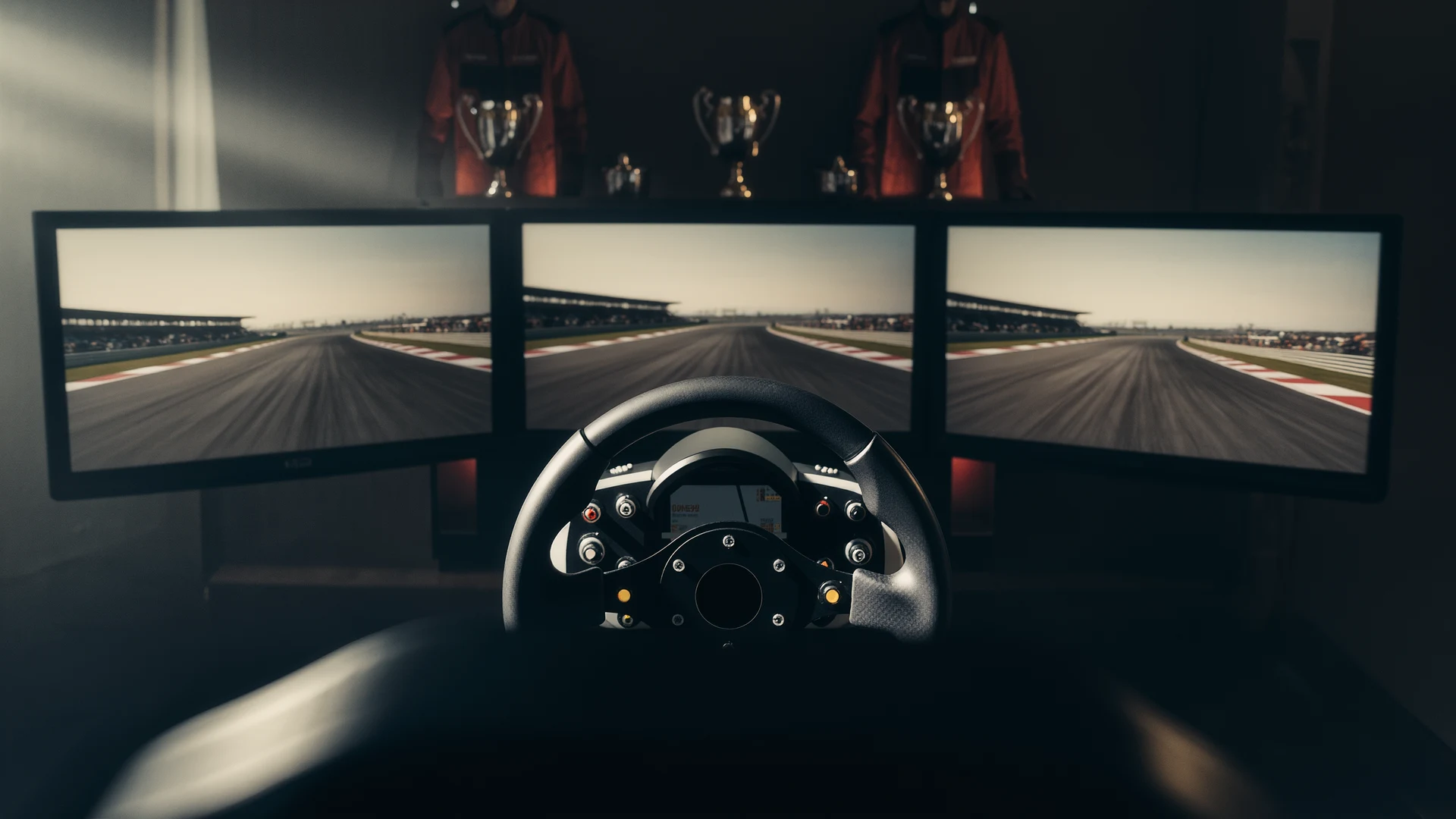
Assetto Corsa Ultimate Guide
Assetto Corsa ultimate guide: the best mods (Content Manager, CSP, SOL, Pure), free cars and tracks, online racing, performance tuning, and AC vs ACC …