The Ultimate Simulator Racing Cockpit: Enhance Your Gaming Experience
So, you’re looking to boost your simulator racing game, huh? The quickest way to a more immersive and precise experience is with a dedicated racing cockpit. Forget bolting a wheel …
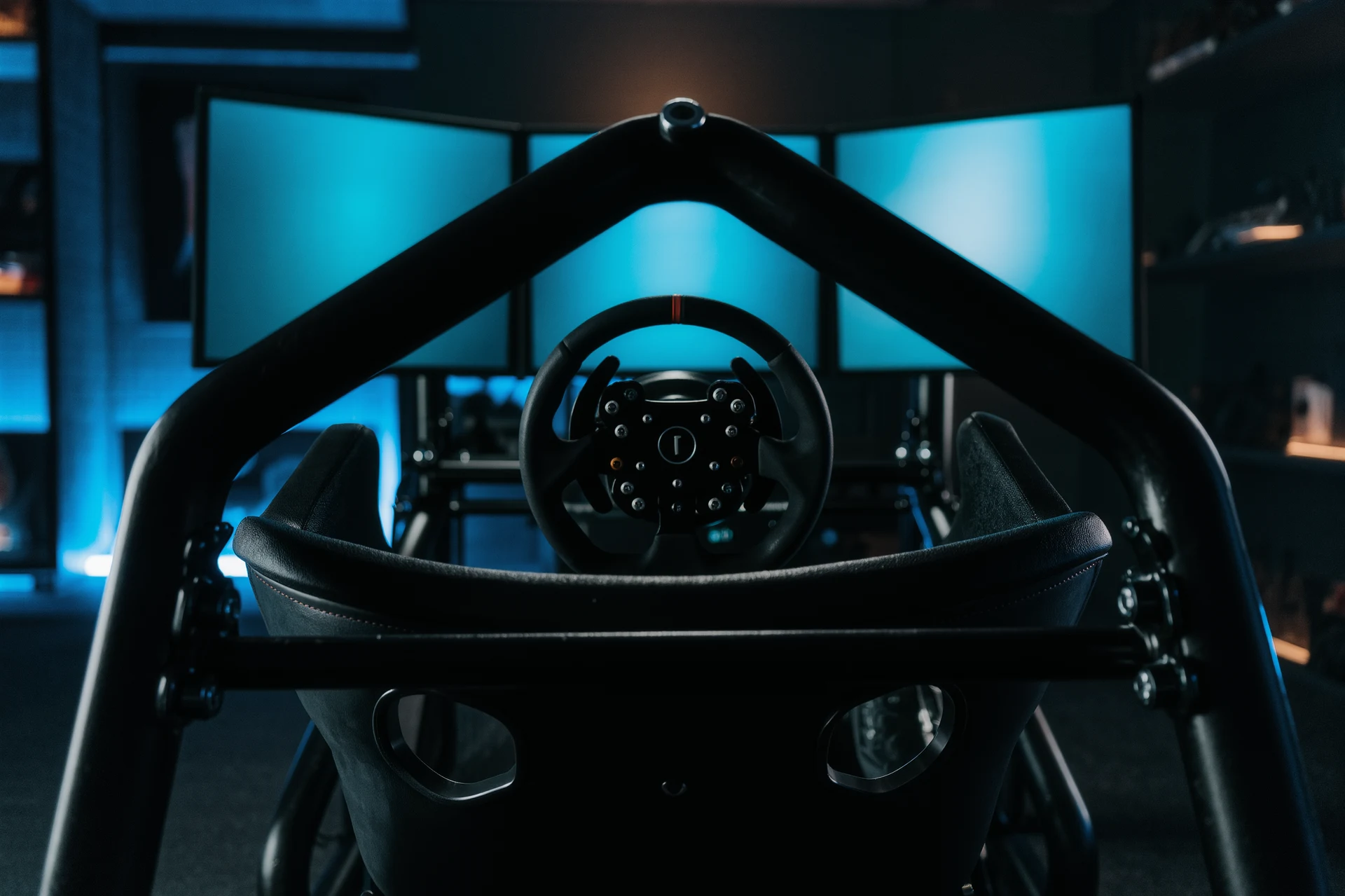
So, you’re looking to boost your simulator racing game, huh? The quickest way to a more immersive and precise experience is with a dedicated racing cockpit. Forget bolting a wheel to your desk. A proper cockpit puts you in the driver’s seat, quite literally, and makes a massive difference to how you feel and perform in your virtual car.
You might be thinking, “Do I really need a specialized setup?” The short answer is yes, if you’re serious about sim racing. It’s not just about looking cool; it’s about performance and immersion.
Stability and Consistency are Key
When your wheel, pedals, and shifter are all rigidly mounted, there’s no flex, no wobble. Every input you make is precise. Imagine trying to hit the apex at Monaco with pedals sliding around under your feet, not going to happen. A cockpit provides a stable platform, ensuring your muscle memory develops accurately. You’ll find yourself making smaller, more refined inputs, which translates directly to faster lap times and better car control.
Immersion Factor Goes Way Up
Sitting in a racing seat, with your wheel and pedals positioned just like they would be in a real car, completely changes the simulation. It tricks your brain into believing you’re actually there. This heightened immersion makes every race more exciting and enjoyable. You’ll feel more connected to the car and the track, leading to a much richer gaming experience than just sitting in a desk chair.
Ergonomics for Longer Sessions
Let’s be honest, sim racing sessions can stretch on. A comfortable, ergonomically sound setup is crucial. A dedicated cockpit allows you to adjust the seat, wheel, and pedal positions to fit your body perfectly, reducing fatigue and allowing you to focus on the race, not on your aching back. Good ergonomics mean you can race longer, more effectively, and without discomfort.
Understanding Different Cockpit Types
Not all cockpits are created equal. There are a few main categories, each with its own benefits and considerations.
Playseat-Style Foldable Rigs
These are a popular entry point. They’re often lightweight and, as the name suggests, can be folded away when not in use.
Pros of Foldable Rigs
- Space-Saving: Great for smaller living spaces where a permanent setup isn’t practical.
- Portability: Easy to move around if needed.
- Affordable: Generally less expensive than more robust options.
Cons of Foldable Rigs
- Flex: Can suffer from some flex, especially with higher-end steering wheels or during aggressive braking.
- Limited Adjustability: Adjustments might be more basic compared to advanced rigs.
- Durability: May not hold up as well over very long periods of heavy use.
Fixed-Frame Cockpits
These are the most common type and offer a significant step up in rigidity and adjustability. They typically consist of a steel or aluminum frame.
Pros of Fixed-Frame Cockpits
- Excellent Rigidity: Much less flex than foldable rigs, providing a very solid platform.
- Good Adjustability: More options for fine-tuning seat, wheel, and pedal positions.
- Durability: Built to last for years of sim racing.
Cons of Fixed-Frame Cockpits
- Space: Take up a permanent footprint.
- Price: Generally more expensive than foldable options.
- Assembly: Can be a bit more involved to assemble.
Aluminum Profile (80/20) Rigs
These are the crème de la crème for most serious sim racers. They are built from industrial aluminum extrusions (often referred to as 80/20, a common profile size) and are incredibly versatile.
Pros of Aluminum Profile Rigs
- Unrivaled Rigidity: Virtually no flex, even with high-end direct drive wheels and powerful load cell pedals.
- Infinite Adjustability: Every component can be moved and secured precisely where you want it. This is a huge advantage for dialing in perfect ergonomics.
- Modularity and Expandability: Easily add monitor mounts, shifters, handbrakes, button boxes, and even motion platforms later on.
- Future-Proof: Can adapt to new equipment releases and personal preferences over time.
Cons of Aluminum Profile Rigs
- Price: Generally the most expensive option.
- Assembly: Can be time-consuming and require some patience, though many find it a rewarding process.
- Footprint: Can be quite large, depending on the design.
Key Components of a Top-Tier Cockpit
Beyond the frame itself, several other elements are crucial for building an ultimate sim racing experience.
The Seat Matters More Than You Think
This isn’t just a place to sit; it’s your primary point of contact with the simulation.
Real Car vs. Dedicated Sim Seat
You’ll often see sim racers use seats from real cars (especially bucket seats from sportscars). These are usually comfortable and highly supportive. However, dedicated sim racing seats are designed with different considerations, they might not need the same crash protection, allowing for lighter construction or specific mounting points. The important thing is a comfortable, supportive seat that holds you in place. Look for minimal flex and good lumbar support.
Slider and Recliner Options
A seat slider allows for quick fore-aft adjustment, useful if multiple people use the rig. A reclining seat offers more comfort for longer sessions, though many prefer fixed-back bucket seats for maximum immersion and stability, as they mimic real race cars.
Pedal Mounting Versatility
Your pedals are how you control braking and acceleration: two of the most critical aspects of racing.
Adjustable Angle and Height
Being able to adjust the angle and height of your pedals is crucial for comfort and consistency. Some setups allow for ‘inverted’ pedal mounting (where the pedals hang down like in a real car), which many find more natural. Rigidity here is paramount; any flex under heavy braking will undermine your control.
Compatibility with Load Cell Pedals
If you’re serious, you’ll likely upgrade to load cell pedals eventually. Ensure your cockpit’s pedal plate is strong enough to withstand the high forces generated by these pedals without flexing. Aluminum profile rigs excel here.
Wheel Deck Rigidity and Adjustability
The wheel deck holds your steering wheel, and it needs to be rock solid.
Direct Drive Wheel Compatibility
Direct drive wheels are powerful, delivering strong force feedback. Many entry-level cockpits can struggle with the torque these wheels generate, leading to unwanted flex. A good cockpit will have a robust wheel deck designed to handle direct drive wheels without a hint of movement.
Tilt and Reach Adjustments
Just like in a real car, you need to be able to set the perfect wheel height and distance. Look for ample tilt and reach adjustment in your wheel deck to ensure optimal ergonomics. Some advanced rigs also offer quick-release mechanisms for the wheel deck to easily swap between driving styles (e.g. F1 vs. GT).
Monitor Mounting Solutions
Where your screen sits drastically impacts immersion and visual feedback.
Single Monitor Stands
These are integrated into the cockpit or stand alone. An integrated mount means the screen moves with the cockpit, keeping the distance consistent. A standalone monitor stand offers more flexibility if you share the screen with a desktop computer or have limited space directly on the rig.
Triple Monitor Stands
For the most immersive field of view, triple monitors are the way to go. A dedicated triple monitor stand, either integrated or standalone, is essential for positioning the side screens at the correct angle to wrap around your periphery. Ensuring sturdy mounting and easy angle adjustment is key.
Ultrawide Monitors and VR
Ultrawide monitors offer a good compromise between a single screen and triple screens. If you’re using VR, the monitor setup becomes less critical, but you’ll still want a place for your display. No matter your choice, ensure your cockpit can accommodate the size and weight of your chosen display solution.
Future-Proofing Your Cockpit
Investing in a good cockpit is a big step, so thinking about future upgrades now can save you headaches later.
Modularity and Expandability
This is where aluminum profile rigs truly shine. They are inherently modular. You can add:
- Shifter Mounts: Positioned ergonomically for sequential or H-pattern shifters.
- Handbrake Mounts: Crucial for rally or drifting.
- Button Box Mounts: Keep frequently used controls within easy reach.
- Keyboard and Mouse Trays: Practical for navigation outside of the race.
- Cup Holders: Because hydration is important, even in a sim.
Motion Platform Compatibility
If you ever dream of adding tactile feedback beyond force feedback (and many do!), consider a rig that can be adapted for a motion platform. These systems tilt and move the cockpit to mimic G-forces, bumps, and changes in elevation. Again, aluminum profile rigs are often the best choice for integrating these systems due to their strength and adaptability.
Cable Management Options
A tangled mess of cables not only looks unsightly but can also interfere with your pedal inputs or get caught on things. Look for cockpits that offer integrated cable routing options or at least easily allow for zip ties and cable clips to keep things tidy. A clean setup is a professional setup.
Setting Up Your Cockpit for Success
Once you have your cockpit, proper setup is critical to extracting its full potential.
Optimizing Your Driving Position
This is perhaps the most important ergonomic consideration.
Seat Distance and Height
Experiment with how far or close you are to the pedals and wheel. Your knees should have a slight bend when your pedals are fully pressed. Your arms should also have a slight bend when your hands are on the wheel at 9 and 3 o’clock.
Wheel Angle and Reach
The wheel’s height should allow you a clear view of the screen and any on-wheel displays. The angle should feel natural and comfortable for long periods. Avoid having to reach too far or having your elbows tucked too tightly.
Pedal Angle and Spacing
Adjust the pedal angle to match your foot’s natural resting position. If your pedals allow, fine-tune the spacing between them for comfortable heel-toe braking or left-foot braking. The goal is to minimize strain and maximize consistency.
Eye-Tracking and Field of View (FOV)
This is a game-changer for immersion and spatial awareness.
The Importance of Correct FOV
A correctly set Field of View (FOV) in your sim software makes the in-game world behave as it would in real life. If it’s too wide, everything looks distorted and distant. If it’s too narrow, you lose peripheral vision. There are online calculators that help you determine the accurate FOV based on your screen size and distance. Getting this right is crucial for judging braking points and corner entry.
Monitor Distance
Your monitor should ideally be as close to your wheel as possible without physically touching. This helps mimic the view from a real car and allows for a more accurate FOV. When you combine correct FOV with a close monitor, the illusion of depth and scale is incredibly convincing.
Conclusion
Building the ultimate simulator racing cockpit isn’t just about buying expensive gear; it’s about creating a cohesive, ergonomic, and rock-solid platform that completely transforms your sim racing experience. From the unyielding rigidity of an aluminum profile rig to the nuanced adjustments of your seat, wheel, and pedals, every component plays a vital role. Invest wisely, set it up meticulously, and you’ll find yourself not just playing a game, but truly driving, competing, and pushing the limits in your virtual garage.
FAQs
What is a simulator racing cockpit?
A simulator racing cockpit is a specialized setup designed to provide a realistic and immersive experience for racing simulation games. It typically includes a racing seat, steering wheel, pedals, and sometimes a monitor stand.What are the benefits of using a simulator racing cockpit?
Using a simulator racing cockpit can enhance the realism and immersion of racing simulation games, providing a more authentic experience for players. It can also improve comfort and ergonomics during long gaming sessions.What features should I look for in a simulator racing cockpit?
When choosing a simulator racing cockpit, it’s important to consider the build quality, adjustability, compatibility with gaming peripherals, and additional features such as built-in mounts for accessories like shifter and handbrake.How much does a simulator racing cockpit cost?
The cost of a simulator racing cockpit can vary widely depending on the brand, features, and build quality. Entry-level setups can start at around $200, while more advanced and customizable options can cost upwards of $1000.Are simulator racing cockpits compatible with different gaming platforms?
Many simulator racing cockpits are designed to be compatible with a range of gaming platforms, including PC, PlayStation, and Xbox. However, it’s important to check the compatibility of the specific cockpit with the gaming platform you intend to use.More from Racing Simulators
Future of Sim Racing
The future of sim racing: how AI tire models, mixed reality, cloud streaming, cheaper direct-drive hardware and the sim-to-real pipeline reshape motor…

F1 Sim Racing Guide
F1 sim racing guide: compare F1 24, iRacing, RSS and AMS2, choose the right wheel and load-cell brake, and master braking, ERS and tire strategy.…
Assetto Corsa Ultimate Guide
Assetto Corsa ultimate guide: the best mods (Content Manager, CSP, SOL, Pure), free cars and tracks, online racing, performance tuning, and AC vs ACC …