Master the Art of Drifting with Competition Simulator
So, you want to get good at drifting, but without, you know, actually trashing your real car or spending a fortune on tires? A competition simulator is absolutely your best bet. It…
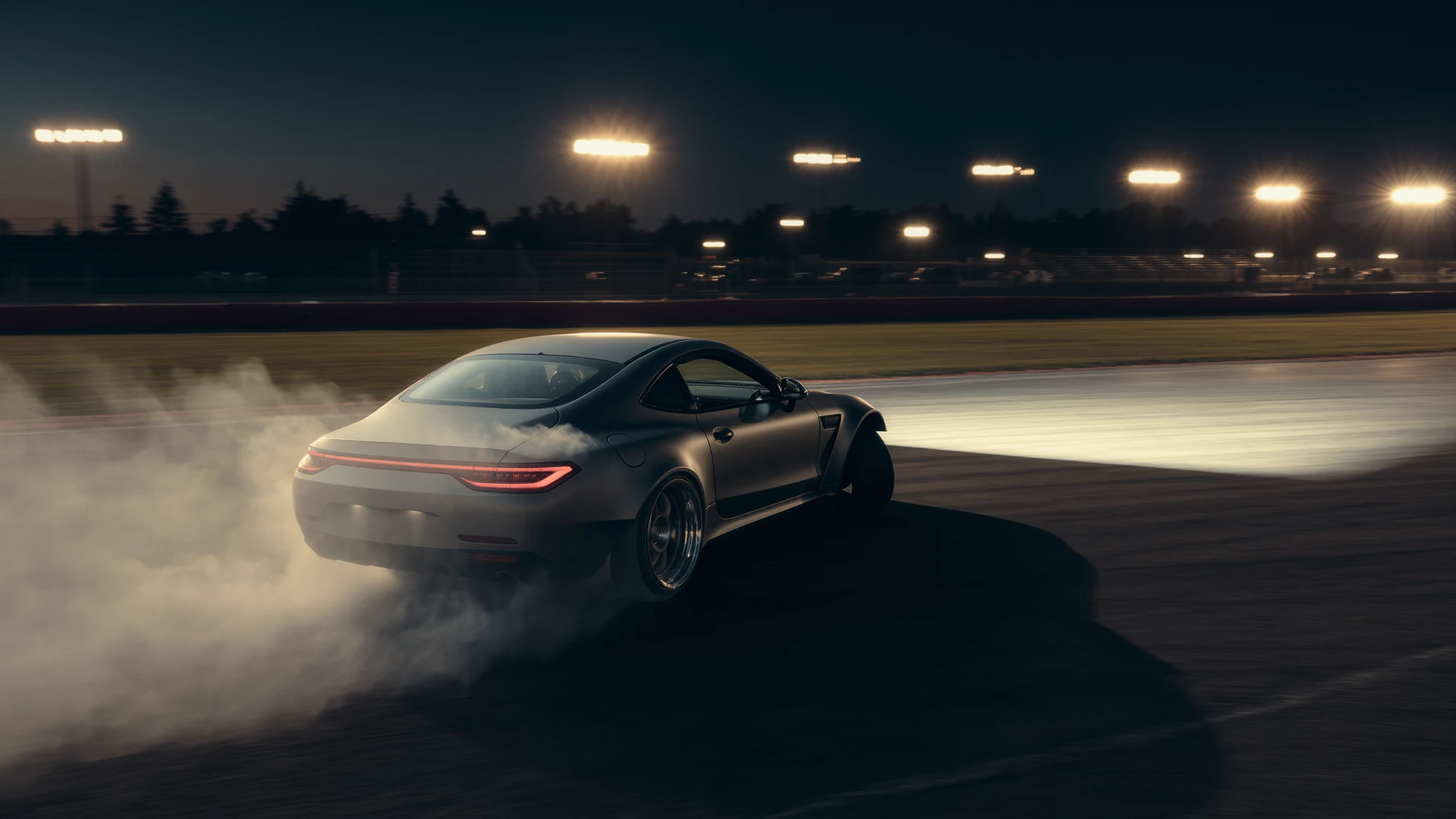
So, you want to get good at drifting, but without, you know, actually trashing your real car or spending a fortune on tires? A competition simulator is absolutely your best bet. It’s not just a game; it’s a serious training tool that can genuinely transfer skills to the real world. Think of it as a virtual practice track where mistakes don’t cost you thousands. You’ll learn car control, weight transfer, and line discipline in a low-stakes environment, building muscle memory and understanding before you ever hit a real-world track.
Let’s face it, real-world drifting is expensive and risky. Simulators change that equation entirely. You get unlimited practice, immediate feedback, and the ability to experiment without consequence.
Infinite Practice, Zero Consequences
This is hands down the biggest benefit. In a simulator, you can spin out a thousand times, hit every wall, and blow every engine without racking up a repair bill. This freedom allows you to push boundaries, try crazy angles, and understand what happens when you overcook it, all crucial steps in learning to control a car at (and beyond) its limits.
Cost-Effective Skill Building
Imagine the cost of tires, fuel, track time, and potential repairs for just one real-world drifting session. Now imagine doing that consistently to gain proficiency. Simulators, once you’ve made the initial setup investment, offer virtually free practice forever. This financial accessibility opens the door for many who couldn’t otherwise afford to pursue drifting.
Safe Environment for Experimentation
Real-world drifting has inherent risks. A simulator allows you to take risks and experiment with different techniques without fear of injury or damage. Want to try a new initiation technique? Go for it. Interested in how a different setup feels? Change it virtually. This safe sandbox is invaluable for learning and innovation.
Essential Simulator Setup: Beyond Just a Game
To truly “master” drifting, you need more than just a controller and your living room TV. A proper sim setup is an investment, but it’s one that pays dividends in skill development.
The Powerhouse PC
Your computer is the brain of your operation. It needs to be capable of running demanding simulator software smoothly, especially if you’re aiming for high refresh rates and graphical fidelity, which contribute significantly to immersion and responsiveness.
- Processor (CPU): A modern multi-core CPU (Intel i5/i7/i9 or AMD Ryzen 5/7/9) is crucial for complex physics calculations.
- Graphics Card (GPU): This render the visual world. A mid-to-high-end GPU (NVIDIA RTX 3060/4060 or AMD RX 6700/7700 or better) will ensure smooth frame rates and detailed graphics.
- RAM: 16GB is pretty much the standard minimum these days; 32GB is even better, especially if you run other applications in the background.
- Storage: An SSD (Solid State Drive) is a must for fast loading times.
The Tactile Interface: Wheel, Pedals, and Shifter
This is where the magic happens, connecting you to the virtual car. Don’t skimp here if you’re serious.
- Force Feedback Steering Wheel: This is non-negotiable. Good force feedback (FFB) is the primary way the simulator communicates what the car is doing, grip levels, weight transfer, tire slip. Entry-level wheels like the Logitech G29/G920 are great starting points, but direct drive wheels (Fanatec, Moza, Simagic) offer a far more realistic and detailed FFB experience, making it much easier to catch slides and feel the car “talking” to you.
- Pedals: A good set of pedals, especially with a load cell brake, is transformative. Load cell brakes measure pressure, not travel, which is how real car brakes work. This allows for much finer control and trail braking techniques essential for drifting. Many wheels come with decent pedal sets, but standalone sets from Fanatec, Heusinkveld, or Thrustmaster offer superior performance.
- Shifter: A sequential shifter or, even better for drifting, an H-pattern shifter, adds another layer of realism and control. It helps develop proper shifting habits without looking away from the track.
- Handbrake: Crucial for many drifting initiations and adjustments mid-drift. An analog USB handbrake provides smooth, proportional control, unlike a simple on/off button.
Visual Immersion: Monitors or VR?
Seeing the track clearly and feeling immersed is key to understanding your line and car placement.
- Single Ultrawide Monitor: Offers a wider field of view than a standard monitor, which is beneficial for peripheral vision.
- Triple Monitors: This is often considered the gold standard for immersion without going full VR. Three monitors surrounding you create a much clearer sense of speed and a wide, realistic field of view, allowing you to see apexes, clips, and exits much more naturally.
- Virtual Reality (VR) Headset: VR offers unparalleled immersion. Being “in” the car helps with depth perception and makes you feel like you are actually there. However, it requires a powerful PC to maintain smooth frame rates, can be fatiguing for long sessions, and currently has lower resolution than monitors.
The Foundation: Rig or Cockpit
A stable platform for your gear is often overlooked but incredibly important.
- Wheel Stand: A good starting point, often foldable for convenience, but can still have some flex.
- Full Cockpit/Rig: Provides a rock-solid platform for all your peripherals, eliminating wobble and allowing you to position everything ergonomically. This greatly enhances consistency and comfort during long sessions.
Top Simulators for Drifting Excellence
Not all simulators are created equal, especially when it comes to physics and force feedback that accurately represent drifting.
Assetto Corsa (AC)
This is arguably the king of drifting simulators. Its physics engine is incredibly robust and allows for a vast amount of modding.
- Unrivaled Modding Community: AC thrives on user-created content. You’ll find thousands of cars (from street cars to hyper-spec drift machines) and tracks (real-world and fictional) that enhance the drifting experience. This means an endless variety of cars with specific drift tunes and real-world tracks accurately replicated.
- Realistic Physics: AC’s physics engine allows for nuanced weight transfer and tire model behavior. Once you find good quality car mods, the feeling of grip breaking and regaining, and the subtleties of counter-steer, are incredibly accurate.
- Customization: You can finely tune car setups, from suspension and alignment to engine power and differential locking, allowing you to understand how each change impacts the car’s behavior.
Forza Motorsport (PC) / Forza Horizon (PC/Xbox)
While more “gamey” than Assetto Corsa, the Forza titles, particularly Motorsport, have surprisingly good physics and a massive car roster.
- Accessibility: Forza offers a more polished user interface and is often easier for newcomers to pick up.
- Car Variety and Customization: A massive library of cars and an extensive upgrade system allow you to build and tune your dream drift car.
- Solid Physics (with caveats): While not as deep as AC, Forza’s physics can still be very rewarding for drifting, especially in custom lobbies or private sessions. Horizon emphasizes an open world and more arcade-like feel, while Motorsport focuses on competitive racing with a more realistic physics model.
iRacing
Known for its hardcore realism and subscription-based competitive online racing, iRacing also offers a surprisingly deep drifting experience, particularly with its oval track stock cars or even some road course vehicles.
- Ultra-Realistic Physics and Force Feedback: iRacing’s physics engine is considered among the best, providing incredibly detailed feedback through your wheel. This translates to an exceptional feel for tire slip and grip.
- Competitive Environment: If you want to test your skills against serious competitors, iRacing’s structured online races and events are unmatched.
- Steep Learning Curve: iRacing demands precision and a deep understanding of car control. It’s not for the faint of heart and generally requires significant practice to be competitive, making it perfect for dedicated individuals looking to truly master their craft.
- Cost: iRacing is subscription-based, and you pay for individual cars and tracks, which can add up.
Mastering Drift Techniques in the Simulator
Once you have your setup and simulator software, it’s time to get down to business. Drifting involves a combination of techniques, and the simulator is the perfect place to practice them until they’re second nature.
Initiation Techniques
Getting the car sideways is the first step. Practice these different methods to understand their nuances.
- Clutch Kick: Briefly depressing and releasing the clutch while on the throttle to send a shockwave of power to the drivetrain, breaking traction. This is a common and effective technique, especially for lower-powered cars.
- Handbrake Initiate: Using the handbrake to momentarily lock the rear wheels, causing them to lose traction and the car to rotate. You then release the handbrake and apply throttle to maintain the slide.
- Power Oversteer: Simply applying enough throttle to make the rear wheels lose traction. This works best with high-powered cars.
- Feint Drift/Scandinavian Flick: Shifting the car’s weight to one side with a quick counter-steer, then flicking the steering wheel in the opposite direction to transfer weight and initiate a slide. This is effective for maintaining momentum through corners.
- Brake Drift: Initiating a slide by applying brake pressure while turning, shifting weight to the front and lightening the rear.
Maintaining the Slide: Throttle Control and Counter-Steer
Once sideways, these two elements are your best friends.
- Throttle Control: This is your primary tool for managing drift angle and speed. Too much throttle, and you spin; too little, and you straighten out. Precision input is key.
- Counter-Steer: As the rear of the car slides out, you steer into the slide (e.g. if the car slides left, you steer left) to catch it and control the angle. The amount of counter-steer varies depending on speed and angle.
Transitions and Linking Drifts
Drifting isn’t just one long slide; it’s often a series of interconnected slides.
- Drift Transitions: Moving from one drifting direction to another (e.g. drifting left, then transitioning to drift right). This often involves a quick input of throttle, a slight flick of the wheel, and precise counter-steer.
- Linking Corners: Connecting multiple turns into one continuous drift. This requires excellent foresight, line management, and dynamic throttle/steering adjustments.
Vision and Line Management
Where you look dictates where you go, both in real life and in the simulator.
- Looking Ahead: Don’t stare at the front of your car. Look at the apex, the exit of the corner, and even the next corner. This gives your brain time to process and react.
- Drift Line Theory: Understanding the “drift line”, the optimal path through a corner to maintain speed, angle, and proximity to clipping points, is critical for competitive drifting.
The Mental Game: Beyond the Inputs
Drifting isn’t just about physical inputs; it’s about developing a certain mindset and approach.
Patience and Persistence
You will spin out. A lot. Embrace it. Each spin is a learning opportunity. The simulator allows you to fail safely and repeatedly, which is the fastest way to learn. Don’t get discouraged; stick with it.
Analyze, Adapt, Overcome
After a bad run, don’t just immediately restart. Think about what went wrong.
- Review Replays: Most simulators have replay functions. Watch your own driving from different angles. Where did you initiate too late? Too early? Too much throttle? Not enough counter-steer?
- Identify Weaknesses: Are you consistent with initiates but struggle with transitions? Focus your practice on that specific area.
- Experiment with Setup: Small changes to your car’s suspension, differential, or tire pressure can have a big impact. Use the simulator to understand these relationships.
Building Muscle Memory and Instinct
The ultimate goal is for these complex inputs to become automatic. You want to react instinctively when the car starts to slide, rather than consciously thinking about each step. Consistent practice in the simulator is the best way to achieve this. The more hours you put in, the more these actions will become second nature, allowing your brain to focus on the bigger picture of the drift.
Conclusion: Your Path to Drifting Mastery Starts Here
A competition simulator isn’t just a toy; it is a legitimate and highly effective tool for learning and mastering the art of drifting. From its ability to provide unlimited, consequence-free practice to the realistic force feedback and physics of top-tier software, a well-setup simulator offers an unparalleled training ground. By investing in quality hardware, choosing the right software, and diligently practicing fundamental techniques, you’ll develop the muscle memory, car control, and strategic thinking needed to truly excel. Whether your goal is to compete virtually, build skills for real-world driving, or simply enjoy the thrill of sliding, the simulator is where your journey to drifting mastery begins.
FAQs
What is a drift competition simulator?
A drift competition simulator is a video game or software that allows players to simulate the experience of participating in drift competitions. Players can control virtual cars and perform drift maneuvers in a realistic environment.What features are typically included in a drift competition simulator?
Drift competition simulators often include a variety of features such as realistic car physics, customizable vehicles, different drift tracks, multiplayer modes, and the ability to compete in virtual drift competitions.How do players control the cars in a drift competition simulator?
Players typically control the cars in a drift competition simulator using a game controller, keyboard, or steering wheel peripheral. The controls allow players to steer, accelerate, brake, and perform drift maneuvers.Are there different types of drift competition simulators available?
Yes, there are various drift competition simulators available, ranging from realistic, simulation-focused games to more arcade-style experiences. Some simulators may also focus on specific aspects of drift competitions, such as tandem drifting or car customization.Can drift competition simulators be used for training or practice?
Yes, drift competition simulators can be used for training and practice purposes. They provide a safe and accessible way for aspiring drifters to hone their skills, learn different techniques, and familiarize themselves with various drift tracks.More from Drifting
Virtual Drifting: A Thrilling Experience
Virtual drifting is, in short, a digital simulation of the high-skill, car-control sport of drifting. It’s about sliding a car through a turn, m…

Mastering Drifts: Professional Simulator Experience
So, you want to get good at drifting in a simulator, huh? The short answer is: it takes a lot of practice, the right equipment, and a solid understand…
Mastering the Art of Sim Racing Drifting
Let’s dive into the world of sim racing drifting. If you’re wondering how to actually drift in a simulator, it boils down to a controlled …