Mastering the Art of Racing with Professional Sim Rig
So, you’re looking to level up your sim racing game, huh? You’ve probably seen these incredible setups online, the full rigs, the motion platforms, the works, and won…
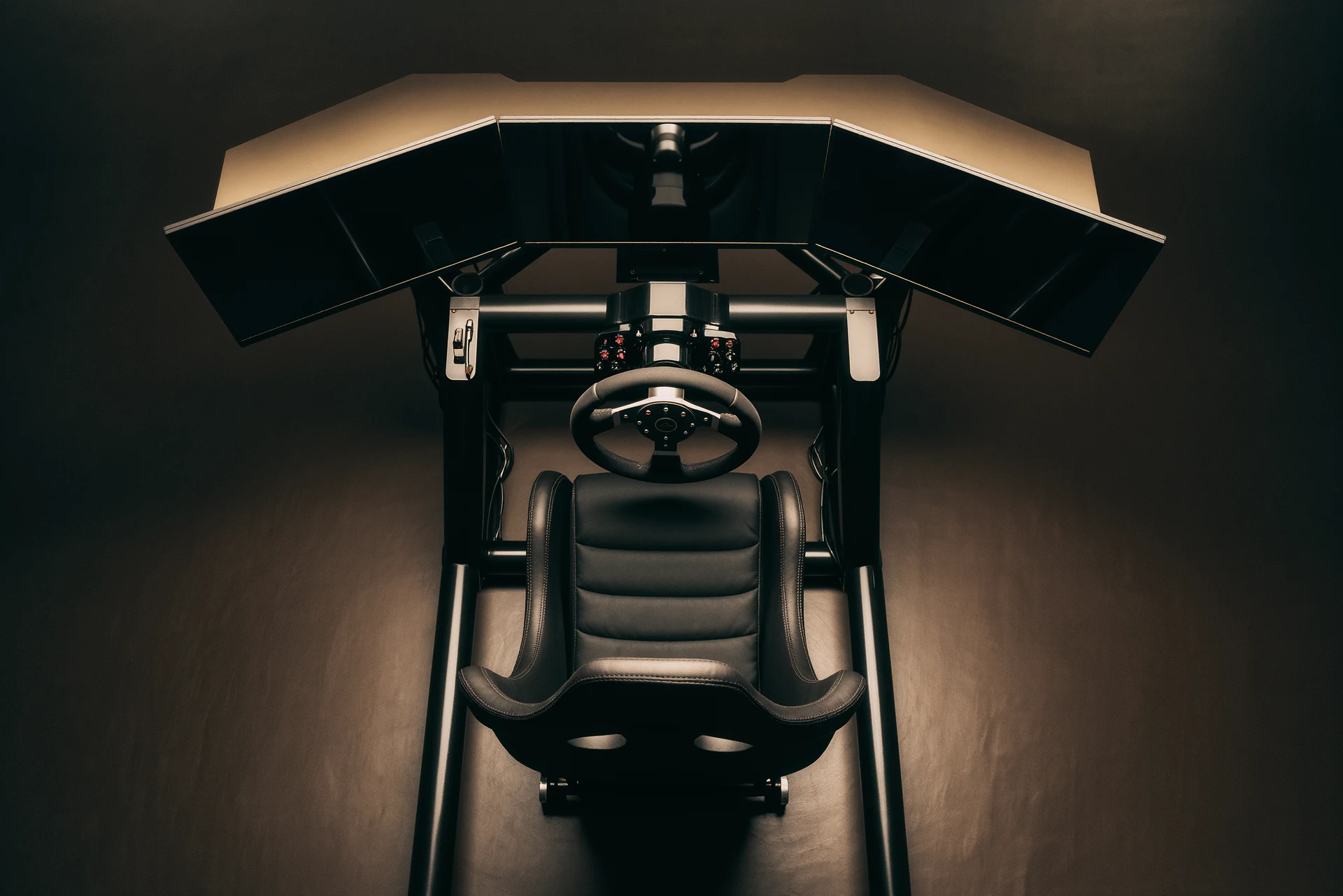
So, you’re looking to level up your sim racing game, huh? You’ve probably seen these incredible setups online, the full rigs, the motion platforms, the works, and wondered, “Can a professional sim rig really make that big of a difference?” The short answer is a resounding yes. While talent and practice are king, a high-end sim rig can absolutely be the key to unlocking your potential, transforming a good sim racer into a truly competitive one. It’s not just about looking cool; it’s about creating a more immersive, detailed, and ultimately, faster experience.
When we talk about a “professional” sim rig, we’re moving beyond the basic wheel and pedals you might plug into your PC. Think of it as a meticulously crafted ecosystem designed to replicate the feeling of driving a real race car as closely as possible, within the confines of your home. This isn’t just about aesthetics; it’s about leveraging technology to provide crucial feedback that helps you understand and control the car.
The Core Components You Can’t Skip
Every professional sim rig starts with the essentials, but elevated. These are the pieces that form the foundation of your racing experience and are worth investing in if you’re serious about improving.
The Wheelbase: Where the Force Feedback Magic Happens
This is the heart of your rig. A high-quality wheelbase is responsible for translating the car’s behaviour on track into physical sensations you can feel through your hands. It’s more than just vibrating; it’s about nuanced force feedback that conveys information about tire grip, suspension load, and even the slightest twitch of the steering.
Direct Drive vs. Belt/Gear Driven
Most enthusiast-level wheels use belt or gear systems to transfer power from the motor to the wheel rim. They’re quieter and generally more affordable. However, for a professional rig, direct drive is the gold standard. Here, the wheel rim is directly attached to the motor. This eliminates any mechanical slop or lag, delivering incredibly precise and instantaneous force feedback. You’ll feel every ripple in the tarmac and every subtle shift in weight.
- Direct Drive: Incredible fidelity, lag-free response, allows for finer control and more realistic feedback. Can be more expensive and require more desk space or a dedicated rig.
- Belt/Gear Driven: Smoother, quieter, often more affordable. May have a slight delay in feedback and lack the sharp detail of direct drive.
The Wheel Rim: Your Connection to the Car
The wheel rim is what you’ll be holding onto for hours. While many professional rigs come with a standard rim, this is an area where customization can pay off big time. The shape, size, materials, and even the button layout can significantly impact your comfort and control.
- Materials: Alcantara, leather, or even carbon fiber can provide different levels of grip and feel.
- Diameter: Smaller wheels can offer quicker steering response, mimicking race cars. Larger wheels can feel more stable and comfortable for longer sessions.
- Buttons and Shifters: The placement and feel of buttons and shifters need to be intuitive and accessible without taking your eyes off the track. Many professional wheel rims feature programmable buttons, rotary encoders, and clutch paddles for advanced control.
Pedals: The Fine Art of Modulation
Your feet are just as important as your hands on the racetrack. High-end pedal sets go far beyond simple accelerator and brake inputs. They are engineered to provide precise and consistent control, allowing you to modulate braking pressure and throttle application with incredible finesse.
Load Cell Brakes: The Game Changer
This is arguably the most critical upgrade for any serious sim racer. Traditional pedals use potentiometers, which measure pedal travel. Load cell pedals, on the other hand, measure the force applied to the pedal. This is how real car brakes work.
- Benefits: A load cell brake allows you to brake with a consistent amount of force, rather than just pressing the pedal a certain distance. You can build up braking pressure more smoothly and precisely, leading to shorter braking distances and better control in corners. It replicates the feel of stepping on a firm brake pedal in a real car.
- Adjustability: Most quality load cell pedals offer adjustable brake resistance, allowing you to tune the feel to your preference and the specific car you’re driving.
- Accelerator and Clutch: While the load cell brake is the star, high-end accelerator and clutch pedals also benefit from precise construction, offering smooth travel and consistent resistance for refined control.
The Chassis: Building Your Cockpit
The chassis, or the rig itself, is the structural backbone that holds everything together. It needs to be sturdy enough to handle the forces from the wheel and pedals without flexing or vibrating, providing a stable platform for your racing.
Rigidity is Key
Any flex in the chassis can introduce unwanted vibrations and dampen the force feedback from your wheel. This means you’re not getting the full picture of what the car is doing.
- Materials: Aluminum extrusions (like Trak Racer or Sim-Lab rigs) are incredibly popular for their modularity, strength, and ease of assembly. Steel rigs are also common, often offering exceptional rigidity but being heavier and less customizable.
- Adjustability: A good chassis will allow for extensive adjustment of seating position, pedal angle, wheel height and angle, and many other factors to ensure you can find an ergonomic and comfortable setup that mimics a real racing cockpit.
Seat Selection: Comfort Meets Immersion
While many people start with a regular office chair or car seat, a dedicated sim racing seat makes a huge difference in comfort and immersion, especially during long racing sessions.
- Racing Seats: These are designed to hold you securely in place, preventing you from sliding around under G-forces. They often mimic the driving position of a race car, providing a lower, more reclined posture that enhances the feeling of being in a dedicated driver’s seat.
- Ergonomics: Look for a seat that offers good lumbar and side support for long-term comfort and allows for proper positioning relative to your wheel and pedals.
Immersion Boosters: Beyond the Basics
Once you have your core components dialed in, you can start adding elements that further blur the line between sim and reality. These aren’t strictly necessary for speed, but they dramatically enhance the experience and can subtly improve your performance by engaging more of your senses.
Motion Platforms: Feeling the G-Forces
This is where things get truly exciting, and expensive. Motion platforms are designed to tilt, pitch, and roll your entire rig in response to the on-track action.
How They Work
- 3-DOF (Degrees of Freedom): Typically involves a platform that pitches forward and backward (simulating acceleration and braking) and rolls left and right (simulating cornering forces).
- 6-DOF (Degrees of Freedom): Adds heave (vertical movement, simulating bumps and road texture), surge (forward/backward movement), and yaw (rotation). These offer the most comprehensive and realistic motion experience.
The Impact on Performance
- Enhanced Awareness: Motion platforms allow you to “feel” G-forces in a tangible way. You can instinctively anticipate weight transfer, better understand when tires are losing grip, and feel the subtle cues that a driver uses to manage momentum.
- Reduced Reliance on Visuals: While visuals are crucial, motion can provide an additional layer of feedback, sometimes allowing you to react to events before you even see them clearly. For example, you might feel the initial lean of acceleration before you properly see the horizon moving.
- Fatigue and Immersion: While incredibly immersive, intense motion can also be fatiguing. Balancing motion intensity with your own tolerance is key for endurance racing.
Haptic Feedback: Feeling the Road and Engine
Beyond the wheel and pedals, haptic feedback devices can add even more tactile information to your sim racing experience.
Sim-Shakers/Buttkickers
These are transducers that attach to your rig’s chassis and translate audio frequencies into vibrations.
- Engine Vibrations: Feel the rumble of the V8, the buzz of a high-revving V10, or the vibration of a smaller turbocharged engine.
- Road Texture: Experience the subtle bumps of tarmac, the jarring effect of curbing, or the washboard feel of a gravel surface.
- Impacts: Feel the slight jolt of merging with the track or the more pronounced impact of hitting a barrier.
- Integration: These systems are often controlled by software that analyzes the game’s audio or data output, translating it into specific vibrations.
Beyond Sim-Shakers: More Refined Haptics
Some higher-end systems offer more nuanced haptic feedback.
- Pedal Transducers: Small transducers integrated into the pedals can provide specific feedback, like a rumble when the ABS kicks in or a jolt from downshifting.
- Pro-Haptics: Advanced systems can simulate specific feedback points on the chassis, allowing you to feel tire slip through the seat or suspension load shifts.
Software and Integration: Making It All Work Together
Having the best hardware is only half the battle. The software that drives your sim rig and integrates all its components is equally important.
Sim Racing Titles: The Foundation of Your Experience
The choice of sim racing game or software plays a huge role. While most aim for realism, some excel in certain areas.
- iRacing: Known for its meticulously scanned tracks and vehicles, realistic tire models, and strong online competition. It’s subscription-based and has a well-defined progression system.
- Assetto Corsa Competizione (ACC): The official game of the GT World Challenge, ACC offers superb GT3 and GT4 racing simulation with impressive visuals and dynamic weather.
- Assetto Corsa: A classic with a massive modding community, offering a huge variety of cars and tracks. Its physics are highly regarded, and it’s a great platform for experimenting with different setups.
- rFactor 2: Praised for its highly dynamic tire model and realistic weather effects, though it can have a steeper learning curve.
- Automobilista 2: Offers a wide range of racing disciplines and beautiful visuals, with excellent VR support.
Software for Hardware Integration
Beyond the games, you’ll need software to configure and manage your sim rig components.
- Driver Software: Your wheelbase and pedal manufacturers will provide their own software to adjust force feedback settings, pedal curves, and other parameters.
- SimHub: A powerful and versatile software that allows you to integrate various hardware devices, including sim shakers, LED displays, and more. It can pull data directly from the sim to create custom experiences.
- Third-Party Dashboards: Software like SRS Dashboard or VRS Dashboard can overlay crucial telemetry data onto your screen or a secondary display, giving you real-time insights into your performance.
Fine-Tuning Force Feedback
This is where you’ll spend a lot of time as you get to know your rig.
- Gain: Controls the overall strength of the force feedback.
- Filter: Smooths out some of the finer details, which can be useful if your rig is introducing unwanted vibrations.
- Spring/Damper/ especiais: These settings allow you to control how the wheel returns to center and how it reacts to certain forces.
- Road Effects: Adjusts the intensity of vibrations related to road surface details.
Telemetry and Data Analysis
To truly master your rig and driving, you need to understand your performance.
- In-Game Telemetry: Most sims offer basic telemetry data like speed, throttle, brake, and steering inputs.
- Third-Party Telemetry Software: Tools like MoTeC, VBO (Virtual Driving Optimizer), or Atlas are more advanced and allow for in-depth analysis of everything from tire temperatures to suspension travel. This is where you can pinpoint exactly why you’re losing time.
Optimizing Your Experience: The Human Element
Even with the most advanced sim rig, the driver behind the wheel is still the most important factor. Optimizing your experience involves ensuring your physical and mental state are conducive to peak performance.
Ergonomics: Setting Yourself Up for Success
Proper ergonomics aren’t just about comfort; they’re about enabling precise control and preventing fatigue.
- Seating Position: Ensure your seat allows for a natural and comfortable driving posture, with your arms and legs at the correct angles to operate the wheel and pedals without strain. You should be able to see enough of your virtual screen or cockpit.
- Wheel and Pedal Placement: Adjust the height, angle, and distance of your wheel and pedals so they feel intuitive and natural. Your hands should rest comfortably on the wheel, and your feet should be able to apply consistent pressure to the pedals.
- Monitor Placement: Ideally, your monitor(s) should be positioned to mimic the field of view of a real car, reducing the need to constantly move your head. Triple screens or ultrawide monitors offer a significant advantage here.
Practice and Calibration: Finding Your Rhythm
A professional rig is a tool, and like any tool, it needs to be mastered.
- Calibrating Your Gear: Take the time to properly calibrate your wheel and pedals within the sim software. This ensures that the full range of motion translates accurately into the game.
- Learning the Feedback: Spend time with specific cars and tracks, actively trying to interpret the force feedback and haptic cues. How does the wheel feel when the tires are about to lose grip? What does the seat tell you about the suspension load?
- Consistent Practice: Regular, focused practice sessions are more effective than sporadic long ones. Use your rig to develop muscle memory and a deeper connection with the virtual car.
Virtual Reality (VR): True Immersion
For many, VR is the ultimate step in sim racing immersion.
- Unparalleled Depth: VR headsets place you directly inside the cockpit, offering a sense of scale and depth that flat screens can’t replicate.
- Improved Awareness: Your peripheral vision is significantly enhanced, allowing you to better judge distances and track other cars.
- Reduced Visual Cues: While powerful, VR can sometimes make it harder to perceive subtle visual cues, which is where good force feedback and motion become even more critical.
What to Expect When You Invest in a Pro Rig
Switching to a professional sim rig isn’t just about adding expensive gadgets; it’s about fundamentally changing how you interact with sim racing. You’ll experience a steeper learning curve initially as you adapt to the increased fidelity, but the rewards are substantial.
The Initial Adjustment Period
When you first get into a high-end direct drive wheel and load cell pedals, it can feel alien compared to what you might be used to.
- Force Feedback Nuance: You’ll suddenly feel things you never noticed before, vibrations, small bumps, subtle shifts in grip that were previously smoothed out or lost in translation. This can be overwhelming at first.
- Braking Precision: Learning to modulate a load cell brake takes time. You’ll move from a binary “on/off” approach to a graduated, pressure-sensitive control. This translates to much more consistent and effective braking.
- Steering Sensitivity: Direct drive wheels are incredibly responsive. You’ll need to refine your steering inputs to be smoother and less “jerky.”
The Performance Payoff
Once you’ve adapted, the performance gains become undeniable.
- Faster Lap Times: You’ll be able to carry more speed through corners, brake later and more effectively, and manage the car’s weight transfer with greater precision.
- Consistency: The increased fidelity and tactile feedback lead to more consistent lap times. You can feel what the car is doing and make micro-adjustments to keep it on the limit, rather than fighting to keep it under control.
- Better Car Understanding: You’ll develop a deeper understanding of how different cars behave and how to extract the most performance from them. The subtleties of tire wear, fuel load, and suspension setup will become more apparent.
- More Enjoyable Experience: Ultimately, the goal is to have more fun. The increased immersion and connection to the virtual car make every racing session more engaging and rewarding.
The Community Aspect
Investing in a professional sim rig often means joining a passionate community of like-minded individuals.
- Forums and Discord: You’ll find vibrant online communities where you can share tips, troubleshoot issues, and get advice from experienced sim racers.
- Competitive Leagues: High-end rigs often attract drivers who compete in organized online leagues, offering challenging and fair racing against equally dedicated individuals.
Investing in a professional sim rig is a significant commitment, but for those who are serious about sim racing, it’s an investment that pays dividends in performance, immersion, and sheer enjoyment. It’s about moving from playing a racing game to truly racing.
FAQs
What is a professional sim rig?
A professional sim rig is a specialized setup designed for sim racing and flight simulation. It typically includes a racing seat, steering wheel, pedals, and a frame to mount all the components.What are the benefits of using a professional sim rig?
Using a professional sim rig provides a more immersive and realistic experience for sim racing and flight simulation. It also offers better stability and comfort compared to using a regular desk or chair setup.What features should I look for in a professional sim rig?
When choosing a professional sim rig, look for features such as adjustable seating position, sturdy construction, compatibility with various racing wheels and pedals, and the ability to add accessories such as monitors and VR headsets.How much does a professional sim rig cost?
The cost of a professional sim rig can vary widely depending on the brand, features, and quality. Entry-level rigs may start at around $500, while high-end rigs with advanced features can cost several thousand dollars.Can I use a professional sim rig for other gaming purposes?
While a professional sim rig is designed specifically for sim racing and flight simulation, it can also be used for other gaming purposes such as playing racing or flight simulation games. However, its specialized design may not be as versatile for general gaming compared to a traditional gaming setup.More from Cockpits & Rigs
Sim Racing VR vs Triples Guide
VR vs triple monitors for sim racing in 2026: compare Quest 3, Pimax Crystal Light and triple 1440p setups on field of view, depth, comfort, cost and …
Sim Racing Motion Platforms Guide
Sim racing motion platforms guide: compare seat movers, chassis movers, D-BOX, PT Actuator, and bass shakers, with prices from $150 to $20,000-plus an…

Sim Racing Cockpit Setup Guide
Sim racing cockpit setup guide: compare folding rigs, wheel stands, full cockpits and aluminum profile, plus seats, ergonomics and field-of-view tips.…