Mastering Drift Techniques with Simulator Training
So, you’re wondering if simulator training can actually help you get better at drifting? The short answer is a resounding yes. While nothing can perfectly replicate the feel …
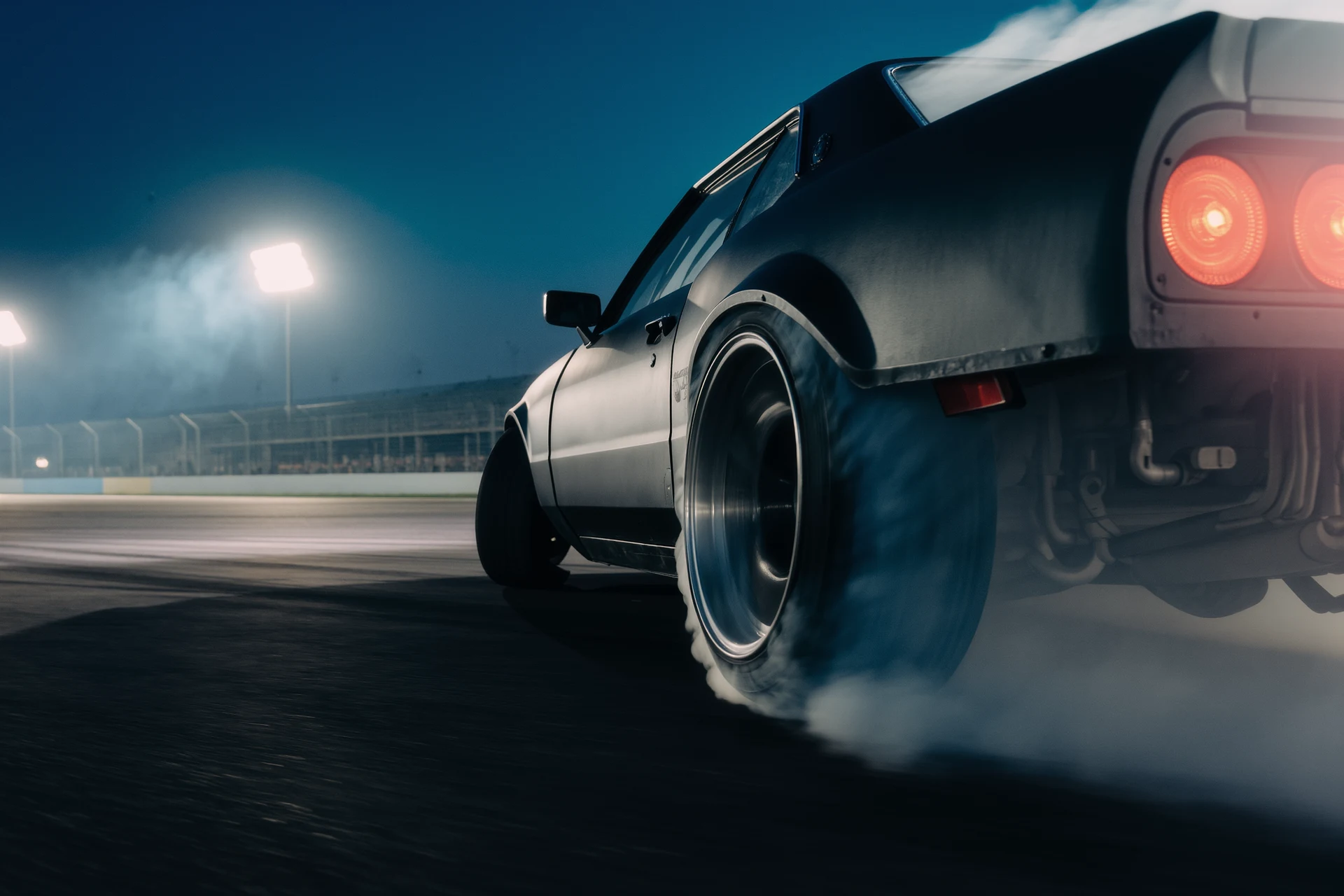
So, you’re wondering if simulator training can actually help you get better at drifting? The short answer is a resounding yes. While nothing can perfectly replicate the feel of a real car and a track, simulators have become incredibly sophisticated tools. They allow you to practice complex maneuvers, understand car dynamics, experiment with different setups, and build muscle memory in a safe, affordable, and accessible way. Think of it as a highly focused, repetition-heavy training ground that translates directly to real-world driving improvement, especially when it comes to mastering those controlled slides.
Let’s be honest, real-world drifting isn’t exactly for the faint of heart, nor is it cheap. Between car wear and tear, tire costs, track time, and the inherent risk of crashing, getting serious about drifting can be a significant investment. Simulators offer a brilliant alternative. They let you dive deep into the mechanics of drifting without the financial or physical consequences. You can spend hours, days, even weeks practicing a single technique until it becomes second nature. This kind of dedicated, consequence-free practice is invaluable for building confidence and refining your skills.
More Than Just a Game: The Scientific Approach
Modern sim racing titles, especially those focused on drifting, are built on detailed physics engines. These engines are designed to accurately model everything from tire grip and suspension travel to weight transfer and aerodynamic forces. This means that what you experience in the sim, the way the car breaks traction, how it slides, and how you correct it, often closely mirrors what you’d feel in a real vehicle. Developers work with real drivers and engineers to fine-tune these models, making them remarkably realistic.
Cost-Effectiveness and Accessibility
The cost of a dedicated sim rig can seem high upfront, but compare it to the recurring costs of real drifting. A set of tires for a drift car can cost hundreds of dollars, and you’ll go through them quickly. Track days have entry fees, and the potential for body damage can run into thousands. Your simulator, once purchased, has no ongoing consumable costs. Plus, you can practice whenever you want, in your own garage, at 2 AM if the mood strikes. This accessibility means you can rack up hours of practice that would be impossible or prohibitively expensive in reality.
Safety First: A Consequence-Free Playground
This is perhaps the most significant advantage. Crashing in a simulator means a quick reset, no injuries, and no expensive repairs. This freedom from fear allows you to push the limits, experiment with aggressive inputs, and make mistakes without repercussions. Learning from those mistakes in a safe environment is crucial for developing the quick reflexes and precise control needed for drifting. You can explore scenarios that would be incredibly dangerous on a real track, building an understanding of how the car will react in extreme situations.
Building Foundational Skills in the Virtual World
Before you even think about pulling off a stylish entry, simulators are fantastic for drilling down on the absolute fundamentals of controlling a sliding vehicle. These are the bedrock upon which all advanced drifting techniques are built.
Understanding Weight Transfer: The Key to Initiation
Drifting is all about managing weight transfer. When you initiate a drift, you’re deliberately upsetting the car’s balance to break rear traction. Simulators excel at letting you feel and manipulate this.
Throttle Control and Its Impact
In the sim, you’ll quickly learn how subtle changes in throttle input can make a huge difference. A sudden jab can break traction instantly, while a smooth application can maintain a controlled slide. You can experiment with different throttle application styles, quick taps, sustained pressure, and modulation, to see how they affect the car’s yaw angle and speed.
Braking and Steering Dance
Using the brakes to initiate a drift, known as a brake drift, is a fundamental technique. Simulators allow you to practice the precise timing and pressure needed. You’ll learn to brake just enough to unsettle the rear, then immediately move to counter-steer. This dance between braking and initial steering input is something you can practice endlessly in a sim.
Mastering Counter-Steering: The Art of Correction
This is where a lot of drifters get into trouble: either over-steering or under-steering because they don’t have the right counter-steer input. Simulators provide immediate feedback.
Visual and Haptic Feedback
Even with a good wheel and pedals, the visual cues in a simulator are paramount. You’ll see the car’s angle and observe its trajectory. Paired with force feedback through your wheel, you’ll start to feel the subtle changes in steering weight as the car slides. This combination trains your brain to anticipate and react instinctively.
Practicing the “Catch”
The “catch”, applying counter-steer to prevent a spin, can be practiced repeatedly. You can deliberately overdo it, see what happens, then try again with a lighter touch. This iterative process helps you develop the fine motor control and spatial awareness needed to keep the car pointed in the general direction you want it to go, even when it’s sideways.
Simulating Core Drift Techniques: From Entry to Exit
Once you’ve got the basics down, simulators are perfect for practicing the specific techniques that define a drift. You can break down complex maneuvers into smaller, manageable steps.
Initiating the Drift: Getting it Sideways
There are several ways to initiate a drift, and simulators allow you to experiment with each one until it feels natural.
Power Oversteer: The Classic
This is as simple as applying enough throttle to break rear traction. In a sim, you can experiment with how much throttle is needed for different cars and tire pressures. You’ll learn to modulate the throttle to maintain the desired slip angle.
Clutch Kick and Handbrake: Aggressive Entries
These are higher-skilled techniques. A clutch kick involves momentarily disengaging the clutch while on throttle, followed by a rapid re-engagement. A handbrake pull locks up the rear wheels, causing a slide. Simulators with haptic feedback on a clutch pedal and a simulated handbrake can provide a surprisingly realistic feel for these inputs. You can practice the timing and force required to execute them smoothly.
Scandinavian Flick (Feint): The Corner Entry Masterclass
This technique involves a quick steering input away from the corner, followed by a steering input into the corner. It’s all about using the car’s inertia. Simulators allow you to practice the timing of these inputs to initiate a gentle oversteer into the corner, setting you up perfectly.
Maintaining the Drift: The Art of Balance
Getting the car sideways is one thing; keeping it there is another. This requires constant adjustments.
Throttle Modulation: Your Steering Wheel
Your throttle pedal becomes your primary steering input while drifting. In the sim, you can practice feathering the throttle, giving short bursts, or holding it steady to control the drift angle and speed. You’ll learn how different levels of throttle affect the rear grip and the car’s tendency to spin or straighten.
Steering Input Refinement: Micro-Adjustments
Even while sideways, you’ll still be using your steering wheel, often with very subtle inputs. The force feedback from your wheel in a simulator is crucial here. You’ll learn to feel the tire grip (or lack thereof) and make tiny corrections to keep the car from spinning out.
Exiting the Drift: Transitioning Back to Grip
Successfully exiting a drift is as important as initiating it. It requires a smooth transition of weight and grip.
Transitioning from Oversteer to Understeer (and back!)
This is the basis of most multi-drift sequences. You’ll practice steering into the slide to straighten the car, then as the rear begins to grip, you’ll steer the other way to initiate the next drift. Simulators allow you to practice these transitions until they are seamless, making you more comfortable with complex sequences.
Controlled Straightening
The goal is not always a perfectly straight exit, but a controlled one that sets you up for the next maneuver or for the end of the corner. Simulators let you practice applying the right amount of counter-steer as the rear tires regain grip.
Advanced Drift Scenarios and Tuning in Simulators
Once you’ve conquered the basics, simulators offer advanced features that can further refine your drifting prowess.
Practicing Tandem Drifting: The Ultimate Test
Drifting with other cars, known as tandem drifting, is a highlight of the sport. Simulators are exceptionally good at replicating the challenges of tandem.
Following Lines and Proximity
You can practice holding a consistent line behind another car, maintaining the correct distance, and anticipating their movements. This is crucial for developing spatial awareness and the ability to react to another driver’s actions.
Communication and Anticipation
While not directly simulated, the act of practicing with AI or online with friends forces you to think about communication and anticipation. You learn to read the lead car’s intentions and react accordingly, building the non-verbal communication that’s so vital in real tandems.
Experimenting with Car Setups: The Tuning Bench
Most serious drift simulators allow you to tune your virtual cars. This is a game-changer for understanding how different settings affect handling. This knowledge is directly transferable to real-world tuning.
Suspension Geometry: Camber, Caster, Toe
Adjusting these parameters can significantly alter how the car behaves under load and during slides. You can experiment in the sim to see how more negative camber affects grip on the front during a drift, or how caster influences steering feel.
Differential Settings: LSD Tuning
The limited-slip differential (LSD) is critical for drifting. You can experiment with different LSD preload and locking percentages in the sim to see how it affects the car’s tendency to break traction and maintain a slide. A more aggressive LSD will make it easier to break traction and keep the rear wheels spinning, while a less aggressive one will require more throttle input.
Spring Rates and Dampers: Finding the Sweet Spot
Stiffer springs can reduce body roll, making the car more responsive, but can also make it snap oversteer. Simulators let you feel these differences in a controlled environment. You can dial in different damper settings to control rebound and compression, influencing how the car reacts to bumps and weight transfer.
Tire Pressures and Compounds: The Grip Equation
This is a simple but effective tuning element. You can experiment with different tire pressures to see how they affect grip levels and how easily the car slides.
Low Pressure for More Slip
Running lower tire pressures can effectively reduce the contact patch, making it easier to break traction and initiate a drift. You can feel this difference in the sim.
Compound Choices
Some simulators offer different tire compounds, mimicking real-world options like harder, longer-lasting tires and softer, grippier tires. Experimenting with these allows you to understand their trade-offs in a drifting context.
Transitioning from Simulator to Real Car: Bridging the Gap
While simulators offer incredible training, the ultimate goal is to apply these skills in a real car. The transition can be smoother than you think if you leverage your simulator experience effectively.
The Feel Factor: Bridging the Sensory Gap
This is where simulators have limitations. The subtle vibrations, the actual grip levels, and the nuanced feedback through your body are hard to replicate. However, your simulator training will have prepared your mind.
Trusting Your Instincts
After countless hours in the sim, your reflexes will be sharper. When you get into a real car, you’ll likely find that your instincts are already primed. You’ll start making the correct inputs almost automatically.
Focusing on the Key Sensations
In a real car, pay close attention to the steering wheel feedback and the sounds of the tires. These are the most direct indicators of what the car is doing and will feel more familiar due to your simulator experience.
Practicing on Safer Terrains
When you first transition, don’t jump straight into a competitive drift event. Find safe environments to practice.
Empty Parking Lots (with permission, of course)
Large, empty paved areas can be great for initial practice. You can feel the car break traction and make your first real-world corrections without the danger of a track.
Dedicated Driving Circuits
If available, driving circuits that offer specific training days or offer open track sessions can be ideal. This allows you to gradually increase your speed and aggression in a controlled environment.
Gradual Progression: Building Confidence Step-by-Step
Don’t expect to be a drift king on your first outing. Build your confidence and skills incrementally.
Start with Gentle Slides
Focus on executing smooth, controlled entries and exits. Don’t try to over-rotate or do anything too radical initially.
Increase Speed and Angle Over Time
As you become more comfortable, gradually increase your entry speed and the angle of your slides. Listen to your car and your own physical feedback.
The Future of Drift Training: Enhanced Realism and Integration
The world of sim racing is constantly evolving, promising even more integrated and realistic training for aspiring drifters.
VR and Advanced Haptics: Immersive Realism
Virtual Reality (VR) headsets are becoming increasingly affordable and offer an unparalleled level of immersion. When combined with advanced haptic feedback systems, like motion platforms, the line between simulation and reality begins to blur.
Enhanced Spatial Awareness
VR allows you to genuinely feel like you’re in the car, looking around the cockpit and out the windows. This improves your spatial awareness, a critical component of drifting.
Feeling the G-Forces
Motion platforms can simulate the G-forces experienced during acceleration, braking, and cornering, adding another layer of realism to the simulator experience.
AI and Machine Learning: Personalized Coaching
The use of artificial intelligence (AI) and machine learning is set to revolutionize simulator training. AI can analyze your driving and provide personalized feedback, identifying weaknesses and suggesting areas for improvement.
Identifying Subtle Mistakes
AI can detect inconsistencies in your throttle application, steering inputs, or braking points that a human might miss, helping you fine-tune your technique.
Adaptive Learning Scenarios
Imagine a simulator that adapts the difficulty and challenges based on your performance, providing a constantly evolving and engaging learning experience.
Direct Integration with Real-World Data
Future simulators might incorporate data from professional drivers’ real-world sessions, allowing you to directly compare your performance and learn from the best.
In conclusion, mastering drift techniques with simulator training is not just possible; it’s an increasingly effective and essential part of a modern drifter’s journey. By leveraging the safety, accessibility, and sophisticated physics engines of today’s simulators, you can build a strong foundation, refine advanced techniques, and prepare yourself for the thrill of real-world drifting without the excessive risks and costs. It’s a smart, practical, and ultimately, fun way to hone your skills and get you sliding with confidence.
FAQs
What is a drift practice simulator?
A drift practice simulator is a virtual reality or computer-based program that allows users to practice and improve their drifting skills in a simulated environment. It provides a safe and controlled setting for drivers to hone their techniques without the risks associated with real-world drifting.How does a drift practice simulator work?
A drift practice simulator typically uses advanced physics engines and realistic driving dynamics to simulate the experience of drifting. Users can control a virtual car using a steering wheel, pedals, and other input devices, and the simulator provides visual and auditory feedback to help users understand and improve their drifting performance.What are the benefits of using a drift practice simulator?
Using a drift practice simulator allows drivers to improve their drifting skills in a safe and controlled environment. It can help drivers learn and practice advanced techniques, such as controlling oversteer and maintaining a slide, without the risks associated with real-world drifting. Additionally, it can be a cost-effective way to train and improve driving skills.What features should I look for in a drift practice simulator?
When choosing a drift practice simulator, look for features such as realistic physics and driving dynamics, a variety of virtual cars and tracks to choose from, adjustable difficulty settings, and the ability to customize and fine-tune the driving experience. Additionally, consider compatibility with different input devices and the availability of online multiplayer or competitive modes.Are there any drawbacks to using a drift practice simulator?
While drift practice simulators can be a valuable tool for improving driving skills, they may not fully replicate the real-world experience of drifting. Factors such as vehicle feedback, environmental conditions, and the physical sensations of driving may be different in a simulator compared to real-world drifting. Additionally, some users may find that the skills learned in a simulator do not directly translate to real-world driving.More from Drifting
Virtual Drifting: A Thrilling Experience
Virtual drifting is, in short, a digital simulation of the high-skill, car-control sport of drifting. It’s about sliding a car through a turn, m…
Mastering Drifts: Professional Simulator Experience
So, you want to get good at drifting in a simulator, huh? The short answer is: it takes a lot of practice, the right equipment, and a solid understand…
Mastering the Art of Sim Racing Drifting
Let’s dive into the world of sim racing drifting. If you’re wondering how to actually drift in a simulator, it boils down to a controlled …