Oval racing: the discipline road racers underestimate
Oval racing is the discipline road racers underestimate: what actually makes it hard, how the simulators support it and the first month done properly.
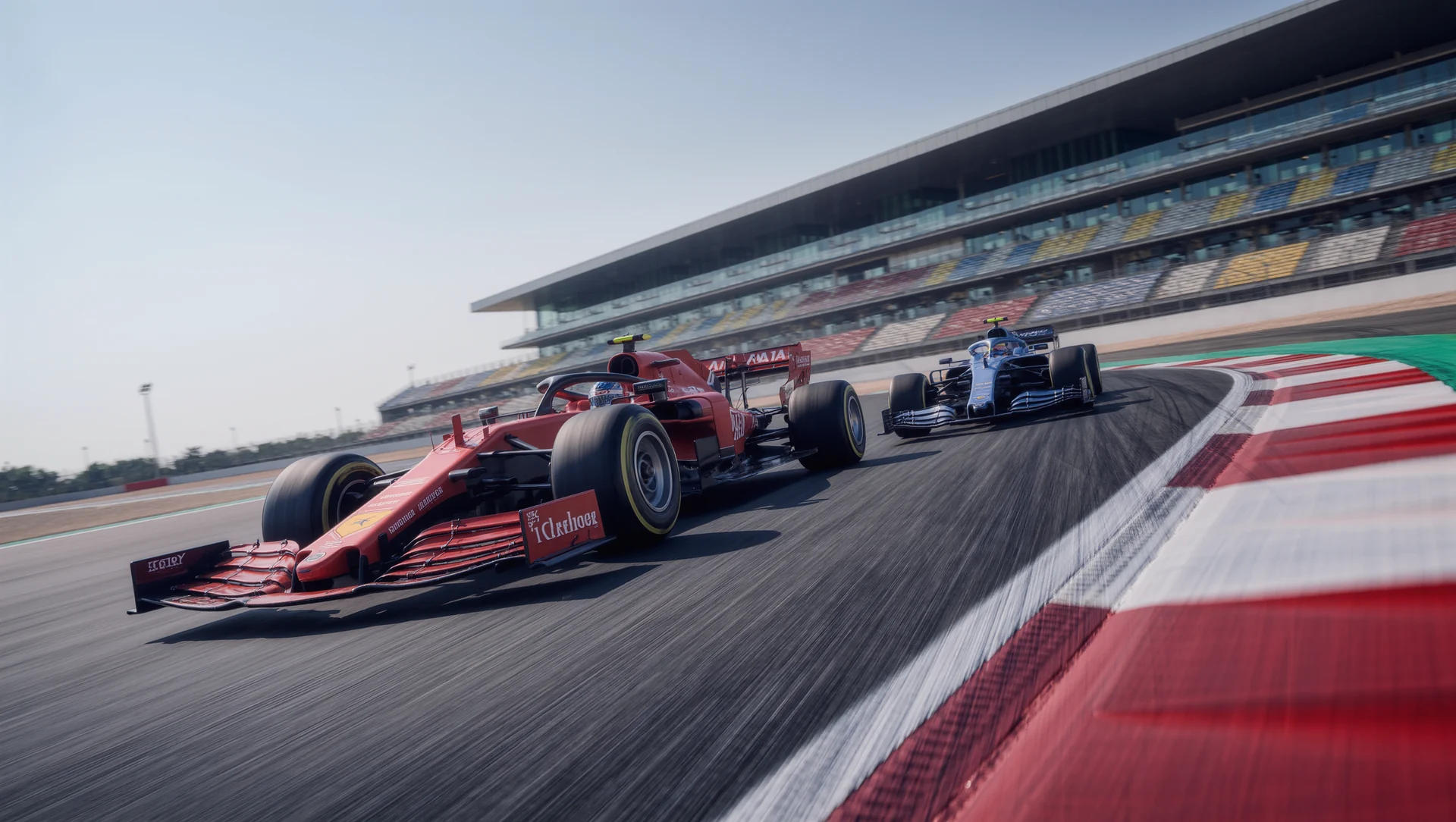
Four left turns sounds like the easiest thing in racing until you try to hold a car three centimetres from a wall at 300 km/h with somebody's bumper removing air from your rear wing. Oval racing is not simpler than road racing, it is a different problem with a much smaller margin for error.
What makes it hard
The margin is the first thing. On a road circuit a mistake usually costs a lap time and a runoff area absorbs the rest; on an oval the same mistake meets a wall, and a car damaged at 300 km/h takes several other cars with it. That changes the objective from finding time to never being the reason a race ends.
Aerodynamics is the second. Cars in traffic remove air from each other, so the grip available depends on where the cars around you are, and it changes several times per lap. The skill of reading that is invisible from outside and takes longer to learn than any circuit.
The third is that the car changes underneath you continuously. Fuel burns off, tyres wear asymmetrically because every corner turns the same way, and a car that is perfect on lap ten is loose on lap forty. Setup adjustments made during the race are part of the discipline rather than an emergency measure.
What the simulators offer
iRacing publishes more than 150 tracks with over 425 configurations, and its oval content includes the venues the discipline is actually built around, from short tracks to superspeedways and dirt ovals. The structured licence and race system matters more here than anywhere else, because oval racing depends on everybody in the field behaving predictably.
Automobilista 2 is one of the few road racing simulators that engineered for ovals rather than tolerating them, and its official listing names Full Course Yellow support specifically. That is not a cosmetic feature: caution periods, the running order under yellow and the restart are a large part of what an oval race is.
The practical point is that the surrounding software matters as much as the physics. An oval race with no caution handling and no consistent rules is a demolition derby, and the simulators that treat the discipline seriously are the ones that built the rules infrastructure for it.
| Item | Figure |
|---|---|
| Tracks in iRacing | more than 150 |
| Configurations in iRacing | over 425 |
| Full Course Yellow support | named in the Automobilista 2 feature list |
| Target consistency to start racing | under two tenths over twenty laps |
| First ten races | judged on causing no cautions, not on position |
The first month, done properly
Start on a short track, not a superspeedway. Speeds are lower, the corners are longer and the consequences of a mistake are survivable, and the skill you need first is holding a line while somebody is alongside for a full corner.
Practise alone until your lap times over twenty laps vary by less than two tenths. On an oval, consistency is not a virtue but the entry requirement: a driver whose line moves by half a car width lap to lap is unpredictable to everybody around them.
Then run the lowest level races you can find and finish them. Position does not matter for the first ten races; what matters is that you never caused a caution. That is the reputation the discipline runs on, and it is built race by race.
What road racers get wrong
They brake. On most ovals the corner is taken by lifting rather than braking, and a driver applying a road racing braking technique unsettles the car exactly where there is no room for it.
They chase a fast lap. In a 200 lap race, the driver who is two tenths slower and finishes will beat the fast one who did not, and this is more true here than in any other discipline.
They also underestimate the arithmetic. A 200 lap race on a 1.5 mile oval is 300 miles and roughly 2 hours, with about 4 pit stops, 800 corners taken at the same angle and a fuel load that falls by perhaps 60 kilogrammes between the first lap and the last. Every one of those 800 corners is driven in a car that is a little different from the corner before.
And they treat the setup as fixed. Weight jacker, wedge and tyre pressures exist to be used during the race as the fuel load drops, and ignoring them means driving a car that gets progressively wronger for two hours.
Sources
Frequently asked questions
Is oval racing easier than road racing?
No. The corners are simpler and the margin is far smaller, and the traffic skill takes longer to learn than any circuit layout.
Do I brake on an oval?
On short tracks sometimes, on superspeedways almost never. Lifting is the primary tool, and braking usually unsettles the car.
Why do people adjust the setup during the race?
Because the fuel load and tyre wear change the balance continuously, and the tools exist specifically to correct that from the cockpit.
Which simulator should I start in?
One with structured licences and caution handling. Oval racing depends on predictable behaviour from the whole field, and that is a rules question rather than a physics one.
More in Games & Platforms
Console wheel compatibility without the marketing
Console wheel compatibility explained by where the licensing chip sits, which combinations work on which platform and what that means before you buy.
Braking points you can repeat, not remember
Braking points you can repeat rather than remember: the arithmetic behind the distances, why markers fail and the method that survives a race.

Trail braking: the technique that separates the field
Trail braking explained through the friction circle: why it works, what it costs when done wrong and how to learn it in one session per corner.