Ultimate Drifting Event Simulator: Experience the Thrill
Thinking about diving into the world of virtual drifting? The “Ultimate Drifting Event Simulator” offers a really solid way to get a taste of the thrill without the rea…

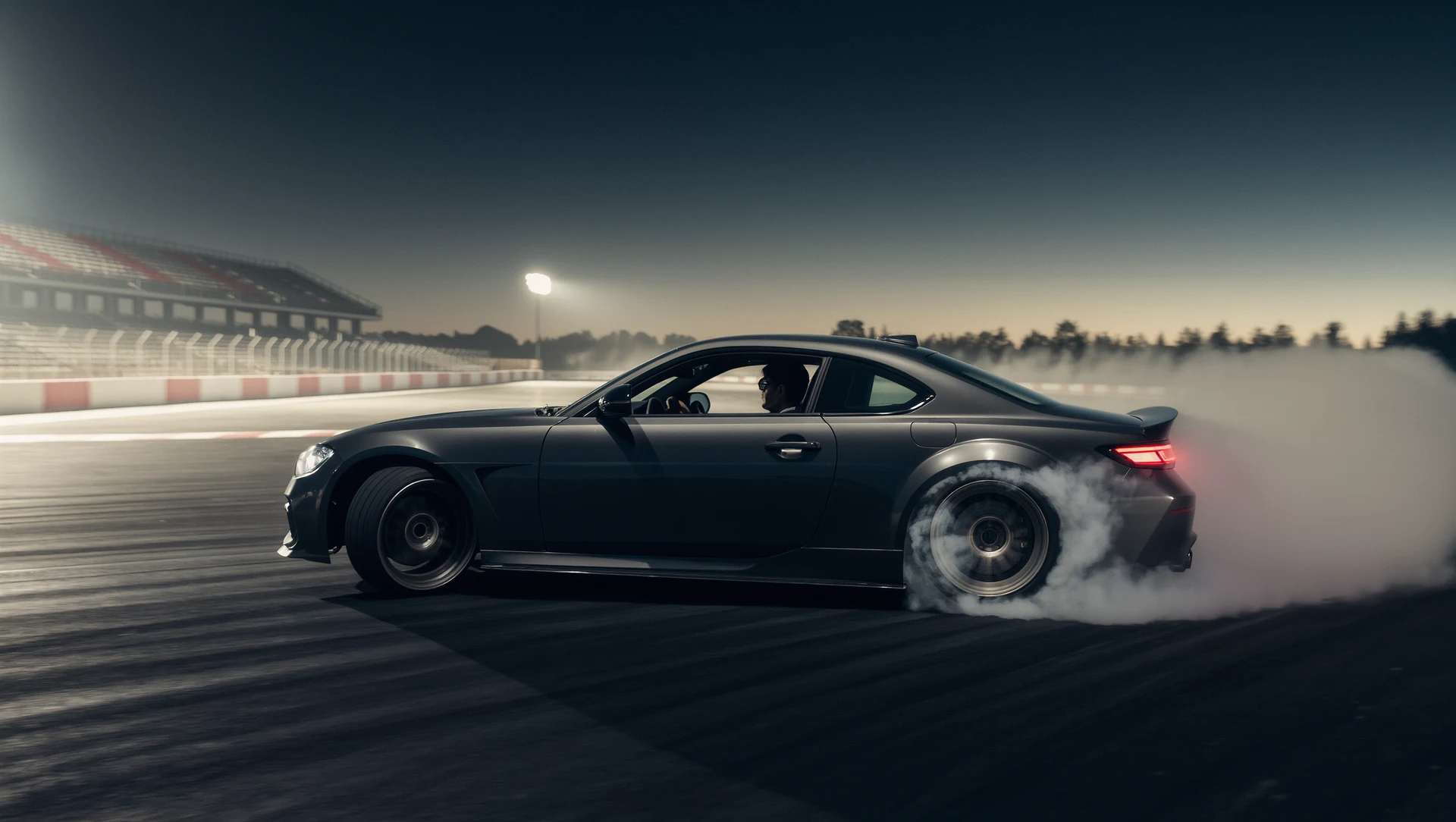
Thinking about diving into the world of virtual drifting? The “Ultimate Drifting Event Simulator” offers a really solid way to get a taste of the thrill without the real-world risks or massive expense. It’s designed to give you a surprisingly accurate feel for what it’s like to slide a car sideways, and it does a pretty good job of it.
So, “ultimate” is a strong word, right? When we talk about an ultimate drifting simulator, we’re really looking at a blend of several key elements that come together to create a truly immersive and challenging experience. It’s not just about flashy graphics; it’s about the underlying physics and how well it translates to your controls.
Realistic Physics Engine
This is arguably the most crucial part. A great drifting simulator needs a physics engine that accurately models vehicle dynamics. This means:
- Weight Transfer: How the car’s weight shifts during acceleration, braking, and cornering is fundamental to drifting. You should feel the load transfer to the rear when you dump the clutch or to the front when you brake hard. A good simulator will make this palpable, often through force feedback in your wheel.
- Tire Model: The interaction between tires and the road surface is complex. An “ultimate” simulator will have a sophisticated tire model that accounts for grip levels, heat buildup, and how tires behave under extreme slip angles. You’ll actually feel the tires lose and regain grip, which is essential for maintaining a slide.
- Suspension Behavior: The way the springs, dampers, and anti-roll bars react to inputs and road irregularities plays a huge role in how a car feels and handles. A realistic suspension model allows for precise control of weight distribution, which is key to initiating and holding a drift.
- Powertrain Dynamics: How the engine delivers power, the gear ratios, and the differential all impact the car’s ability to break traction and maintain a drift. A good simulator will accurately represent these elements, allowing you to use engine power effectively to control your slide.
High-Fidelity Graphics and Sound
While not as critical as physics, good visuals and audio significantly enhance the immersion.
- Visual Feedback: Clear, crisp graphics help you judge speed, distance, and angle. A well-designed track with discernible reference points is vital for lining up your drifts. Dynamic lighting and weather effects can also add to the challenge and realism.
- Auditory Cues: The sound of the engine, tires squealing, and even the wind rushing past can provide valuable feedback. Hearing the engine revs and tire scrub can help you gauge your slip angle and power application, even when you’re focused on the visual aspect of the drift.
Comprehensive Car and Track Selection
Variety keeps things interesting and allows you to explore different drifting styles.
- Diverse Vehicle Roster: From classic Japanese drift machines to modern, purpose-built drift cars, a wide selection lets you experiment with different power-to-weight ratios, wheelbase lengths, and suspension setups. Each car should feel distinct.
- Iconic Drift Tracks: Having access to accurately recreated famous drift circuits, as well as challenging custom layouts, provides a range of environments to test your skills. Each track should present unique challenges and opportunities for different drifting techniques.
Getting Started: Your First Slides
Jumping into a drifting simulator can feel a bit overwhelming at first, especially if you’re new to the concept of intentionally losing traction. But don’t worry, everyone starts somewhere. The key is to break it down and practice.
Essential Hardware Setup
While you can drift with a keyboard or gamepad, you’ll get a much, much better experience with proper hardware.
- Force Feedback Steering Wheel: This is almost non-negotiable for a truly immersive experience. The force feedback will tell you what the car is doing, when you’re losing grip, when you’re gaining it back, and how much counter-steer you need. Without it, you’re missing a huge chunk of crucial information.
- Pedals (with Clutch): A good set of pedals, especially those with a clutch pedal, will significantly improve your control. Being able to kick the clutch (a fundamental drifting technique) adds another layer of realism and control. Load cell brakes are a bonus for more consistent braking.
- Handbrake: Many wheel setups now include a dedicated handbrake accessory. This isn’t strictly necessary for all drifting, but it’s vital for certain techniques like the handbrake entry and can make initiating a drift much smoother and more controlled.
Basic Drifting Techniques to Master
Don’t try to be a drift king on day one. Focus on the fundamentals.
- Initiating a Drift: There are several ways to get the car sideways. Start with the most common:
- Power Over: Accelerate hard in a corner to intentionally break traction on the driven wheels. This is often the easiest to learn.
- Clutch Kick: Briefly depress and then release the clutch while accelerating to send a jolt of power to the rear wheels, breaking traction. This is a very effective and widely used technique.
- Handbrake Entry: Use the handbrake to lock the rear wheels momentarily, causing the car to rotate. You’ll need to release it quickly and apply throttle to maintain the slide.
- Controlling the Slide: Once you’re sideways, it’s all about balancing throttle and counter-steer.
- Throttle Control: This dictates your slip angle and speed. Too much throttle, and you’ll spin out; too little, and you’ll straighten up. You’ll be constantly modulating the throttle.
- Counter-Steer: As the car starts to slide, you need to steer in the opposite direction of the slide. The amount of counter-steer needed is always changing. Your force feedback wheel will be a huge help here, as it will naturally try to snap to the correct counter-steer angle.
- Linking Corners: Once you can hold a slide, the next step is linking multiple corners together seamlessly. This involves transitioning from one drift to another, often using techniques like the feint drift (shifting weight in the opposite direction before initiating the slide).
Understanding Advanced Drifting Concepts
As you get more comfortable, you’ll want to dig into some of the more nuanced aspects that separate a good drifter from a great one.
The Drift Line and Apexes
Just like racing, drifting has a “line” you’re aiming for. It’s different, though.
- Apex Management: In drifting, your apex isn’t necessarily the geometric center of the corner. It’s where you want the rear of your car to be closest to the inside of the track. You’re effectively aiming to slide past the traditional apex.
- Exit Trajectory: A good drift sets you up for the next corner. You want to exit the corner with enough speed and in the right position to initiate your next slide without having to straighten out too much.
Tuning for Drift
A simulator usually allows for deep car tuning. This is where you can really adapt a car to your style.
- Suspension Adjustments:
- Stiffer Springs/Dampers: Can make the car more responsive to inputs but also less forgiving.
- Softer Springs/Dampers: Can provide more grip and make the car easier to catch, but might feel less direct.
- Camber/Caster/Toe: These alignment settings have a significant impact on tire contact patch and steering feel, crucial for initiating and holding angle.
- Differential Settings:
- Higher Lock: A more locked differential makes it easier to break traction and hold a slide (both wheels spin at roughly the same rate), but can also make the car more prone to spinning if you’re not careful.
- Lower Lock: A more open differential will make it harder to initiate a drift with power, but might offer more progressive slip.
- Tire Pressure: Can influence the tire’s contact patch and heat buildup, affecting overall grip and predictability when sliding. Experimenting with slightly lower rear pressures can often help with grip.
Community and Competition
One of the great things about simulators is the thriving community aspect. You’re rarely drifting alone.
Online Multiplayer and Lobbies
Most ultimate drifting simulators feature robust online multiplayer.
- Freestyle Lobbies: These are fantastic for just practicing with others, trying out new lines, and getting comfortable with cars. There’s usually less pressure, and you can learn a lot by watching how others tackle sections of a track.
- Tandem Drifting: This is where things get really exciting. Tandem drifting involves two or more cars drifting in close proximity, mirroring each other’s lines and angles. It requires immense coordination and communication (if you’re using voice chat) and is a true test of skill.
- Organized Events and Championships: Many communities host leagues and championships, from casual to highly competitive. This is a great way to push your skills, learn from experienced drivers, and experience the thrill of competition.
Resources and Learning Platforms
The community isn’t just about racing; it’s also about sharing knowledge.
- Community Forums and Discord Servers: These are goldmines for information. You can find tuning setups, ask questions, get feedback on your driving, and connect with other enthusiasts.
- YouTube Tutorials and Walkthroughs: Many experienced sim drifters create content explaining techniques, car setups, and track guides. Watching these can accelerate your learning curve significantly.
- Modding Communities: Depending on the simulator, there might be extensive modding communities providing custom cars, tracks, and even physics tweaks. This can greatly expand the content available and offer new challenges.
Beyond the Basics: Pushing Your Limits
Once you’ve got a handle on the fundamentals and are comfortable linking corners, it’s time to refine your techniques and really push the boundaries.
Precision and Style Points
Drifting isn’t just about getting sideways; it’s about doing it with style and control.
- Angle, Speed, and Proximity (ASP): These are the three key metrics often judged in real-world drift competitions.
- Angle: How much counter-steer you’re holding and how far sideways the car is. More angle generally scores higher, but it must be controlled.
- Speed: Carrying good speed through the drift is crucial. Slow, hesitant drifts aren’t as impressive.
- Proximity: Getting close to clipping points (virtual cones or markers on the track) and to other cars in tandem is a huge part of the challenge.
- Smooth Transitions: Making the switch from one slide to another without significant corrections or losing momentum is a hallmark of skilled drifting. It’s about finding that rhythm.
- Initiation Variety: Don’t just stick to one way of starting a drift. Practice feint entries, braking drifts, and high-speed entries to adapt to different track layouts and situations.
Spectator Mode and Replays
Utilize the tools the simulator provides to improve.
- Reviewing Your Driving: Watch your replays from different camera angles. Where did you lose angle? Where could you have carried more speed? Did you hit your clipping points? Self-analysis is a powerful learning tool.
- Learning from Others: Most simulators allow you to watch other drivers’ replays, or even spectate live online sessions. Pay attention to their lines, their throttle inputs, and their steering corrections. You might pick up a trick or two.
Ultimately, the “Ultimate Drifting Event Simulator” isn’t just a game; it’s a platform for learning, challenging yourself, and connecting with a passionate community. It offers a relatively safe and accessible way to experience a unique motorsport that’s incredibly difficult and expensive to pursue in real life. So, get your wheel set up, pick a car, and start sliding. The thrill is addictive.
FAQs
What is a drifting event simulator?
A drifting event simulator is a virtual reality or video game simulation that allows players to experience the thrill and excitement of drifting events. Players can control virtual cars and compete in drifting competitions, while experiencing realistic physics and car handling.How does a drifting event simulator work?
A drifting event simulator typically uses advanced graphics and physics engines to create a realistic driving experience. Players use a steering wheel, pedals, and sometimes a virtual reality headset to control their virtual car and navigate through drifting courses.What are the features of a drifting event simulator?
Features of a drifting event simulator may include a variety of drifting courses, customizable cars, realistic car physics, multiplayer modes for competing with other players, and the ability to fine-tune car setups for optimal drifting performance.What are the benefits of using a drifting event simulator?
Using a drifting event simulator can provide players with a safe and controlled environment to practice and improve their drifting skills. It can also be a fun and immersive way to experience the excitement of drifting events without the risks associated with real-life racing.Are there different types of drifting event simulators available?
Yes, there are various drifting event simulators available, ranging from video games for gaming consoles and PC to more immersive experiences using virtual reality technology. Some simulators are designed for casual gaming, while others are used for professional training and competitions.More from Drifting

Virtual Drifting: A Thrilling Experience
Virtual drifting is, in short, a digital simulation of the high-skill, car-control sport of drifting. It’s about sliding a car through a turn, m…

Mastering Drifts: Professional Simulator Experience
So, you want to get good at drifting in a simulator, huh? The short answer is: it takes a lot of practice, the right equipment, and a solid understand…
Mastering the Art of Sim Racing Drifting
Let’s dive into the world of sim racing drifting. If you’re wondering how to actually drift in a simulator, it boils down to a controlled …