Enhance Your Racing Simulator with Top Accessories
Ready to take your racing simulator to the next level? You’ve probably got a decent wheel and pedal setup already, but the real magic happens when you start adding those extra bits…
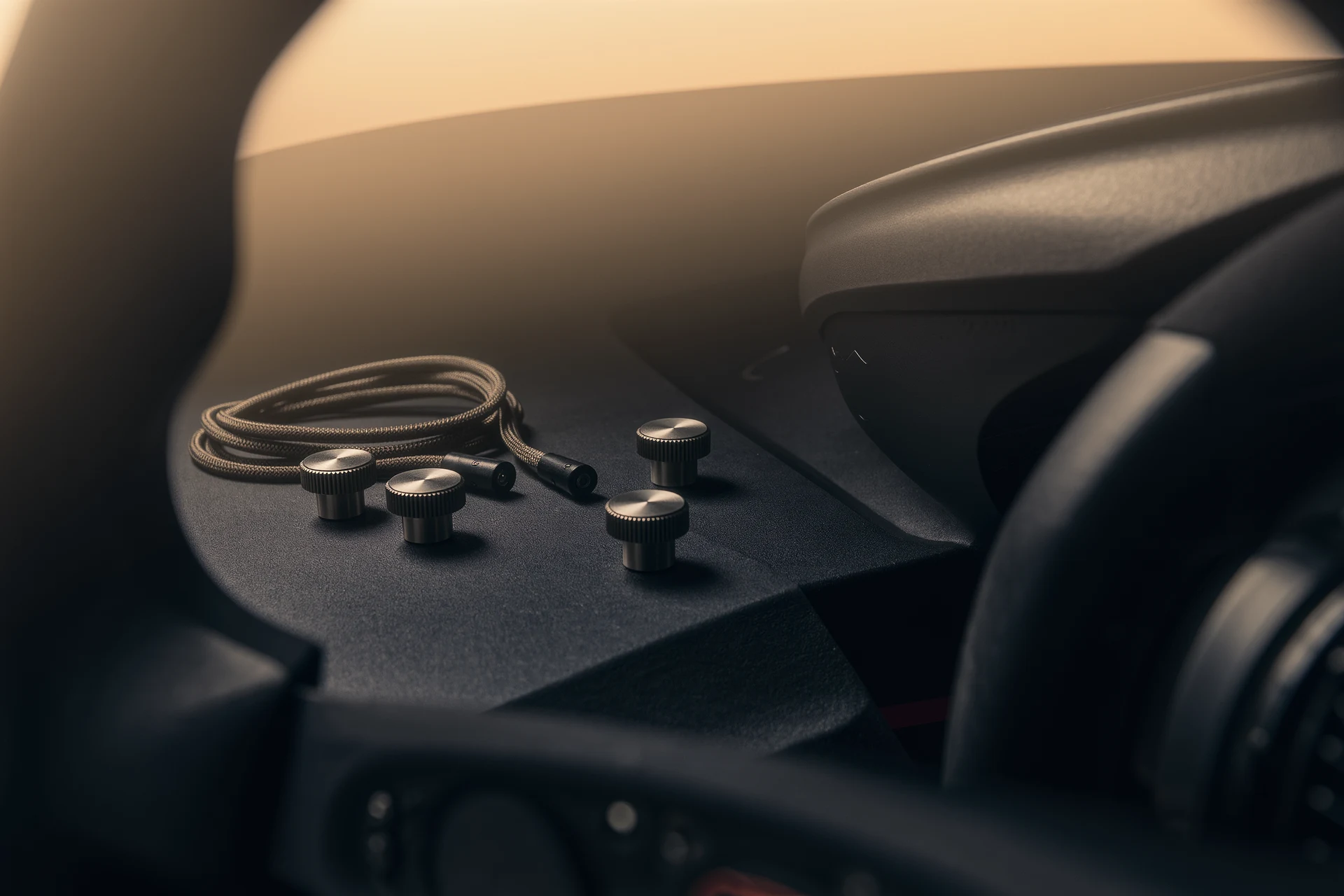
Ready to take your racing simulator to the next level? You’ve probably got a decent wheel and pedal setup already, but the real magic happens when you start adding those extra bits and pieces. Think of it like upgrading your car itself, a better engine is great, but the right tires, suspension, and even a comfortable seat make a huge difference in how you perform and enjoy the ride. This guide is all about practical additions that actually enhance your experience, not just pretty-looking gadgets. We’ll break down what actually matters and why it matters, so you can make smart choices for your rig.
Your steering wheel is your primary connection to the virtual track. If it’s basic, your feedback and control will be too. Upgrading your wheel can be the single biggest leap in simulator immersion.
Force Feedback: Feeling the Road
This is the big one. Good force feedback (FFB) lets you feel what the car is doing.
What is Force Feedback?
Essentially, the FFB system in your wheel simulates the forces you’d feel through a real steering wheel. This includes things like the road surface, tire grip, engine vibrations, and the effects of bumps and kerbs.
Why Does It Matter?
Without good FFB, you’re just guessing at what your tires are doing. With it, you can:
- Sense Tire Grip: Feel when your tires are about to lose traction, allowing you to make micro-adjustments and avoid sliding out. This is crucial for getting the most out of every corner.
- Understand Road Texture: Subtle vibrations can tell you if you’re on tarmac, grass, or a bumpy kerb, affecting your car’s handling and your confidence.
- Receive Impact Feedback: Experience the jolt of hitting a kerb, a bump, or even making contact with another car. This adds a layer of realism that’s hard to replicate otherwise.
- Feel Steering Weight: As your car builds speed, the steering naturally gets heavier and less direct. A good FFB wheel replicates this sensation, making high-speed cornering feel authentic.
Types of Force Feedback
- Gear Driven: Often the cheapest but can feel notchy or imprecise. You might feel distinct “clicks” as gears move.
- Belt Driven: Smoother than gear-driven wheels, offering a more linear feel. This is a good mid-range option.
- Direct Drive: The ultimate in FFB. The steering wheel is directly attached to powerful motors. This offers incredible detail, responsiveness, and raw power. It’s often the most expensive but provides the most authentic experience.
Choosing Your Wheel
Consider your budget and the types of racing you enjoy. For casual sim racing, a good belt-driven wheel offers a significant upgrade. If you’re serious about competitive sim racing and want the most immersive experience, a direct drive wheel is the goal, though it comes with a significant investment. Look for wheels that offer robust software for tuning FFB settings, as this allows you to dial in the feel to your preferences and the specific car you’re driving.
Pedals That Perform: More Than Just Stopping
Your pedals are your connection to acceleration and braking. While many stock wheels come with basic pedals, upgrading them unlocks a new level of control.
Braking Precision Matters
The ability to modulate your braking is fundamental to fast lap times and consistent performance.
The Problem with Stock Pedals
Many entry-level wheel sets come with simple spring-loaded pedals. These often lack:
- Feel: It’s hard to tell exactly how much pressure you’re applying.
- Consistency: The resistance can feel uneven, making it difficult to hit the same braking point repeatedly.
- Durability: They can feel a bit flimsy and might not withstand intense use over time.
What to Look for in Upgraded Pedals
- Load Cells: This is the game-changer for braking. Instead of measuring pedal travel, a load cell measures the force you apply to the brake pedal. This allows for much finer control and realism, as you can brake with the same intensity as you would in a real car. You can practice braking hard and then easing off precisely, mimicking trail braking techniques.
- Adjustable Resistance: Whether it’s through springs, elastomers, or hydraulic systems, adjustable resistance lets you fine-tune the feel to your liking. Some users prefer a stiffer brake pedal, while others like a softer, more forgiving feel.
- Material and Construction: Look for pedals made from sturdy materials like aluminum. This ensures they can handle heavy use and feel solid underfoot.
- Heel-and-Toe Readiness: Some pedal sets are designed with spacing and angles that make heel-and-toe downshifting easier and more natural.
Different Pedal Configurations
- Two Pedal Sets: Acceleration and braking. A good starting point for many.
- Three Pedal Sets: Acceleration, braking, and clutch. Essential for driving cars with manual transmissions in sims that accurately model them.
- Performance Pedal Sets: These are typically the higher-end options, often featuring load cells for the brake and sophisticated damping or spring systems for all pedals.
The Impact on Your Driving
With better pedals, you’ll find:
- More Consistent Braking: Hit your braking zones with greater accuracy every lap.
- Improved Trail Braking: Master this advanced technique to carry more speed through corners.
- Better Throttle Control: More precise acceleration out of corners.
- Enhanced Realism: The feedback from the pedals complements the force feedback from your wheel for a more complete simulation.
Getting Seated: Immersion Starts With Comfort
You can have all the high-end hardware in the world, but if you’re uncomfortable, your sim racing sessions will be short and frustrating.
The Rig Itself: Stability and Ergonomics
This is where your wheel, pedals, and potentially a shifter will be mounted. A proper rig provides stability and proper positioning.
Freestanding Cockpits (Playseat Style)
These are often self-contained units that hold your seat, wheel, and pedals.
- Pros: Relatively easy to set up, can often be folded for storage, good for smaller spaces.
- Cons: Can sometimes flex under heavy load, may not offer the most ergonomic seating position for extended sessions, and can lack the adjustability of more advanced rigs.
Wheel Stands
These are simpler frames that primarily hold your steering wheel and pedals, leaving you to use your own desk chair or existing seat.
- Pros: More affordable than full cockpits, compact.
- Cons: Can be less stable than dedicated rigs, your seating position is dictated by your existing chair, which might not be ideal.
Motion Simulators and Full Cockpits
This is the top tier, offering a fully enclosed racing experience.
- Pros: Unmatched stability, extensive adjustability for perfect ergonomics, and some even incorporate motion systems for even greater immersion.
- Cons: Significant investment in cost and space.
Key Ergonomic Considerations
- Seat Comfort: You’ll be sitting for potentially long periods. A comfortable seat is paramount. Racing bucket seats offer good support and a racing feel.
- Wheel Height and Angle: The wheel should be at a height and angle that feels natural, allowing your arms to be slightly bent and relaxed.
- Pedal Placement: Pedals should be positioned so you can comfortably reach them and apply force without straining. The spacing between pedals should also feel right.
- Monitor Placement: Your monitor should be at eye level and at a distance that fills your field of view to enhance immersion.
Why a Dedicated Rig (Beyond a Desk)
- Stability: Prevents your wheel and pedals from moving around during intense moments, which is distracting and hinders performance.
- Adjustability: Allows you to fine-tune the position of all components to your body and preferences, ensuring optimal comfort and control.
- Immersion: A dedicated rig often places you in a more natural driving position, contributing significantly to the feeling of being in a real car.
Shifters and Handbrakes: For Analogue Control
If you drive cars that have manual transmissions or enjoy rally or drifting, these accessories are essential for adding another layer of realism and control.
Clutch and Gear Changes: The Manual Experience
Simulating a manual gearbox can elevate certain racing disciplines significantly.
Sim Shifters (Sequential)
These are typically simpler to use than H-pattern shifters. You push forward to downshift and pull back to upshift (or vice versa, depending on the design).
- Pros: Easy to learn and use, good for rally, drifting, and sports cars. Offers a tactile feel that’s more engaging than paddles.
- Cons: Less realistic for classic racing cars with H-pattern gearboxes.
Sim Shifters (H-Pattern)
These replicate the classic six-speed H-pattern gearbox with a reverse gear.
- Pros: Essential for accurately simulating driving older GT cars, classic sports cars, and many road cars. Adds a significant layer of immersion for enthusiasts. Requires more coordination and precision.
- Cons: Can be more complex to master, especially in fast-paced racing situations.
Sim Handbrakes
A handbrake is crucial for genres like rally and drifting, allowing for controlled slides.
- Pros: Enables techniques like handbrake turns and J-turns, unlocking a whole new dimension of driving in appropriate simulators. Often feature adjustable resistance.
- Cons: Primarily useful for specific driving styles and cars.
Mounting Your Shifter/Handbrake
- Integrated Rigs: Many higher-end cockpits have dedicated mounting points for shifters and handbrakes, offering a clean and stable solution.
- Separate Mounts: You can also buy standalone desk clamps or standalone mounts for shifters and handbrakes if your rig doesn’t have integrated options.
The Difference They Make
- Increased Realism: Driving a manual car in a simulator feels much more authentic with a proper shifter and clutch.
- Improved Control: For skilled drivers, the clutch allows for precise torque control during acceleration and facilitates advanced techniques like left-foot braking.
- Genre Specificity: For rally and drifting, a handbrake is not just an accessory; it’s a necessity for executing many of the game’s core mechanics.
Enhancing Your View: Seeing the Track is Half the Battle
While not hardware you hold, your display setup is incredibly important for immersion and performance.
Beyond a Single Monitor: Immersion and Awareness
Your monitor setup directly impacts what you see and how you perceive the racing environment.
Ultrawide Monitors
These monitors have a wider aspect ratio than standard monitors, providing a more panoramic view.
- Pros: Significantly enhances peripheral vision, making it feel like you’re sitting deeper in the car. Good balance between immersion and cost.
- Cons: May require some in-game FOV (Field of View) adjustments to prevent distortion, and not all games perfectly support ultrawide resolutions.
Triple Monitors
This setup uses three monitors arranged in an arc around you, providing a truly immersive wrap-around view.
- Pros: The most immersive common setup. Excellent peripheral vision and a sense of scale. Great for competitive racing as you can see cars approaching from the sides.
- Cons: Most expensive option, requires more desk/rig space, can be tricky to align perfectly to avoid bezels disrupting the view.
VR Headsets
Virtual Reality offers perhaps the ultimate in immersion, placing you directly inside the car.
- Pros: Unparalleled sense of presence and depth. You can physically look around the cockpit and track. Can make you feel like you’re truly there.
- Cons: Can be expensive, can cause motion sickness for some, requires a powerful PC to run smoothly, and can be less ideal for prolonged sessions due to comfort. Wearing glasses can also be an issue.
Motion Platforms (Advanced Immersion)
These platforms physically move your rig to simulate the forces of acceleration, braking, and cornering.
- Pros: Adds another physical dimension to the simulation, making you feel g-forces and track vibrations. Can be incredibly immersive when paired with good FFB and visuals.
- Cons: Very expensive, require significant space and power, and can be complex to set up and calibrate.
Why Display Matters
- Situational Awareness: Seeing more of the track and other cars around you is crucial for reacting to incidents, managing overtakes, and defending your position.
- Immersion: A wider field of view and a more natural perspective make the experience feel much more real and engaging.
- Reduced Eye Strain: Proper monitor placement and a comfortable FOV can reduce eye strain during long races.
By thoughtfully selecting and integrating these accessories, you can transform your racing simulator from a fun pastime into a deeply engaging and performance-enhancing experience. It’s about building a system that connects you physically and mentally to the virtual track, allowing you to drive faster, race smarter, and most importantly, have more fun.
FAQs
What are racing simulator accessories?
Racing simulator accessories are peripherals and add-ons designed to enhance the immersive experience of racing simulation games. These accessories can include steering wheels, pedals, shifters, racing seats, and virtual reality headsets.What are the benefits of using racing simulator accessories?
Using racing simulator accessories can provide a more realistic and immersive experience when playing racing simulation games. They can also improve the overall gameplay and control, making it feel more like driving an actual vehicle.What types of racing simulator accessories are available?
There are various types of racing simulator accessories available, including force feedback steering wheels, realistic pedal sets, sequential and H-pattern shifters, racing seats with built-in vibration feedback, and virtual reality headsets for a more immersive visual experience.Are racing simulator accessories compatible with all gaming platforms?
Many racing simulator accessories are designed to be compatible with multiple gaming platforms, including PC, PlayStation, and Xbox. However, it’s important to check the compatibility of specific accessories with the gaming platform before making a purchase.Where can I purchase racing simulator accessories?
Racing simulator accessories can be purchased from various retailers, both online and in physical stores. Additionally, they can also be found on specialized gaming and simulation equipment websites.More from Equipment & Gear
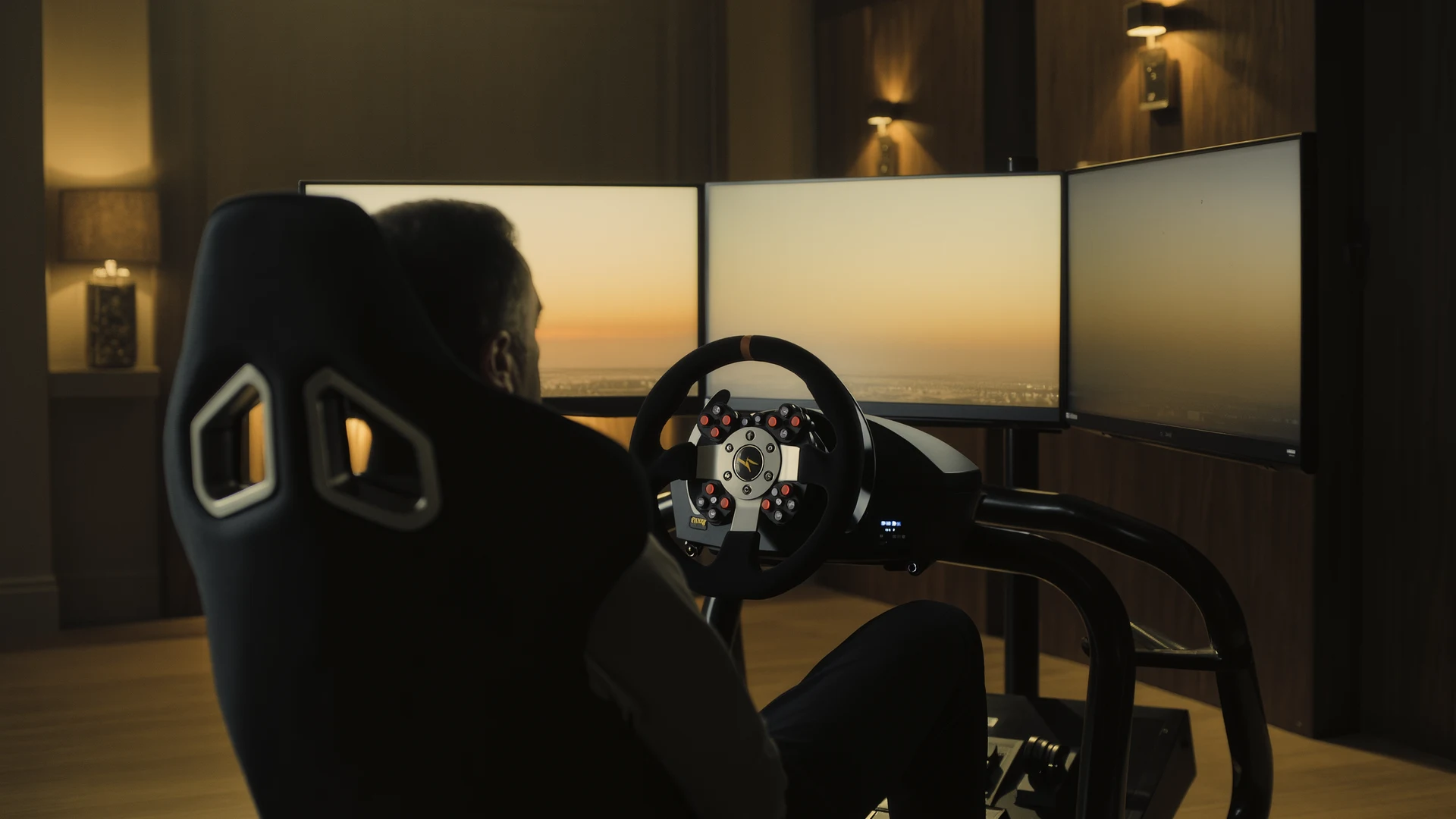
Sim Racing PC Build Guide
Sim racing PC build guide: why the AMD Ryzen 7 7800X3D wins on single-thread cache, how to match your GPU to your display, plus four complete budget b…
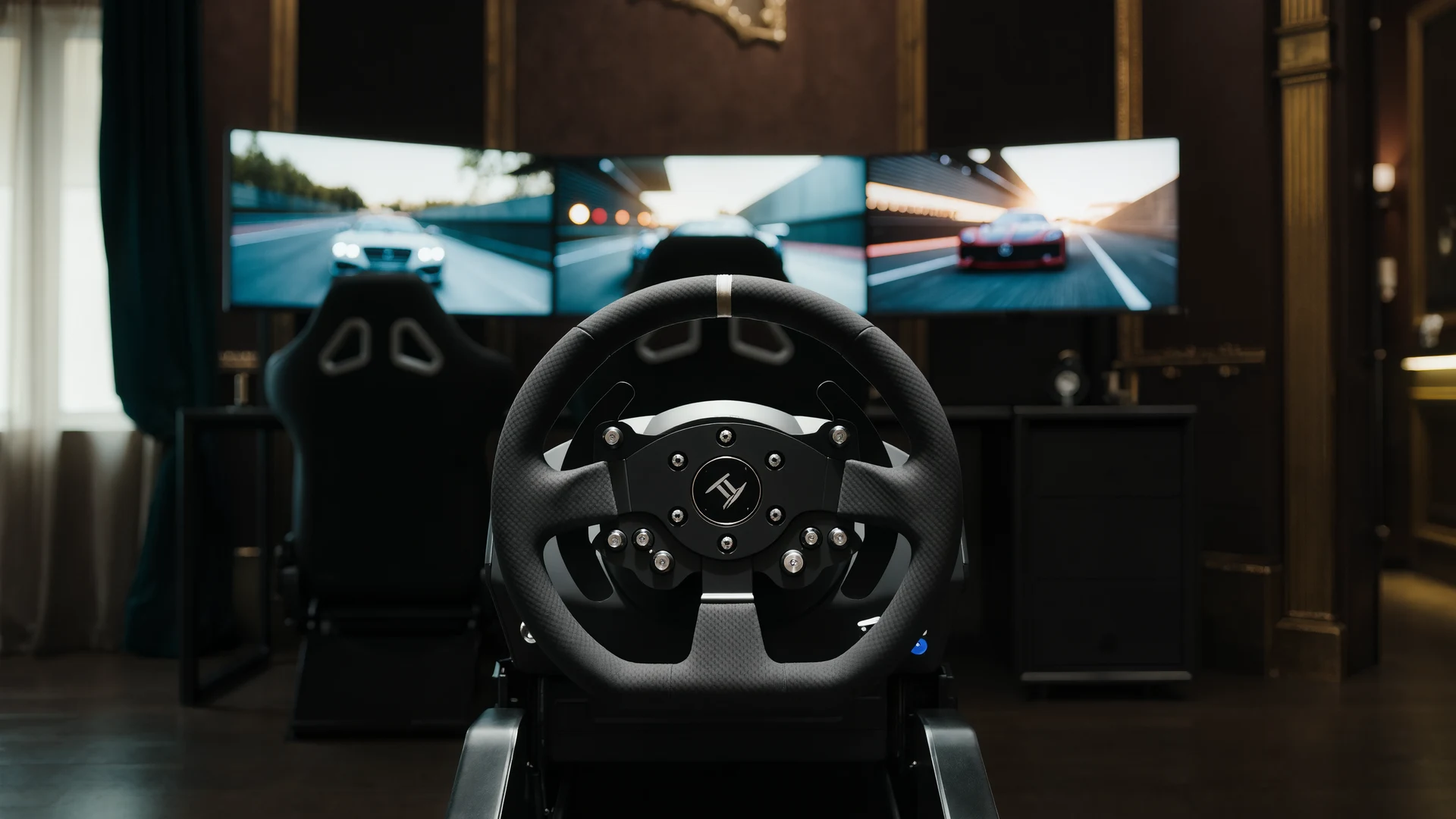
Sim Racing VR vs Triples Guide
VR vs triple monitors for sim racing in 2026: compare Quest 3, Pimax Crystal Light and triple 1440p setups on field of view, depth, comfort, cost and …
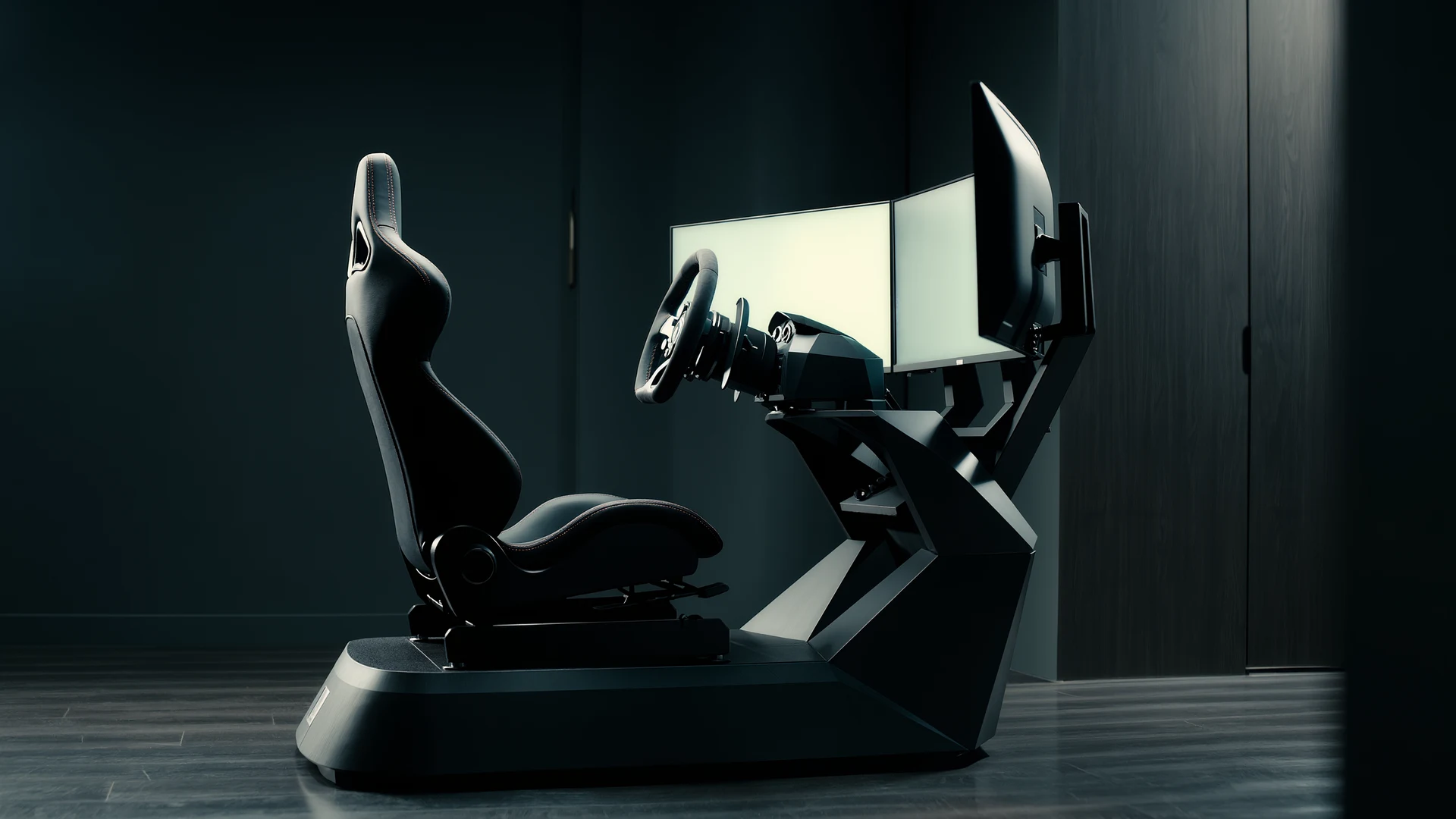
Sim Racing Motion Platforms Guide
Sim racing motion platforms guide: compare seat movers, chassis movers, D-BOX, PT Actuator, and bass shakers, with prices from $150 to $20,000-plus an…