Rally sims: why gravel rewrites everything you learned
Why gravel rewrites everything circuit racing taught you, what the official rally simulator contains and the three techniques that transfer in the other direction.
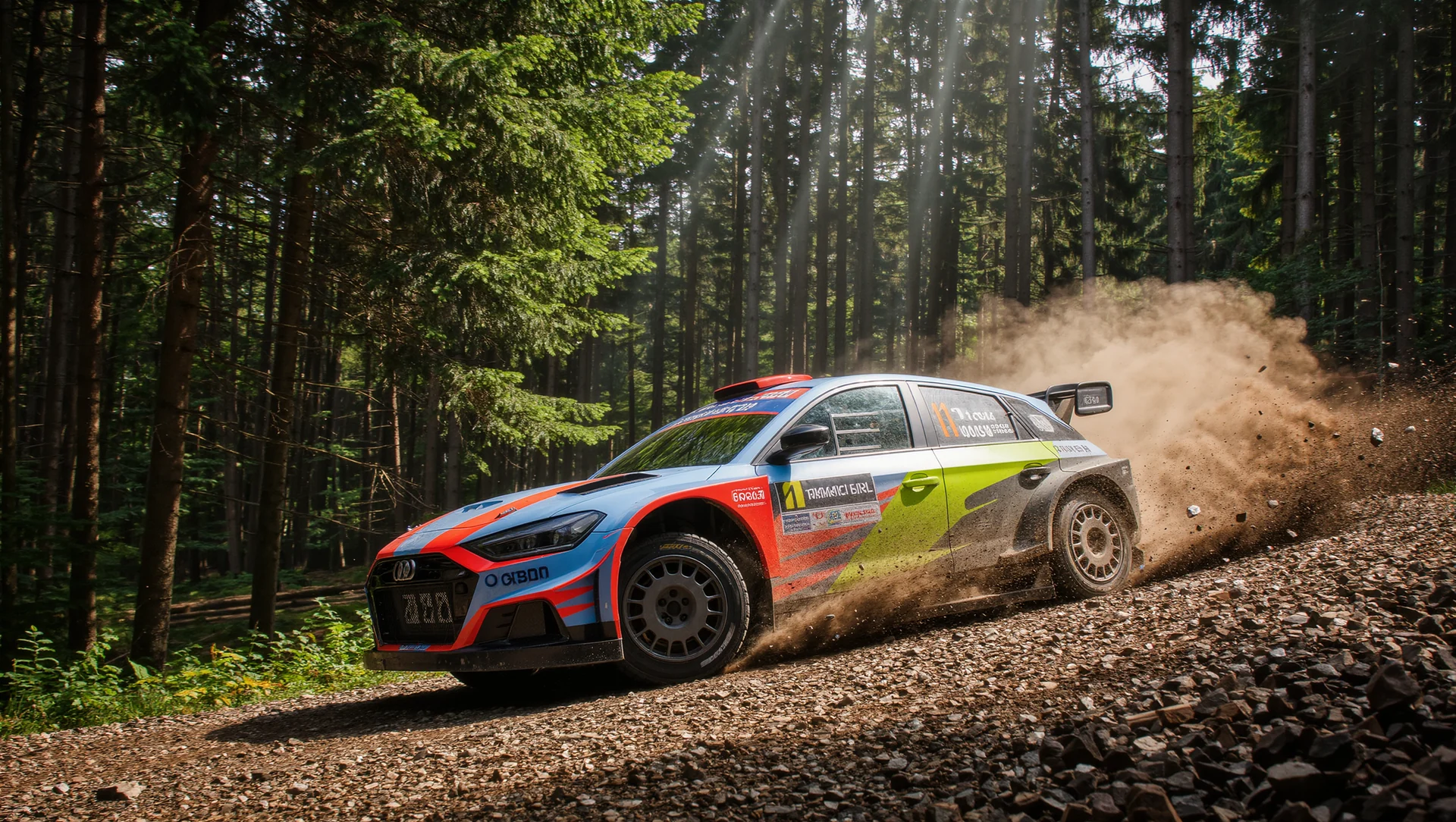
On a circuit you learn a corner; on a rally stage you drive a corner you have never seen, from a description read out loud a few seconds earlier. That single difference changes what the skill actually is, and it is why circuit drivers are often slower on gravel than complete beginners expect.
What the discipline actually asks
The scale is the first shock. The official rally simulator ships with over 600 km of unique stages across 18 locations, with individual hero stages of 18 km, 16 km and 10 km. A circuit driver learns a 5 km track by repetition; nobody memorises 600 km of stages that way, so the skill has to be reading rather than recall.
The content scale follows: 78 rally cars, covering 10 current WRC, WRC2 and Junior WRC vehicles alongside 68 classics spanning 60 years of the sport, with more than 200 stages in total. The 2024 content added 5 further vehicles, 2 locations and 12 stages per location, plus up to 52 real drivers and crews and over 50 liveries.
What that content forces is a different loop. There is no reference lap to compare against, no braking marker board and often no visual clue about what happens after the crest, so the driver's job is to build a margin that survives being wrong rather than to find the last tenth.
| Item | Figure |
|---|---|
| Unique stage distance | over 600 km |
| Locations | 18 |
| Stages | over 200 |
| Cars | 78 |
| Current WRC, WRC2 and Junior WRC cars | 10 |
| Classic cars | 68, spanning 60 years |
| Added with the 2024 content | 5 cars, 2 locations, 12 stages per location |
| Real drivers and crews | up to 52 |
Why gravel behaves differently
Grip on gravel is a layer, not a surface. The loose stones on top act like ball bearings on the first pass and get swept aside into a cleaner line as cars go through, which means the same stage is a different stage for car twenty than for car one. Running order is a part of the result in a way it never is on a circuit.
The car rotates on the throttle rather than on the brake. Weight transfer, a lifted throttle and a deliberate slide are the tools that point the car, which is why a handbrake matters here and does nothing on tarmac. A circuit driver's instinct to straighten the car and brake in a line is the exact instinct that produces an understeer into a ditch.
And the suspension does the work. On gravel the surface moves under you continuously, so a car that is set up stiff for a circuit will skate across the top rather than dig in. This is the setup dimension that circuit racing barely uses and rally cannot live without.
The three techniques that transfer back
Reading a corner from a description rather than from memory is the first, and it makes you faster on any unfamiliar circuit. A driver used to pace notes arrives at a new track with a system for building the layout in their head instead of learning it by attrition.
Recovering from a slide is the second. Gravel produces twenty slides an hour where a circuit produces two, and the reflexes built there transfer to the moment a circuit car steps out in the wet.
Managing a car that is damaged or degrading is the third. Rally is one of the few disciplines where continuing at 90 per cent is routinely the correct choice, and drivers who learn that carry it into endurance racing where the same judgement decides results.
Starting without wasting a month
Learn one location before you touch the others. Twelve stages in one place teaches you the surface, the typical corner shapes and the note vocabulary, and that knowledge is what makes the remaining 17 locations approachable rather than overwhelming.
And drive the classics rather than the current cars first. A modern hybrid rally car has power that punishes an imprecise foot, while a car from 60 years of the sport's history often teaches the technique more clearly because it requires it.
Sources
Frequently asked questions
Do I need a handbrake for rally?
For hairpins, yes. It is the tool that rotates the car without the brakes, and it is the one accessory that genuinely changes what you can drive.
Is gravel harder than tarmac?
Different rather than harder. Tarmac rewards precision, gravel rewards a margin that survives being wrong about what is over the crest.
Why am I slower here than on a circuit?
Because you are driving from a description instead of from memory. That is a skill in itself and it takes a few evenings to build.
Which car should I start in?
A classic rather than a current hybrid. Less power means the technique shows up before the consequences do.
More in Games & Platforms
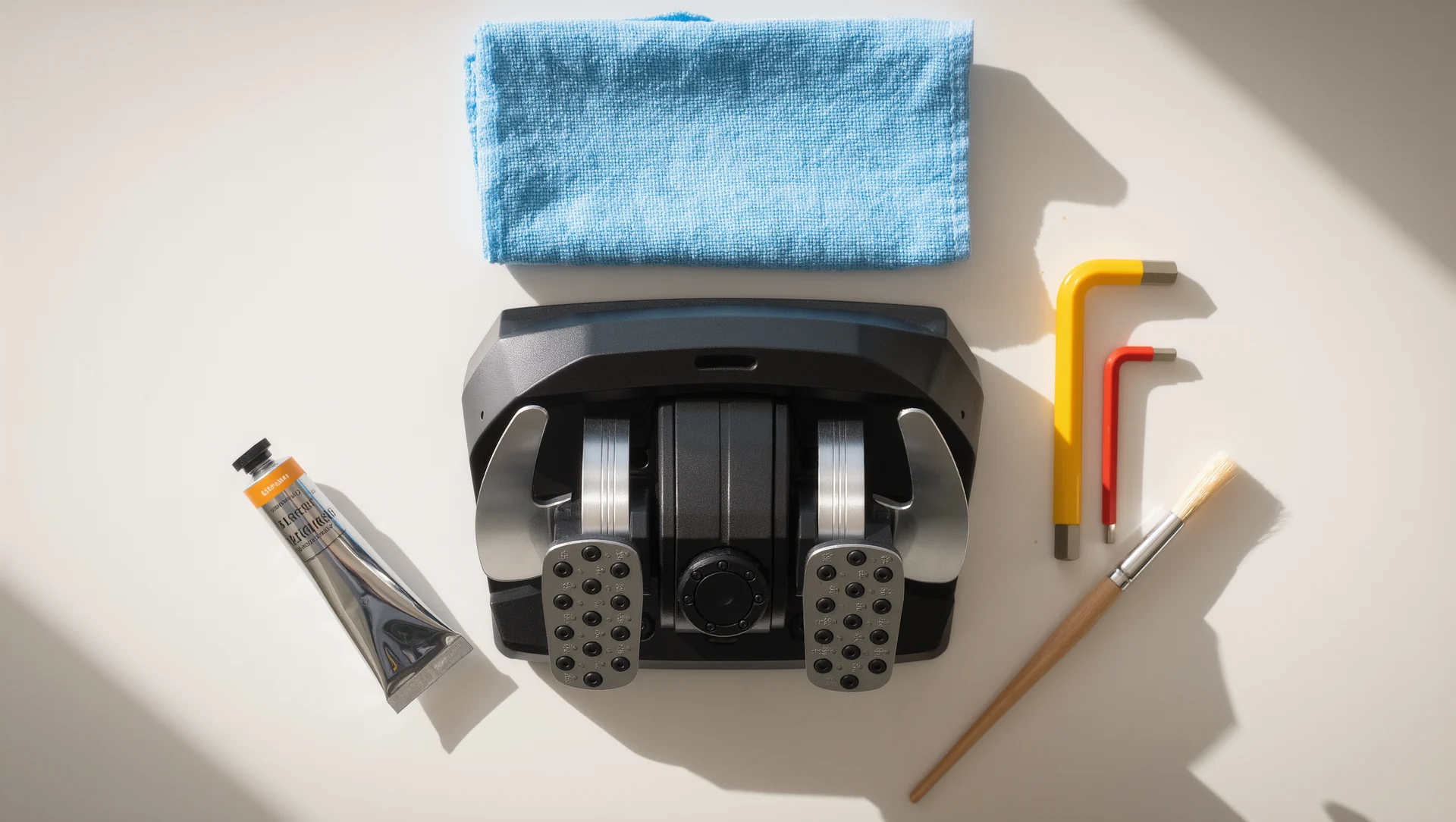
Maintenance that doubles the life of your hardware
Maintenance that doubles the life of sim racing hardware: what the manufacturers let you service yourself, what to check on a schedule and what to leave alone.

Console wheel compatibility without the marketing
Console wheel compatibility explained by where the licensing chip sits, which combinations work on which platform and what that means before you buy.
Braking points you can repeat, not remember
Braking points you can repeat rather than remember: the arithmetic behind the distances, why markers fail and the method that survives a race.