Revolutionary Load Cell Pedals: The Future of Racing Simulators
So, you’re curious about those fancy load cell pedals for racing simulators, huh? They’re pretty neat, and honestly, they’re changing the game. Basically, instead…
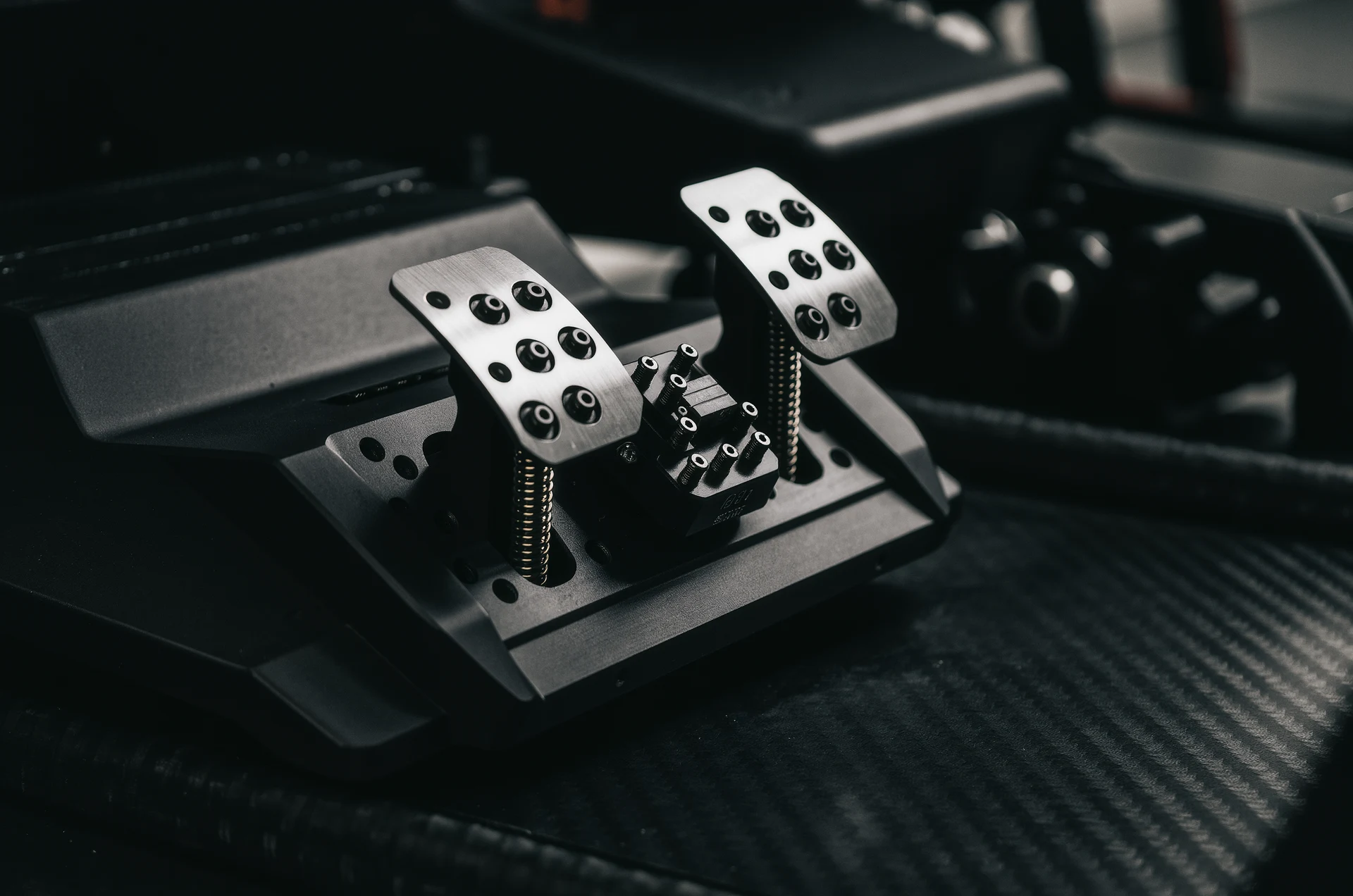
So, you’re curious about those fancy load cell pedals for racing simulators, huh? They’re pretty neat, and honestly, they’re changing the game. Basically, instead of just measuring how far you push a pedal, load cells measure the actual force you apply. This means you get a much more nuanced and realistic feel when you’re braking or accelerating. We’re talking about a whole new level of precision that can seriously shave seconds off your lap times and make sim racing feel way more immersive.
Let’s break it down without getting too bogged down in technical jargon. Traditional racing simulator pedals, often called potentiometer pedals, work by measuring the angle or position of the pedal. Think of a dimmer switch for a light, there are a few distinct ‘on’ or ‘off’ positions, or perhaps a smooth glide between them. While this gives you some range, it doesn’t really tell you how hard you’re pressing.
Potentiometer vs. Load Cell: A Simple Analogy
Imagine you’re trying to gently squeeze a stress ball. A potentiometer pedal is like having a slider that tells you if you’re barely touching it, squeezing it a bit, or squeezing it hard. It’s got distinct points. A load cell pedal, on the other hand, is like having a scale under that stress ball. It tells you precisely how many pounds of pressure you’re applying. This allows for a much finer degree of control. You can be incredibly subtle with your inputs.
How Load Cells Work (The Basics)
At their core, load cells are electronic transducers. They measure a physical force, in this case, the pressure from your foot, and convert it into an electrical signal. This signal is then interpreted by your sim racing software. There are different types, but many racing pedals use what’s called a “strain gauge” load cell. Tiny wires on a flexible material deform when pressure is applied, and this deformation changes their electrical resistance. The sim hardware measures this change and translates it into pedal input.
The “Feel” Factor
The most significant difference for the user is the feel. Potentiometer pedals can feel a bit “binary”, either you’re on the brake or you’re not, or there’s a distinct point where you’re applying significant braking. Load cells offer a much smoother, more progressive response. You can apply a little bit of brake, then a bit more, then a lot, and it all feels natural and controlled. This is crucial for modern racing techniques.
Why Load Cells Are a Game-Changer for Braking
Braking is arguably where load cell pedals shine the brightest. In real-world motorsport, effective braking isn’t just about slamming on the brakes. It’s a delicate dance of modulating pressure to avoid locking up the wheels, transfer weight effectively, and maintain as much grip as possible. Potentiometer pedals simply can’t replicate this level of subtlety.
The Magic of Trail Braking
One of the most significant real-world racing techniques that load cell pedals unlock is “trail braking.” This is where you continue to apply some brake pressure as you turn into a corner. It helps to rotate the car, keeping the front tires loaded and allowing you to carry more speed into the apex. With potentiometer pedals, attempting trail braking often results in either being fully on the brake (locking up) or completely off it. Load cells allow you to feather the brake pedal with incredibly fine control, replicating the feel of a real racing brake system.
Avoiding Wheel Lock-up
Tire lock-up is the enemy of fast lap times and can even damage your virtual tires. Potentiometer pedals make it harder to feel when you’re about to lock up. You might push too hard without realizing it and suddenly the car snaps or you begin sliding. Load cells provide tactile feedback. You can feel the resistance build, and as you get closer to the lock-up point, you can feel the pedal’s resistance change in a way that mirrors real brakes. This allows for much more precise control and fewer lock-ups.
Weight Transfer and Car Rotation
Braking is all about managing weight transfer. When you brake hard, weight shifts forward, loading the front tires and unloading the rear. This is essential for cornering grip. Load cells allow you to gradually apply and release brake pressure, giving you a much better sense of how this weight transfer is affecting the car. This translates to being able to “feel” the car more effectively and make it rotate smoothly into corners.
Consistent Braking Performance
Because load cells measure absolute force application, your braking performance will be more consistent. You’re not relying as much on muscle memory for pedal travel; you’re relying on the feel of the pressure you’re applying. This means you’ll be able to brake at the same point with the same level of intensity lap after lap, which is fundamental for improving lap times.
Load Cells and Accelerated Driving
While braking is their primary benefit, load cell pedals also offer advantages on the accelerator. The principles of precise throttle control are just as important in certain situations as precise brake control.
Fine-Tuning Throttle Application
In many high-performance cars, especially rear-wheel-drive vehicles, simply flooring the accelerator can lead to wheelspin and loss of traction. Load cells allow for much finer adjustments to throttle input. You can feel exactly how much throttle you’re giving the car, allowing you to maintain grip even when accelerating hard out of corners. This is especially beneficial in cars known for being a bit twitchy on the throttle.
Smooth Power Delivery
Just like with braking, smooth power delivery is key for maintaining grip and stability. Load cells help you achieve this by allowing you to gradually apply power. Instead of an abrupt surge of acceleration, you can ease into it, letting the tires find grip and avoiding sudden, destabilizing weight shifts. This can be particularly useful in wet conditions or when driving cars with very powerful engines.
“Numb” Throttle Issues on Potentiometers
Some potentiometer pedals suffer from a “dead zone” or a less responsive area in the mid-travel. This means you might be pushing the pedal a fair bit, and it’s not making much difference, then suddenly it kicks in. Load cells, with their linear force measurement, tend to eliminate this issue. Every millimeter of pedal travel, or rather, every pound of force, has a direct and predictable effect.
Replicating Real-World Throttle Response
Many modern sports cars and race cars have electronic throttles that are very responsive. Load cell pedals do a better job of mimicking this direct connection between your foot and the engine’s power output. You can feel the engine’s response more organically.
The Importance of a High-Quality Load Cell Pedals Set
Not all load cell pedals are created equal. While the technology is inherently superior to potentiometers, the implementation matters. Investing in a good set can make a significant difference in your sim racing experience.
Build Quality and Materials
Look for pedals made from sturdy materials like steel or aluminum. shoddy construction can lead to flex, creaking, and a general lack of rigidity, which undermines the whole point of load cells. A well-built pedal set will feel solid underfoot, contributing to the realism.
The Feel of the Force Feedback
The actual “feel” of the load cell itself is crucial. Some pedals use stiff springs or dampers to simulate brake feel. A good set will offer a progressive resistance that builds naturally as you press harder, rather than feeling artificially stiff or bouncy. The force you need to apply to reach maximum braking in a high-end load cell often replicates the feel of a real car’s brake pedal, which can require a significant amount of pressure.
Adjustability for Personal Preference
Everyone has different preferences for brake firmness, throttle resistance, and clutch feel. High-quality load cell pedal sets often offer a good degree of adjustability. This might include changing the elastomers or springs to alter the resistance, or even adjusting the pedal face position. Being able to tailor the pedals to your liking is a big part of making them feel “right.”
The Electronics and Calibration
The accuracy and responsiveness of the electronics are also vital. A good load cell will have high resolution, meaning it can detect very small changes in force. Easy and intuitive calibration software is also a plus. You want to be able to quickly set your dead zones and maximum force without a lot of fuss.
Durability and Longevity
Sim racing pedals can take a beating, especially when you’re really getting into an intense race. A well-made load cell pedal set should be built to withstand years of use. This means robust components and good engineering.
Beyond Braking: Load Cells for Clutch and Throttle
While braking is the star of the show for load cells, they can also enhance the clutch and throttle experience.
The Clutch Engagement Point
The clutch in a manual car is all about finding that precise engagement point where the engine and transmission begin to connect. Potentiometer pedals can make this feel quite vague. You push, push, and then suddenly the car lurches forward. Load cells allow for much finer control, letting you feel that delicate engagement point. This is a massive advantage for launching the car off the grid and for heel-and-toe downshifts.
Heel-and-Toe Downshifts Made Easier
Heel-and-toe is a technique where you simultaneously brake with one part of your foot, blip the throttle with another, and engage the clutch with your foot’s movement. This allows for smooth downshifts without upsetting the car’s balance. With potentiometer pedals, it’s incredibly difficult to get the throttle blip just right while braking. Load cells, by providing realistic resistance and feedback for both the brake and throttle, make this technique much more achievable and natural to learn.
Simulating Different Clutch Types
Some higher-end load cell pedal sets allow you to adjust the clutch resistance to simulate different types of clutches, from a lightweight sports car to a heavier truck or even a racing clutch. This adds another layer of realism to the driving experience.
Throttle Feel for Realistic Engine Management
As mentioned earlier, the throttle control offered by load cells is superior. It’s not just about launching. It’s about the everyday act of managing the engine’s power. Think of driving a powerful GT car: you can’t just jam the throttle. You need to be smooth. Load cells give you the granularity to do that.
The Future is Force-Sensitive: Where Load Cells Lead
Load cell pedals aren’t just a current trend; they represent a clear step towards the future of sim racing hardware. As technology advances and prices become more accessible, they’re becoming the standard for serious sim racers.
Increased Realism and Immersion
The primary driver for the adoption of load cells is the pursuit of realism. By more accurately simulating the forces involved in driving a real car, these pedals significantly increase immersion. You feel more connected to the virtual vehicle.
Performance Improvement
This isn’t just about “feeling”; it translates directly to performance. The precision offered by load cells allows drivers to extract more from the virtual cars they’re driving, leading to faster and more consistent lap times. The ability to brake later and more effectively, and to accelerate out of corners with more control, is a tangible performance benefit.
Accessibility and the Growing Market
While high-end load cell pedal sets can be expensive, the market is maturing. More manufacturers are offering a range of options, from entry-level load cell solutions to extremely sophisticated professional setups. This wider availability is making the technology accessible to a broader audience of sim racers.
Integration with Other Hardware
As load cells become more common, we’re seeing them more frequently integrated with other advanced sim racing hardware, such as direct-drive steering wheels and motion platforms. This creates a holistic simulation experience where all the physical inputs are as realistic as possible.
The Evolution of Sim Racing Games
The game developers are also taking notice. As the hardware gets more sophisticated, so too do the physics engines in racing simulators. They are designed to take advantage of the nuanced inputs that load cell pedals provide. This creates a positive feedback loop where better hardware encourages better software, and vice versa.
In conclusion, if you’re looking to seriously step up your sim racing game, investing in a good set of load cell pedals is one of the most impactful upgrades you can make. They offer a level of realism and control that traditional pedals simply can’t match, and they’re paving the way for what’s next in the world of virtual motorsport.
FAQs
What are load cell pedals?
Load cell pedals are a type of racing simulator pedals that use load cell technology to measure the amount of force applied to the pedal. This allows for more precise and realistic control of the vehicle in racing simulations.How do load cell pedals work?
Load cell pedals work by using a load cell sensor to measure the force applied to the pedal. This sensor converts the force into an electrical signal, which is then interpreted by the racing simulator software to control the vehicle in the game.What are the benefits of using load cell pedals?
Load cell pedals offer more realistic and precise control over the vehicle in racing simulations. They provide a more immersive experience for the user and can help improve driving performance in the game.Are load cell pedals compatible with all racing simulators?
Load cell pedals are compatible with most racing simulators, but it’s important to check the compatibility with the specific simulator you are using before purchasing. Some simulators may require additional software or settings to properly integrate load cell pedals.Are load cell pedals easy to install and use?
Load cell pedals are generally easy to install and use, but it’s important to follow the manufacturer’s instructions for proper installation and calibration. Once set up, load cell pedals function like traditional pedals but offer a more realistic driving experience.More from Equipment & Gear

Sim Racing PC Build Guide
Sim racing PC build guide: why the AMD Ryzen 7 7800X3D wins on single-thread cache, how to match your GPU to your display, plus four complete budget b…

Sim Racing VR vs Triples Guide
VR vs triple monitors for sim racing in 2026: compare Quest 3, Pimax Crystal Light and triple 1440p setups on field of view, depth, comfort, cost and …

Sim Racing Motion Platforms Guide
Sim racing motion platforms guide: compare seat movers, chassis movers, D-BOX, PT Actuator, and bass shakers, with prices from $150 to $20,000-plus an…