Audio in a sim: the cheapest lap time you can buy
Audio is the cheapest lap time in sim racing: which sounds carry information, what to set and why headphones beat most hardware upgrades for the same money.
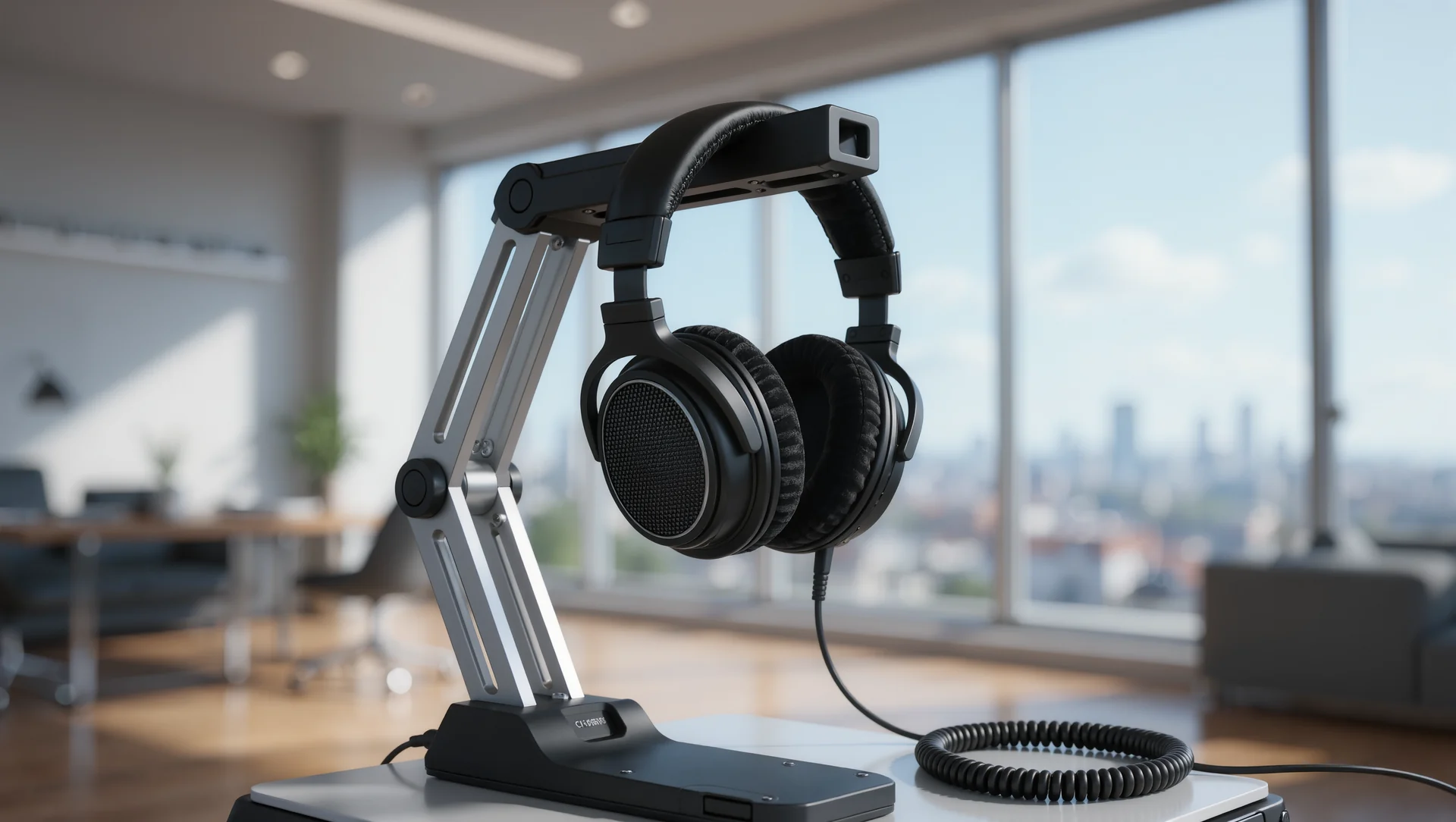
Tyre noise rises before slip is visible, which means your ears know the car is sliding before your eyes do and often before the wheel does. Audio is the only channel most drivers never configure deliberately, and it costs less than any other improvement on the list.
Which sounds actually carry information
Tyre noise is the first and most valuable. The pitch and volume of the contact patch rise as slip angle increases, which gives you a warning before the car visibly moves. On a well set up system that warning arrives earlier than the visual cue and at about the same time as the drop in self aligning torque at the wheel.
Engine note is the second, and it is doing two jobs. It tells you the revs, which you can also read, and it tells you about wheelspin on corner exit, which you cannot read as quickly anywhere else. A rise in engine note without a rise in speed is traction loss, and the ear catches that faster than a dashboard.
Surface changes are the third. Kerbs, painted lines, gravel and the transition to a wet line all sound different, and a driver using audio can hear that they have put two wheels off before the picture makes it obvious.
| Sound | What it tells you | How early |
|---|---|---|
| Tyre noise | slip angle rising | before the visual cue |
| Engine note without speed | wheelspin on exit | faster than a dashboard |
| Surface change | two wheels off, kerb, wet line | immediately |
| Tactile transducer | kerbs, bumps, ABS | 5 to 200 Hz, felt not heard |
| Amplifier range | 10 to 300 Hz | |
| Headphones against speakers | positioning and no competition from the rig |
What to set and how
Turn the music off and the engine down. Most default mixes put the engine loud enough to mask tyre noise, which is exactly backwards for a driver who wants information. Lower the engine until the tyres are clearly audible over it, then raise it back slightly.
Then set the balance so you can hear the rear tyres. In most simulators the tyre sounds are positioned, and a driver who cannot tell which end is sliding is missing the most useful part of the signal.
Count what the money buys. A pair of headphones at 100 euro against a wheel base upgrade at 800 is a factor of 8, and the headphones move the earliest warning in the whole chain while the base moves the second earliest. Of the 3 information channels available to a driver, sight, touch and hearing, 2 are already configured on most rigs and 1 almost never is.
Then use headphones rather than speakers, for two reasons. Positioning is more precise, and the sound does not have to compete with a bass shaker, a wheel base motor and three fans. A modest pair of headphones outperforms a good speaker set in a rig for exactly this reason.
Where audio and tactile overlap
They cover different frequencies on purpose. A tactile transducer such as the ButtKicker Gamer PLUS covers 5 to 200 Hz with an amplifier rated 10 to 300 Hz, which is below where the ear is precise and squarely where the body feels. Headphones cover the range above that, where the tyre and engine information sits.
Running both is therefore not redundant, and the correct division is to let the shaker handle the low frequency events and the headphones handle the detail. A driver who turns the shaker up until it masks the audio has spent money to remove information.
And the two have different latencies. The audio path is fast; a tactile transducer with a 6 ounce piston has to move a physical mass before you feel anything. For the earliest possible warning, the ears win.
Testing whether it is working
Drive a corner deliberately past the limit with your eyes on the apex rather than on the car. If you can tell from sound alone whether the front or the rear let go, the mix is right. If you cannot, the engine is too loud or the balance is wrong.
Then check it in traffic. Audio that works alone often disappears behind twenty other cars, and a mix that keeps your own tyres audible in a full field is the one worth keeping.
Sources
Frequently asked questions
Headphones or speakers?
Headphones, for positioning and because they do not compete with a shaker, a wheel base motor and fans in the same room.
What should I turn down?
The engine, until tyre noise is clearly audible over it. Most default mixes mask the most useful channel with the loudest one.
Is a tactile transducer a substitute for audio?
No. It covers 5 to 200 Hz, which is felt rather than heard, while the tyre and engine information sits above that range.
How do I know my mix is right?
Slide a corner with your eyes on the apex. If you can hear which end let go, the mix works.
More in Technology
Stewarding: how a protest is judged, step by step
How a protest is judged, step by step: who may file, what evidence is required, the deadlines and what happens when a protest is found frivolous.

Running a league: the software that saves the weekend
The tools a league actually needs: what has to be tracked, what a spreadsheet still does better than an application and where automation earns its keep.
Streaming your races without wrecking your frame rate
Streaming your races without wrecking them: the encoder numbers that matter, the headroom the simulator needs and the setup that survives a full race distance.